

SUBSCRIBE TO OUR FREE NEWSLETTER
Daily news & progressive opinion—funded by the people, not the corporations—delivered straight to your inbox.
5
#000000
#FFFFFF
To donate by check, phone, or other method, see our More Ways to Give page.
Daily news & progressive opinion—funded by the people, not the corporations—delivered straight to your inbox.
"Nothing could be more antithetical to the free, independent press than the president charging for early access to his public announcements."
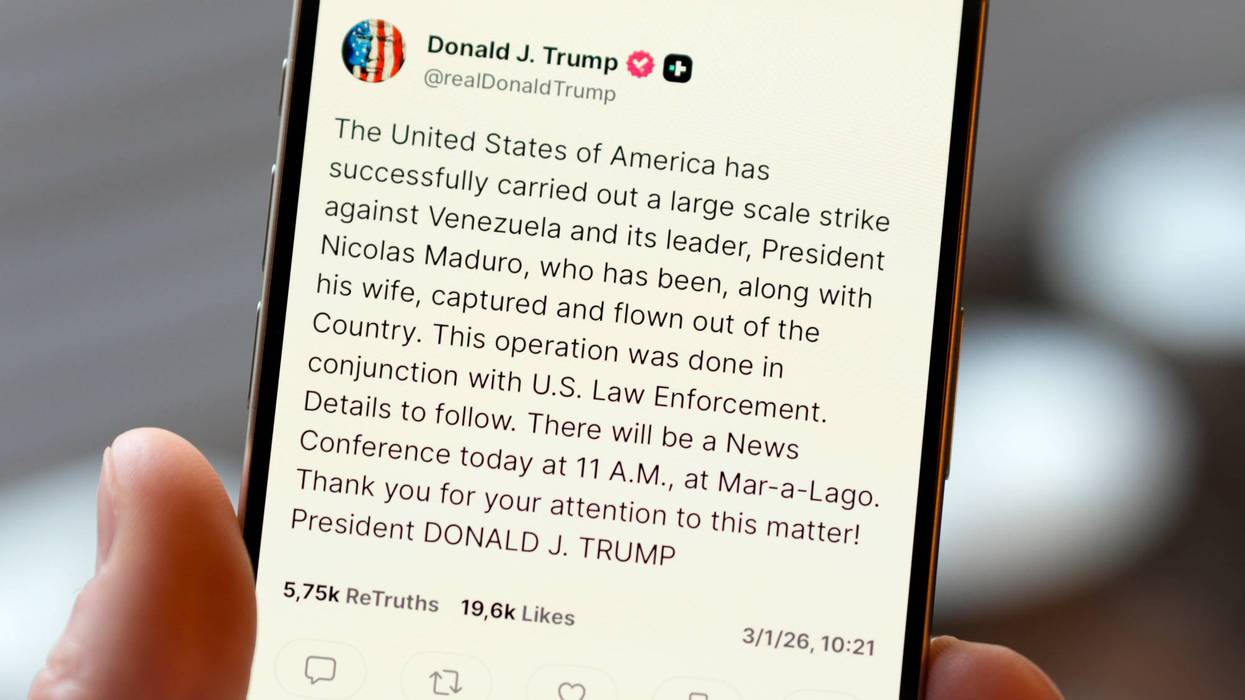
A lawsuit filed on Wednesday is challenging the legality of Truth API, a recently unveiled initiative to allow Wall Street firms to pay up to $100,000 per month in exchange for early access to potentially market-moving social media posts from President Donald Trump.
The complaint, filed by the Freedom of the Press Foundation (FPF) and The Intercept, alleges Truth API violates the US Constitution's First Amendment by granting insiders special access to the president's announcements.
The scheme also violates the Constitution's Fifth Amendment by "charging unreasonable sums that cannot be justified to offset the cost" of receiving the benefit of information from the president, the complaint states.
The lawsuit describes Truth API as "profoundly corrupt," given that "the president stands to gain financially by giving 'market-moving' government information to those who are willing and able to pay his personal company."
In establishing the plaintiffs' standing, the complaint argues that The Intercept is being put at a competitive disadvantage by the scheme, given that the news outlet is "both unable and unwilling to subscribe" to it, even though it risks "losing out on timely news to competing organizations."
Ben Muessig, editor-in-chief of The Intercept, accused the president of "trying to enrich himself by privatizing government information that he has no right to sell," while vowing that "we won't let that stand."
David Bralow, chief legal officer for The Intercept, said that "nothing could be more antithetical to the free, independent press than the president charging for early access to his public announcements," emphasizing that "public information belongs to the public."
Seth Stern, chief of advocacy at FPF, said Truth API "is so blatantly corrupt and unconstitutional that it would have been hard to even fathom just a few years ago."
"Trump’s crooked scheme is particularly outrageous," Stern added, "because, as documented by our Trump Anti-Press Social Media Tracker, he frequently uses his Truth Social account to berate journalists and even to announce his plans to sue them and criminally investigate them. Then, he makes them wait in line behind paying customers to find out about it unless they’re willing to subsidize the platform he uses to attack them."
The Intercept and the FPF are being represented in the case by attorneys from Citizens for Responsibility and Ethics in Washington (CREW), the Yale Law School Media Freedom and Information Access Clinic, the Public Integrity Project, and Altshuler Berzon LLP.
Nikhel Sus, chief counsel at CREW, said his organization was "proud to represent our clients in their effort to end this corrupt and unconstitutional scheme" because "all Americans are entitled to timely access to their president’s public statements, not just those willing to pay the president’s company $100,000 a month."
Truth API has also drawn the attention of Rep. Jamie Raskin (D-Md.), ranking member of the US House Judiciary Committee, who announced a probe into the initiative last month, describing it as an "insider-information scheme" that "will enable Wall Street to profit from the president’s frequent market-moving posts on major businesses."

"BreakThrough News is not the first, nor will it be the last, to come under official attack," said one press freedom advocate.
Press freedom groups are issuing dire warnings on Thursday that House Republicans' efforts to subpoena the nonprofit left-wing news organization BreakThrough News represent a dangerous new step in a McCarthyite war on political dissent.
On Wednesday, Fox News reported that BreakThrough, a New York-based outlet, was one of three nonprofits that had been issued subpoenas by the GOP-controlled House Ways and Means Committee as part of an investigation into $39 million worth of donations from tech mogul Neville Roy Singham, a self-described socialist who has used his wealth to fund left-wing nonprofits.
In letters sent Tuesday, the committee, led by Rep. Jason Smith (R-Mo.), said that BreakThrough, as well as two other organizations—the People’s Forum Inc., a New York-based activist hub, and Tricontinental: Institute for Social Research—had not turned over any documents that had been requested as part of an investigation into whether rules around tax exempt status for nonprofits should be tightened to protect against foreign influence.
The committee has accused Singham, an American who now lives in Shanghai, of exploiting the tax code and using shell companies and donor-advised funds to hide foreign money that has been used to promote the interests of the Chinese Communist Party. It does not, however, make any specific accusation of legal wrongdoing.
The subpoena requires BreakThrough News to turn over records about its finances, foreign donors and grant recipients, fiscal-sponsorship arrangements, and communications with Singham and any foreign entities.
In a statement on Wednesday, BreakThrough News said it was "under attack."
"For years, Republican lawmakers have painted a target on our backs, falsely claiming that our political views and reporting are part of some foreign plot," the outlet said. "Now, the MAGA-dominated House Ways and Means Committee has issued us a subpoena—demanding internal communications, financial records and more. Make no mistake, this is a flagrant abuse of power, and a direct attack on our work as journalists and on the First Amendment generally."
BreakThrough said it does not receive any funding from foreign governments or institutions and that it already complies with all the tax and public reporting requirements that nonprofits have to follow.
"We are not charged with any crime, because our only 'crime' has been to tell the truth–by covering the activities of the Palestine solidarity movement, unmasking the truth of ICE’s terror in our streets, and exposing Washington’s crimes around the world, from Cuba to the Congo," the outlet said. "That’s the journalism they want to shut down. Their goal is to saddle us with legal proceedings and hostile media to drain our resources and stop this important work."
While the committee stated that they are investigating BreakThrough over its financing rather than its politics, letters sent to the organization have treated the content of its reporting as circumstantial evidence of malign foreign influence, referring to it as "anti-American" and claiming that its negative coverage of Israel was "sowing division within the United States."
Chip Gibbons, the policy director of the free speech advocacy group Defending Rights & Dissent, told Common Dreams that the subpoena of BreakThrough was a "deeply chilling assault on the First Amendment."
"Such tactics are, quite literally, a throwback to the House Un-American Activities Committee, which today is mostly viewed as a disgrace," Gibbons said. "I say mostly, because just three days ago [Secretary Marco] Rubio's State Department released a report preposterously attacking the US left, including some of these groups, as Cuban fronts that cited old HUAC reports."
He further emphasized in a press release that there was "no plausible need" for a news organization to provide documents as part of a broad congressional inquiry.
"The only thing these groups are accused of is essentially receiving donations from a US citizen who has been the subject of an intensive campaign of demonization," Gibbons said. "It is lawful for Americans to donate to activist causes and media projects while holding views disfavored by Congress. This is clearly not a valid legislative inquiry at all, but an attempt to intimidate and chill dissenting opinions."
Seth Stern, the chief of advocacy for the Freedom of the Press Foundation, agreed that “Congress shouldn’t be using a tax investigation as a pretext to dig through a newsroom’s internal communications or financial records.
"Freedom of the press," he said, "applies to all journalists, regardless of whether politicians like their editorial slant or their politics."
In what it has portrayed as a fight against "left-wing terrorism," the Trump administration has increasingly blurred the lines between violent activity and protected political speech that they claim "incites" violence.
National Security Presidential Memorandum 7, signed by Trump in September, designates large swathes of left-wing viewpoints on race, gender, immigration, and other topics as "indicators" of domestic terrorism that have been used to link entire groups of people to violent acts they themselves did not commit.
Rubio said last week that the administration would soon be designating more left-wing organizations as terrorist groups, while senior Trump adviser Stephen Miller said that the full force of the state would be used to "disrupt, identify, defund, de-bank, arrest, prosecute" those deemed to "foment" political violence, not just those who actually commit it.
He has previously pledged to use the law to "dismantle" organizations that use heated rhetoric to refer to their right-wing opponents, including calling them "fascist" or "authoritarian."
Nora Benavidez, senior counsel at Free Press, described the subpoena of BreakThrough as an extension of a "retaliatory ethos" Trump has taken towards critical journalists "with the goal of shutting down criticism and dissent."
She told Common Dreams, "BreakThrough News is not the first, nor will it be the last, to come under official attack for bringing people alternative and useful news coverage about ICE abuses, foreign policy, Palestinian rights, and other topics."
"Allowing a congressional committee to harass an independent newsroom with a broad subpoena sets an awful precedent," Stern said. "If lawmakers can abuse tax oversight to single out outlets whose reporting offends them today, no newsroom in America is safe from government intimidation tomorrow.”
"ABC has finally learned that bullies don’t stop when companies cower in a corner," said one free press advocate.
ABC News earned plaudits on Friday after it came out swinging against the Trump administration's investigation into its daytime talk show "The View."
In a filing with the Federal Communications Commission (FCC), first reported by The New York Times, ABC said the Trump administration's actions "threaten to upend decades of settled law and practice and chill critical protected speech, both with respect to 'The View' and more broadly."
The FCC launched an investigation into "The View" over its interview with Democratic US Senate candidate James Talarico of Texas earlier this year, as the agency questioned whether the program should be exempt from Section 315 of the Communications Act, which requires networks to provide equal access to candidates' political opponents.
Disney-owned ABC noted that "'The View' has been broadcasting under a bona fide news exemption granted to it more than 20 years ago," and argued that forcing the show to abide by equal-time rules "would risk restricting political discourse exactly when it is needed most."
The network's aggressive posture against the FCC inquiry earned it praise from press freedom watchdogs who have long criticized mainstream media outlets for timidity in the face of the Trump administration's authoritarianism.
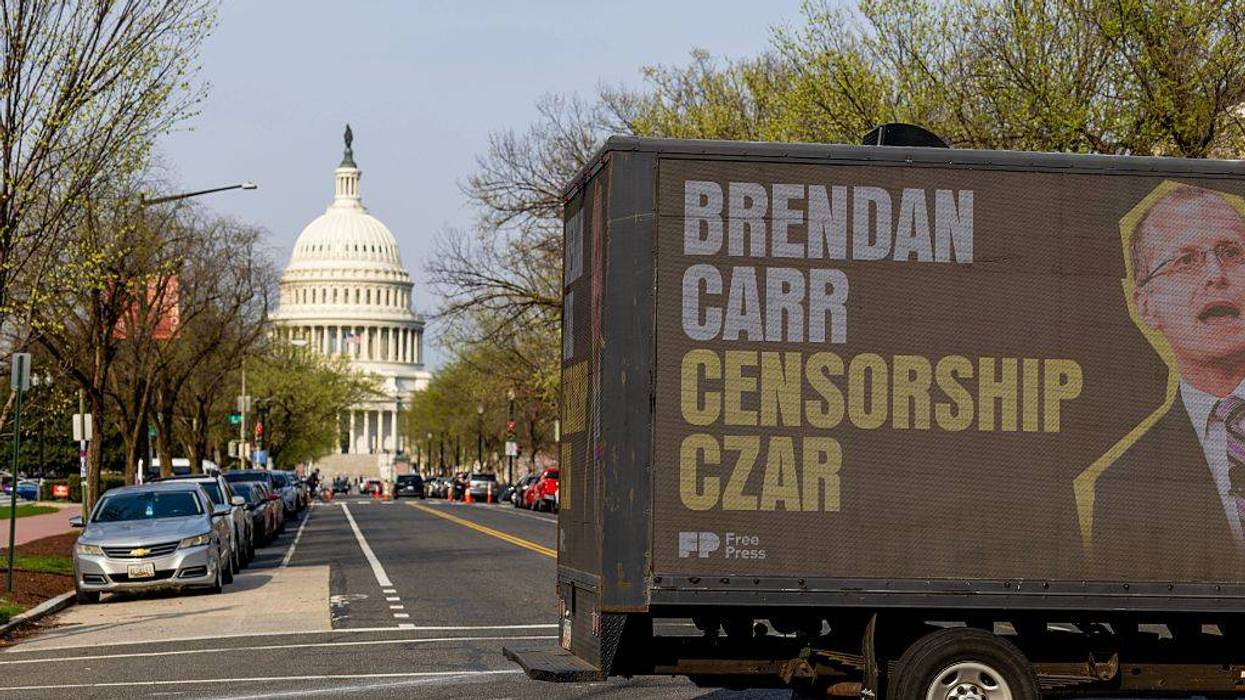
Seth Stern, chief of advocacy for the Freedom of the Press Foundation, said ABC deserved kudos for "for standing up for itself and the First Amendment" amid attacks from President Donald Trump and FCC Chairman Brendan Carr, who has repeatedly threatened to pull broadcasters' licenses over unfavorable news coverage.
"It’s about time news outlets start telling Carr and his Donald Trump lapel pin to kick rocks," said Stern. "Otherwise, he’ll continue manufacturing bogus pretexts to harass and jawbone licensees that air content his boss doesn’t like."
Jessica J. González, co-CEO of Free Press, said she was "pleased that ABC has finally learned that bullies don’t stop when companies cower in a corner," referring to past settlements ABC and other networks made with Trump after his 2024 election victory.
"The FCC chairman has blatantly and repeatedly abused his power to silence speech that displeases Trump," said González. "This doesn’t just violate the First Amendment rights of broadcasters on the receiving end of Brendan Carr's tactics; it also harms the broadcasters’ audiences."
Mark Jacobs, former editor at the Chicago Tribune and the Chicago Sun-Times, similarly pointed to ABC's past capitulations to Trump, while expressing hope that the network had learned its lesson.
"Remember when ABC folded to Trump's shakedown scheme with a $15 million settlement?" he wrote in a social media post. "Maybe they thought it would buy peace with the dictator. It didn't. The regime demanded Jimmy Kimmel's firing and harassed 'The View.' Now ABC is fighting back after learning that fascists always come back for more."
"It's unfortunate that it took this long for the Pentagon's ridiculous policy to be thrown in the trash," said one press freedom advocate.
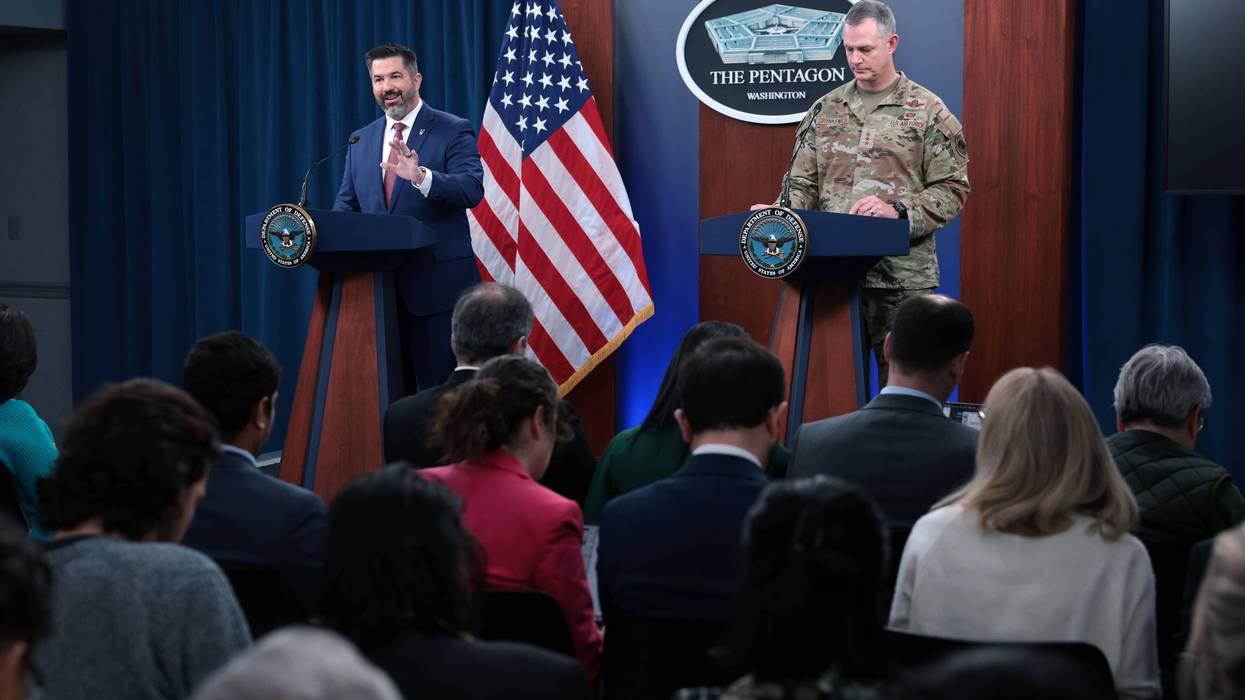
A federal judge in Washington, DC blocked the US Department of Defense's widely decried press policy on Friday, which The New York Times and reporter Julian Barnes had argued violates their rights under the First and Fifth amendments to the Constitution.
The Times filed its lawsuit in December, shortly after the first briefing for the "Pentagon Propaganda Corps," which critics called those who signed the DOD's pledge not to report on any information unless it is explicitly authorized by the Trump administration. Journalists who refused the agreement turned over their press credentials and carried out boxes of their belongings.
"A primary purpose of the First Amendment is to enable the press to publish what it will and the public to read what it chooses, free of any official proscription," Judge Paul Friedman, who was appointed to the US District Court for DC by former President Bill Clinton, wrote in a 40-page opinion.
"Those who drafted the First Amendment believed that the nation's security requires a free press and an informed people and that such security is endangered by governmental suppression of political speech," he continued. "That principle has preserved the nation’s security for almost 250 years. It must not be abandoned now."
Friedman recognized that "national security must be protected, the security of our troops must be protected, and war plans must be protected," but also stressed that "especially in light of the country's recent incursion into Venezuela and its ongoing war with Iran, it is more important than ever that the public have access to information from a variety of perspectives about what its government is doing—so that the public can support government policies, if it wants to support them; protest, if it wants to protest; and decide based on full, complete, and open information who they are going to vote for in the next election."
The newspaper said that Friday's ruling "enforces the constitutionally protected rights for the free press in this country. Americans deserve visibility into how their government is being run, and the actions the military is taking in their name and with their tax dollars. Today's ruling reaffirms the right of the Times and other independent media to continue to ask questions on the public's behalf."
The Times had hired a prominent First Amendment lawyer, Theodore Boutrous Jr. of Gibson Dunn, who celebrated the decision as "a powerful rejection of the Pentagon's effort to impede freedom of the press and the reporting of vital information to the American people during a time of war."
"As the court recognized, those provisions violate not only the First Amendment and the due process clause, but also the founding principle that the nation's security depends upon a free press," Boutrous said. "The district court's opinion is not just a win for the Times, Mr. Barnes, and other journalists, but most importantly, for the American people who benefit from their coverage of the Pentagon."
Seth Stern, chief of advocacy at Freedom of the Press Foundation, also welcomed the ruling, saying that "the judge was right to see the Pentagon's outrageous censorship for what it is, but this wasn't exactly a close call. If the same issue was presented as a hypothetical question on a first-year law school exam, the professor would be criticized for making the test too easy."
"It's shocking that this sweeping prior restraint was the official policy of our federal government and that Department of Justice lawyers had the nerve to argue that journalists asking questions of the government is criminal," Stern declared. "Fifty years ago, the Supreme Court called prior restraints on the press 'the most serious and the least tolerable' of First Amendment violations. At the time, the court was talking about relatively targeted orders restraining specific reporting because of a specific alleged threat—like in the Pentagon Papers case, where the government falsely claimed that the documents about the Vietnam War leaked by Daniel Ellsberg threatened national security."
"Courts back then could never have anticipated the government broadly restraining all reporting that it doesn't authorize without any justification beyond hypothetical speculation," he added. "It's unfortunate that it took this long for the Pentagon's ridiculous policy to be thrown in the trash. Especially now that we are spending money and blood on yet another war based on constantly shifting pretexts, journalists should double down on their commitment to finding out what the Pentagon does not want the public to know rather than parroting 'authorized' narratives."
The Trump administration has not yet said whether it will appeal the decision in the case, which was brought against the DOD—which President Donald Trump calls the Department of War—as well as Defense Secretary Pete Hegseth and the Pentagon’s chief spokesperson, Sean Parnell.
"ICE abductions of noncitizen journalists take the reporters best equipped to cover immigration enforcement off the beat."
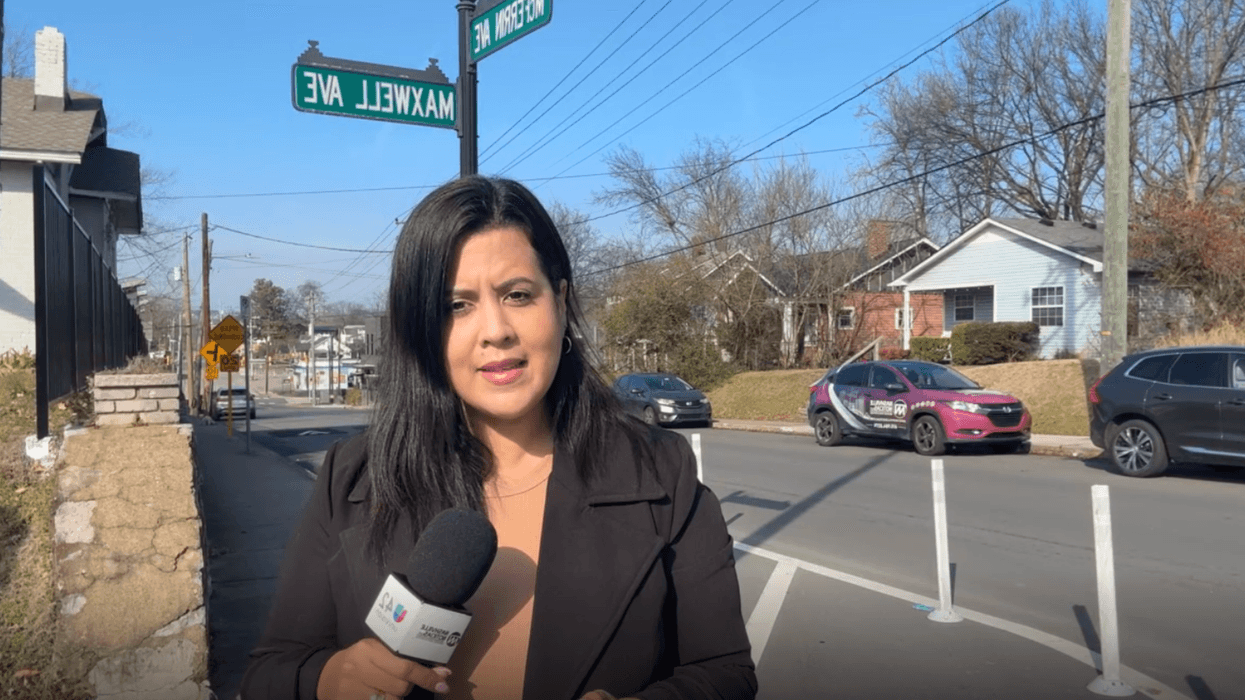
Press freedom groups on Friday were calling for the immediate release of Estefany Rodríguez, a journalist with Nashville Noticias and Univision 42 Nashville, after she was detained by federal immigration agents while traveling in her marked press vehicle.
The Freedom of the Press Foundation said it was not yet clear whether Rodríguez was detained "in retaliation for her reporting" on US Immigration and Customs Enforcement's (ICE) mass detention and deportation operation under President Donald Trump.
"But we certainly wouldn't be surprised," said the group in a statement on social media. "ICE abductions of noncitizen journalists take the reporters best equipped to cover immigration enforcement off the beat."
Rodríguez was with her husband, a US citizen, on Wednesday when she was arrested outside a gym. She was in a car marked with the Nashville Noticias logo when several other vehicles surrounded her, the outlet said in a statement Friday.
"Several men got out and demanded that our colleague be taken into custody for reasons that the legal team will specify at a later date," said Nashville Noticias. "Estefany Rodríguez was taken to a detention center."
Pablo Manríquez of Migrant Insider reported Friday that Rodríguez had been taken to the Central Louisiana ICE Processing Center, "a facility infamous for solitary confinement and sexual abuse by guards against detainees."
Nashville Banner reported that Rodríguez arrived in the US in 2021 on a tourist visa and then applied for political asylum. Her lawyer, Joel Coxander, told the outlet that Rodríguez had reported on armed groups in her native Colombia and had received threats for doing so, leading her to file at least one police report before coming to the US. After getting married, the Columbia Journalism Review (CJR) reported, Rodríguez "filed for permission to adjust her status to that of a lawful permanent resident."
She had never had an interaction with ICE until January 8, Nashville Banner reported, when she received a G-56 "call-in" letter asking her to come in to a local ICE office for "processing and additional information" on January 26.
Coxander told Nashville Banner that the letter advised Rodríguez to come to a meeting to "help ensure the best outcome for your case." She was also told she would receive a Notice to Appear (NTA) at the meeting, an official document initiating an immigration court case.
The local office was closed on January 26 due to inclement weather, and a makeup appointment was scheduled for February 25.
Media and an associate of Coxander's went to the ICE office two days before the rescheduled appointment to confirm whether Rodríguez had to go to the meeting and ask if the NTA could simply be sent to her attorneys. They were told no appointment was in the system for Rodríguez and a third appointment was scheduled for March 17.
Nine days later, Rodríguez was arrested, with ICE agents presenting the NTA rather than a warrant after they surrounded her car.
An ICE officer at the local office told Coxander's associate after Rodríguez was detained that she had been arrested because she was considered a "flight risk" because she had "missed" two meetings.
“She’s being told, ‘We’re holding it against you that you didn’t do this thing we told you you didn’t have to do,” Coxander told Nashville Banner. “They’re saying, ‘Hey, you didn’t show up to this invitation letter, so you’re a full flight risk.’”
Rodríguez has covered ICE's operations in Nashville. CJR reported that on Tuesday, the day before she was arrested, Rodríguez "reported from the parking lot of a residential complex where three ICE agents detained a man believed to be of Venezuelan origin."
Her arrest comes weeks after federal agents arrested journalists Don Lemon and Georgia Fort, accusing the two US citizens of conspiring with organizers to disrupt a church service at a protest they were covering. Last June, an Emmy-winning reporter named Mario Guevara was arrested and held for more than 100 days before being deported. His deportation "is believed to be the first case of a journalist being removed from the US in retaliation for their work," wrote CJR's Carolina Abbott Galvão.
The Tennessee Immigrant and Refugee Rights Coalition said Rodríguez is a "beloved community member and trusted journalist in the community."
"It’s not lost on us that as a reporter, Estefany honestly and courageously told real stories about the harms caused by ICE and the people they targeted and detained," said the group.
Media Action Plan, a Canada-based press freedom group, said Rodríguez's arrest "is another attack on the free press."
Rodríguez's husband set up a GoFundMe for the family, which also includes a young daughter. The fundraiser had raised nearly $9,000 as of Friday afternoon.
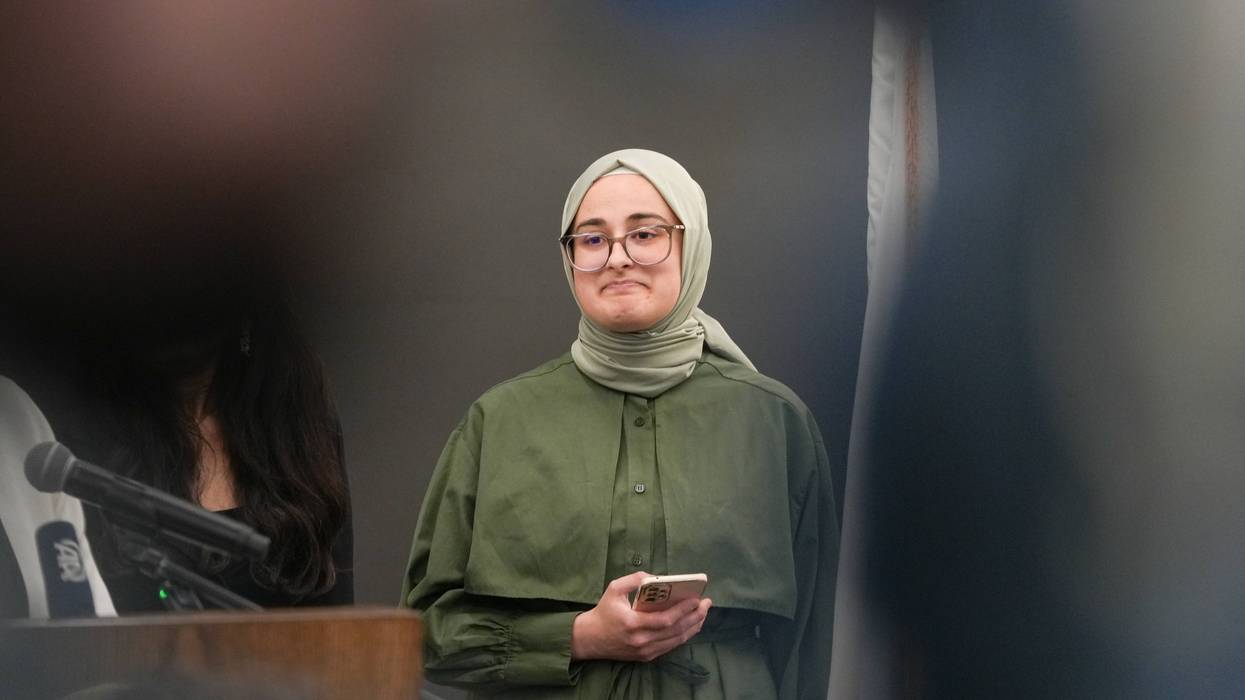
"They’d throw out all of us who dissent if they could," warned the Freedom of the Press Foundation's chief of advocacy.
An immigration judge has terminated the Trump administration's effort to deport Rümeysa Öztürk, a doctoral student at Tufts University, for criticizing Israel, her lawyers announced on Monday.
Öztürk, a 30-year-old Turkish national, was snatched off the street by masked US Immigration and Customs Enforcement (ICE) in Massachusetts last March and was flown to an unsanitary detention center in Louisiana, where she spent 45 days before a judge ordered her release on bail.
The US State Department had revoked Öztürk's visa, accusing her of "support for Hamas," a designated terrorist group, and creating a “hostile environment” for Jewish students.
That accusation was based solely on an opinion piece she'd co-written with other Tufts students calling for the university to divest assets from Israel over its genocide in Gaza, which had killed over 50,000 people at the time, according to official figures.
An internal memo relied upon by Secretary of State Marco Rubio provided no evidence that Öztürk had expressed support for terrorist groups or participated in any sort of antisemitic harassment.
Documents unsealed last month by a Massachusetts judge later revealed that Rubio had approved Öztürk and several other students' deportations based solely on their advocacy for Palestinian rights.
It was for this reason that an immigration judge, Roopal Patel, an employee of President Donald Trump's own Department of Justice (DOJ), ultimately found that the Department of Homeland Security (DHS) had not met its burden to prove Öztürk’s removability and ordered her case to be dropped.
“Today, I breathe a sigh of relief knowing that despite the justice system’s flaws, my case may give hope to those who have also been wronged by the US government,” Öztürk wrote in a statement Monday. “Though the pain that I and thousands of other women wrongfully imprisoned by ICE have faced cannot be undone, it is heartening to know that some justice can prevail after all.”
Many of the international students who were initially detained by ICE over their advocacy have since been freed after judges ruled their detentions unlawful. But they still spent weeks or months in detention in some cases.
Jessie Rossman, legal director at the ACLU of Massachusetts, added that the decision "underscores the importance of allowing federal courts to review challenges to immigration detention" because otherwise "the government could punitively and unlawfully detain any noncitizen for months based solely on their speech so long as it simultaneously began removal proceedings."
Seth Stern, the chief of advocacy for the Freedom of the Press Foundation, said his organization is "thrilled that the effort to deport Rümeysa Öztürk is over," but that they "remain alarmed and disgusted that it ever happened."
"Öztürk’s case is arguably the most blatant press freedom violation of this century, and maybe the last century as well," he said. "The administration did not even bother to present a pretext for its actions—it arrested her, jailed her in horrific conditions, and sought to expel her solely because she expressed views shared by millions of Americans about one of the most important issues of our time."
Chip Gibbons, policy director of Defending Rights & Dissent, noted that the Trump administration "continues to [Öztürk] as a terrorist," even though "her only 'crime' was using the First Amendment."
Stern said that “they went after noncitizens first, not because they have any greater appreciation of the First Amendment rights of citizens, but because they’re the low-hanging fruit. They’d throw out all of us who dissent if they could.”
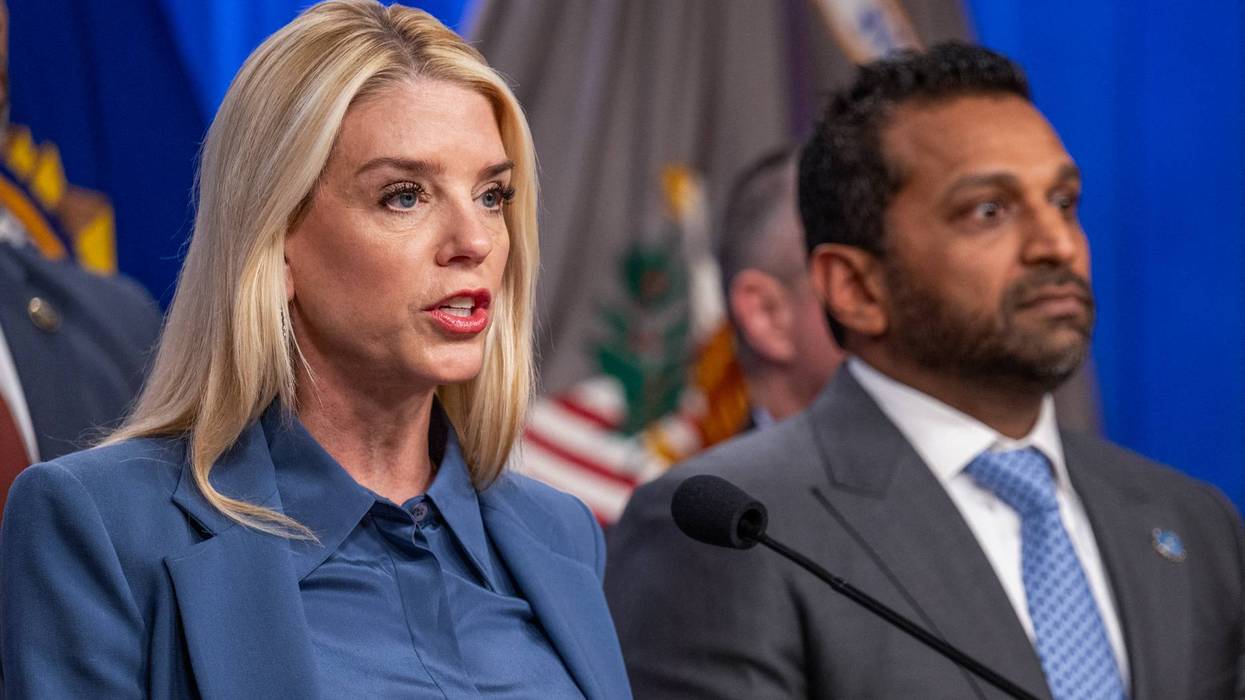
“The search and seizure of Washington Post reporter Hannah Natanson’s records is unconstitutional and illegal in its entirety," said one free press defender.
A US judge on Wednesday blocked federal prosecutors from searching data on a Washington Post reporter's electronic devices seized during what one press freedom group called an "unconstitutional and illegal" raid last week.
US Magistrate Judge William B. Porter in Alexandria, Virginia—who also authorized the January 14 raid of Post reporter Hannah Natanson's home—ruled that "the government must preserve but must not review any of the materials that law enforcement seized pursuant to search warrants the court issued."
The government has until January 28 to respond to the Post's initial legal filings against the agent's actions. Oral arguments in the case are scheduled for February 6.
Natanson—who describes her work as covering "Trump's reshaping of the government"—welcomed Wednesday's order.
"I need my devices back to do my job," she said on Bluesky.
Federal Bureau of Investigation investigators executed a warrant to search Natanson's Virginia home as part of a probe into Aurelio Perez-Lugones, a federal contractor who is accused of illegally possessing classified documents. FBI agents seized Natanson’s cellphone, her smart watch, and her personal and work laptops.
As Politico senior legal affairs reporter Kyle Cheney noted, the criminal complaint for Perez-Lugones’ case contains no allegations that he gave classified documents to any Post reporter, as implied by Attorney General Pam Bondi and FBI Director Kash Patel.
The Post said that the seized devices “contain years of information about past and current confidential sources and other unpublished newsgathering materials, including those she was using for current reporting."
“The government cannot meet its heavy burden to justify this intrusion, and it has ignored narrower, lawful alternatives,” the newspaper added.
As the Post noted Wednesday:
It is exceptionally rare for law enforcement officials to conduct searches at reporters’ homes. The law allows such searches, but federal regulations intended to protect a free press are designed to make it more difficult to use aggressive law enforcement tactics against reporters to obtain the identities of their sources...
The US has no law that explicitly makes it a crime for a journalist to obtain or publish classified information. In 2019, when WikiLeaks founder Julian Assange was indicted under the Espionage Act for disclosing classified information, First Amendment scholars warned that his case could set a precedent that could be used against journalists. That issue was never tested in court because Assange and the government reached a plea deal in 2024.
"The outrageous seizure of our reporter’s confidential newsgathering materials chills speech, cripples reporting, and inflicts irreparable harm every day the government keeps its hands on these materials,” the Post said in a statement. “We have asked the court to order the immediate return of all seized materials and prevent their use. Anything less would license future newsroom raids and normalize censorship by search warrant.”
Free press defenders cheered Porter's order.
“The search and seizure of Washington Post reporter Hannah Natanson’s records is unconstitutional and illegal in its entirety," Freedom of the Press Foundation chief of advocacy Seth Stern said in a statement. "But even the Trump administration’s policies require searches of journalists’ materials to be narrow and targeted and that authorities use filter teams and other measures to avoid searching protected records."
"That the administration wouldn’t follow its own guidelines shows that the raid on Natanson’s home wasn’t about any criminal investigation, and certainly wasn’t about national security," he added.
The search and seizure of @washingtonpost.com reporter @hannahnatanson.bsky.social's records is unconstitutional and illegal in its entirety.The judge was right to block it until a full hearing, at which time he should block it permanently.Read our statement: freedom.press/issues/judge...
[image or embed]
— Freedom of the Press Foundation (@freedom.press) January 21, 2026 at 2:30 PM
“This is the first time in US history that the government has searched a reporter’s home in a national security media leak investigation, seizing potentially a vast amount of confidential data and information," Reporters Committee for Freedom of the Press president Bruce Brown said in a statement. "The move imperils public interest reporting and will have ramifications far beyond this specific case."
Wednesday's order came two weeks after the Republican-controlled House Oversight Committee voted to subpoena Seth Harp, a journalist wrongly accused of “leaking classified intel” and “doxing” a US special forces commander involved in President Donald Trump’s invasion of Venezuela and abduction of the South American nation’s president and his wife.
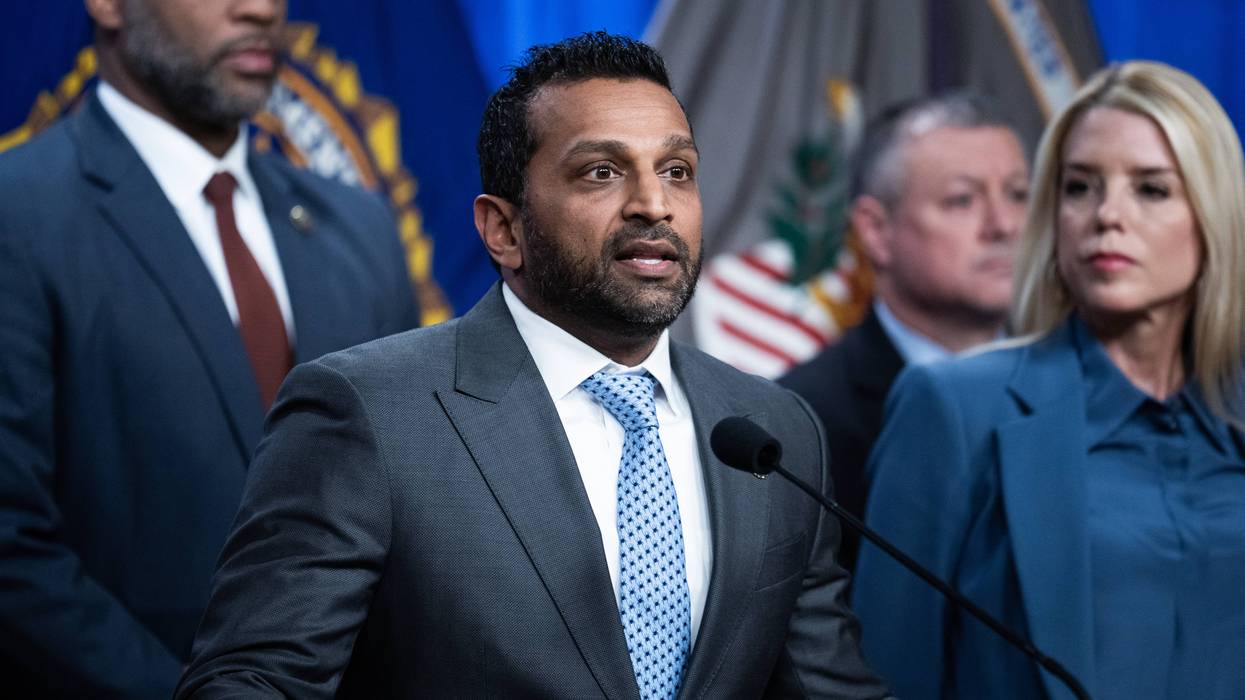
"This is a tremendous escalation in the administration’s intrusions into the independence of the press," said one First Amendment advocate.
A press freedom group on Wednesday accused the Trump administration of a "disturbing escalation" in its "war on the First Amendment" after the FBI executed a search warrant at the home of a Washington Post journalist who has extensively covered President Donald Trump's attempts to gut the federal workforce.
FBI agents reportedly conducted a search early Wednesday morning at the Virginia home of Hannah Natanson as part of an investigation into a federal contractor who is accused of illegally retaining classified documents.
"If true, this would be a serious violation of press freedom," said the Freedom of the Press Foundation in a social media post.
The Post reported that the agents seized Natanson's cellphone, Garmin watch, a personal laptop, and a laptop issued by the newspaper.
The warrant stated that the FBI was investigating Aurelio Perez-Lugones, a system administrator with top secret security clearance who has been accused of taking classified intelligence reports to his home in Maryland. The documents were found in his lunch box and basement, an FBI affidavit said.
Politico senior legal affairs reporter Kyle Cheney noted that the criminal complaint regarding Perez-Lugones' case does not mention allegations that he gave any classified documents to a reporter.
"The FBI's search and seizure of a journalist's personal and professional devices appears to be a serious violation of press freedom and underscores why we need to enact greater federal protections for both journalists and their sources," said Clayton Weimers, executive director of Reporters Without Borders North America. "Attorney General Pam Bondi confirmed the seizure is linked to an investigation into a federal contractor who is alleged to have leaked classified information. It's worth reiterating, though we shouldn't have to, that journalists have a constitutionally protected right to publish government secrets. We call for the FBI to immediately return Hannah Natanson's devices."
Jameel Jaffer, director of the Knight First Amendment Institute at Columbia University, told the New York Times that the FBI search at Natanson's home was "intensely concerning" and could chill "legitimate journalistic activity."
“There are important limits on the government’s authority to carry out searches that implicate First Amendment activity,” Jaffer said.
As the Committee to Protect Journalists notes in a guide to reporters' legal rights, the Privacy Protection Act of 1980 established high standards for searches and seizures of journalists' materials that are "reasonably believed to be related to media intended for dissemination to the public—including 'work product materials' (e.g., notes or voice memos containing mental impressions, conclusions, opinions, etc. of the person who prepared such materials) and 'documentary materials' (e.g., video tapes, audio tapes, photographs, and anything else physically documenting an event)."
"These materials generally cannot be searched or seized unless they are reasonably believed to relate to a crime committed by the person possessing the materials," reads the guide. "They may, however, be held for custodial storage incident to an arrest of the journalist possessing the materials, so long as the material is not searched and is returned to the arrestee intact."
Last year, the US Department of Justice (DOJ) ended a Biden-era policy that limited its ability to search or subpoena a reporter's data as part of investigations into leaks.
Attorney General Pam Bondi said the DOJ "will not tolerate unauthorized disclosures that undermine President Trump’s policies, victimize government agencies, and cause harm to the American people.”
Before becoming FBI director, Kash Patel said in 2023 that should Trump return to the White House, his administration would "come after people in the media" in efforts to target the president's enemies.
The Post reported Wednesday that "while it is not unusual for FBI agents to conduct leak investigations around reporters who publish sensitive government information, it is highly unusual and aggressive for law enforcement to conduct a search on a reporter’s home."
Natanson has spent much of Trump's second term thus far covering his efforts to fire federal employees, tens of thousands of whom have been dismissed as the president seeks to ensure the entire government workforce is pushing forward his right-wing agenda.
She wrote an essay last month for the Post in which she described being inundated with messages over the past year from more than 1,000 federal employees who wanted to tell her "how President Donald Trump was rewriting their workplace policies, firing their colleagues, or transforming their agency’s missions." She has written about the toll the mass firings have had on workers' mental health.
Bruce D. Brown, president of the Reporters Committee for Freedom of the Press, said in a statement that "physical searches of reporters’ devices, homes, and belongings are some of the most invasive investigative steps law enforcement can take."
"There are specific federal laws and policies at the Department of Justice that are meant to limit searches to the most extreme cases because they endanger confidential sources far beyond just one investigation and impair public interest reporting in general," said Brown. "While we won’t know the government’s arguments about overcoming these very steep hurdles until the affidavit is made public, this is a tremendous escalation in the administration’s intrusions into the independence of the press.”
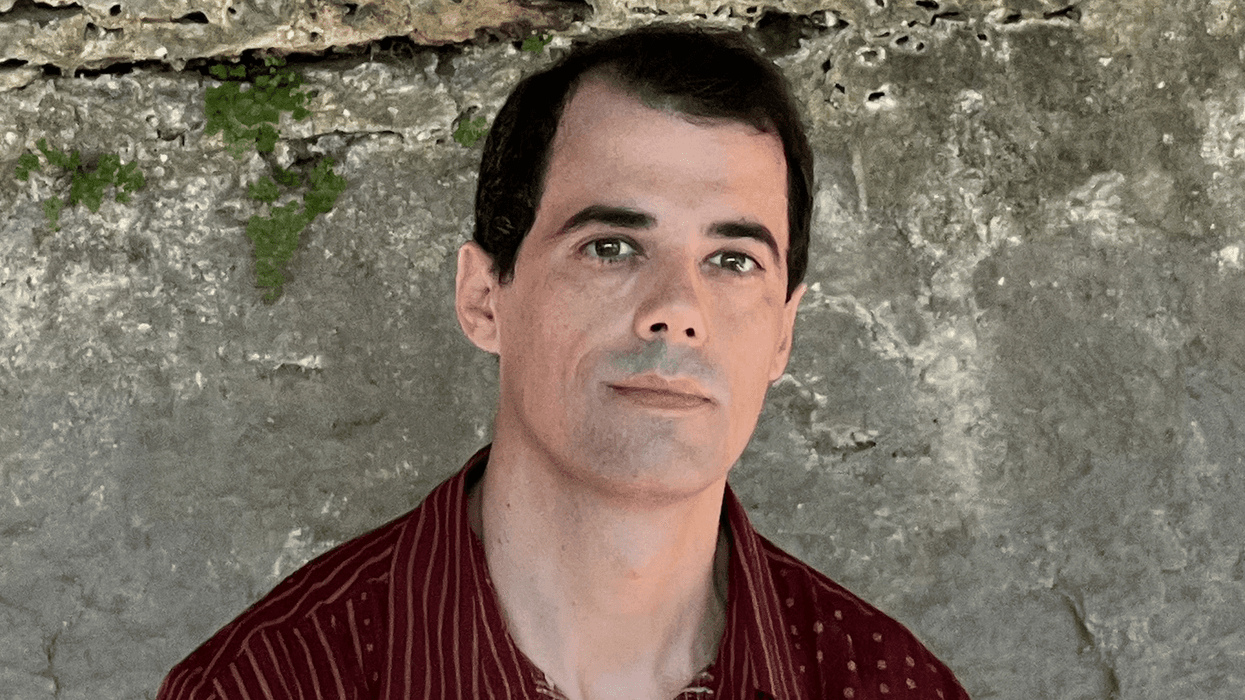
One expert asserted that the House vote to subpoena Seth Harp "is clearly designed to chill and intimidate" journalists from reporting on government policies and practices.
Free press defenders voiced alarm and outrage following Wednesday's vote by a congressional committee to subpoena a journalist wrongly accused of "leaking classified intel" and "doxing" a US special forces commander involved in President Donald Trump's invasion of Venezuela and abduction of the South American nation's president and his wife.
Seth Harp is an investigative journalist, New York Times bestselling author, and Iraq war veteran whose work focuses on links between the US military and organized crime. On January 4—the day after the US bombed and invaded Venezuela and kidnapped Venezuelan President Nicolás Maduro and his wife, Cilia Flores—Harp posted on X the name and photo of a commander in Delta Force, which played a key role in the attack.
Experts noted that Harp did not break any laws, with Freedom of the Press Foundation chief of advocacy Seth Stern pointing out that "reporters have a constitutional right to publish even classified leaks as long as they don’t commit crimes to obtain them."
“Harp merely published information that was publicly available about someone at the center of the world’s biggest news story," he added.
However, the House Oversight Committee on Wednesday approved in a voice vote a motion introduced the previous day by Congresswoman Anna Paulina Luna (R-Fla.) to subpoena Harper. Democrats on the committee backed the measure after Rep. Robert Garcia (D-Calif.) added an amendment to also subpoena co-executors of Jeffrey Epstein's estate, according to the Washington Post.
Responding to the committee vote, Harp told the Post:
The idea of a reporter "leaking classified intel" is a contradiction in terms. The First Amendment and ironclad Supreme Court precedent permit journalists to publish classified documents. We don’t work for the government and it’s our job to expose secrets, not protect them for the convenience of high-ranking officials. It’s not “doxing" to point out which high-ranking military officials are involved in breaking news events. That’s information that the public has a right to know.
Harp also took to social media to underscore that he's not the only journalist being targeted with dubious "doxing" claims.
The House lawmakers' vote drew widespread condemnation from press freedom advocates.
“Luna’s subpoena of investigative reporter Seth Harp is clearly designed to chill and intimidate a journalist doing some of the most significant investigative reporting on US special forces," Defending Rights & Dissent policy director Chip Gibbons said in a statement.
"Harp did not share classified information about the US regime change operation in Venezuela. And even if he had, his actions would firmly be protected by the First Amendment," Gibbons added. "This is a dangerous assault on the press freedom, as well as the US people’s right to know. It is shameful it passed the committee.”
PEN America Journalism and Disinformation program director Tim Richardson said Thursday that “any attempt to haul an investigative reporter before Congress for doing their job reflects a fundamental misunderstanding of the role of a free press."
"Seth Harp is an independent journalist, not a government official, and therefore cannot be accused of ‘leaking’ classified information in the way those entrusted with such material can," Richardson added. "The information at issue was publicly available, not secret or unlawfully obtained."
In a bid to protect reporters and their sources, House lawmakers in 2024 unanimously passed the PRESS Act, legislation prohibiting the federal government from compelling journalists and telecommunications companies to disclose certain information, with exceptions for imminent violence or terrorism. However, under pressure from Trump, the Senate declined to vote on the proposal.
"The bill died after Trump ordered the Senate to kill it on Truth Social," said Stern. "Apparently, so did the principles of Reps. Luna, Garcia, and their colleagues.”
"Now is a time when press freedom is in jeopardy, and it's essential that courts stop prosecutors from twisting the law to silence news the government doesn't like."
Amid rising concerns over US President Donald Trump's authoritarianism, including attacks on the media, press freedom advocates on Friday celebrated the dismissal of some federal charges against a journalist indicted during the Biden administration.
"This ruling is a significant victory for free expression and press freedom, and it will help restore confidence that journalists, researchers, and members of the public are not breaking federal law simply by accessing or reviewing streaming information," said Bobby Block, executive director of the Florida First Amendment Foundation, which had filed an amicus brief with other advocacy groups.
US District Judge Kathryn Kimball Mizelle—appointed to the Middle District of Florida by Trump during his first term—dismissed seven of the 14 charges against Tampa-based media consultant and journalist Timothy Burke on Thursday.
Burke was arrested and charged last year after obtaining and disseminating unaired 2022 footage from Tucker Carlson's former show on Fox News, including antisemitic remarks by Ye, the rapper formerly known as Kanye West.
"In this case, the government argues that it can prove a Wiretap Act violation solely by showing that a defendant intentionally acquired a communication using a device and that the many exceptions to the Wiretap Act are not elements of the crime but instead defenses to be raised by a criminal defendant," the judge wrote. "Significant First Amendment concerns arise if I were to adopt the government's theory."
"The court recognized that the government's theory not only posed serious threats to press freedom, but also to anyone engaged in everyday internet activity."
Seth Stern, director of advocacy at the Freedom of the Press Foundation, explained that "the prosecution's theory would have allowed not only journalists but anyone who watched a livestream to be forced to defend themselves in court to stay out of prison. It would be naive to think the government wouldn’t abuse that kind of power."
Stern expressed relief at the judge's dismissal decision, while Yanni Chen, legal director at the group Free Press, called it "a crucial victory for the First Amendment—for journalists, for internet users, and, most immediately, for Timothy Burke."
"The court recognized that the government's theory not only posed serious threats to press freedom, but also to anyone engaged in everyday internet activity," Chen said. "At a time when journalists face increasing risks for doing their jobs of holding power to account, this ruling affirms the essential protections they deserve and sends a clear message: The law cannot be twisted to criminalize newsgathering."
Jennifer Stisa Granick, surveillance and cybersecurity counsel with the ACLU's Speech, Privacy, and Technology Project, also pointed to threats under the current US government, saying that "now is a time when press freedom is in jeopardy and it's essential that courts stop prosecutors from twisting the law to silence news the government doesn't like."
"The Wiretap Act protects our privacy; it doesn't criminalize journalists whose reporting relies on online sources," she stressed. "Tim Burke's case isn't the first example of this kind of abuse, but hopefully it will be the last."
In a social media post late Thursday, Burke thanked not only his "overworked and underpaid legal team" but also the press freedom groups that submitted amicus briefs in this case.
Thanks not only to my overworked and underpaid legal team, of course, but also the ACLU, EFF, Reporters Committee for Freedom of the Press, & other organizations whose amicus briefs played such a large role in helping the court come to this decision.
[image or embed]
— Timothy Burke (@bubbaprog.xyz) September 25, 2025 at 11:44 PM
Burke also stressed that the case against him continues, saying, "To be clear, only the wiretap charges (which were half of the total) have been dismissed, though they were certainly the far more serious of the allegations and I'm grateful the court has found them to be deficient."
Last month, Judge Charlene Edwards Honeywell—appointed to the Middle District of Florida by former President Barack Obama—sentenced Marco Gaudino to five years of probation with a year of house arrest for his role in helping Burke gain unauthorized access to the videos. Gaudino pleaded guilty to a single conspiracy charge and agreed to cooperate with prosecutors against Burke.