SUBSCRIBE TO OUR FREE NEWSLETTER
Daily news & progressive opinion—funded by the people, not the corporations—delivered straight to your inbox.
5
#000000
#FFFFFF
To donate by check, phone, or other method, see our More Ways to Give page.
Daily news & progressive opinion—funded by the people, not the corporations—delivered straight to your inbox.
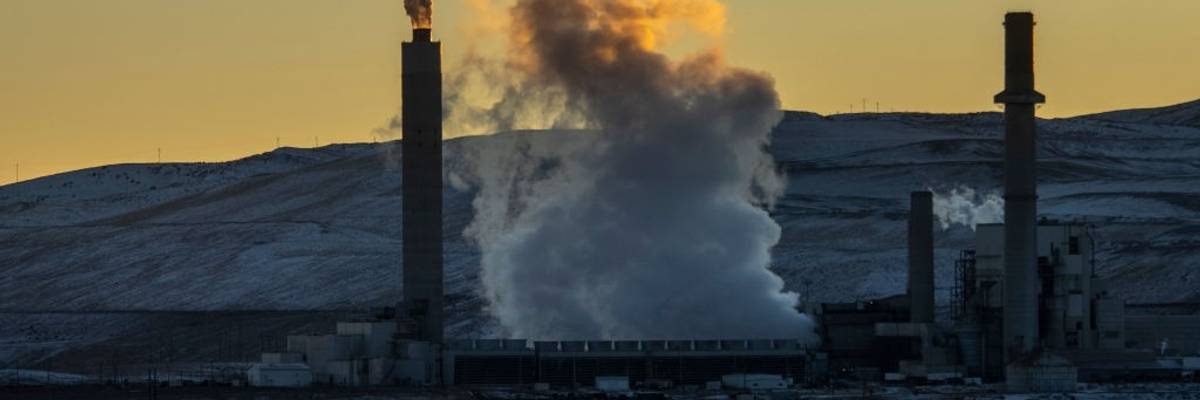
A mixture of steam and pollutants are emitted from the Naughton coal-fired power plant on November 22, 2022 in Kemmerer, Wyoming.
"Fossil fuel interests lost, and clean air won," one group declared.
The climate movement on Wednesday welcomed a victory at the U.S. Supreme Court, the third temporary win for the Biden administration's environmental policies this month.
Although the right-wing justices have a record of rulings that have alarmed environmental and public health groups, the high court declined to block an Environmental Protection Agency (EPA) rule intended to limit power plants' planet-heating pollution as a legal challenge to the April policy plays out.
"Given its rulings in recent years undercutting environmental protections, the refusal of the majority on the Supreme Court to block this vital rule is a victory for common sense. This warrants a sigh of relief from the millions of Americans experiencing the impact of the climate crisis," said Meredith Hankins, a senior attorney at the Natural Resources Defense Council.
"Today's ruling rejects the latest abuse of the Supreme Court's shadow docket by industry and some state attorneys general. The high court made the right call," she continued. "The Supreme Court evidently saw through their phony arguments."
"Power producers don't need immediate relief from modest standards that kick in eight years from now. And states have plenty of time to begin their planning process," Hankins stressed. "Now the case goes back to the D.C. Circuit Court of Appeals, which is moving quickly to decide the merits of this case. We will be helping to defend the standards there. The climate crisis demands that we do."
Margie Alt, director of the Climate Action Campaign, similarly said that "the climate crisis is actually an emergency affecting tens of millions of people across the globe every day. Today the court rejected the big polluters' attempt to seek an emergency stay based on their trumped-up allegations. We are in the middle of what will be the hottest year on record, with devastating and deadly extreme storms occurring regularly."
"The EPA's carbon pollution standards for power plants set reasonable targets for utilities and states to cut their carbon pollution, allowing years for them to meet those goals. The Supreme Court's decision rejected the big polluter arguments against slashing carbon pollution and paved the way for less climate pollution in the future," Alt added. "Of course, the fight isn't over. The D.C. Circuit must still rule on the merits. We support the EPA's authority to set commonsense pollution protections to slash climate pollution and protect our kids and communities from climate change and other dangerous air pollution."
The decision came after the justices in early October rejected industry-backed petitions to issue injunctions on new Biden administration rules for methane and mercury. However, conservative Justice Samuel Alito did not participate in Wednesday's decision due to financial conflicts and Justice Clarence Thomas said he would have granted the emergency request from GOP-led states and groups to block the rule.
Additionally, Justice Brett Kavanaugh, joined by Justice Neil Gorsuch, said the states and groups "have shown a strong likelihood of success on the merits as to at least some of their challenges," but there is no need for emergency action at this time "because the applicants need not start compliance work until June 2025," so "they are unlikely to suffer irreparable harm" before a final decision.
As The New York Times reported Wednesday:
The dispute was the latest bid by Republican-led states to undercut the Biden administration's ambitious climate agenda. The challenge carries similarities to a case the Supreme Court considered in the term that ended in July. Three states, Ohio, Indiana, and West Virginia, joined with industry groups to challenge an EPA proposal aimed at limiting the flow of air pollution across state lines, asking the Supreme Court to intervene even as the challenge continued to be litigated in lower courts.
In June, the justices paused the proposal, known as the "good neighbor" plan, which requires factories and power plants in the West and Midwest to cut ozone pollution that makes its way into Eastern states.
Although green groups are pushing to preserve the April policy, some have argued that the Biden administration should have gone further with its actions to combat the fossil fuel-driven climate emergency.
Climate Justice Alliance interim executive director KD Chavez said Wednesday that while the group applauds the path the latest Supreme Court decision "charts for what can be construed as a coal phaseout, this rule is still riddled with loopholes that give a lifeline to the fossil fuel industry to continue operations and experiment on frontline communities by exposing them to the dangers and health effects of unproven technologies such as carbon capture and storage."
"The rule does not go far enough to push the needle towards a fossil fuel phaseout and a just transition for the energy sector, the communities where energy projects are sited, and the workers who could tap into renewable energy jobs," Chavez emphasized. "Frontline communities deserve more, and given this rule won't be applied until next year, we will continue to work to ensure stronger power plant regulations that meet the growing threat of climate catastrophe we all currently face."
Dear Common Dreams reader, It’s been nearly 30 years since I co-founded Common Dreams with my late wife, Lina Newhouser. We had the radical notion that journalism should serve the public good, not corporate profits. It was clear to us from the outset what it would take to build such a project. No paid advertisements. No corporate sponsors. No millionaire publisher telling us what to think or do. Many people said we wouldn't last a year, but we proved those doubters wrong. Together with a tremendous team of journalists and dedicated staff, we built an independent media outlet free from the constraints of profits and corporate control. Our mission has always been simple: To inform. To inspire. To ignite change for the common good. Building Common Dreams was not easy. Our survival was never guaranteed. When you take on the most powerful forces—Wall Street greed, fossil fuel industry destruction, Big Tech lobbyists, and uber-rich oligarchs who have spent billions upon billions rigging the economy and democracy in their favor—the only bulwark you have is supporters who believe in your work. But here’s the urgent message from me today. It's never been this bad out there. And it's never been this hard to keep us going. At the very moment Common Dreams is most needed, the threats we face are intensifying. We need your support now more than ever. We don't accept corporate advertising and never will. We don't have a paywall because we don't think people should be blocked from critical news based on their ability to pay. Everything we do is funded by the donations of readers like you. When everyone does the little they can afford, we are strong. But if that support retreats or dries up, so do we. Will you donate now to make sure Common Dreams not only survives but thrives? —Craig Brown, Co-founder |
The climate movement on Wednesday welcomed a victory at the U.S. Supreme Court, the third temporary win for the Biden administration's environmental policies this month.
Although the right-wing justices have a record of rulings that have alarmed environmental and public health groups, the high court declined to block an Environmental Protection Agency (EPA) rule intended to limit power plants' planet-heating pollution as a legal challenge to the April policy plays out.
"Given its rulings in recent years undercutting environmental protections, the refusal of the majority on the Supreme Court to block this vital rule is a victory for common sense. This warrants a sigh of relief from the millions of Americans experiencing the impact of the climate crisis," said Meredith Hankins, a senior attorney at the Natural Resources Defense Council.
"Today's ruling rejects the latest abuse of the Supreme Court's shadow docket by industry and some state attorneys general. The high court made the right call," she continued. "The Supreme Court evidently saw through their phony arguments."
"Power producers don't need immediate relief from modest standards that kick in eight years from now. And states have plenty of time to begin their planning process," Hankins stressed. "Now the case goes back to the D.C. Circuit Court of Appeals, which is moving quickly to decide the merits of this case. We will be helping to defend the standards there. The climate crisis demands that we do."
Margie Alt, director of the Climate Action Campaign, similarly said that "the climate crisis is actually an emergency affecting tens of millions of people across the globe every day. Today the court rejected the big polluters' attempt to seek an emergency stay based on their trumped-up allegations. We are in the middle of what will be the hottest year on record, with devastating and deadly extreme storms occurring regularly."
"The EPA's carbon pollution standards for power plants set reasonable targets for utilities and states to cut their carbon pollution, allowing years for them to meet those goals. The Supreme Court's decision rejected the big polluter arguments against slashing carbon pollution and paved the way for less climate pollution in the future," Alt added. "Of course, the fight isn't over. The D.C. Circuit must still rule on the merits. We support the EPA's authority to set commonsense pollution protections to slash climate pollution and protect our kids and communities from climate change and other dangerous air pollution."
The decision came after the justices in early October rejected industry-backed petitions to issue injunctions on new Biden administration rules for methane and mercury. However, conservative Justice Samuel Alito did not participate in Wednesday's decision due to financial conflicts and Justice Clarence Thomas said he would have granted the emergency request from GOP-led states and groups to block the rule.
Additionally, Justice Brett Kavanaugh, joined by Justice Neil Gorsuch, said the states and groups "have shown a strong likelihood of success on the merits as to at least some of their challenges," but there is no need for emergency action at this time "because the applicants need not start compliance work until June 2025," so "they are unlikely to suffer irreparable harm" before a final decision.
As The New York Times reported Wednesday:
The dispute was the latest bid by Republican-led states to undercut the Biden administration's ambitious climate agenda. The challenge carries similarities to a case the Supreme Court considered in the term that ended in July. Three states, Ohio, Indiana, and West Virginia, joined with industry groups to challenge an EPA proposal aimed at limiting the flow of air pollution across state lines, asking the Supreme Court to intervene even as the challenge continued to be litigated in lower courts.
In June, the justices paused the proposal, known as the "good neighbor" plan, which requires factories and power plants in the West and Midwest to cut ozone pollution that makes its way into Eastern states.
Although green groups are pushing to preserve the April policy, some have argued that the Biden administration should have gone further with its actions to combat the fossil fuel-driven climate emergency.
Climate Justice Alliance interim executive director KD Chavez said Wednesday that while the group applauds the path the latest Supreme Court decision "charts for what can be construed as a coal phaseout, this rule is still riddled with loopholes that give a lifeline to the fossil fuel industry to continue operations and experiment on frontline communities by exposing them to the dangers and health effects of unproven technologies such as carbon capture and storage."
"The rule does not go far enough to push the needle towards a fossil fuel phaseout and a just transition for the energy sector, the communities where energy projects are sited, and the workers who could tap into renewable energy jobs," Chavez emphasized. "Frontline communities deserve more, and given this rule won't be applied until next year, we will continue to work to ensure stronger power plant regulations that meet the growing threat of climate catastrophe we all currently face."
The climate movement on Wednesday welcomed a victory at the U.S. Supreme Court, the third temporary win for the Biden administration's environmental policies this month.
Although the right-wing justices have a record of rulings that have alarmed environmental and public health groups, the high court declined to block an Environmental Protection Agency (EPA) rule intended to limit power plants' planet-heating pollution as a legal challenge to the April policy plays out.
"Given its rulings in recent years undercutting environmental protections, the refusal of the majority on the Supreme Court to block this vital rule is a victory for common sense. This warrants a sigh of relief from the millions of Americans experiencing the impact of the climate crisis," said Meredith Hankins, a senior attorney at the Natural Resources Defense Council.
"Today's ruling rejects the latest abuse of the Supreme Court's shadow docket by industry and some state attorneys general. The high court made the right call," she continued. "The Supreme Court evidently saw through their phony arguments."
"Power producers don't need immediate relief from modest standards that kick in eight years from now. And states have plenty of time to begin their planning process," Hankins stressed. "Now the case goes back to the D.C. Circuit Court of Appeals, which is moving quickly to decide the merits of this case. We will be helping to defend the standards there. The climate crisis demands that we do."
Margie Alt, director of the Climate Action Campaign, similarly said that "the climate crisis is actually an emergency affecting tens of millions of people across the globe every day. Today the court rejected the big polluters' attempt to seek an emergency stay based on their trumped-up allegations. We are in the middle of what will be the hottest year on record, with devastating and deadly extreme storms occurring regularly."
"The EPA's carbon pollution standards for power plants set reasonable targets for utilities and states to cut their carbon pollution, allowing years for them to meet those goals. The Supreme Court's decision rejected the big polluter arguments against slashing carbon pollution and paved the way for less climate pollution in the future," Alt added. "Of course, the fight isn't over. The D.C. Circuit must still rule on the merits. We support the EPA's authority to set commonsense pollution protections to slash climate pollution and protect our kids and communities from climate change and other dangerous air pollution."
The decision came after the justices in early October rejected industry-backed petitions to issue injunctions on new Biden administration rules for methane and mercury. However, conservative Justice Samuel Alito did not participate in Wednesday's decision due to financial conflicts and Justice Clarence Thomas said he would have granted the emergency request from GOP-led states and groups to block the rule.
Additionally, Justice Brett Kavanaugh, joined by Justice Neil Gorsuch, said the states and groups "have shown a strong likelihood of success on the merits as to at least some of their challenges," but there is no need for emergency action at this time "because the applicants need not start compliance work until June 2025," so "they are unlikely to suffer irreparable harm" before a final decision.
As The New York Times reported Wednesday:
The dispute was the latest bid by Republican-led states to undercut the Biden administration's ambitious climate agenda. The challenge carries similarities to a case the Supreme Court considered in the term that ended in July. Three states, Ohio, Indiana, and West Virginia, joined with industry groups to challenge an EPA proposal aimed at limiting the flow of air pollution across state lines, asking the Supreme Court to intervene even as the challenge continued to be litigated in lower courts.
In June, the justices paused the proposal, known as the "good neighbor" plan, which requires factories and power plants in the West and Midwest to cut ozone pollution that makes its way into Eastern states.
Although green groups are pushing to preserve the April policy, some have argued that the Biden administration should have gone further with its actions to combat the fossil fuel-driven climate emergency.
Climate Justice Alliance interim executive director KD Chavez said Wednesday that while the group applauds the path the latest Supreme Court decision "charts for what can be construed as a coal phaseout, this rule is still riddled with loopholes that give a lifeline to the fossil fuel industry to continue operations and experiment on frontline communities by exposing them to the dangers and health effects of unproven technologies such as carbon capture and storage."
"The rule does not go far enough to push the needle towards a fossil fuel phaseout and a just transition for the energy sector, the communities where energy projects are sited, and the workers who could tap into renewable energy jobs," Chavez emphasized. "Frontline communities deserve more, and given this rule won't be applied until next year, we will continue to work to ensure stronger power plant regulations that meet the growing threat of climate catastrophe we all currently face."