

SUBSCRIBE TO OUR FREE NEWSLETTER
Daily news & progressive opinion—funded by the people, not the corporations—delivered straight to your inbox.
5
#000000
#FFFFFF
To donate by check, phone, or other method, see our More Ways to Give page.
Daily news & progressive opinion—funded by the people, not the corporations—delivered straight to your inbox.
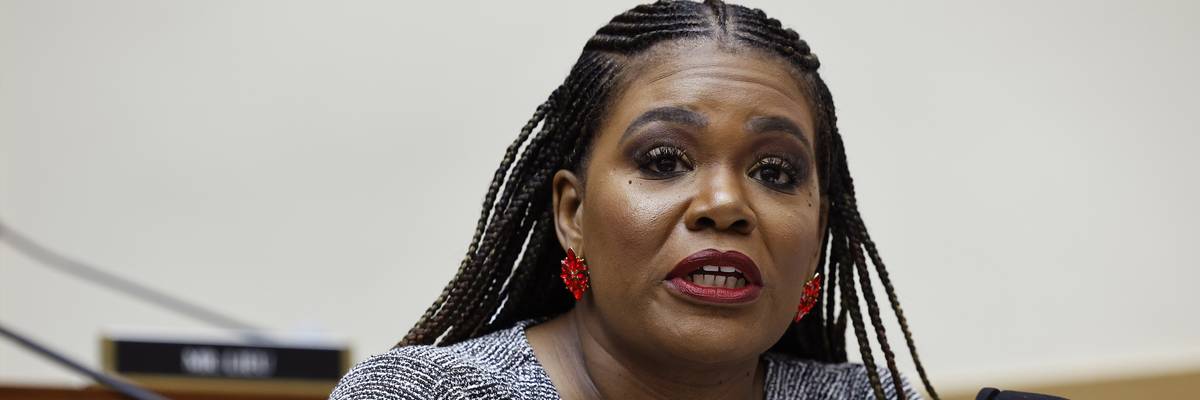
Rep. Cori Bush (D-Mo.) speaks during a House Judiciary Committee hearing on March 12, 2024.
"The Comstock Act must be repealed," said the Missouri Democrat.
Rep. Cori Bush on Tuesday called for the repeal of a long-obsolete law that anti-abortion activists, lawmakers, and judges have worked to revive as part of their nationwide assault on reproductive rights.
"The Comstock Act must be repealed," Bush (D-Mo.) wrote in a social media post on Tuesday as the U.S. Supreme Court heard oral arguments in a case brought by a group of anti-abortion doctors aiming to curtail access to mifepristone—a medication used in more than 60% of U.S. abortions.
"Enacted in 1873, it is a zombie statute, a dead law that the far-right is trying to reanimate," Bush warned. "The anti-abortion movement wants to weaponize the Comstock Act as a quick route to a nationwide medication abortion ban. Not on our watch."
Bush's office said she was the first member of Congress to demand the law's repeal since the U.S. Supreme Court overturned the constitutional right to abortion in the summer of 2022.
The Comstock Act, which hasn't been applied in a century and was repeatedly narrowed following its enactment, prohibits the mailing of any "instrument, substance, drug, medicine, or thing" that "may, or can, be used or applied for producing abortion." Legal experts have described the dormant law as the "most significant national threat to reproductive rights."
Given that "virtually everything used for an abortion—from abortion pills, to the instruments for abortion procedures, to clinic supplies—gets mailed to providers in some form," a trio of experts wrote earlier this year, the anti-abortion movement's "interpretation of the Comstock Act could mean a nationwide ban on all abortions, even in states where it remains legal."
"Enforcing a Victorian-era law would be deeply unpopular and Democrats have a chance to sound the alarm, take action in both chambers, and run on it."
The Biden Justice Department has argued that the Comstock Act "does not prohibit the mailing of certain drugs that can be used to perform abortions where the sender lacks the intent that the recipient of the drugs will use them unlawfully."
But the law has nevertheless been cited with growing frequency by far-right advocacy groups and judges following the overturning of Roe v. Wade.
In 2023, a Trump-appointed federal judge in Texas, Matthew Kacsmaryk, invoked the Comstock Act in a decision suspending the Food and Drug Administration's 2000 approval of mifepristone. In 2021, the FDA said it would allow patients to receive abortion medication by mail—which Kacsmaryk claimed the Comstock Act "plainly forecloses."
That case, which has massive implications for abortion rights nationwide, is now before the U.S. Supreme Court.
During oral arguments on Tuesday, Justices Justices Samuel Alito and Clarence Thomas "repeatedly invoked the Comstock Act," The Washington Post reported, "pressing lawyers about whether the 1873 federal law should apply to abortion drugs sent through the mail today."
The justices' comments raised concerns that they could try to resurrect the Comstock Act in their coming ruling in the mifepristone case.
"While the Biden administration has issued guidance saying that the federal government
will not enforce the laws," the Post noted, "a future administration seeking to restrict abortion could choose to do so."
Donald Trump, the former president and presumptive 2024 Republican nominee, has expressed support for a national abortion ban.
Jezebel's Susan Rinkunas wrote Tuesday that "enforcing a Victorian-era law would be deeply unpopular and Democrats have a chance to sound the alarm, take action in both chambers, and run on it."
"We definitively have one lawmaker on board," Rinkunas added, referring to Bush. "Who's next?"
Dear Common Dreams reader, It’s been nearly 30 years since I co-founded Common Dreams with my late wife, Lina Newhouser. We had the radical notion that journalism should serve the public good, not corporate profits. It was clear to us from the outset what it would take to build such a project. No paid advertisements. No corporate sponsors. No millionaire publisher telling us what to think or do. Many people said we wouldn't last a year, but we proved those doubters wrong. Together with a tremendous team of journalists and dedicated staff, we built an independent media outlet free from the constraints of profits and corporate control. Our mission has always been simple: To inform. To inspire. To ignite change for the common good. Building Common Dreams was not easy. Our survival was never guaranteed. When you take on the most powerful forces—Wall Street greed, fossil fuel industry destruction, Big Tech lobbyists, and uber-rich oligarchs who have spent billions upon billions rigging the economy and democracy in their favor—the only bulwark you have is supporters who believe in your work. But here’s the urgent message from me today. It's never been this bad out there. And it's never been this hard to keep us going. At the very moment Common Dreams is most needed, the threats we face are intensifying. We need your support now more than ever. We don't accept corporate advertising and never will. We don't have a paywall because we don't think people should be blocked from critical news based on their ability to pay. Everything we do is funded by the donations of readers like you. When everyone does the little they can afford, we are strong. But if that support retreats or dries up, so do we. Will you donate now to make sure Common Dreams not only survives but thrives? —Craig Brown, Co-founder |
Rep. Cori Bush on Tuesday called for the repeal of a long-obsolete law that anti-abortion activists, lawmakers, and judges have worked to revive as part of their nationwide assault on reproductive rights.
"The Comstock Act must be repealed," Bush (D-Mo.) wrote in a social media post on Tuesday as the U.S. Supreme Court heard oral arguments in a case brought by a group of anti-abortion doctors aiming to curtail access to mifepristone—a medication used in more than 60% of U.S. abortions.
"Enacted in 1873, it is a zombie statute, a dead law that the far-right is trying to reanimate," Bush warned. "The anti-abortion movement wants to weaponize the Comstock Act as a quick route to a nationwide medication abortion ban. Not on our watch."
Bush's office said she was the first member of Congress to demand the law's repeal since the U.S. Supreme Court overturned the constitutional right to abortion in the summer of 2022.
The Comstock Act, which hasn't been applied in a century and was repeatedly narrowed following its enactment, prohibits the mailing of any "instrument, substance, drug, medicine, or thing" that "may, or can, be used or applied for producing abortion." Legal experts have described the dormant law as the "most significant national threat to reproductive rights."
Given that "virtually everything used for an abortion—from abortion pills, to the instruments for abortion procedures, to clinic supplies—gets mailed to providers in some form," a trio of experts wrote earlier this year, the anti-abortion movement's "interpretation of the Comstock Act could mean a nationwide ban on all abortions, even in states where it remains legal."
"Enforcing a Victorian-era law would be deeply unpopular and Democrats have a chance to sound the alarm, take action in both chambers, and run on it."
The Biden Justice Department has argued that the Comstock Act "does not prohibit the mailing of certain drugs that can be used to perform abortions where the sender lacks the intent that the recipient of the drugs will use them unlawfully."
But the law has nevertheless been cited with growing frequency by far-right advocacy groups and judges following the overturning of Roe v. Wade.
In 2023, a Trump-appointed federal judge in Texas, Matthew Kacsmaryk, invoked the Comstock Act in a decision suspending the Food and Drug Administration's 2000 approval of mifepristone. In 2021, the FDA said it would allow patients to receive abortion medication by mail—which Kacsmaryk claimed the Comstock Act "plainly forecloses."
That case, which has massive implications for abortion rights nationwide, is now before the U.S. Supreme Court.
During oral arguments on Tuesday, Justices Justices Samuel Alito and Clarence Thomas "repeatedly invoked the Comstock Act," The Washington Post reported, "pressing lawyers about whether the 1873 federal law should apply to abortion drugs sent through the mail today."
The justices' comments raised concerns that they could try to resurrect the Comstock Act in their coming ruling in the mifepristone case.
"While the Biden administration has issued guidance saying that the federal government
will not enforce the laws," the Post noted, "a future administration seeking to restrict abortion could choose to do so."
Donald Trump, the former president and presumptive 2024 Republican nominee, has expressed support for a national abortion ban.
Jezebel's Susan Rinkunas wrote Tuesday that "enforcing a Victorian-era law would be deeply unpopular and Democrats have a chance to sound the alarm, take action in both chambers, and run on it."
"We definitively have one lawmaker on board," Rinkunas added, referring to Bush. "Who's next?"
Rep. Cori Bush on Tuesday called for the repeal of a long-obsolete law that anti-abortion activists, lawmakers, and judges have worked to revive as part of their nationwide assault on reproductive rights.
"The Comstock Act must be repealed," Bush (D-Mo.) wrote in a social media post on Tuesday as the U.S. Supreme Court heard oral arguments in a case brought by a group of anti-abortion doctors aiming to curtail access to mifepristone—a medication used in more than 60% of U.S. abortions.
"Enacted in 1873, it is a zombie statute, a dead law that the far-right is trying to reanimate," Bush warned. "The anti-abortion movement wants to weaponize the Comstock Act as a quick route to a nationwide medication abortion ban. Not on our watch."
Bush's office said she was the first member of Congress to demand the law's repeal since the U.S. Supreme Court overturned the constitutional right to abortion in the summer of 2022.
The Comstock Act, which hasn't been applied in a century and was repeatedly narrowed following its enactment, prohibits the mailing of any "instrument, substance, drug, medicine, or thing" that "may, or can, be used or applied for producing abortion." Legal experts have described the dormant law as the "most significant national threat to reproductive rights."
Given that "virtually everything used for an abortion—from abortion pills, to the instruments for abortion procedures, to clinic supplies—gets mailed to providers in some form," a trio of experts wrote earlier this year, the anti-abortion movement's "interpretation of the Comstock Act could mean a nationwide ban on all abortions, even in states where it remains legal."
"Enforcing a Victorian-era law would be deeply unpopular and Democrats have a chance to sound the alarm, take action in both chambers, and run on it."
The Biden Justice Department has argued that the Comstock Act "does not prohibit the mailing of certain drugs that can be used to perform abortions where the sender lacks the intent that the recipient of the drugs will use them unlawfully."
But the law has nevertheless been cited with growing frequency by far-right advocacy groups and judges following the overturning of Roe v. Wade.
In 2023, a Trump-appointed federal judge in Texas, Matthew Kacsmaryk, invoked the Comstock Act in a decision suspending the Food and Drug Administration's 2000 approval of mifepristone. In 2021, the FDA said it would allow patients to receive abortion medication by mail—which Kacsmaryk claimed the Comstock Act "plainly forecloses."
That case, which has massive implications for abortion rights nationwide, is now before the U.S. Supreme Court.
During oral arguments on Tuesday, Justices Justices Samuel Alito and Clarence Thomas "repeatedly invoked the Comstock Act," The Washington Post reported, "pressing lawyers about whether the 1873 federal law should apply to abortion drugs sent through the mail today."
The justices' comments raised concerns that they could try to resurrect the Comstock Act in their coming ruling in the mifepristone case.
"While the Biden administration has issued guidance saying that the federal government
will not enforce the laws," the Post noted, "a future administration seeking to restrict abortion could choose to do so."
Donald Trump, the former president and presumptive 2024 Republican nominee, has expressed support for a national abortion ban.
Jezebel's Susan Rinkunas wrote Tuesday that "enforcing a Victorian-era law would be deeply unpopular and Democrats have a chance to sound the alarm, take action in both chambers, and run on it."
"We definitively have one lawmaker on board," Rinkunas added, referring to Bush. "Who's next?"

