SUBSCRIBE TO OUR FREE NEWSLETTER
Daily news & progressive opinion—funded by the people, not the corporations—delivered straight to your inbox.
5
#000000
#FFFFFF
To donate by check, phone, or other method, see our More Ways to Give page.
Daily news & progressive opinion—funded by the people, not the corporations—delivered straight to your inbox.
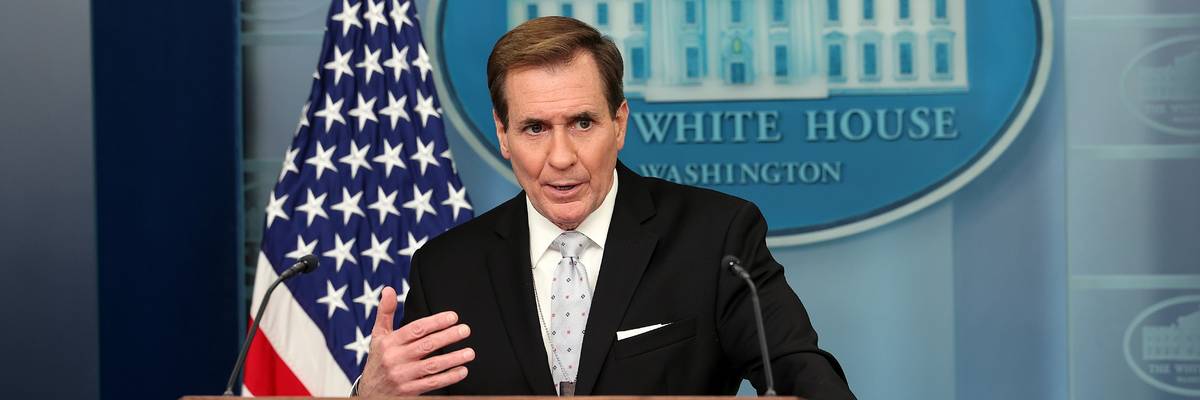
John Kirby, coordinator for strategic communications at the National Security Council in the White House, speaks at a daily press briefing on January 26, 2024.
"But the U.S. can snap to its senses, end the Gaza war, and climb down from pointless escalations across the Middle East," said one observer.
Since October, the United States has bombed Iraq and Syria dozens of times, launched five rounds of airstrikes in Yemen, supplied the Israeli government with more than 10,000 tons of military equipment for its devastating assault on the Gaza Strip, and opposed international efforts to secure a cease-fire in the Palestinian enclave.
Yet Biden administration officials continue to insist that the U.S. is not at war in the Middle East, and is not seeking a broader military conflict in the region.
On Monday, amid reports that the U.S. is weighing how to respond to a deadly drone attack on American servicemembers just inside Jordan's border with Syria—an attack the White House blamed on Iran-backed militia groups—National Security Council spokesman John Kirby said in an appearance on NBC's "Today Show" that "we don't want a wider war with Iran."
"We don't want a wider war in the region," said Kirby, "but we gotta do what we have to do."
The disconnect between the White House's stated intention to avoid a broader conflagration in the Middle East and its escalatory actions has become increasingly stark in recent weeks, with potentially dire consequences for the region.
Phyllis Bennis, director of the New Internationalism Project at the Institute for Policy Studies, told Common Dreams that—contrary to Kirby's suggestion—the U.S. is not obligated to continue the tit-for-tat strikes that are fueling the intensifying cycle of violence and risking an all-out war.
"They don't 'gotta do' what they're doing," Bennis wrote in an email. "What they've 'gotta do'—if there's any reality to the claim that they don't want to expand the war in the region or risk war with Iran—is exactly the opposite of what they're now doing."
"That means stop the military provocations," she added. "Withdraw the aircraft carrier groups and destroyers from the area. Stop bombing Iraq and Syria, and withdraw the 2,500 U.S. troops from Iraq (isn't that war officially over?) and the 900 or so U.S. troops from Syria (who are we fighting there, anyway?). Stop bombing Yemen, killing civilians as well as Houthi fighters. And first things first—call for an immediate cease-fire in Gaza."
"The only genuine path to significantly reducing the current spasm of violence in the Middle East is securing an immediate cease-fire in Gaza, pouring cold water on the fire at the heart of this regional inferno."
The attack on American troops in Jordan—reportedly carried out by a drone that was initially mistaken for a U.S. aircraft—immediately set off the drumbeats of war, with Democratic and Republican members of Congress demanding that the Biden administration respond forcefully with strikes inside Iran.
Biden signaled in a statement Sunday that the U.S. will retaliate "at a time and in a manner of our choosing." Kirby declined to say Monday whether the president is weighing strikes within Iran—which has denied involvement in the Jordan attack—but vowed that the U.S. "absolutely will" retaliate.
Analysts and anti-war campaigners warned that a military response would be a potentially catastrophic mistake, further inflaming a conflict that already involves at least 10 countries.
Thanassis Cambanis, director of The Century Foundation's Center for International Research and Policy, argued late Sunday that with the U.S. already "fighting on multiple fronts," it is "too late to avoid regional war."
Unless the U.S. "deescalates immediately" across the region and pressures Israel to stop its war on the Gaza Strip, President Joe Biden "will have ended one war in Afghanistan only to start a bigger one that stretches from Iran to the Suez Canal," Cambanis wrote.
"It's too late for 26,000 dead Gazans," he added. "It's too late to avoid colossal self-harm to America's reputation. But the U.S. can snap to its senses, end the Gaza war, and climb down from pointless escalations across the Middle East."
Stephen Miles, president of Win Without War, also made the case for urgent deescalation efforts, saying in a statement that the attack on U.S. servicemembers in Jordan was "a painful reminder that President Biden's current policy in the Middle East is simply not working."
"The same voices who advocated for never-ending wars in Iraq and Afghanistan, arguing victory was forever just around the corner, now want the American public to believe that the path to peace lies with yet another war in the Middle East—this time with Iran. They were wrong then, and they are wrong now," said Miles. "The only genuine path to significantly reducing the current spasm of violence in the Middle East is securing an immediate cease-fire in Gaza, pouring cold water on the fire at the heart of this regional inferno."
This story has been updated to include additional comment from Phyllis Bennis.
Dear Common Dreams reader, It’s been nearly 30 years since I co-founded Common Dreams with my late wife, Lina Newhouser. We had the radical notion that journalism should serve the public good, not corporate profits. It was clear to us from the outset what it would take to build such a project. No paid advertisements. No corporate sponsors. No millionaire publisher telling us what to think or do. Many people said we wouldn't last a year, but we proved those doubters wrong. Together with a tremendous team of journalists and dedicated staff, we built an independent media outlet free from the constraints of profits and corporate control. Our mission has always been simple: To inform. To inspire. To ignite change for the common good. Building Common Dreams was not easy. Our survival was never guaranteed. When you take on the most powerful forces—Wall Street greed, fossil fuel industry destruction, Big Tech lobbyists, and uber-rich oligarchs who have spent billions upon billions rigging the economy and democracy in their favor—the only bulwark you have is supporters who believe in your work. But here’s the urgent message from me today. It's never been this bad out there. And it's never been this hard to keep us going. At the very moment Common Dreams is most needed, the threats we face are intensifying. We need your support now more than ever. We don't accept corporate advertising and never will. We don't have a paywall because we don't think people should be blocked from critical news based on their ability to pay. Everything we do is funded by the donations of readers like you. When everyone does the little they can afford, we are strong. But if that support retreats or dries up, so do we. Will you donate now to make sure Common Dreams not only survives but thrives? —Craig Brown, Co-founder |
Since October, the United States has bombed Iraq and Syria dozens of times, launched five rounds of airstrikes in Yemen, supplied the Israeli government with more than 10,000 tons of military equipment for its devastating assault on the Gaza Strip, and opposed international efforts to secure a cease-fire in the Palestinian enclave.
Yet Biden administration officials continue to insist that the U.S. is not at war in the Middle East, and is not seeking a broader military conflict in the region.
On Monday, amid reports that the U.S. is weighing how to respond to a deadly drone attack on American servicemembers just inside Jordan's border with Syria—an attack the White House blamed on Iran-backed militia groups—National Security Council spokesman John Kirby said in an appearance on NBC's "Today Show" that "we don't want a wider war with Iran."
"We don't want a wider war in the region," said Kirby, "but we gotta do what we have to do."
The disconnect between the White House's stated intention to avoid a broader conflagration in the Middle East and its escalatory actions has become increasingly stark in recent weeks, with potentially dire consequences for the region.
Phyllis Bennis, director of the New Internationalism Project at the Institute for Policy Studies, told Common Dreams that—contrary to Kirby's suggestion—the U.S. is not obligated to continue the tit-for-tat strikes that are fueling the intensifying cycle of violence and risking an all-out war.
"They don't 'gotta do' what they're doing," Bennis wrote in an email. "What they've 'gotta do'—if there's any reality to the claim that they don't want to expand the war in the region or risk war with Iran—is exactly the opposite of what they're now doing."
"That means stop the military provocations," she added. "Withdraw the aircraft carrier groups and destroyers from the area. Stop bombing Iraq and Syria, and withdraw the 2,500 U.S. troops from Iraq (isn't that war officially over?) and the 900 or so U.S. troops from Syria (who are we fighting there, anyway?). Stop bombing Yemen, killing civilians as well as Houthi fighters. And first things first—call for an immediate cease-fire in Gaza."
"The only genuine path to significantly reducing the current spasm of violence in the Middle East is securing an immediate cease-fire in Gaza, pouring cold water on the fire at the heart of this regional inferno."
The attack on American troops in Jordan—reportedly carried out by a drone that was initially mistaken for a U.S. aircraft—immediately set off the drumbeats of war, with Democratic and Republican members of Congress demanding that the Biden administration respond forcefully with strikes inside Iran.
Biden signaled in a statement Sunday that the U.S. will retaliate "at a time and in a manner of our choosing." Kirby declined to say Monday whether the president is weighing strikes within Iran—which has denied involvement in the Jordan attack—but vowed that the U.S. "absolutely will" retaliate.
Analysts and anti-war campaigners warned that a military response would be a potentially catastrophic mistake, further inflaming a conflict that already involves at least 10 countries.
Thanassis Cambanis, director of The Century Foundation's Center for International Research and Policy, argued late Sunday that with the U.S. already "fighting on multiple fronts," it is "too late to avoid regional war."
Unless the U.S. "deescalates immediately" across the region and pressures Israel to stop its war on the Gaza Strip, President Joe Biden "will have ended one war in Afghanistan only to start a bigger one that stretches from Iran to the Suez Canal," Cambanis wrote.
"It's too late for 26,000 dead Gazans," he added. "It's too late to avoid colossal self-harm to America's reputation. But the U.S. can snap to its senses, end the Gaza war, and climb down from pointless escalations across the Middle East."
Stephen Miles, president of Win Without War, also made the case for urgent deescalation efforts, saying in a statement that the attack on U.S. servicemembers in Jordan was "a painful reminder that President Biden's current policy in the Middle East is simply not working."
"The same voices who advocated for never-ending wars in Iraq and Afghanistan, arguing victory was forever just around the corner, now want the American public to believe that the path to peace lies with yet another war in the Middle East—this time with Iran. They were wrong then, and they are wrong now," said Miles. "The only genuine path to significantly reducing the current spasm of violence in the Middle East is securing an immediate cease-fire in Gaza, pouring cold water on the fire at the heart of this regional inferno."
This story has been updated to include additional comment from Phyllis Bennis.
Since October, the United States has bombed Iraq and Syria dozens of times, launched five rounds of airstrikes in Yemen, supplied the Israeli government with more than 10,000 tons of military equipment for its devastating assault on the Gaza Strip, and opposed international efforts to secure a cease-fire in the Palestinian enclave.
Yet Biden administration officials continue to insist that the U.S. is not at war in the Middle East, and is not seeking a broader military conflict in the region.
On Monday, amid reports that the U.S. is weighing how to respond to a deadly drone attack on American servicemembers just inside Jordan's border with Syria—an attack the White House blamed on Iran-backed militia groups—National Security Council spokesman John Kirby said in an appearance on NBC's "Today Show" that "we don't want a wider war with Iran."
"We don't want a wider war in the region," said Kirby, "but we gotta do what we have to do."
The disconnect between the White House's stated intention to avoid a broader conflagration in the Middle East and its escalatory actions has become increasingly stark in recent weeks, with potentially dire consequences for the region.
Phyllis Bennis, director of the New Internationalism Project at the Institute for Policy Studies, told Common Dreams that—contrary to Kirby's suggestion—the U.S. is not obligated to continue the tit-for-tat strikes that are fueling the intensifying cycle of violence and risking an all-out war.
"They don't 'gotta do' what they're doing," Bennis wrote in an email. "What they've 'gotta do'—if there's any reality to the claim that they don't want to expand the war in the region or risk war with Iran—is exactly the opposite of what they're now doing."
"That means stop the military provocations," she added. "Withdraw the aircraft carrier groups and destroyers from the area. Stop bombing Iraq and Syria, and withdraw the 2,500 U.S. troops from Iraq (isn't that war officially over?) and the 900 or so U.S. troops from Syria (who are we fighting there, anyway?). Stop bombing Yemen, killing civilians as well as Houthi fighters. And first things first—call for an immediate cease-fire in Gaza."
"The only genuine path to significantly reducing the current spasm of violence in the Middle East is securing an immediate cease-fire in Gaza, pouring cold water on the fire at the heart of this regional inferno."
The attack on American troops in Jordan—reportedly carried out by a drone that was initially mistaken for a U.S. aircraft—immediately set off the drumbeats of war, with Democratic and Republican members of Congress demanding that the Biden administration respond forcefully with strikes inside Iran.
Biden signaled in a statement Sunday that the U.S. will retaliate "at a time and in a manner of our choosing." Kirby declined to say Monday whether the president is weighing strikes within Iran—which has denied involvement in the Jordan attack—but vowed that the U.S. "absolutely will" retaliate.
Analysts and anti-war campaigners warned that a military response would be a potentially catastrophic mistake, further inflaming a conflict that already involves at least 10 countries.
Thanassis Cambanis, director of The Century Foundation's Center for International Research and Policy, argued late Sunday that with the U.S. already "fighting on multiple fronts," it is "too late to avoid regional war."
Unless the U.S. "deescalates immediately" across the region and pressures Israel to stop its war on the Gaza Strip, President Joe Biden "will have ended one war in Afghanistan only to start a bigger one that stretches from Iran to the Suez Canal," Cambanis wrote.
"It's too late for 26,000 dead Gazans," he added. "It's too late to avoid colossal self-harm to America's reputation. But the U.S. can snap to its senses, end the Gaza war, and climb down from pointless escalations across the Middle East."
Stephen Miles, president of Win Without War, also made the case for urgent deescalation efforts, saying in a statement that the attack on U.S. servicemembers in Jordan was "a painful reminder that President Biden's current policy in the Middle East is simply not working."
"The same voices who advocated for never-ending wars in Iraq and Afghanistan, arguing victory was forever just around the corner, now want the American public to believe that the path to peace lies with yet another war in the Middle East—this time with Iran. They were wrong then, and they are wrong now," said Miles. "The only genuine path to significantly reducing the current spasm of violence in the Middle East is securing an immediate cease-fire in Gaza, pouring cold water on the fire at the heart of this regional inferno."
This story has been updated to include additional comment from Phyllis Bennis.