SUBSCRIBE TO OUR FREE NEWSLETTER
Daily news & progressive opinion—funded by the people, not the corporations—delivered straight to your inbox.
5
#000000
#FFFFFF
To donate by check, phone, or other method, see our More Ways to Give page.
Daily news & progressive opinion—funded by the people, not the corporations—delivered straight to your inbox.
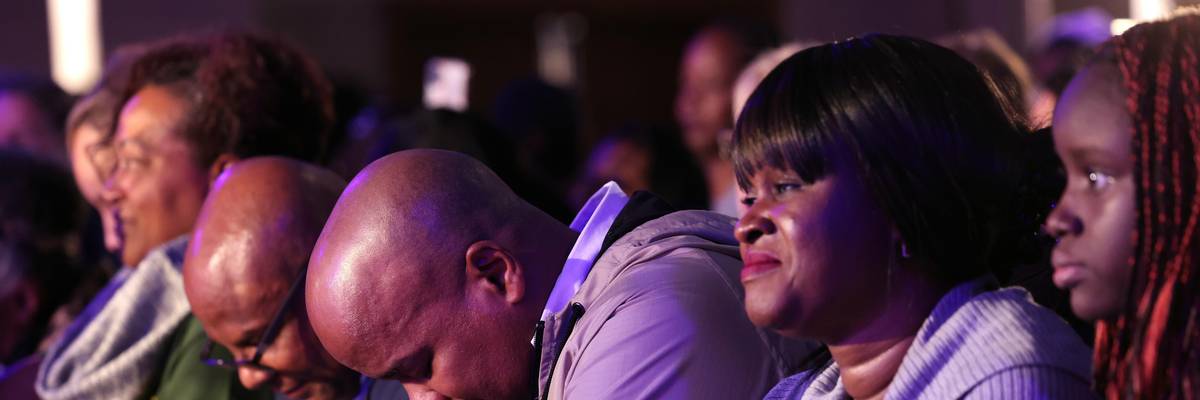
Audience members pray together as they watch returns come in at an election night watch party for Sen. Raphael Warnock (D-Ga.) at the Marriott Marquis on December 6, 2022 in Atlanta, Georgia. (Photo: Win McNamee/Getty Images)
With more than 95% of voting precincts reporting results in Georgia's U.S. Senate runoff election on Wednesday, Sen. Raphael Warnock had beaten Republican challenger Herschel Walker by fewer than three percentage points--prompting sighs of relief among Democrats while a number of progressive observers suggested the close margin was hardly cause for celebration.
"That Walker had any support is a sign of enduring problems in our democracy."
With Warnock maintaining the seat he's held since 2021, Democrats will narrowly control the Senate with 51 seats compared to the 50-50 split that's been in place since last year--a dynamic that could dampen the veto power that's been held by right-wing Sen. Joe Manchin (D-W.Va.) and make it easier for the party to pass legislation in the chamber, although the Republicans will soon control the House.
Warnock's victory followed a major volunteer push and fundraising haul, with the senator raising more than $52 million between October 20 and November 16. Neither candidate won at least 50% of the vote in the general election on November 8, forcing them to proceed to Tuesday's runoff.
As of this writing, the senator had beaten Walker by fewer than 100,000 votes.
Walker, a former professional football player who was endorsed by former President Donald Trump and is a strong supporter of forced pregnancy legislation without any exceptions, was the target of outrage when two women publicly stated that he had pressured them into getting abortions. The Republican candidate was also accused of violence by his son and recently benefited from a tax break meant for permanent residents of Texas, saving about $1,200 on his 2021 taxes for his $3 million home in the Dallas area--a potential violation of state law.
Despite those controversies, lack of experience, bizarre campaign trail behavior, and his far-right views, more than 1.7 million Georgia residents supported Walker.
Law professor Sherrilyn Ifill said that Walker's showing, despite his clear shortcomings, brought to mind Trump's 2016 comment that "he could shoot someone on Fifth Avenue and not lose a vote."
"The closeness of this race is among the most depressing and ominous things I've seen in American politics in my lifetime," tweeted Ifill as the votes were tallied Tuesday night. "I say this because Walker was the worst candidate I've ever seen."
The tight margin also brought to mind the 2017 Senate special election in Alabama, said Ifill, in which corporate Democrat Doug Jones beat Republican Roy Moore--who had been accused by multiple women of sexual misconduct, assault, and of pursuing them when they were minors and he was an adult.
"Yes, I think that today Roy Moore would win over Doug Jones," she said.
While Democrats "should celebrate a very real, significant, and hard-fought victory," said MSNBC anchor Mehdi Hasan, the party should also be asking, "Would a non-crazy, non-extreme GOP candidate have beaten Warnock?"
Olayemi Olurin of the Legal Aid Society of New York City said Walker's narrow loss does not denote that Democrats can safely discount "right-wing extremism" as a tool Republicans will continue to use to garner votes.
"That Walker had any support is a sign of enduring problems in our democracy," said political analyst David Rothkopf. "Much work remains to be done."
Dear Common Dreams reader, It’s been nearly 30 years since I co-founded Common Dreams with my late wife, Lina Newhouser. We had the radical notion that journalism should serve the public good, not corporate profits. It was clear to us from the outset what it would take to build such a project. No paid advertisements. No corporate sponsors. No millionaire publisher telling us what to think or do. Many people said we wouldn't last a year, but we proved those doubters wrong. Together with a tremendous team of journalists and dedicated staff, we built an independent media outlet free from the constraints of profits and corporate control. Our mission has always been simple: To inform. To inspire. To ignite change for the common good. Building Common Dreams was not easy. Our survival was never guaranteed. When you take on the most powerful forces—Wall Street greed, fossil fuel industry destruction, Big Tech lobbyists, and uber-rich oligarchs who have spent billions upon billions rigging the economy and democracy in their favor—the only bulwark you have is supporters who believe in your work. But here’s the urgent message from me today. It's never been this bad out there. And it's never been this hard to keep us going. At the very moment Common Dreams is most needed, the threats we face are intensifying. We need your support now more than ever. We don't accept corporate advertising and never will. We don't have a paywall because we don't think people should be blocked from critical news based on their ability to pay. Everything we do is funded by the donations of readers like you. When everyone does the little they can afford, we are strong. But if that support retreats or dries up, so do we. Will you donate now to make sure Common Dreams not only survives but thrives? —Craig Brown, Co-founder |
With more than 95% of voting precincts reporting results in Georgia's U.S. Senate runoff election on Wednesday, Sen. Raphael Warnock had beaten Republican challenger Herschel Walker by fewer than three percentage points--prompting sighs of relief among Democrats while a number of progressive observers suggested the close margin was hardly cause for celebration.
"That Walker had any support is a sign of enduring problems in our democracy."
With Warnock maintaining the seat he's held since 2021, Democrats will narrowly control the Senate with 51 seats compared to the 50-50 split that's been in place since last year--a dynamic that could dampen the veto power that's been held by right-wing Sen. Joe Manchin (D-W.Va.) and make it easier for the party to pass legislation in the chamber, although the Republicans will soon control the House.
Warnock's victory followed a major volunteer push and fundraising haul, with the senator raising more than $52 million between October 20 and November 16. Neither candidate won at least 50% of the vote in the general election on November 8, forcing them to proceed to Tuesday's runoff.
As of this writing, the senator had beaten Walker by fewer than 100,000 votes.
Walker, a former professional football player who was endorsed by former President Donald Trump and is a strong supporter of forced pregnancy legislation without any exceptions, was the target of outrage when two women publicly stated that he had pressured them into getting abortions. The Republican candidate was also accused of violence by his son and recently benefited from a tax break meant for permanent residents of Texas, saving about $1,200 on his 2021 taxes for his $3 million home in the Dallas area--a potential violation of state law.
Despite those controversies, lack of experience, bizarre campaign trail behavior, and his far-right views, more than 1.7 million Georgia residents supported Walker.
Law professor Sherrilyn Ifill said that Walker's showing, despite his clear shortcomings, brought to mind Trump's 2016 comment that "he could shoot someone on Fifth Avenue and not lose a vote."
"The closeness of this race is among the most depressing and ominous things I've seen in American politics in my lifetime," tweeted Ifill as the votes were tallied Tuesday night. "I say this because Walker was the worst candidate I've ever seen."
The tight margin also brought to mind the 2017 Senate special election in Alabama, said Ifill, in which corporate Democrat Doug Jones beat Republican Roy Moore--who had been accused by multiple women of sexual misconduct, assault, and of pursuing them when they were minors and he was an adult.
"Yes, I think that today Roy Moore would win over Doug Jones," she said.
While Democrats "should celebrate a very real, significant, and hard-fought victory," said MSNBC anchor Mehdi Hasan, the party should also be asking, "Would a non-crazy, non-extreme GOP candidate have beaten Warnock?"
Olayemi Olurin of the Legal Aid Society of New York City said Walker's narrow loss does not denote that Democrats can safely discount "right-wing extremism" as a tool Republicans will continue to use to garner votes.
"That Walker had any support is a sign of enduring problems in our democracy," said political analyst David Rothkopf. "Much work remains to be done."
With more than 95% of voting precincts reporting results in Georgia's U.S. Senate runoff election on Wednesday, Sen. Raphael Warnock had beaten Republican challenger Herschel Walker by fewer than three percentage points--prompting sighs of relief among Democrats while a number of progressive observers suggested the close margin was hardly cause for celebration.
"That Walker had any support is a sign of enduring problems in our democracy."
With Warnock maintaining the seat he's held since 2021, Democrats will narrowly control the Senate with 51 seats compared to the 50-50 split that's been in place since last year--a dynamic that could dampen the veto power that's been held by right-wing Sen. Joe Manchin (D-W.Va.) and make it easier for the party to pass legislation in the chamber, although the Republicans will soon control the House.
Warnock's victory followed a major volunteer push and fundraising haul, with the senator raising more than $52 million between October 20 and November 16. Neither candidate won at least 50% of the vote in the general election on November 8, forcing them to proceed to Tuesday's runoff.
As of this writing, the senator had beaten Walker by fewer than 100,000 votes.
Walker, a former professional football player who was endorsed by former President Donald Trump and is a strong supporter of forced pregnancy legislation without any exceptions, was the target of outrage when two women publicly stated that he had pressured them into getting abortions. The Republican candidate was also accused of violence by his son and recently benefited from a tax break meant for permanent residents of Texas, saving about $1,200 on his 2021 taxes for his $3 million home in the Dallas area--a potential violation of state law.
Despite those controversies, lack of experience, bizarre campaign trail behavior, and his far-right views, more than 1.7 million Georgia residents supported Walker.
Law professor Sherrilyn Ifill said that Walker's showing, despite his clear shortcomings, brought to mind Trump's 2016 comment that "he could shoot someone on Fifth Avenue and not lose a vote."
"The closeness of this race is among the most depressing and ominous things I've seen in American politics in my lifetime," tweeted Ifill as the votes were tallied Tuesday night. "I say this because Walker was the worst candidate I've ever seen."
The tight margin also brought to mind the 2017 Senate special election in Alabama, said Ifill, in which corporate Democrat Doug Jones beat Republican Roy Moore--who had been accused by multiple women of sexual misconduct, assault, and of pursuing them when they were minors and he was an adult.
"Yes, I think that today Roy Moore would win over Doug Jones," she said.
While Democrats "should celebrate a very real, significant, and hard-fought victory," said MSNBC anchor Mehdi Hasan, the party should also be asking, "Would a non-crazy, non-extreme GOP candidate have beaten Warnock?"
Olayemi Olurin of the Legal Aid Society of New York City said Walker's narrow loss does not denote that Democrats can safely discount "right-wing extremism" as a tool Republicans will continue to use to garner votes.
"That Walker had any support is a sign of enduring problems in our democracy," said political analyst David Rothkopf. "Much work remains to be done."