SUBSCRIBE TO OUR FREE NEWSLETTER
Daily news & progressive opinion—funded by the people, not the corporations—delivered straight to your inbox.
5
#000000
#FFFFFF
To donate by check, phone, or other method, see our More Ways to Give page.
Daily news & progressive opinion—funded by the people, not the corporations—delivered straight to your inbox.
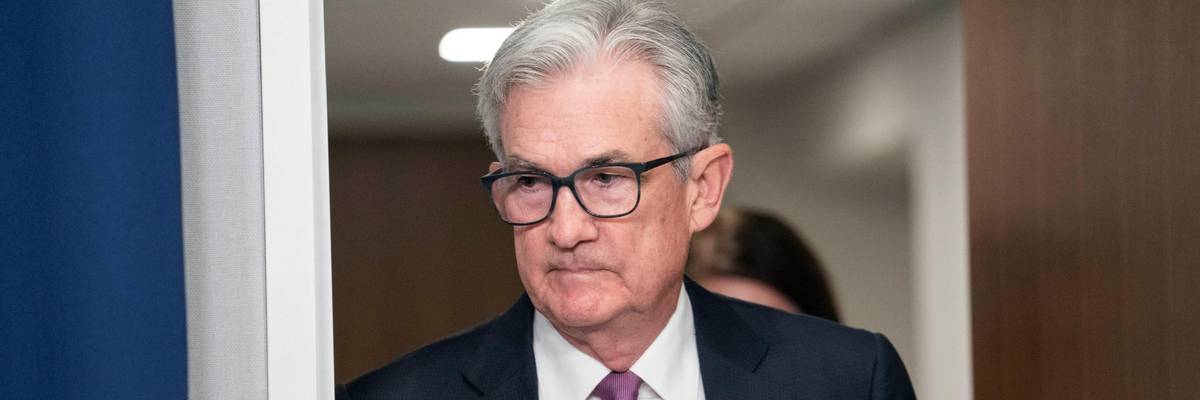
U.S. Federal Reserve Chair Jerome Powell attends a press conference in Washington, D.C. on July 27, 2022.
With the Federal Reserve expected to impose another large interest rate hike on Wednesday, the editorial board of Bloomberg openly encouraged the U.S. central bank to demonstrate that it is willing to "cause a recession" in order to get sky-high inflation under control.
Critics were quick to note that the Wednesday editorial, which claims "wage growth will need to slow" and unemployment will need to rise for inflation to come down, doesn't grapple with the severe damage a recession would inflict on workers who would face job losses, pay cuts, and other consequences in the case of a Fed-induced downturn.
"This editorial doesn't mention workers, families, and communities--the lifeblood of our economy and the people who will bear the brutal costs of a recession."
"Imagine my absolute shock that this editorial doesn't mention workers, families, and communities--the lifeblood of our economy and the people who will bear the brutal costs of a recession--at all," Claire Guzdar, managing director of campaigns and partnerships at the Groundwork Collaborative, wrote in a sarcasm-tinged Twitter post.
The editorial from Bloomberg, a publication founded by billionaire Michael Bloomberg, argues that while the Fed's stated goal of lowering inflation without hurling the economy into recession is "a worthy goal," reining in runaway price increases "almost always involves a temporary contraction of output together with higher unemployment."
"The central bank can't afford to equivocate about the need to slow the economy," the editorial continues. "Wage growth will need to slow substantially for inflation to gradually settle back at the Fed's 2% target. That, in turn, is likely to require short-term interest rates that peak at well over 4% and, unfortunately, a somewhat higher rate of unemployment. The Fed surely understands all this. But it needs to show it understands--and won't balk at the prospect."
In his recent public remarks, Fed Chair Jerome Powell has hardly been coy about his willingness to push the economy into recession and cause "pain" for households and businesses in his effort to tame inflation.
"Reducing inflation is likely to require a sustained period of below-trend growth. Moreover, there will very likely be some softening of labor market conditions," Powell said during his closely watched speech in Jackson Hole, Wyoming last month. "These are the unfortunate costs of reducing inflation."
By endorsing a recession as an acceptable outcome in the fight against inflation, Bloomberg's editorial board joins a group of media outlets, analysts, and pundits that economist Dean Baker has dubbed "the recession lobby."
"There is a large recession lobby in Washington these days that seems to view a recession as a positive good for the economy and society," Baker, senior economist at the Center for Economic and Policy Research, wrote in a blog post earlier this month. "The basic story is that we have seen a big jump in inflation associated with the pandemic and the war in Ukraine. They argue that a recession will be needed to bring inflation back down to acceptable levels."
"I, and others, have pointed out the enormous human costs associated with a recession," Baker added. "Unemployment is traumatic for everyone, but we know that the people who are most likely to lose their jobs in a recession are those who are most disadvantaged in the labor market, such as Blacks, Hispanics, people with less education, and people with a criminal record."
The Bloomberg editorial was published hours before the Fed's announcement on its latest interest rate hike, which is expected to be 75 basis points following a hotter-than-expected August inflation reading.
Economists have warned for months that the Fed's rate-hiking frenzy, which other powerful central banks around the world have replicated, risks a destructive global recession. The World Bank cautioned last week that a worldwide recession is becoming increasingly likely as interest rate increases take their toll on demand.
Writing for Project Syndicate last week, Baker and Nobel Prize-winning economist Joseph Stiglitz called on the Fed to pause its rake hikes, arguing that "it would be irresponsible for the Fed to create much higher unemployment deliberately."
"With inflation and inflationary expectations already dampening," they wrote, "the Fed should be assigning more weight to the downside risk of additional tightening: namely, that it would push an already battered U.S. economy into recession."
Dear Common Dreams reader, It’s been nearly 30 years since I co-founded Common Dreams with my late wife, Lina Newhouser. We had the radical notion that journalism should serve the public good, not corporate profits. It was clear to us from the outset what it would take to build such a project. No paid advertisements. No corporate sponsors. No millionaire publisher telling us what to think or do. Many people said we wouldn't last a year, but we proved those doubters wrong. Together with a tremendous team of journalists and dedicated staff, we built an independent media outlet free from the constraints of profits and corporate control. Our mission has always been simple: To inform. To inspire. To ignite change for the common good. Building Common Dreams was not easy. Our survival was never guaranteed. When you take on the most powerful forces—Wall Street greed, fossil fuel industry destruction, Big Tech lobbyists, and uber-rich oligarchs who have spent billions upon billions rigging the economy and democracy in their favor—the only bulwark you have is supporters who believe in your work. But here’s the urgent message from me today. It's never been this bad out there. And it's never been this hard to keep us going. At the very moment Common Dreams is most needed, the threats we face are intensifying. We need your support now more than ever. We don't accept corporate advertising and never will. We don't have a paywall because we don't think people should be blocked from critical news based on their ability to pay. Everything we do is funded by the donations of readers like you. When everyone does the little they can afford, we are strong. But if that support retreats or dries up, so do we. Will you donate now to make sure Common Dreams not only survives but thrives? —Craig Brown, Co-founder |
With the Federal Reserve expected to impose another large interest rate hike on Wednesday, the editorial board of Bloomberg openly encouraged the U.S. central bank to demonstrate that it is willing to "cause a recession" in order to get sky-high inflation under control.
Critics were quick to note that the Wednesday editorial, which claims "wage growth will need to slow" and unemployment will need to rise for inflation to come down, doesn't grapple with the severe damage a recession would inflict on workers who would face job losses, pay cuts, and other consequences in the case of a Fed-induced downturn.
"This editorial doesn't mention workers, families, and communities--the lifeblood of our economy and the people who will bear the brutal costs of a recession."
"Imagine my absolute shock that this editorial doesn't mention workers, families, and communities--the lifeblood of our economy and the people who will bear the brutal costs of a recession--at all," Claire Guzdar, managing director of campaigns and partnerships at the Groundwork Collaborative, wrote in a sarcasm-tinged Twitter post.
The editorial from Bloomberg, a publication founded by billionaire Michael Bloomberg, argues that while the Fed's stated goal of lowering inflation without hurling the economy into recession is "a worthy goal," reining in runaway price increases "almost always involves a temporary contraction of output together with higher unemployment."
"The central bank can't afford to equivocate about the need to slow the economy," the editorial continues. "Wage growth will need to slow substantially for inflation to gradually settle back at the Fed's 2% target. That, in turn, is likely to require short-term interest rates that peak at well over 4% and, unfortunately, a somewhat higher rate of unemployment. The Fed surely understands all this. But it needs to show it understands--and won't balk at the prospect."
In his recent public remarks, Fed Chair Jerome Powell has hardly been coy about his willingness to push the economy into recession and cause "pain" for households and businesses in his effort to tame inflation.
"Reducing inflation is likely to require a sustained period of below-trend growth. Moreover, there will very likely be some softening of labor market conditions," Powell said during his closely watched speech in Jackson Hole, Wyoming last month. "These are the unfortunate costs of reducing inflation."
By endorsing a recession as an acceptable outcome in the fight against inflation, Bloomberg's editorial board joins a group of media outlets, analysts, and pundits that economist Dean Baker has dubbed "the recession lobby."
"There is a large recession lobby in Washington these days that seems to view a recession as a positive good for the economy and society," Baker, senior economist at the Center for Economic and Policy Research, wrote in a blog post earlier this month. "The basic story is that we have seen a big jump in inflation associated with the pandemic and the war in Ukraine. They argue that a recession will be needed to bring inflation back down to acceptable levels."
"I, and others, have pointed out the enormous human costs associated with a recession," Baker added. "Unemployment is traumatic for everyone, but we know that the people who are most likely to lose their jobs in a recession are those who are most disadvantaged in the labor market, such as Blacks, Hispanics, people with less education, and people with a criminal record."
The Bloomberg editorial was published hours before the Fed's announcement on its latest interest rate hike, which is expected to be 75 basis points following a hotter-than-expected August inflation reading.
Economists have warned for months that the Fed's rate-hiking frenzy, which other powerful central banks around the world have replicated, risks a destructive global recession. The World Bank cautioned last week that a worldwide recession is becoming increasingly likely as interest rate increases take their toll on demand.
Writing for Project Syndicate last week, Baker and Nobel Prize-winning economist Joseph Stiglitz called on the Fed to pause its rake hikes, arguing that "it would be irresponsible for the Fed to create much higher unemployment deliberately."
"With inflation and inflationary expectations already dampening," they wrote, "the Fed should be assigning more weight to the downside risk of additional tightening: namely, that it would push an already battered U.S. economy into recession."
With the Federal Reserve expected to impose another large interest rate hike on Wednesday, the editorial board of Bloomberg openly encouraged the U.S. central bank to demonstrate that it is willing to "cause a recession" in order to get sky-high inflation under control.
Critics were quick to note that the Wednesday editorial, which claims "wage growth will need to slow" and unemployment will need to rise for inflation to come down, doesn't grapple with the severe damage a recession would inflict on workers who would face job losses, pay cuts, and other consequences in the case of a Fed-induced downturn.
"This editorial doesn't mention workers, families, and communities--the lifeblood of our economy and the people who will bear the brutal costs of a recession."
"Imagine my absolute shock that this editorial doesn't mention workers, families, and communities--the lifeblood of our economy and the people who will bear the brutal costs of a recession--at all," Claire Guzdar, managing director of campaigns and partnerships at the Groundwork Collaborative, wrote in a sarcasm-tinged Twitter post.
The editorial from Bloomberg, a publication founded by billionaire Michael Bloomberg, argues that while the Fed's stated goal of lowering inflation without hurling the economy into recession is "a worthy goal," reining in runaway price increases "almost always involves a temporary contraction of output together with higher unemployment."
"The central bank can't afford to equivocate about the need to slow the economy," the editorial continues. "Wage growth will need to slow substantially for inflation to gradually settle back at the Fed's 2% target. That, in turn, is likely to require short-term interest rates that peak at well over 4% and, unfortunately, a somewhat higher rate of unemployment. The Fed surely understands all this. But it needs to show it understands--and won't balk at the prospect."
In his recent public remarks, Fed Chair Jerome Powell has hardly been coy about his willingness to push the economy into recession and cause "pain" for households and businesses in his effort to tame inflation.
"Reducing inflation is likely to require a sustained period of below-trend growth. Moreover, there will very likely be some softening of labor market conditions," Powell said during his closely watched speech in Jackson Hole, Wyoming last month. "These are the unfortunate costs of reducing inflation."
By endorsing a recession as an acceptable outcome in the fight against inflation, Bloomberg's editorial board joins a group of media outlets, analysts, and pundits that economist Dean Baker has dubbed "the recession lobby."
"There is a large recession lobby in Washington these days that seems to view a recession as a positive good for the economy and society," Baker, senior economist at the Center for Economic and Policy Research, wrote in a blog post earlier this month. "The basic story is that we have seen a big jump in inflation associated with the pandemic and the war in Ukraine. They argue that a recession will be needed to bring inflation back down to acceptable levels."
"I, and others, have pointed out the enormous human costs associated with a recession," Baker added. "Unemployment is traumatic for everyone, but we know that the people who are most likely to lose their jobs in a recession are those who are most disadvantaged in the labor market, such as Blacks, Hispanics, people with less education, and people with a criminal record."
The Bloomberg editorial was published hours before the Fed's announcement on its latest interest rate hike, which is expected to be 75 basis points following a hotter-than-expected August inflation reading.
Economists have warned for months that the Fed's rate-hiking frenzy, which other powerful central banks around the world have replicated, risks a destructive global recession. The World Bank cautioned last week that a worldwide recession is becoming increasingly likely as interest rate increases take their toll on demand.
Writing for Project Syndicate last week, Baker and Nobel Prize-winning economist Joseph Stiglitz called on the Fed to pause its rake hikes, arguing that "it would be irresponsible for the Fed to create much higher unemployment deliberately."
"With inflation and inflationary expectations already dampening," they wrote, "the Fed should be assigning more weight to the downside risk of additional tightening: namely, that it would push an already battered U.S. economy into recession."