SUBSCRIBE TO OUR FREE NEWSLETTER
Daily news & progressive opinion—funded by the people, not the corporations—delivered straight to your inbox.
5
#000000
#FFFFFF
To donate by check, phone, or other method, see our More Ways to Give page.
Daily news & progressive opinion—funded by the people, not the corporations—delivered straight to your inbox.

A senior woman is seen lying in a bed in an intensive care unit.
Sen. Ron Wyden on Tuesday launched an inquiry into "potentially deceptive" marketing tactics being used by private insurers and other companies that offer Medicare benefits through Medicare Advantage and Part D prescription drug plans, citing "alarming reports" about contractors "engaging in aggressive sales practices that take advantage of vulnerable seniors and people with disabilities."
In his capacity as chair of the Senate Finance Committee, which has jurisdiction over federal healthcare programs under the Social Security Act, including privately run Medicare Advantage (MA) and Part D drug plans, Wyden (D-Ore.) sent letters requesting more information from 15 state insurance commissioners and state health insurance assistance programs.
The letter--sent to officials in Arizona, California, Colorado, Florida, Georgia, Illinois, Massachusetts, Michigan, Missouri, New York, North Carolina, Ohio, Oregon, Pennsylvania, and Texas--comes amid a surge in complaints about MA and Part D marketing materials that purport to inform seniors of their coverage options.
In May, the Centers for Medicare & Medicaid Services (CMS), which has the authority to regulate materials used to market MA and Part D plans, reported that complaints from seniors more than doubled from 2020 to 2021.
The most recent survey of state insurance commissioners conducted by the National Association of Insurance Commissioners, moreover, found that there has been an increase in complaints regarding "false and misleading advertising" of MA plans, wrote Wyden.
"Unfortunately, false or misleading advertisements and fraudulent sales practices are not new issues for Medicare beneficiaries," he continued. The lawmaker pointed to 2009 and 2010 reports from the Government Accountability Office and the Health and Human Services Office of Inspector General, respectively, which documented widespread grievances against private enterprises and sales agents over their peddling of MA plans.
"Given this trend in complaints," Wyden wrote, "I am seeking to better understand the nature and extent of these marketing and enrollment issues. Your offices of state insurance regulation and State Health Insurance Programs (SHIPs) are working on-the-ground and are uniquely positioned to hear directly from Medicare beneficiaries about false or misleading marketing and sales practices in MA and Part D."
To that end, Wyden asked the officials to provide joint or separate responses to a series of questions by September 16.
Among other things, Wyden wants officials to provide data on the number of complaints about MA and/or Part D marketing materials they have received in 2019, 2020, 2021, and 2022, including possible patterns of discrimination, as well as "examples of potentially false or misleading marketing materials and advertisements in MA or Part D, including mailers, robo-calls, websites, television commercials, and online advertisements."
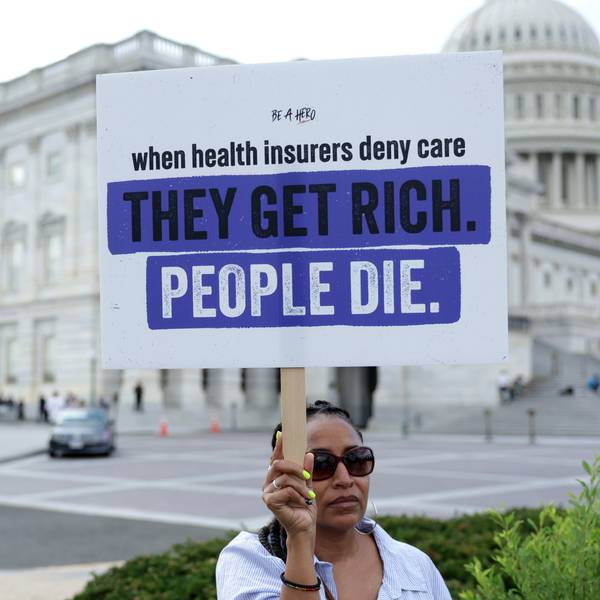
Of Medicare's 60 million beneficiaries, nearly half are enrolled in MA plans and 50 million are enrolled in Part D plans. Corporations that manage MA plans have come under fire for upcoding, or exaggerating patients' illnesses in order to reap larger payments from the federal government--something they do while refusing to provide necessary care for tens of thousands each year.
Despite mounting evidence of rampant fraud and other abuses committed by private MA organizations, the Biden administration announced in April that MA insurers will receive one of the largest payment increases in the program's history in 2023, eliciting pushback from several congressional Democrats led by Rep. Katie Porter of California.
MA and Part D, progressives argue, are part of a broader effort to privatize Medicare and must be resisted.
Another major culprit is ACO REACH, a pilot program that critics have described as "Medicare Advantage on steroids."
The pilot--an updated version of Direct Contracting launched by the Trump administration and continued by the Biden administration--invites MA insurers and Wall Street firms to "manage" care for Medicare beneficiaries and allows the profit-maximizing middlemen to pocket as much as 40% of what they don't spend on patients, all but ensuring life-threatening cost-cutting.
Physicians and healthcare advocates have warned that a failure to stop ACO REACH could result in the complete privatization of traditional Medicare in a matter of years.
"Even though Medicare is relied on by millions of seniors across the country, and precisely because it is so necessary and cost-effective, it is under threat today from the constant efforts of private insurance companies and for-profit investors who want to privatize it and turn it into yet another shameful opportunity to make money off of peoples' health problems," Rep. Pramila Jayapal (D-Wash.) said in May.
Jayapal, the chair of the Congressional Progressive Caucus and lead sponsor of the Medicare for All Act in the House, has called on the Biden administration to "fully end" ACO REACH and other privatization schemes.
Dear Common Dreams reader, It’s been nearly 30 years since I co-founded Common Dreams with my late wife, Lina Newhouser. We had the radical notion that journalism should serve the public good, not corporate profits. It was clear to us from the outset what it would take to build such a project. No paid advertisements. No corporate sponsors. No millionaire publisher telling us what to think or do. Many people said we wouldn't last a year, but we proved those doubters wrong. Together with a tremendous team of journalists and dedicated staff, we built an independent media outlet free from the constraints of profits and corporate control. Our mission has always been simple: To inform. To inspire. To ignite change for the common good. Building Common Dreams was not easy. Our survival was never guaranteed. When you take on the most powerful forces—Wall Street greed, fossil fuel industry destruction, Big Tech lobbyists, and uber-rich oligarchs who have spent billions upon billions rigging the economy and democracy in their favor—the only bulwark you have is supporters who believe in your work. But here’s the urgent message from me today. It's never been this bad out there. And it's never been this hard to keep us going. At the very moment Common Dreams is most needed, the threats we face are intensifying. We need your support now more than ever. We don't accept corporate advertising and never will. We don't have a paywall because we don't think people should be blocked from critical news based on their ability to pay. Everything we do is funded by the donations of readers like you. When everyone does the little they can afford, we are strong. But if that support retreats or dries up, so do we. Will you donate now to make sure Common Dreams not only survives but thrives? —Craig Brown, Co-founder |
Sen. Ron Wyden on Tuesday launched an inquiry into "potentially deceptive" marketing tactics being used by private insurers and other companies that offer Medicare benefits through Medicare Advantage and Part D prescription drug plans, citing "alarming reports" about contractors "engaging in aggressive sales practices that take advantage of vulnerable seniors and people with disabilities."
In his capacity as chair of the Senate Finance Committee, which has jurisdiction over federal healthcare programs under the Social Security Act, including privately run Medicare Advantage (MA) and Part D drug plans, Wyden (D-Ore.) sent letters requesting more information from 15 state insurance commissioners and state health insurance assistance programs.
The letter--sent to officials in Arizona, California, Colorado, Florida, Georgia, Illinois, Massachusetts, Michigan, Missouri, New York, North Carolina, Ohio, Oregon, Pennsylvania, and Texas--comes amid a surge in complaints about MA and Part D marketing materials that purport to inform seniors of their coverage options.
In May, the Centers for Medicare & Medicaid Services (CMS), which has the authority to regulate materials used to market MA and Part D plans, reported that complaints from seniors more than doubled from 2020 to 2021.
The most recent survey of state insurance commissioners conducted by the National Association of Insurance Commissioners, moreover, found that there has been an increase in complaints regarding "false and misleading advertising" of MA plans, wrote Wyden.
"Unfortunately, false or misleading advertisements and fraudulent sales practices are not new issues for Medicare beneficiaries," he continued. The lawmaker pointed to 2009 and 2010 reports from the Government Accountability Office and the Health and Human Services Office of Inspector General, respectively, which documented widespread grievances against private enterprises and sales agents over their peddling of MA plans.
"Given this trend in complaints," Wyden wrote, "I am seeking to better understand the nature and extent of these marketing and enrollment issues. Your offices of state insurance regulation and State Health Insurance Programs (SHIPs) are working on-the-ground and are uniquely positioned to hear directly from Medicare beneficiaries about false or misleading marketing and sales practices in MA and Part D."
To that end, Wyden asked the officials to provide joint or separate responses to a series of questions by September 16.
Among other things, Wyden wants officials to provide data on the number of complaints about MA and/or Part D marketing materials they have received in 2019, 2020, 2021, and 2022, including possible patterns of discrimination, as well as "examples of potentially false or misleading marketing materials and advertisements in MA or Part D, including mailers, robo-calls, websites, television commercials, and online advertisements."
Of Medicare's 60 million beneficiaries, nearly half are enrolled in MA plans and 50 million are enrolled in Part D plans. Corporations that manage MA plans have come under fire for upcoding, or exaggerating patients' illnesses in order to reap larger payments from the federal government--something they do while refusing to provide necessary care for tens of thousands each year.
Despite mounting evidence of rampant fraud and other abuses committed by private MA organizations, the Biden administration announced in April that MA insurers will receive one of the largest payment increases in the program's history in 2023, eliciting pushback from several congressional Democrats led by Rep. Katie Porter of California.
MA and Part D, progressives argue, are part of a broader effort to privatize Medicare and must be resisted.
Another major culprit is ACO REACH, a pilot program that critics have described as "Medicare Advantage on steroids."
The pilot--an updated version of Direct Contracting launched by the Trump administration and continued by the Biden administration--invites MA insurers and Wall Street firms to "manage" care for Medicare beneficiaries and allows the profit-maximizing middlemen to pocket as much as 40% of what they don't spend on patients, all but ensuring life-threatening cost-cutting.
Physicians and healthcare advocates have warned that a failure to stop ACO REACH could result in the complete privatization of traditional Medicare in a matter of years.
"Even though Medicare is relied on by millions of seniors across the country, and precisely because it is so necessary and cost-effective, it is under threat today from the constant efforts of private insurance companies and for-profit investors who want to privatize it and turn it into yet another shameful opportunity to make money off of peoples' health problems," Rep. Pramila Jayapal (D-Wash.) said in May.
Jayapal, the chair of the Congressional Progressive Caucus and lead sponsor of the Medicare for All Act in the House, has called on the Biden administration to "fully end" ACO REACH and other privatization schemes.
Sen. Ron Wyden on Tuesday launched an inquiry into "potentially deceptive" marketing tactics being used by private insurers and other companies that offer Medicare benefits through Medicare Advantage and Part D prescription drug plans, citing "alarming reports" about contractors "engaging in aggressive sales practices that take advantage of vulnerable seniors and people with disabilities."
In his capacity as chair of the Senate Finance Committee, which has jurisdiction over federal healthcare programs under the Social Security Act, including privately run Medicare Advantage (MA) and Part D drug plans, Wyden (D-Ore.) sent letters requesting more information from 15 state insurance commissioners and state health insurance assistance programs.
The letter--sent to officials in Arizona, California, Colorado, Florida, Georgia, Illinois, Massachusetts, Michigan, Missouri, New York, North Carolina, Ohio, Oregon, Pennsylvania, and Texas--comes amid a surge in complaints about MA and Part D marketing materials that purport to inform seniors of their coverage options.
In May, the Centers for Medicare & Medicaid Services (CMS), which has the authority to regulate materials used to market MA and Part D plans, reported that complaints from seniors more than doubled from 2020 to 2021.
The most recent survey of state insurance commissioners conducted by the National Association of Insurance Commissioners, moreover, found that there has been an increase in complaints regarding "false and misleading advertising" of MA plans, wrote Wyden.
"Unfortunately, false or misleading advertisements and fraudulent sales practices are not new issues for Medicare beneficiaries," he continued. The lawmaker pointed to 2009 and 2010 reports from the Government Accountability Office and the Health and Human Services Office of Inspector General, respectively, which documented widespread grievances against private enterprises and sales agents over their peddling of MA plans.
"Given this trend in complaints," Wyden wrote, "I am seeking to better understand the nature and extent of these marketing and enrollment issues. Your offices of state insurance regulation and State Health Insurance Programs (SHIPs) are working on-the-ground and are uniquely positioned to hear directly from Medicare beneficiaries about false or misleading marketing and sales practices in MA and Part D."
To that end, Wyden asked the officials to provide joint or separate responses to a series of questions by September 16.
Among other things, Wyden wants officials to provide data on the number of complaints about MA and/or Part D marketing materials they have received in 2019, 2020, 2021, and 2022, including possible patterns of discrimination, as well as "examples of potentially false or misleading marketing materials and advertisements in MA or Part D, including mailers, robo-calls, websites, television commercials, and online advertisements."
Of Medicare's 60 million beneficiaries, nearly half are enrolled in MA plans and 50 million are enrolled in Part D plans. Corporations that manage MA plans have come under fire for upcoding, or exaggerating patients' illnesses in order to reap larger payments from the federal government--something they do while refusing to provide necessary care for tens of thousands each year.
Despite mounting evidence of rampant fraud and other abuses committed by private MA organizations, the Biden administration announced in April that MA insurers will receive one of the largest payment increases in the program's history in 2023, eliciting pushback from several congressional Democrats led by Rep. Katie Porter of California.
MA and Part D, progressives argue, are part of a broader effort to privatize Medicare and must be resisted.
Another major culprit is ACO REACH, a pilot program that critics have described as "Medicare Advantage on steroids."
The pilot--an updated version of Direct Contracting launched by the Trump administration and continued by the Biden administration--invites MA insurers and Wall Street firms to "manage" care for Medicare beneficiaries and allows the profit-maximizing middlemen to pocket as much as 40% of what they don't spend on patients, all but ensuring life-threatening cost-cutting.
Physicians and healthcare advocates have warned that a failure to stop ACO REACH could result in the complete privatization of traditional Medicare in a matter of years.
"Even though Medicare is relied on by millions of seniors across the country, and precisely because it is so necessary and cost-effective, it is under threat today from the constant efforts of private insurance companies and for-profit investors who want to privatize it and turn it into yet another shameful opportunity to make money off of peoples' health problems," Rep. Pramila Jayapal (D-Wash.) said in May.
Jayapal, the chair of the Congressional Progressive Caucus and lead sponsor of the Medicare for All Act in the House, has called on the Biden administration to "fully end" ACO REACH and other privatization schemes.