

SUBSCRIBE TO OUR FREE NEWSLETTER
Daily news & progressive opinion—funded by the people, not the corporations—delivered straight to your inbox.
5
#000000
#FFFFFF
To donate by check, phone, or other method, see our More Ways to Give page.
Daily news & progressive opinion—funded by the people, not the corporations—delivered straight to your inbox.
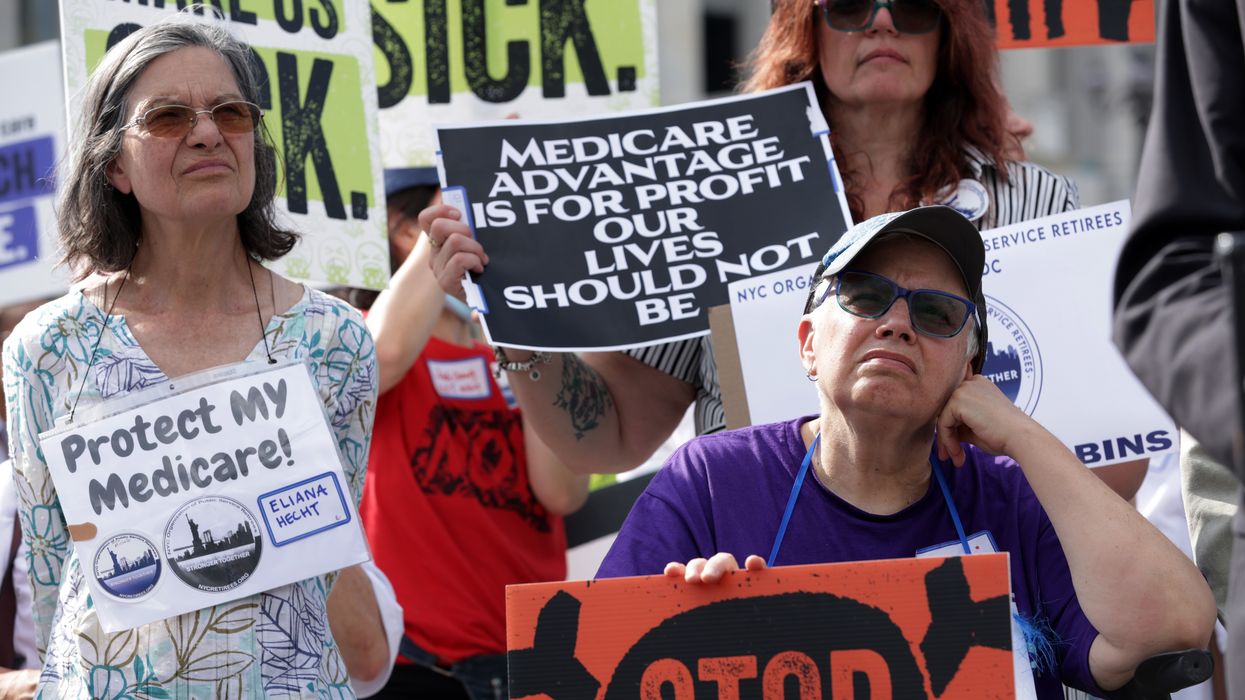
Since passage of the 1965 Medicare law, special interests inside and outside of government have continually bent the intent of Medicare in order to maximize corporate profits at the expense of taxpayers, seniors, and the disabled.
The authors of "The Privatization of Everything: How the Plunder of Public Goods Transformed America..." describe the corporate campaign to turn public goods and services into private profit-centers, paralleling the U.S. half-century $50 trillion wealth transfer upward. Promoting increasing commodification of healthcare, the U.S. is the only developed nation to place profiteering middlemen between patients and providers. Corporate/Wall St. exploitation of U.S. healthcare as a cash cow since 1980 has contributed to higher health costs and worse outcomes than other advanced nations.
A 1971 Oval Office conversation between President Nixon and John Ehrlichman augured misplaced healthcare priorities. Extolling the Kaiser CEO's profit-seeking, Ehrlichman enthused: "All the incentives are toward less medical care, because the less care they give them, the more money they make."
Nixon's 1973 HMO Act ushered in "Managed Care" health models, including Health Maintenance Organizations, Accountable Care Organizations and Medicare Advantage, many morphing into "Managed Profit," because neoliberalism yields wealthcare not healthcare.
Since passage of the 1965 Medicare law, special interests inside and outside of government have continually bent the intent of Medicare in order to maximize corporate profits at the expense of taxpayers, seniors, and the disabled. With plutocratic intent Newt Gingrich in 1996 blithely forecast that privatization would cause Medicare to “wither on the vine.”
The 2003 Medicare Modernization Act was G.W. Bush's giveaway to the PhRMA and insurance industries. Even as it prohibited negotiation of bulk medicine rates, the MMA subsidized Medicare Advantage plans with extra billions of dollars annually siphoned from the Medicare Trust Fund, overcharging taxpayers up to $140 billion annually by 2023.
An obscure provision of MMA, the Employer Group Waiver Plans (EGWP), furthers Medicare privatization by permitting employers to move retirees, without their consent, into for-profit Medicare Advantage plans. Retiree organizations in Vermont, New York, and Delaware have waged David vs. Goliath-style battles to preserve their Traditional Medicare coverage against the subterfuge of Medicare Advantage "modernization" of benefits, which actually represent benefits "reduction."
A 2023 report by the Center for Economic and Policy Research (CEPR) relates that privatized Medicare Advantage plans drain the Medicare Trust Fund, while increasing insurers' profits and reducing quality of patient care. Failing to protect Medicare's Trust Fund, the Centers for Medicare and Medicaid Services (CMS) has failed to halt overpayments to private Medicare Advantage plans. The Center for Medicare Advocacy (CMA) cites CMS outreach and enrollment materials since 2017 that encourage beneficiaries to choose private Medicare Advantage plans over Traditional Medicare.
Excess Medicare Advantage payments fund supplemental benefits and heavy marketing to lure enrollees, while brokers are paid commissions twice as high to sell Medicare Advantage plans than to sell Medicare Medigap plans. Moneymaking schemes of both Medicare Advantage and the Affordable Care Act have employed deceptive marketing, sometimes switching people's insurance without their consent. Some seniors intending to enroll in Traditional Medicare have been enrolled in a private Medicare Advantage plan. Too many seniors discover too late that MA's frequently-changing, narrow doctor networks expose them to substantial out-of-network costs, and that they are denied access to necessary care.
Medicare Advantage payments are inflated by "upcoding," which exaggerate patient health conditions; capitated payments incentivizing healthcare denial; and prior authorization requirements that delay and deny healthcare. Medicare Advantage "cherry-picking" selects the healthiest for coverage, and "lemon-dropping" rejects sicker patients.
The Affordable Care Act created the Center for Medicare and Medicaid Innovation (CMMI) to conduct Medicare "innovative payment" experiments, modeled on "Managed Care" ACOs. Since first testing ACOs in 2005, CMS has authorized hundreds of private Managed Medicare ACO insurance models that amplify administrative costs. In 2023 the Congressional Budget Office reported that CMS experiments with "value-based" ACO payments failed to control costs, improve quality or increase equity, costing Medicare $5.4 billion more than it saved during its first decade.
An official CMS webpage titled "Fraud and Abuse Waivers” lists Innovation Center models that have been granted waivers to bypass fraud and abuse laws, to permit testing "innovative payment and delivery models" of healthcare—the better to milk the Medicare Trust Fund. CMS has invited the same investor-controlled insurance and Wall St. actors that drive Medicare Advantage overpayments to act as fiscal intermediaries between providers and patients within successive Trump DCE and Biden ACO REACH Alternative Payment Models.
Every administration since 2000 has welcomed some CMS administrators through Washington's Revolving Door. Prior to, or following government service, some have headed investor-backed health startups. Tom Scully, G.W. Bush's CMS head, oversaw privatized prescription drug benefits and Medicare Advantage before joining a private equity firm to capitalize on public dollars. Liz Fowler has rotated through the Revolving Door, between executive positions with insurance and pharmaceutical industries, alternately helping to draft both the Medicare Modernization and Affordable Care Acts, and subsequently returning to the Biden administration to oversee CMMI that she helped write into the ACA.
Even as CMS promotes experimentation with costlier multiple private payer models, they disregard single-risk-pool Medicare that alone has the economy of scale to provide sustainable universal health coverage, while permitting global budgeting and bulk medicine rate negotiations. Twenty-two studies report annual $600 billion Medicare-for-All administrative savings alone, enough to extend comprehensive health coverage to all ages.
Rather than improve and expand the promise of direct-payment Single-Payer Fee-For-Service—a model utilized by many advanced nations—CMS has promoted privatization of most public healthcare programs. Describing the goal of placing "100% of Traditional Medicare beneficiaries and the majority of Medicaid enrollees in accountable care relationships by 2030," CMS transfers Medicare recipients without their consent into private ACO REACH plans, "auto-aligning" Medicare enrollees with ACO-affiliated providers.
"Don't Bust Up Medicare and Turn It Over to the States," writes Kay Tillow of the latest misguided attempt to drain the Medicare Trust Fund, purportedly to achieve health care state by state.
If Health and Human Services, CMS and legislators fulfilled their responsibility to protect Medicare for the People, the plan would have been streamlined long ago. There would be no need for complicating costly supplemental insurance plans such as Parts A, B, C, D, and Medigap.
The non-profit law organization, the Center for Medicare Advocacy, defender of Traditional Medicare, affirms that "Few programs in the history of the United States have brought as much benefit to society as Medicare... Reforms to Medicare should honor and maintain its core values to ensure its continued success for future generations."
We must eliminate the greed of the market ethos, prioritize health as a human value, and support the aspiration of the Poor People's Campaign—i.e., an economy and healthcare for the people, eliminating continuous wealth transfer upward.
A traditional Medicare enrollee for over a decade, CMS recently notified me that my health provider has been moved to a MSSP ACO, where 11 million beneficiaries were reportedly transferred by 2023. To retain Traditional Medicare, recipients are forced to find independent providers not captured by ACO payment plans, and to do so before CMS drains the Medicare Trust Fund and totally destroys Medicare.

Waivers given by the Center for Medicare and Medicaid Services allow venture capital, private equity, and health insurance entities the freedom to violate anti-corruption laws without penalty.
The Center for Medicare and Medicaid Services (CMS), the federal agency that oversees those national health care programs, has the dubious distinction of being light years ahead of other government regulators in excusing fraudulent conduct. CMS doesn’t just allow healthcare companies to repeatedly commit fraud and abuse with fines amounting to a tiny fraction of the profit; CMS goes much further.
CMS formally authorizes the violation of anti-corruption laws by granting “fraud and abuse” waivers to the corporate entities involved in experimental programs within its Center for Medicare and Medicaid Innovation (CMMI or Innovation Center).
It’s true. CMS has an official webpage named “Fraud and Abuse Waivers” that lists the programs entitled to their absolution.
The Innovation Center plans continue because they serve a different purpose—an unnamed purpose. They serve the privatization of the Medicare program.
CMS regularly issues “Fraud and Abuse Waivers” to the healthcare industry giants that participate in its Innovation Center programs impacting millions of people. If it’s an Accountable Care Organization (ACO), the new form of the hated, managed-care organizations (HMOs) of the 1990s infamous for drive-through mastectomies, it won’t be held accountable to the laws of the land.
How can this be possible? The Affordable Care Act of 2010, among its many provisions, set up the Innovation Center within CMS to promote experimental models in Medicare that would save money while maintaining or improving quality, or that would cost the same while improving the quality of care. Models approved by CMS can be automatically implemented into Medicare without congressional approval.
The Innovation Center models are not working to accomplish the stated purposes of quality and cost savings. “The majority have not saved money, and several are on pace to lose billions of dollars,” reports Bill Frist, former senator and owner of the giant hospital chain HCA. The majority of models do not show significant improvements in quality, says Brad Smith, former Innovation Center director. The models are neither saving money nor improving care, but the Innovation Center has $10 billion dollars to spend each decade and keeps churning out new models, the latest on June 8.
The Innovation Center models are the ones to which CMS grants the Fraud and Abuse Waivers. Let’s take for instance Medicare Advantage plans that are advertised to offer cash back on your Social Security check or up to $900 a year in grocery money. Those offers would logically be a violation of the law that forbids the offer of inducements to buy a certain plan. But these plans operate under the Innovation Center experiment called “Medicare Advantage Value Based Insurance Design (VBID) Model.” That model has the “get out of jail free card” from CMS. For the plan year 2023, the VBID Model has 52 participating Medicare Advantage Organizations with a total of 9.3 million people projected to be enrolled.
CMS waives the Beneficiary Inducements Civil Monetary Penalty (CMP) and the Federal anti-kickback statute to allow Medicare Advantage VBID plans to provide these cash, grocery, and other incentives. The excuse is that these payments are contributing to equity by ending disparities. The reality is that such plans provide incentives for seniors and the disabled to choose the for-profit plans rather than traditional Medicare. That’s convenient for the Medicare Advantage companies that are using the Medicare Trust Fund as their cash cow. Medicare Advantage plans cost the nation more than traditional Medicare yet deny, delay, and limit care. So why is CMS promoting the growth of these plans?
Among the long list of accountable care organizations (ACOs) and other models that CMS excuses from obeying the law is the Vermont All-Payer ACO Model Vermont Medicare ACO Initiative which is called OneCare ACO Vermont. The League of Women Voters of Vermont and the Physicians for a National Health Program of Vermont, among others, urged an end to the Innovation Center’s One Care ACO experimental model stating that the for-profit OneCare ACO, by design, does nothing to improve access to care and that the ACO was supposed to reduce costs, but, instead, spending continues to rise even faster than established targets.
The Vermont organizations issued a press release and listed eleven reasons why the program should be ended, including the assertion that both hospitals and primary care are suffering from the program. “It is time to redirect wasteful administrative spending on the ACO to actually providing health care, especially as the coronavirus pandemic exposes and exacerbates inequities in our system,” the Vermont organizations concluded.
That Vermont experiment by the Innovation Center has the fraud and abuse waivers. The for-profit OneCare Vermont is exempted from the federal physician self-referral law and the anti-kickback law. The program is scheduled to continue through the end of 2024 despite the community’s protests over the damage that OneCare Vermont has done to the health care of the state.
The privatization of Medicare, through Medicare Advantage and Innovation Center models, requires the freedom of corporate medical and insurance entities to collect overpayments, escape oversight, avoid regulation, and violate anti-corruption laws without penalty.
The Innovation Center granted the fraud and abuse waivers to the Direct Contracting model and to its successor program ACO REACH. ACO REACH currently has 132 participants in states across the country and places seniors and the disabled who chose traditional Medicare into for-profit, private Medicare ACOs. Seniors are assigned, without their consent, to ACO REACH plans owned by private equity, venture capital, and insurance companies which can take upwards of 25% of the Medicare money for profit and overhead. In addition, ACO REACH creates an incentive that increases profits with the denial or restriction of care.
The Innovation Center models are not working to produce cost savings and quality. CMS continues them anyway ignoring a storm of protest by health care advocates. The Innovation Center plans continue because they serve a different purpose—an unnamed purpose. They serve the privatization of the Medicare program. All of these plans have private managers, middlemen intervening between patients and their physicians or other caregivers.
Why would a government agency issue waivers for fraud and abuse? Why would that agency give venture capital, private equity, and health insurance entities the freedom to violate anti-corruption laws without penalty? What possible good can come from this and why should the Innovation Center be allowed to continue to exist?
The privatization of Medicare, through Medicare Advantage and Innovation Center models, requires the freedom of corporate medical and insurance entities to collect overpayments, escape oversight, avoid regulation, and violate anti-corruption laws without penalty. CMS allows massive overpayments, bribes, and denials of care, as it places our cherished Medicare into private hands. As CMS issues waivers of fraud and abuse laws, the privatization is unleashed on an unsuspecting population.
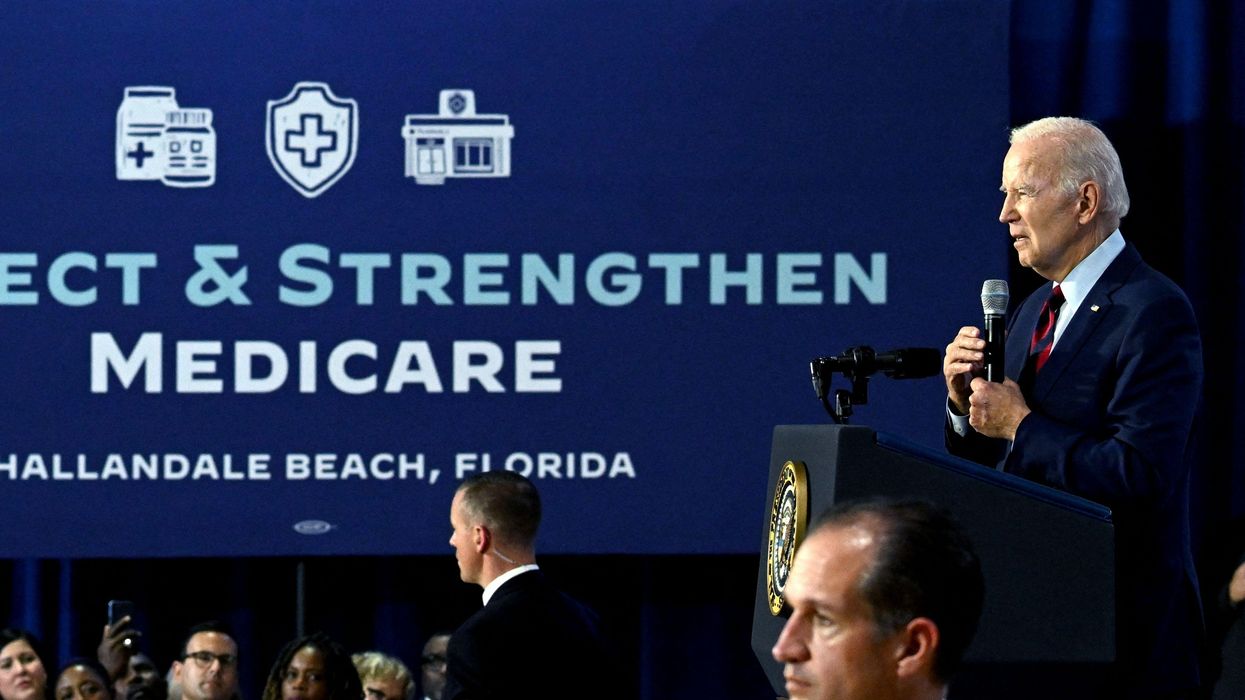
Sadly, getting the fraudsters out of ACO REACH will not improve a program designed to enrich corporations and harm patients. This entire apple cart needs to be overturned.
On January 17, the Center for Medicare and Medicaid Innovation (CMMI) announced 48 new model participants in a controversial pilot program called Accountable Care Organization: Realizing Equity, Access, and Community Health, better known as ACO REACH. CMMI, created by the Affordable Care Act, is supposed to test alternative payment models for Traditional Medicare to lower costs and improve, or at least not worsen, the care of 30 million seniors and people with disabilities.
The program, launched in the waning days of the Trump Administration as Direct Contracting, was greenlighted by the Biden Administration in 2021 and renamed ACO REACH in 2022. The model, which started with 53 contracting entities under Trump has grown to 132 participants with 131,772 health care practitioners and organizations providing care to over 2 million beneficiaries on Traditional Medicare under President Biden. Startling research found many of the ACO REACH participants have a history of Medicare fraud. Nevertheless, Medicare continues to sign contracts with them.
ACO REACH is a program designed to privatize what is left of public Medicare. Half of Medicare has been privatized through Medicare Advantage plans, which receive up-front “capitated” payments for Medicare beneficiaries from the Center for Medicare and Medicaid Services (CMS) and have the power to decide whether and how much of those Medicare dollars to spend on the beneficiaries who signed up for their plan. The Affordable Care Act allows Medicare Advantage plans to keep up to 15% of these Medicare dollars for administrative fees and profit (although they have clever ways to get around this restriction). To make these profits, Medicare Advantage plans create narrow networks for their beneficiaries, deny and delay care, and get overpaid by CMS, cashing in on billions of Medicare dollars.
What earthly reason would there be to exclude companies from ACO REACH but allow them to continue their plunder in Medicaid, Medicare Advantage, and subsidized on the ACA Exchanges?
ACO REACH uses similar tactics to those found in Medicare Advantage to profit from Medicare by overcharging Medicare, financially incentivizing providers to control healthcare costs for beneficiaries, and increasing the number of beneficiaries in their plans. But while some seniors “choose” to participate in Medicare Advantage, seniors and people with disabilities are auto-enrolled into an ACO REACH through their primary care physicians (PCPs). Thus, it is physicians and physician practices which are being lured into or forced to join the ACO REACH (Many physician practices are being swooped up by private equity or created whole-cloth). Physician practices, or their controllers, are enticed by the “shared savings” they will collect if they save money on their patients, shredding the trust between doctors and patients.
Once the PCP joins, their patients are automatically enrolled into the ACO REACH, without their informed knowledge or consent. While Medicare Advantage plans are allowed to keep 15% of the capitated fee for profits and administration, ACO REACH organizations, which include private equity and venture capital firms, as well as Medicare Advantage plans and insurance companies, can keep up to 40% of the capitated, up-front fees from Medicare as profit, guaranteeing themselves excessive payouts as they play out the eventual demise of the Medicare Trust Fund.
We were assured by CMMI that the new vetting process for all applicants was supposed to “ensure participants’ interests align with CMS’s vision.” They promised to protect beneficiaries and the model with “more participant vetting, monitoring, and greater transparency.” They pledged to employ “increased up-front screening… monitoring… and stronger protections against inappropriate coding and risk score growth.”
Yet, in a letter sent by Senator Elizabeth Warren (D-Mass.) and Congresswoman Pramila Jayapal (D-Wash.) to CMS Administrator Chiquita Brooks-LaSure in December 2022, they called on CMS to investigate nine organizations that had signed contracts to become an ACO REACH: Centene, Sutter Health, Clover Health, Adventist Health System/AdventHealth, Humana, Vively Health, Cigna/CareAllies, Bright Health/NeueHealth, and Nivano Physicians. The letter pointed out that all these organizations have been accused, investigated, settled claims, and/or sanctioned by governmental agencies for Medicare fraud and abuse.
Recently, CMMI Director Liz Fowler—a poster child for the revolving door in D.C.—was a guest speaker at the ACO REACH educational forum held by the California Public Employees Retirement System, the largest public pension fund in the country. When asked about private equity in ACO REACH, Fowler responded, “My personal opinion, you can’t say that private equity is inherently bad or good, but the way we viewed it, we want to make sure that the organizations in our program are in it for the right reasons.” And the right reasons for Fowler might very well be profit, given that six of the nine organizations identified by Warren and Jayapal are publicly traded in the stock market.
The entire apple cart needs to be overturned and replaced with a national, non-profit, single-payer healthcare system that covers everyone from birth to death...
Given Director Fowler’s personal opinion of private equity firms, it comes as no surprise that most of the Medicare fraudsters—including: Cigna/CareAllies, accused by the Justice Department of using a primary care program to defraud Medicare; Bright Health/NeueHealth, fined $1 million by the Colorado Division of Insurance for complaints from consumers and providers; Clover Health, which failed to let investors know it was under investigation by the DOJ as it was going public and even fined by CMS in 2016 for engaging in marketing activities that misled their beneficiaries; AdventHealth (formerly Adventist Health System), that paid $115 million to settle allegations of improper financial arrangements with referring physicians and for miscoding claims; Humana that overcharged Medicare by $200 million according to a federal audit; and Nivano Physicians, previously under a corrective action plan with the Department of Managed Health Care for lacking financial solvency—all made it through and became approved as ACO REACH.
Only three of the original nine identified in the Warren-Jayapal letter failed to get a contract with CMS: Centene, Sutter Health, and Vively Health. Fowler refuses to say whether these corporations pulled out on their own, or were rejected.
The Centene Corporation, with Medicaid contracts in 29 states, settled potential fraud claims in a dozen states to resolve Medicaid fraud claims for an estimated $1.25 billion. Sutter Health, a major California-based healthcare system, agreed to pay $90 million to settle allegations of knowingly submitting inaccurate information about the health of beneficiaries in the Sutter Medicare Advantage plans. DaVita HealthCare Partners Inc., one of the largest for-profit kidney dialysis providers and parent company of Vively Health, paid $450 million in 2015 to settle a whistleblower lawsuit, which accused DaVita of “intentionally wasting medications in order to overbill Medicare.”
What earthly reason would there be to exclude companies from ACO REACH but allow them to continue their plunder in Medicaid, Medicare Advantage, and subsidized on the ACA Exchanges?
The hypocrisy of CMS and CMMI is on full display. As is their collusion with the profiteers. Sadly, getting the fraudsters out of ACO REACH will not improve a program designed to enrich corporations and harm patients. The entire apple cart needs to be overturned and replaced with a national, non-profit, single-payer healthcare system that covers everyone from birth to death with all necessary medical services including long-term care, hearing, vision, dental, and prescription drugs. Only then can we stop worrying about the fraudsters.
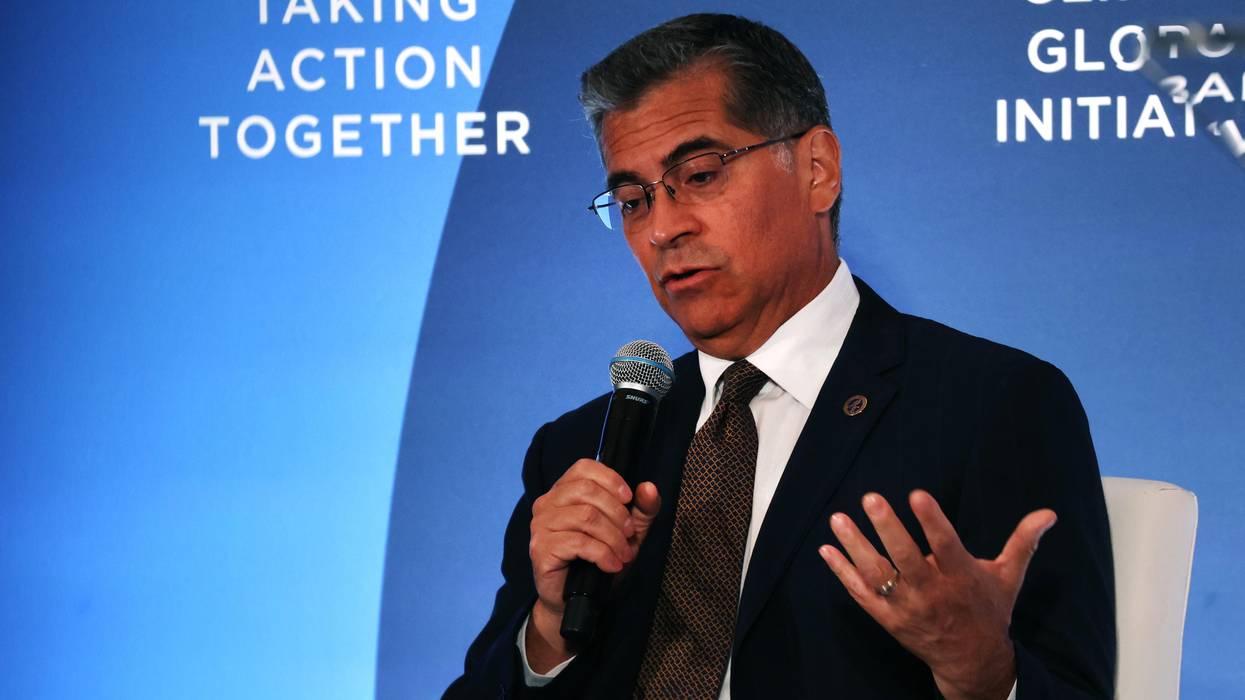
The program "presents a threat to the integrity of traditional Medicare, and an opportunity for corporations to take money from taxpayers while denying care to beneficiaries," said Physicians for a National Health Program.
A national physician group this week called for the complete termination of a Medicare privatization scheme that the Biden White House inherited from the Trump administration and later rebranded—while keeping intact its most dangerous components.
Now known as the Accountable Care Organization Realizing Equity, Access, and Community Health (ACO REACH) Model, the experiment inserts a for-profit entity between traditional Medicare beneficiaries and healthcare providers. The federal government pays the ACO REACH middlemen to cover patients' care while allowing them to pocket a significant chunk of the fee as profit.
The rebranded pilot program, which was launched without congressional approval and is set to run through at least 2026, officially began this month, and progressive healthcare advocates fear the experiment could be allowed to engulf traditional Medicare.
In a Tuesday letter to Health and Human Services Secretary Xavier Becerra and Centers for Medicare and Medicaid Services Administrator Chiquita Brooks-LaSure, Physicians for a National Health Program (PNHP) argued that ACO REACH "presents a threat to the integrity of traditional Medicare, and an opportunity for corporations to take money from taxpayers while denying care to beneficiaries."
The group, which advocates for a single-payer healthcare system, voiced alarm over the Biden administration's decision to let companies with records of fraud and other abuses take part in the ACO REACH pilot, which automatically assigns traditional Medicare patients to private entities without their consent.
CMS said in a press release Tuesday that "the ACO REACH Model has 132 ACOs with 131,772 healthcare providers and organizations providing care to an estimated 2.1 million beneficiaries" for 2023.
"As we have stated, PNHP believes that the REACH program threatens the integrity of traditional Medicare and should be permanently ended," Dr. Philip Verhoef, the physician group's president, wrote in the new letter. "Whether or not one agrees with this statement, we should all be able to agree that companies found to have violated the rules have no place managing the care of our Medicare beneficiaries."
Among the concerning examples PNHP cited was Clover Health, which has operated so-called Direct Contracting Entities (DCEs)—the name of private middlemen under the Trump-era version of the Medicare pilot—in more than a dozen states, including Arizona, Florida, Georgia, and New York.
PNHP noted that in 2016, CMS fined Clover—a large Medicare Advantage provider—for "using 'marketing and advertising materials that contained inaccurate statements' about coverage for out-of-network providers, after a high volume of complaints from patients who were denied coverage by its MA plan. Clover had failed to correct the materials after repeated requests by CMS."
Humana, another large insurer with its teeth in the Medicare privatization pilot, "improperly collected almost $200 million from Medicare by overstating the sickness of patients," PNHP observed, citing a recent federal audit.
"It appears that in its selection process [for ACO REACH], CMS did not prevent the inclusion of companies with histories of such behavior," Verhoef wrote. "Given these findings, we are concerned that CMS is inappropriately allowing these DCEs to continue unimpeded into ACO REACH in 2023."
While the Medicare pilot garnered little attention from lawmakers when the Trump administration first launched it during its final months in power, progressive members of Congress have recently ramped up scrutiny of the program.
Last month, Sen. Elizabeth Warren (D-Mass.) and Rep. Pramila Jayapal (D-Wash.) led a group of lawmakers in warning that ACO REACH "provides an opportunity for healthcare insurers with a history of defrauding and abusing Medicare and ripping off taxpayers to further encroach on the Medicare system."
"We have long been concerned about ensuring this model does not give corporate profiteers yet another opportunity to take a chunk out of traditional Medicare," the lawmakers wrote, echoing PNHP's concerns. "The continued participation of corporate actors with a history of fraud and abuse threatens the integrity of the program."

A group of progressive lawmakers led by Sen. Elizabeth Warren and Rep. Pramila Jayapal is calling on Biden health officials to immediately launch a fraud probe into the organizations taking part in ACO REACH, a slightly reformed version of a Medicare privatization scheme that the Trump administration set in motion during its final months in power.
In a Thursday letter to Chiquita Brooks-LaSure, head of the Centers for Medicare and Medicaid Services (CMS), 21 members of Congress voiced alarm that the ACO REACH pilot "provides an opportunity for healthcare insurers with a history of defrauding and abusing Medicare and ripping off taxpayers to further encroach on the Medicare system."
"No matter the name, these systems are designed to create profit for private insurers by delaying or denying care."
The newest version of the program, which entails shifting some traditional Medicare recipients onto privately run insurance plans without their knowledge or consent, is scheduled to formally begin on January 1, months after CMS announced largely cosmetic changes to the Trump-era Global and Professional Direct Contracting (GPDC) model.
The lawmakers noted in their letter that Physicians for a National Health Program (PNHP)--a doctor-led group pushing for the complete termination of ACO REACH--has identified at least 10 GPDC Direct Contracting Entities (DCEs) with records of "healthcare fraud, abuse, and violations of healthcare laws prior to 2021."
Those organizations, the lawmakers stressed, "have continued to operate in the program even as CMS pushes for additional oversight, vetting, and transparency."
"In its three-year history, the Medicare Direct Contracting program, now ACO REACH, has roughly doubled in size each year: it had 53 participants in its first year, 99 in the second year, and as many as 202 participants planned for 2023," the letter continued. "The exponential growth of the program heightens our concerns about the potential for fraud and abuse of taxpayer Medicare dollars."
One example the letter cites is Centene, a healthcare firm that is the parent company of three DCEs currently operating in 27 states. DCEs are paid by the federal government to fund a portion of Medicare enrollees' care and act as private middlemen between patients and healthcare providers.
Under ACO REACH, which has faced mounting opposition at the local and national levels in recent months, the middlemen will be able to keep 40% of what they don't spend on care as profit and overhead.
Critics of the pilot, set to run at least through 2026, argue that such an incentive invites fraud and other abuse of patients--practices that have been rife in privately run Medicare Advantage (MA) plans, which now provide coverage to nearly half of the eligible Medicare population.
The lawmakers point out in their letter that Centene "paid over $97 million in 2021 to settle allegations of 'duplicate and inflated claims submitted to the Department of Veterans Affairs' that occurred while its subsidiary, Health Net, was acting as a third-party administrator for VA medical care."
Centene is hardly an outlier, as the letter makes clear.
"AdventHealth, which operates a DCE in Florida, was the subject of one of the largest healthcare fraud settlements in 2015, paying $115 million to settle allegations that the organization 'submitted false claims to the Medicare and Medicaid programs,'" the lawmakers note. "An audit by the Department of Health and Human Services Office of Inspector General found that Humana, which operates a DCE in 13 states, improperly collected nearly $200 million in 2015 through upcoding and 'overstating how sick some patients were.'"
Warren (D-Mass.), Jayapal (D-Wash.), Sen. Bernie Sanders (I-Vt.), Rep. Alexandria Ocasio-Cortez (D-N.Y.), and the letter's other signatories warned that the presence of entities with long records of fraud and abuse puts "patients and taxpayer dollars at risk" and called on Biden's CMS to "quickly to address these risks and protect patients before the new ACO REACH program begins operations."
Specifically, the lawmakers urged the Biden administration to "closely examine" ACO REACH participants, halt participation by "any organizations that have committed healthcare fraud," and terminate "DCEs that do not meet the new standards for the ACO REACH program."
"We have long been concerned about ensuring this model does not give corporate profiteers yet another opportunity to take a chunk out of traditional Medicare," they wrote. "The continued participation of corporate actors with a history of fraud and abuse threatens the integrity of the program."
As lawmakers push for reforms to bar bad corporate actors from the program and enhance oversight, patient advocates are demanding that the program be cut off entirely, arguing that it poses a fundamental threat to traditional Medicare and cannot be salvaged with policy tweaks.
In a tweet on Sunday, the progressive advocacy group Social Security Works warned that "no matter the name, these systems are designed to create profit for private insurers by delaying or denying care."
"We need to expand and improve Medicare--not destroy it with backdoor privatization," the group added.
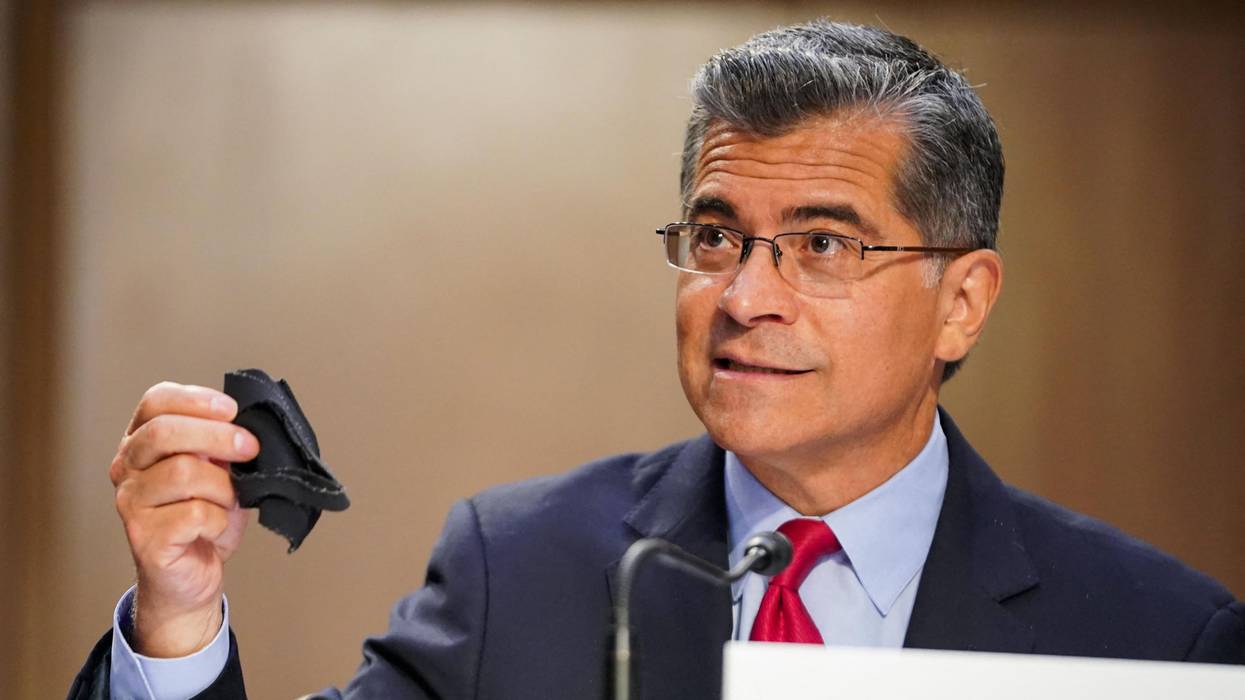
The labor council of the Austin, Texas AFL-CIO has passed a resolution urging the Biden administration to terminate a Medicare privatization scheme that is quietly moving ahead despite vocal opposition from doctors, seniors, and progressive lawmakers.
The pilot program, which inserts private middlemen between patients and healthcare providers, was unveiled with little notice during the final months of the Trump administration despite internal concerns about its legality. The experiment has since been largely upheld by the Biden administration, which announced mostly cosmetic changes earlier this year, winning applause from industry groups that lobbied against complete elimination of the program.
"Immediately stop and dismantle the ACO-REACH program, and instead, immediately protect and preserve traditional Medicare.
Now known as ACO REACH, the pilot involves shifting traditional Medicare recipients onto privately run insurance plans without their knowledge or consent in the name of cutting costs and improving quality.
The resolution unanimously adopted by the Austin AFL-CIO Labor Council last week raises alarm over that aspect of the pilot, noting that "ACO-REACH allows doctors and their offices to convert a patients' traditional Medicare choice into ACO-REACH coverage without first informing their patients about the change nor getting their patients' written permission."
"Doctors and their offices will have a financial incentive to convert to ACO-REACH coverage as they will also be allowed to keep up to 40% of their revenue that they don't spend on healthcare services as overhead, resulting in a 'windfall profit' versus traditional Medicare programs that are only allowed to keep the balance of 2% of their revenue after paying for overhead," the resolution continues.
Under the ACO REACH model, which critics warn could fully supplant traditional Medicare if it is allowed to continue, private entities that are accepted as participants are paid by the Centers for Medicare and Medicaid Services (CMS) and allowed to pocket a significant chunk of what they don't spend on healthcare. The newest version of the pilot, which was announced without congressional approval or oversight, is set to formally begin in January and will run at least through 2026.
The CMS Center for Medicare and Medicaid Innovation (CMMI), which is overseeing ACO REACH, is currently headed by Elizabeth Fowler, the former vice president of public policy and external affairs at WellPoint, Inc.--a health insurance firm that later became Anthem.
The Austin AFL-CIO Labor Council resolution implores the Biden administration to "immediately stop and dismantle the ACO-REACH program, and instead, immediately protect and preserve traditional Medicare plus adding coverage for hearing, vision, and dental care."
The labor council's resolution marks just the latest expression of outrage over the Biden administration's decision to build on a privatization ploy constructed by the Trump administration, which was replete with industry allies hostile to Medicare and other popular government programs.
In August, the AFL-CIO's Alameda, California labor council passed a resolution noting that it is "within the power of the Biden administration to end [ACO REACH] with the stroke of a pen"--and urging it to use that power. Similar resolutions have been approved in recent months by the Arizona Medical Association, the Seattle City Council, and the Texas State Democratic Executive Committee.
On top of opposition from hundreds of local and national advocacy organizations, lawmakers at the national level--including prominent progressives such as Sen. Elizabeth Warren (D-Mass.) and Rep. Pramila Jayapal (D-Wash.)--have raised concerns over the pilot, which could allow the private insurance giants that have profited hugely from Medicare Advantage to further entrench themselves in the Medicare program.
"We must immediately end Medicare privatization programs like ACO REACH," Jayapal, the chair of the Congressional Progressive Caucus, tweeted in April. "There's no excuse for allowing the same Medicare Advantage organizations to now administer 'care' for traditional Medicare beneficiaries."

Legislation unveiled Thursday by two House progressives would ban private insurers from using the "Medicare" label in plan titles and advertising, an effort to curb misleading marketing practices that for-profit health giants have used to expand their reach at great costs to patients and the federal government.
Introduced by Reps. Mark Pocan (D-Wis.) and Ro Khanna (D-Calif.), the Save Medicare Act would change the official name of Medicare Advantage (MA) to "Alternative Private Health Plan" to make clear that such coverage is offered by for-profit companies.
"' Medicare Advantage' is just private insurance that profits by denying coverage, and the name is being used to trick seniors into enrolling. That's not right," Khanna said in a statement. "This bill will prevent these private insurers from labeling themselves as 'Medicare' and allow us to focus on strengthening and expanding real Medicare instead."
To deter for-profit companies from using the Medicare name in its health insurance advertising, the bill proposes levying a $100,000 penalty for each use of the label in the title of a private plan.
According to the latest data from the Kaiser Family Foundation, more than 28 million people--nearly half of the eligible Medicare population--are currently enrolled in MA plans that are supposed to follow rules set by Medicare, which funds the privately run plans.
In practice, as The New York Times demonstrated this past weekend, MA is rife with fraud as private insurance giants frequently attempt to overbill Medicare, which funds the private plans that often skimp on care.
"The health system Kaiser Permanente called doctors in during lunch and after work and urged them to add additional illnesses to the medical records of patients they hadn't seen in weeks," the Times reported, detailing a scheme to make patients appear sicker in order to reap more government money. "Doctors who found enough new diagnoses could earn bottles of Champagne, or a bonus in their paycheck."
"Anthem, a large insurer now called Elevance Health, paid more to doctors who said their patients were sicker," the newspaper added. "And executives at UnitedHealth Group, the country's largest insurer, told their workers to mine old medical records for more illnesses--and when they couldn't find enough, sent them back to try again."
Despite longstanding accusations of fraud and abuse, MA plans continue to receive generous funding from the federal government. Earlier this year, the Centers for Medicare and Medicaid Services announced that the private plans will see an average 8.5% revenue boost next year, one of the program's largest-ever pay hikes.
"Only Medicare is Medicare. It is one of the most popular and important services the government provides," Pocan said Thursday. "We should be working to expand this service to include coverage for dental, vision, and hearing care, as well as looking at ways to strengthen it rather than allowing these 'Medicare Advantage' programs to provide pale alternatives to what Medicare does."
"These non-Medicare plans run by private insurers undermine traditional Medicare," Pocan continued. "They often leave patients without the benefits they need while overcharging the federal government for corporate profit."
The Save Medicare Act, Pocan argued, would eliminate "any confusion about what is--and what is not--Medicare" and ensure that "this essential program will continue to serve seniors and other Americans for years to come."
The new bill was announced days before the October 15 start of Medicare's open enrollment period, which comes as advocates continue to raise alarm over the Biden administration's decision to rebrand and sustain a Medicare privatization effort that began during Donald Trump's presidency.
Now known as ACO Reach, the program has been dubbed "Medicare Advantage on steroids."
"So-called Medicare Advantage is neither Medicare nor an advantage," said Wendell Potter, president of the Center for Health and Democracy. "It is simply another scheme by the insurance companies to line their pockets at the expense of consumers."
Diane Archer, president of Just Care USA and an outspoken critic of both Medicare Advantage and ACO Reach, said that "Medicare is a national treasure, delivering real value to millions of older adults and people with disabilities."
"Corporate insurance plans too often lean on Medicare's good name to mislead people into signing up with them," Archer added. "Rep. Pocan and Rep. Khanna's bill would put an end to this practice."

Sen. Ron Wyden on Tuesday launched an inquiry into "potentially deceptive" marketing tactics being used by private insurers and other companies that offer Medicare benefits through Medicare Advantage and Part D prescription drug plans, citing "alarming reports" about contractors "engaging in aggressive sales practices that take advantage of vulnerable seniors and people with disabilities."
In his capacity as chair of the Senate Finance Committee, which has jurisdiction over federal healthcare programs under the Social Security Act, including privately run Medicare Advantage (MA) and Part D drug plans, Wyden (D-Ore.) sent letters requesting more information from 15 state insurance commissioners and state health insurance assistance programs.
The letter--sent to officials in Arizona, California, Colorado, Florida, Georgia, Illinois, Massachusetts, Michigan, Missouri, New York, North Carolina, Ohio, Oregon, Pennsylvania, and Texas--comes amid a surge in complaints about MA and Part D marketing materials that purport to inform seniors of their coverage options.
In May, the Centers for Medicare & Medicaid Services (CMS), which has the authority to regulate materials used to market MA and Part D plans, reported that complaints from seniors more than doubled from 2020 to 2021.
The most recent survey of state insurance commissioners conducted by the National Association of Insurance Commissioners, moreover, found that there has been an increase in complaints regarding "false and misleading advertising" of MA plans, wrote Wyden.
"Unfortunately, false or misleading advertisements and fraudulent sales practices are not new issues for Medicare beneficiaries," he continued. The lawmaker pointed to 2009 and 2010 reports from the Government Accountability Office and the Health and Human Services Office of Inspector General, respectively, which documented widespread grievances against private enterprises and sales agents over their peddling of MA plans.
"Given this trend in complaints," Wyden wrote, "I am seeking to better understand the nature and extent of these marketing and enrollment issues. Your offices of state insurance regulation and State Health Insurance Programs (SHIPs) are working on-the-ground and are uniquely positioned to hear directly from Medicare beneficiaries about false or misleading marketing and sales practices in MA and Part D."
To that end, Wyden asked the officials to provide joint or separate responses to a series of questions by September 16.
Among other things, Wyden wants officials to provide data on the number of complaints about MA and/or Part D marketing materials they have received in 2019, 2020, 2021, and 2022, including possible patterns of discrimination, as well as "examples of potentially false or misleading marketing materials and advertisements in MA or Part D, including mailers, robo-calls, websites, television commercials, and online advertisements."
Of Medicare's 60 million beneficiaries, nearly half are enrolled in MA plans and 50 million are enrolled in Part D plans. Corporations that manage MA plans have come under fire for upcoding, or exaggerating patients' illnesses in order to reap larger payments from the federal government--something they do while refusing to provide necessary care for tens of thousands each year.
Despite mounting evidence of rampant fraud and other abuses committed by private MA organizations, the Biden administration announced in April that MA insurers will receive one of the largest payment increases in the program's history in 2023, eliciting pushback from several congressional Democrats led by Rep. Katie Porter of California.
MA and Part D, progressives argue, are part of a broader effort to privatize Medicare and must be resisted.
Another major culprit is ACO REACH, a pilot program that critics have described as "Medicare Advantage on steroids."
The pilot--an updated version of Direct Contracting launched by the Trump administration and continued by the Biden administration--invites MA insurers and Wall Street firms to "manage" care for Medicare beneficiaries and allows the profit-maximizing middlemen to pocket as much as 40% of what they don't spend on patients, all but ensuring life-threatening cost-cutting.
Physicians and healthcare advocates have warned that a failure to stop ACO REACH could result in the complete privatization of traditional Medicare in a matter of years.
"Even though Medicare is relied on by millions of seniors across the country, and precisely because it is so necessary and cost-effective, it is under threat today from the constant efforts of private insurance companies and for-profit investors who want to privatize it and turn it into yet another shameful opportunity to make money off of peoples' health problems," Rep. Pramila Jayapal (D-Wash.) said in May.
Jayapal, the chair of the Congressional Progressive Caucus and lead sponsor of the Medicare for All Act in the House, has called on the Biden administration to "fully end" ACO REACH and other privatization schemes.
You may wonder why former President Harry Truman is sitting close by while President Lyndon B. Johnson signs Medicare and Medicaid into law in the iconic 1965 photograph. Or why Harry Truman received the first-ever Medicare card. The reason is that Truman first proposed a Medicare-like system in 1945--but it took two decades, another Democratic president, and a Democratic supermajority in Congress to overcome opposition from political conservatives and the health industry. As we celebrate 57 years of Medicare and Medicaid successes on July 30th, it is vexing that these two vital programs continue to be in the cross-hairs of GOP opponents.
Today, elderly and low-income persons can truly say that--thanks to these two landmark programs--they are free from fear of not having health insurance.
Before Medicare was enacted, 56% of American seniors had no health insurance. Retirees were no longer covered by their employers. Private insurers considered them a "particularly bad risk" and rejected them as customers or charged premiums almost no one could afford. The uninsured elderly had to rely on family, friends, or charity to cover medical bills. More than one in four seniors went without medical care altogether.
Low-income Americans suffered a similar plight prior to the enactment of Medicaid. The poor had "limited access to healthcare, relying heavily on charity care and public hospitals," according to Modern Healthcare. While those deemed the "deserving poor" might receive care through community and religious organizations, "able-bodied (low income) people needing healthcare were generally out of luck."
A crowning achievement of LBJ's Great Society, the enactment of Medicare and Medicaid affirmed that the federal government had a legitimate--and moral--obligation to ensure that the most vulnerable among us could obtain health coverage like everyone else. A truly Great Society would refuse to leave the poor and the old out in the cold when they needed care.
"No longer will older Americans be denied the healing miracle of modern medicine," said President Johnson upon signing Medicare and Medicaid into law. "No longer will illness crush and destroy the savings that they have so carefully put away over a lifetime so that they might enjoy dignity in their later years."
Unfortunately, Medicare and Medicaid faced opposition from a vast majority of Republican members of Congress from the beginning. None other than Ronald Reagan warned in a 1965 radio address that "one of the traditional methods of imposing... socialism on a people has been by way of medicine." Reagan promised that if Medicare and Medicaid were enacted, "One of these days you and I are going to spend our sunset years telling our children... what it once was like in America when men were free."
In fact, the opposite occurred. Today, elderly and low-income persons can truly say that--thanks to these two landmark programs--they are free from fear of not having health insurance. Neither program is perfect. Federal programs of this scope must continually be updated to reflect present realities. However, public support for Medicare and Medicaid is unequivocal. Here are some of the things that our volunteers and supporters have told us over the past few years:
"I had cancer. Without Medicare, I would have been dead."
"As someone with several chronic conditions, I have a great peace of mind because Medicare and Medicare supplemental insurance pay my health care bills."
"My son is a special-needs child. Medicaid was our saving grace in terms of having medical insurance."
"My mother had an aneurysm. If she didn't have Medicaid, she would not have been able to recover at home quickly and comfortably."
Some 76 million Americans are covered by Medicaid, which not only provides health insurance for low-income people, but pays more than 60% of the cost of long-term care services and supports for seniors. Roughly 64 million Americans--most of them over 65 years of age--are enrolled in Medicare. That's about 140 million examples of how Americans with chronic and acute health conditions--who otherwise might not be able to obtain private insurance--can get the health care they need thanks to the vision of President Lyndon Johnson and the U.S. Congress in 1965.
We all should applaud these achievements and the resulting health improvements and increased longevity of our oldest citizens--right? Instead of simply being able to celebrate this 57th anniversary, though, seniors' advocates are having to fight to preserve these life-saving, poverty prevention programs. That's because elite, well-funded, and powerful conservative interests who oppose Medicare and Medicaid continue their efforts to undermine both. During the Trump administration, Republicans renewed their calls to "block grant" Medicaid, which would have forced the states to slash benefits and trim their rolls of insured citizens. Democrats have been able to stop those efforts for now.
As for Medicare, instead of voicing outright opposition, adversaries now pay lip service to preserving Medicare. (President Trump famously promised "not to touch" Medicare but proposed to cut the program by billions of dollars in successive White House budgets.) Today, many conservatives focus on privatizing Medicare. The privatization effort got a running start through the Medicare Advantage (MA) program, which was created by the Medicare Modernization Act of 2003. (It's the same law that forbade Medicare from negotiating prescription drug prices with Big Pharma.)
Medicare Advantage was supposed to save taxpayers money by providing more cost-effective care than the traditional Medicare program. Instead, MA insurers have benefitted handsomely from federal overpayments and fraudulent diagnostic "upcoding." As multiple news reports and investigations have confirmed, Medicare Advantage insurers overbilled the government to the tune of $34 billion dollars in 2018-2019 alone. They've also increased profits by denying medically warranted pre-authorization requests and refusing to reimburse providers for valid claims.
Likewise, Part D prescription drug prices have continued to rise dramatically, hurting seniors on fixed incomes while Big Pharma profits climb ever higher. In 2021, major pharmaceutical CEOs raked in over $292.6 million while 2.3 million seniors were unable to afford at least one doctor-prescribed medication. How ironic that the fiscal conservatives who blast Medicare spending on seniors are at the same time shamefully silent while MA insurers and drug makers reap record profits from the program.
The reason you will likely only hear Democrats marking the anniversary of Medicare and Medicaid is that these programs began with them; they have endured because of them; and the future of both programs depends on electing members of Congress who will strive to continue them.
Meanwhile, private interests recently have gained a bigger foothold in the publicly-run, traditional Medicare program. When Accountable Care Organizations (ACOs) were established through the Affordable Care Act they were intended to improve coordination of care of chronic conditions by having Medicare contract directly with providers to improve quality of care. Over time, for-profit investor driven groups have insinuated themselves into the program. A new initiative begun during the Trump era (later rebranded as ACO/REACH by the Biden administration), provides substantially increased financial incentives for reducing costs. Seniors' advocates are rightfully concerned that this will draw more private entities into traditional Medicare and could eventually lead to additional problems akin to what's been taking place in the Medicare Advantage program.
For years, Democrats have been the only force behind expansion plans for traditional Medicare to cover basic hearing, vision, and dental care. President Biden included these in his initial Build Back Better plan, but vision and dental care were later dropped in Congressional negotiations. Hearing care coverage and expanded Medicaid home and community-based services also perished after Senator Joe Manchin withdrew his support. In an effort to salvage some of their expansion efforts, Congressional Democrats recently sent a letter to the Centers for Medicaid and Medicare Services (CMS) urging that the program broaden the rules for "medically necessary" dental care to cover seniors with various health conditions affecting their teeth.
As for Medicaid, the Biden administration continues to encourage states to expand their programs under the Affordable Care Act. About a dozen red states still refuse to expand their Medicaid programs, denying coverage to millions of uninsured, low-income residents--even though the federal government offers the states extra funding for expansion.
Let's be very clear, Democratic proposals to protect and expand Medicare and Medicaid have received almost ZERO support from the GOP, while proposals to privatize and cut benefits have originated with Republicans. The reason you will likely only hear Democrats marking the anniversary of Medicare and Medicaid is that these programs began with them; they have endured because of them; and the future of both programs depends on electing members of Congress who will strive to continue them. Seniors who value these crucial, life-saving programs should bear this in mind when casting their votes in November. As we mark this 57th anniversary, let's re-commit to protecting the two greatest pillars of the Great Society.
Rep. Pramila Jayapal on Monday called for an end to all Medicare privatization schemes following a Washington Post report spotlighting how Medicare Advantage plans are distorting patients' medical records to overbill the federal government and boost their profits.
" Medicare Advantage plans regularly deny needed care to seniors and frequently create fake illnesses to defraud the government," Jayapal (D-Wash.), the chair of the Congressional Progressive Caucus, wrote in a social media post.
"This is a clear-cut example of why we must end Medicare privatization programs."
"This is a clear-cut example of why we must end Medicare privatization programs," added Jayapal, the lead sponsor of the Medicare for All Act in the House. "Our seniors deserve better."
Privately run Medicare Advantage (MA) plans have long been notorious for the practice of upcoding, whereby large insurers and other MA firms make enrollees appear sicker than they actually are in order to reap larger payments from the federal government--even as they refuse to provide necessary care for tens of thousands of patients each year.
The Post on Sunday detailed the case of Kathy Ormsby, a former employee of the Palo Alto Medical Foundation who blew the whistle on the firm's efforts--alongside its parent affiliate Sutter Health--to pressure doctors into adding false diagnoses to patients' medical histories.
"The point of larding the medical records with outdated and irrelevant diagnoses such as cancer and stroke--often without the knowledge of the patients themselves--was not providing better care, according to a lawsuit from the Justice Department, which investigated a whistleblower complaint Ormsby filed," the Post noted. "It was to make patients appear sicker than they were."
"The maneuver translated into millions of dollars in inflated bills to the federal Medicare Advantage insurance program, the government alleged in its false-claims lawsuit filed in U.S. District Court in California," the newspaper added. "In a sample of hundreds of cases Ormsby audited, the government's lawsuit said, she discovered 90% of diagnoses for cancer were invalid, as were 96% for stroke and 66% for fractures."
Despite growing mountains of evidence documenting large-scale fraud and other abuses committed by private MA organizations, the Biden administration announced in April that MA insurers will get one of the largest payment increases in the program's history in 2023.
"Medicare Advantage insurers such as United Healthcare, Anthem, and CVS/Aetna are celebrating record profits in the tens of billions of dollars," Dr. Susan Rogers, president of Physicians for a National Healthcare Program, told The Lever last week. "Their business plan is simple: inflate their Medicare payments by making seniors look sicker than they are, and then pocket more of those Medicare dollars by ruthlessly denying seniors' care."
Meanwhile, the Health and Human Services Department has decided not to reverse its enactment of one of the largest premium increases in the history of traditional Medicare this year, locking in higher costs for tens of millions of seniors just ahead of the pivotal midterm elections.
The administration is also pushing ahead with a pilot program known as ACO REACH, which critics have described as "Medicare Advantage on steroids."
If the pilot--which originated under the Trump administration--isn't halted, physicians and healthcare advocates warn that it could result in the total privatization of traditional Medicare in a matter of years.
"We must immediately end Medicare privatization programs like ACO REACH," Jayapal argued in April. "There's no excuse for allowing the same Medicare Advantage organizations to now administer 'care' for traditional Medicare beneficiaries."