SUBSCRIBE TO OUR FREE NEWSLETTER
Daily news & progressive opinion—funded by the people, not the corporations—delivered straight to your inbox.
5
#000000
#FFFFFF
To donate by check, phone, or other method, see our More Ways to Give page.
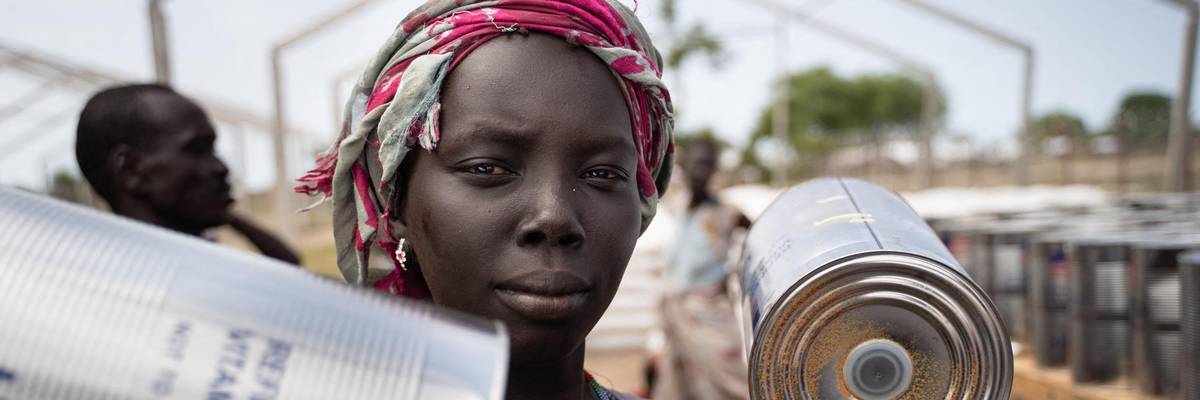
The speed with which Russia's invasion of Ukraine has helped push tens of millions of people across the globe into poverty has been "breathtaking," a top United Nations Development Program official said Thursday as the agency released a report on the cost-of-living crisis in the Global South.
Just four months after President Vladimir Putin began the war in Ukraine, more than 71 million people around the world have fallen into poverty as food exports from the two countries--which together export nearly a quarter of the world's wheat, 14% of corn, and more than 50% of sunflower oil--have plummeted.
Russia and Ukraine are also the world's two largest exporters of natural gas and crude oil, and the conflict has pushed worldwide prices up, with "immediate and devastating impacts on the poorest households," according to the UNDP.
Natural gas prices increased by nearly 167% in the 12-month period ending in May 2022, and more than two-thirds of the surge happened after the war began.
"Cash in the hands of the people who are reeling from the astronomical price increases to food and fuel will have a widespread impact in positive ways."
"Clear hotspots" facing new levels of poverty include the Balkans, countries in the Caspian Sea region, and Sub-Saharan Africa, in particular the Sahel region, the report says.
In the first three months after the war began in late February, 51.6 million more people fell into extreme poverty, surviving on $1.90 per day or less. An additional 20 million people have been forced to live on $3.20 per day or less.
By comparison, 125 million people were pushed into poverty over about 18 months as the coronavirus pandemic spread across the globe.
"Unprecedented price surges mean that for many people across the world, the food that they could afford yesterday is no longer attainable today," UNDP administrator Achim Steiner said in a statement. "This cost-of-living crisis is tipping millions of people into poverty and even starvation at breathtaking speed and with that, the threat of increased social unrest grows by the day."
The agency's report focused on 159 countries in the Global South and found that countries including Rwanda, Sudan, Uzbekistan, and Sri Lanka are facing the most drastic impacts of the crisis.
The worldwide cost-of-living emergency comes as Sri Lanka defaulted on its debt last month for the first time in the South Asian country's history.
"That default essentially means the country is no longer able to pay--or not only service--its debt, but actually to import fundamental parts of what keeps an economy alive, whether it is petrol or it is diesel, whether it is fuel, whether it is medicine," Steiner said Thursday.
The country's crisis has sparked mass protests as many people have been forced to wait for days in line for fuel and authorities have announced plans to cut electricity by up to three hours per day, as well as warning that the health system could collapse as access to medicine plunges.
"We're witnessing a tragic series of events that are unfolding in Sri Lanka right now that should be a warning to anyone who thinks that, you know, it is up to countries themselves to figure out how to deal with this crisis," said Steiner.
More than half of the poorest countries in the world are currently in debt distress or are at high risk of being unable to pay back their debts.
Related Content

To help millions of people struggling to survive as the cost of living rises, the UNDP called for a two-year moratorium on official debt for all developing countries, to help vulnerable economies bounce back from the repeated shocks seen in the last two years.
Developing countries have mostly relied on tax cuts and existing subsidies to help households cope with the rising cost of living, according to the report, but the UNDP called for the use of direct cash transfers to help alleviate new levels of poverty.
"Cash in the hands of the people who are reeling from the astronomical price increases to food and fuel will have a widespread impact in positive ways," said George Gray Molina, head of strategic policy engagement for the UNDP, in a statement. "Our modeling shows that even very modest cash transfers can have dramatic and stabilizing effects for the poorest and most vulnerable in this crisis."
"And we know from Covid-19 responses that developing countries must be supported by the global community to have the fiscal space to fund these schemes," Molina added.
The speed with which Russia's invasion of Ukraine has helped push tens of millions of people across the globe into poverty has been "breathtaking," a top United Nations Development Program official said Thursday as the agency released a report on the cost-of-living crisis in the Global South.
Just four months after President Vladimir Putin began the war in Ukraine, more than 71 million people around the world have fallen into poverty as food exports from the two countries--which together export nearly a quarter of the world's wheat, 14% of corn, and more than 50% of sunflower oil--have plummeted.
Russia and Ukraine are also the world's two largest exporters of natural gas and crude oil, and the conflict has pushed worldwide prices up, with "immediate and devastating impacts on the poorest households," according to the UNDP.
Natural gas prices increased by nearly 167% in the 12-month period ending in May 2022, and more than two-thirds of the surge happened after the war began.
"Cash in the hands of the people who are reeling from the astronomical price increases to food and fuel will have a widespread impact in positive ways."
"Clear hotspots" facing new levels of poverty include the Balkans, countries in the Caspian Sea region, and Sub-Saharan Africa, in particular the Sahel region, the report says.
In the first three months after the war began in late February, 51.6 million more people fell into extreme poverty, surviving on $1.90 per day or less. An additional 20 million people have been forced to live on $3.20 per day or less.
By comparison, 125 million people were pushed into poverty over about 18 months as the coronavirus pandemic spread across the globe.
"Unprecedented price surges mean that for many people across the world, the food that they could afford yesterday is no longer attainable today," UNDP administrator Achim Steiner said in a statement. "This cost-of-living crisis is tipping millions of people into poverty and even starvation at breathtaking speed and with that, the threat of increased social unrest grows by the day."
The agency's report focused on 159 countries in the Global South and found that countries including Rwanda, Sudan, Uzbekistan, and Sri Lanka are facing the most drastic impacts of the crisis.
The worldwide cost-of-living emergency comes as Sri Lanka defaulted on its debt last month for the first time in the South Asian country's history.
"That default essentially means the country is no longer able to pay--or not only service--its debt, but actually to import fundamental parts of what keeps an economy alive, whether it is petrol or it is diesel, whether it is fuel, whether it is medicine," Steiner said Thursday.
The country's crisis has sparked mass protests as many people have been forced to wait for days in line for fuel and authorities have announced plans to cut electricity by up to three hours per day, as well as warning that the health system could collapse as access to medicine plunges.
"We're witnessing a tragic series of events that are unfolding in Sri Lanka right now that should be a warning to anyone who thinks that, you know, it is up to countries themselves to figure out how to deal with this crisis," said Steiner.
More than half of the poorest countries in the world are currently in debt distress or are at high risk of being unable to pay back their debts.
Related Content
To help millions of people struggling to survive as the cost of living rises, the UNDP called for a two-year moratorium on official debt for all developing countries, to help vulnerable economies bounce back from the repeated shocks seen in the last two years.
Developing countries have mostly relied on tax cuts and existing subsidies to help households cope with the rising cost of living, according to the report, but the UNDP called for the use of direct cash transfers to help alleviate new levels of poverty.
"Cash in the hands of the people who are reeling from the astronomical price increases to food and fuel will have a widespread impact in positive ways," said George Gray Molina, head of strategic policy engagement for the UNDP, in a statement. "Our modeling shows that even very modest cash transfers can have dramatic and stabilizing effects for the poorest and most vulnerable in this crisis."
"And we know from Covid-19 responses that developing countries must be supported by the global community to have the fiscal space to fund these schemes," Molina added.
The speed with which Russia's invasion of Ukraine has helped push tens of millions of people across the globe into poverty has been "breathtaking," a top United Nations Development Program official said Thursday as the agency released a report on the cost-of-living crisis in the Global South.
Just four months after President Vladimir Putin began the war in Ukraine, more than 71 million people around the world have fallen into poverty as food exports from the two countries--which together export nearly a quarter of the world's wheat, 14% of corn, and more than 50% of sunflower oil--have plummeted.
Russia and Ukraine are also the world's two largest exporters of natural gas and crude oil, and the conflict has pushed worldwide prices up, with "immediate and devastating impacts on the poorest households," according to the UNDP.
Natural gas prices increased by nearly 167% in the 12-month period ending in May 2022, and more than two-thirds of the surge happened after the war began.
"Cash in the hands of the people who are reeling from the astronomical price increases to food and fuel will have a widespread impact in positive ways."
"Clear hotspots" facing new levels of poverty include the Balkans, countries in the Caspian Sea region, and Sub-Saharan Africa, in particular the Sahel region, the report says.
In the first three months after the war began in late February, 51.6 million more people fell into extreme poverty, surviving on $1.90 per day or less. An additional 20 million people have been forced to live on $3.20 per day or less.
By comparison, 125 million people were pushed into poverty over about 18 months as the coronavirus pandemic spread across the globe.
"Unprecedented price surges mean that for many people across the world, the food that they could afford yesterday is no longer attainable today," UNDP administrator Achim Steiner said in a statement. "This cost-of-living crisis is tipping millions of people into poverty and even starvation at breathtaking speed and with that, the threat of increased social unrest grows by the day."
The agency's report focused on 159 countries in the Global South and found that countries including Rwanda, Sudan, Uzbekistan, and Sri Lanka are facing the most drastic impacts of the crisis.
The worldwide cost-of-living emergency comes as Sri Lanka defaulted on its debt last month for the first time in the South Asian country's history.
"That default essentially means the country is no longer able to pay--or not only service--its debt, but actually to import fundamental parts of what keeps an economy alive, whether it is petrol or it is diesel, whether it is fuel, whether it is medicine," Steiner said Thursday.
The country's crisis has sparked mass protests as many people have been forced to wait for days in line for fuel and authorities have announced plans to cut electricity by up to three hours per day, as well as warning that the health system could collapse as access to medicine plunges.
"We're witnessing a tragic series of events that are unfolding in Sri Lanka right now that should be a warning to anyone who thinks that, you know, it is up to countries themselves to figure out how to deal with this crisis," said Steiner.
More than half of the poorest countries in the world are currently in debt distress or are at high risk of being unable to pay back their debts.
Related Content
To help millions of people struggling to survive as the cost of living rises, the UNDP called for a two-year moratorium on official debt for all developing countries, to help vulnerable economies bounce back from the repeated shocks seen in the last two years.
Developing countries have mostly relied on tax cuts and existing subsidies to help households cope with the rising cost of living, according to the report, but the UNDP called for the use of direct cash transfers to help alleviate new levels of poverty.
"Cash in the hands of the people who are reeling from the astronomical price increases to food and fuel will have a widespread impact in positive ways," said George Gray Molina, head of strategic policy engagement for the UNDP, in a statement. "Our modeling shows that even very modest cash transfers can have dramatic and stabilizing effects for the poorest and most vulnerable in this crisis."
"And we know from Covid-19 responses that developing countries must be supported by the global community to have the fiscal space to fund these schemes," Molina added.