SUBSCRIBE TO OUR FREE NEWSLETTER
Daily news & progressive opinion—funded by the people, not the corporations—delivered straight to your inbox.
5
#000000
#FFFFFF
To donate by check, phone, or other method, see our More Ways to Give page.
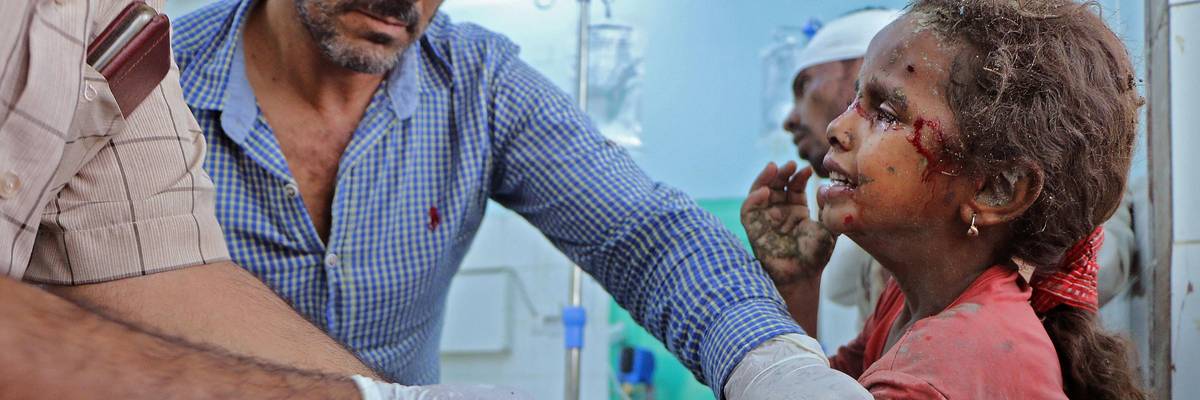
As a year in which millions of youth were caught up in armed conflicts around the world came to a close Friday, the United Nations Children's Fund warned that "grave violations against children" are on the rise and called on all offending parties to work for a more peaceful 2022.
"Year after year, parties to conflict continue to demonstrate a dreadful disregard for the rights and wellbeing of children."
UNICEF said that while data for 2021 are not yet available, 26,425 grave violations against children were verified by the U.N. in 2020. The agency defines "grave violations" as killing and maiming, recruitment and use of child soldiers, sexual violence, attacks against schools or hospitals, abduction, and denial of access to humanitarian aid.
Over the past 16 years, UNICEF has verified over 266,000 grave violations against children in over 30 conflicts in Africa, Asia, the Middle East, and Latin America.
"Year after year, parties to conflict continue to demonstrate a dreadful disregard for the rights and wellbeing of children," UNICEF Executive Director Henrietta Fore said in a statement. "Children are suffering, and children are dying because of this callousness. Every effort should be made to keep these children safe from harm."
According to UNICEF:
From Afghanistan to Yemen, and Syria to northern Ethiopia, thousands of children paid a devastating price as armed conflict, inter-communal violence, and insecurity continued. Just last week, at least four children were reportedly among the victims as at least 35 people were killed--including two Save the Children staff members--in Kayah State in Eastern Myanmar. This was just the latest high-profile example of the devastating toll conflict takes on children and the ongoing threats to humanitarian workers.
UNICEF said that Afghanistan had "the highest number of verified child casualties since 2005, at more than 28,500--accounting for 27% of all verified child casualties globally."
"Meanwhile, the Middle East and North Africa region has the highest number of verified attacks on schools and hospitals since 2005, with 22 such attacks verified in the first six months of this year," the agency added.
The U.N. Development Program projected last month that the death toll from Yemen's seven-year civil war and U.S.-backed Saudi-led intervention would reach 377,000 by the end of this year, with 70% of those killed under the age of five. According to UNICEF, a Yemeni child dies every 10 minutes from preventable causes related to the ongoing war.
Related Content

Additionally, "the use of explosive weapons, particularly in populated areas, is a persistent and growing threat to children and their families," UNICEF said. "In 2020, explosive weapons and explosive remnants of war were responsible for nearly 50% of all child casualties, resulting in more than 3,900 children killed and maimed."
Children in conflict zones and beyond also suffered from widespread hunger in 2021. The Italy-based humanitarian group Cesvi said in October that the "three Cs"--conflict, Covid-19, and the climate emergency--"are starving the world."
UNICEF urged all 61 U.N.-listed parties to conflicts to "commit to formal action plans and take concrete measures to protect children."
"These include preventing grave violations from occurring in the first place, releasing children from armed forces and groups, protecting children from sexual violence, and stopping attacks on hospitals and schools," the agency said.
"Ultimately, children living through war will only be safe when parties to conflict take concrete action to protect them and stop committing grave violations," said Fore. "As we approach the end of 2021, I call on all parties to conflict to end attacks against children, uphold their rights, and strive for peaceful political resolutions to war."
As a year in which millions of youth were caught up in armed conflicts around the world came to a close Friday, the United Nations Children's Fund warned that "grave violations against children" are on the rise and called on all offending parties to work for a more peaceful 2022.
"Year after year, parties to conflict continue to demonstrate a dreadful disregard for the rights and wellbeing of children."
UNICEF said that while data for 2021 are not yet available, 26,425 grave violations against children were verified by the U.N. in 2020. The agency defines "grave violations" as killing and maiming, recruitment and use of child soldiers, sexual violence, attacks against schools or hospitals, abduction, and denial of access to humanitarian aid.
Over the past 16 years, UNICEF has verified over 266,000 grave violations against children in over 30 conflicts in Africa, Asia, the Middle East, and Latin America.
"Year after year, parties to conflict continue to demonstrate a dreadful disregard for the rights and wellbeing of children," UNICEF Executive Director Henrietta Fore said in a statement. "Children are suffering, and children are dying because of this callousness. Every effort should be made to keep these children safe from harm."
According to UNICEF:
From Afghanistan to Yemen, and Syria to northern Ethiopia, thousands of children paid a devastating price as armed conflict, inter-communal violence, and insecurity continued. Just last week, at least four children were reportedly among the victims as at least 35 people were killed--including two Save the Children staff members--in Kayah State in Eastern Myanmar. This was just the latest high-profile example of the devastating toll conflict takes on children and the ongoing threats to humanitarian workers.
UNICEF said that Afghanistan had "the highest number of verified child casualties since 2005, at more than 28,500--accounting for 27% of all verified child casualties globally."
"Meanwhile, the Middle East and North Africa region has the highest number of verified attacks on schools and hospitals since 2005, with 22 such attacks verified in the first six months of this year," the agency added.
The U.N. Development Program projected last month that the death toll from Yemen's seven-year civil war and U.S.-backed Saudi-led intervention would reach 377,000 by the end of this year, with 70% of those killed under the age of five. According to UNICEF, a Yemeni child dies every 10 minutes from preventable causes related to the ongoing war.
Related Content
Additionally, "the use of explosive weapons, particularly in populated areas, is a persistent and growing threat to children and their families," UNICEF said. "In 2020, explosive weapons and explosive remnants of war were responsible for nearly 50% of all child casualties, resulting in more than 3,900 children killed and maimed."
Children in conflict zones and beyond also suffered from widespread hunger in 2021. The Italy-based humanitarian group Cesvi said in October that the "three Cs"--conflict, Covid-19, and the climate emergency--"are starving the world."
UNICEF urged all 61 U.N.-listed parties to conflicts to "commit to formal action plans and take concrete measures to protect children."
"These include preventing grave violations from occurring in the first place, releasing children from armed forces and groups, protecting children from sexual violence, and stopping attacks on hospitals and schools," the agency said.
"Ultimately, children living through war will only be safe when parties to conflict take concrete action to protect them and stop committing grave violations," said Fore. "As we approach the end of 2021, I call on all parties to conflict to end attacks against children, uphold their rights, and strive for peaceful political resolutions to war."
As a year in which millions of youth were caught up in armed conflicts around the world came to a close Friday, the United Nations Children's Fund warned that "grave violations against children" are on the rise and called on all offending parties to work for a more peaceful 2022.
"Year after year, parties to conflict continue to demonstrate a dreadful disregard for the rights and wellbeing of children."
UNICEF said that while data for 2021 are not yet available, 26,425 grave violations against children were verified by the U.N. in 2020. The agency defines "grave violations" as killing and maiming, recruitment and use of child soldiers, sexual violence, attacks against schools or hospitals, abduction, and denial of access to humanitarian aid.
Over the past 16 years, UNICEF has verified over 266,000 grave violations against children in over 30 conflicts in Africa, Asia, the Middle East, and Latin America.
"Year after year, parties to conflict continue to demonstrate a dreadful disregard for the rights and wellbeing of children," UNICEF Executive Director Henrietta Fore said in a statement. "Children are suffering, and children are dying because of this callousness. Every effort should be made to keep these children safe from harm."
According to UNICEF:
From Afghanistan to Yemen, and Syria to northern Ethiopia, thousands of children paid a devastating price as armed conflict, inter-communal violence, and insecurity continued. Just last week, at least four children were reportedly among the victims as at least 35 people were killed--including two Save the Children staff members--in Kayah State in Eastern Myanmar. This was just the latest high-profile example of the devastating toll conflict takes on children and the ongoing threats to humanitarian workers.
UNICEF said that Afghanistan had "the highest number of verified child casualties since 2005, at more than 28,500--accounting for 27% of all verified child casualties globally."
"Meanwhile, the Middle East and North Africa region has the highest number of verified attacks on schools and hospitals since 2005, with 22 such attacks verified in the first six months of this year," the agency added.
The U.N. Development Program projected last month that the death toll from Yemen's seven-year civil war and U.S.-backed Saudi-led intervention would reach 377,000 by the end of this year, with 70% of those killed under the age of five. According to UNICEF, a Yemeni child dies every 10 minutes from preventable causes related to the ongoing war.
Related Content
Additionally, "the use of explosive weapons, particularly in populated areas, is a persistent and growing threat to children and their families," UNICEF said. "In 2020, explosive weapons and explosive remnants of war were responsible for nearly 50% of all child casualties, resulting in more than 3,900 children killed and maimed."
Children in conflict zones and beyond also suffered from widespread hunger in 2021. The Italy-based humanitarian group Cesvi said in October that the "three Cs"--conflict, Covid-19, and the climate emergency--"are starving the world."
UNICEF urged all 61 U.N.-listed parties to conflicts to "commit to formal action plans and take concrete measures to protect children."
"These include preventing grave violations from occurring in the first place, releasing children from armed forces and groups, protecting children from sexual violence, and stopping attacks on hospitals and schools," the agency said.
"Ultimately, children living through war will only be safe when parties to conflict take concrete action to protect them and stop committing grave violations," said Fore. "As we approach the end of 2021, I call on all parties to conflict to end attacks against children, uphold their rights, and strive for peaceful political resolutions to war."