SUBSCRIBE TO OUR FREE NEWSLETTER
Daily news & progressive opinion—funded by the people, not the corporations—delivered straight to your inbox.
5
#000000
#FFFFFF
To donate by check, phone, or other method, see our More Ways to Give page.
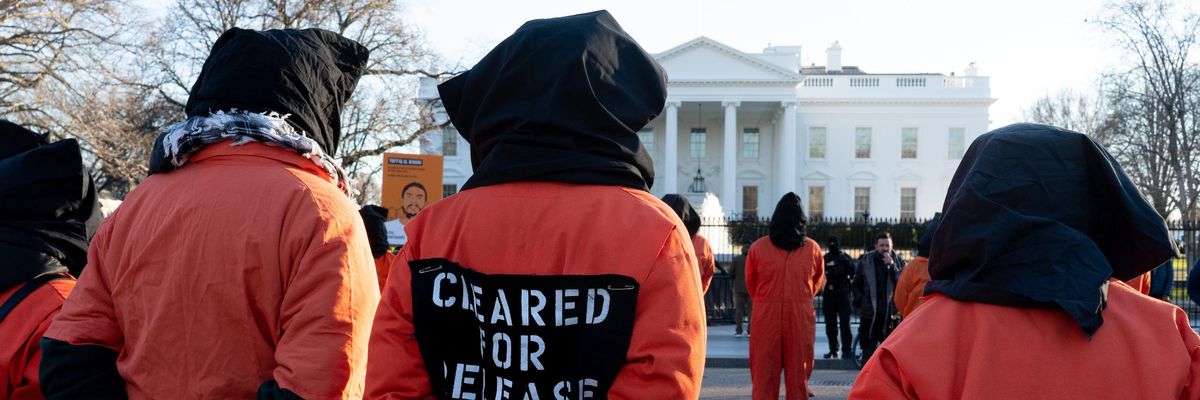
Seven out of the eight members of a military jury called for clemency to be granted in the case of a Guantanamo detainee in light of his detention without due process and said his abuse at the hands of the CIA was "closer to torture performed by the most abusive regimes in modern history" rather than the euphemistic "enhanced interrogation techniques" claimed by the agency.
"The treatment of Mr. Khan in the hands of U.S. personnel should be a source of shame for the U.S. government."
The call from the military officials, the New York Times reported Sunday, came in a handwritten letter to the senior official reviewing the case of 41-year-old Majid Khan, whom the jury sentenced on Friday to 26 years in prison.
The jurors in their letter said the denial of "basic due process" for Khan was "an affront to... the concept of justice."
Khan's sentencing followed his landmark testimony Thursday about the brutality he endured at secret CIA sites for three years beginning in 2003 until he was taken to Guantanamo in 2006. The details of his torture first emerged in 2015.
Khan's accounts to jurors last week included being "raped by CIA medics," waterboarded, hung naked from a ceiling beam, and chained to the floors for days.
"The more I cooperated and told them," Khan, said at the hearing, "the more I was tortured."
The jurors' letter, dated Friday, stated that they "recommend clemency" and noted that "Khan committed serious crimes against the U.S. and partner nations" for which he pled guilty, that he expressed remorse for the impact of those actions, and that he's cooperating with prosecutions.
"Khan was subjected to physical and psychological abuse" that "was of no practical value in terms of intelligence or any other tangible benefit to U.S. interests," the letter stated.
"Instead," the seven jurors wrote, "it is a stain on the moral fiber of America; the treatment of Mr. Khan in the hands of U.S. personnel should be a source of shame for the U.S. government."
Born in Pakistan, Khan came with his family to the U.S. and grew up and graduated high school outside Baltimore. He returned to Pakistan in his early twenties to get married. He has admitted to being a courier for al-Qaeda.
Khan was a vulnerable target for recruitment to terrorist activities, the jurors wrote, because of his young age and because he was still mourning the loss of his mother. The jurors also deemed Khan "not a threat for future extremism."
Related Content

According to the New York-based Center for Constitutional Rights, part of the team representing Khan, the 2012 plea deal he reached with the U.S. government supersedes the 26-year sentence he was dealt last week, meaning he should be released in February 2022.
Despite former President Barack Obama's campaign vow to close the prison, Guantanamo is now in its 20th year.
Wells Dixon, a senior attorney with the Center for Constitutional Rights who represents Khan, said in a Friday statement, "We look forward to working with the Biden administration to ensure that when Majid is transferred from Guantanamo at the conclusion of his sentence in February, he has the necessary support to allow him to move on with his life and be a positive, contributing member of society."
Seven out of the eight members of a military jury called for clemency to be granted in the case of a Guantanamo detainee in light of his detention without due process and said his abuse at the hands of the CIA was "closer to torture performed by the most abusive regimes in modern history" rather than the euphemistic "enhanced interrogation techniques" claimed by the agency.
"The treatment of Mr. Khan in the hands of U.S. personnel should be a source of shame for the U.S. government."
The call from the military officials, the New York Times reported Sunday, came in a handwritten letter to the senior official reviewing the case of 41-year-old Majid Khan, whom the jury sentenced on Friday to 26 years in prison.
The jurors in their letter said the denial of "basic due process" for Khan was "an affront to... the concept of justice."
Khan's sentencing followed his landmark testimony Thursday about the brutality he endured at secret CIA sites for three years beginning in 2003 until he was taken to Guantanamo in 2006. The details of his torture first emerged in 2015.
Khan's accounts to jurors last week included being "raped by CIA medics," waterboarded, hung naked from a ceiling beam, and chained to the floors for days.
"The more I cooperated and told them," Khan, said at the hearing, "the more I was tortured."
The jurors' letter, dated Friday, stated that they "recommend clemency" and noted that "Khan committed serious crimes against the U.S. and partner nations" for which he pled guilty, that he expressed remorse for the impact of those actions, and that he's cooperating with prosecutions.
"Khan was subjected to physical and psychological abuse" that "was of no practical value in terms of intelligence or any other tangible benefit to U.S. interests," the letter stated.
"Instead," the seven jurors wrote, "it is a stain on the moral fiber of America; the treatment of Mr. Khan in the hands of U.S. personnel should be a source of shame for the U.S. government."
Born in Pakistan, Khan came with his family to the U.S. and grew up and graduated high school outside Baltimore. He returned to Pakistan in his early twenties to get married. He has admitted to being a courier for al-Qaeda.
Khan was a vulnerable target for recruitment to terrorist activities, the jurors wrote, because of his young age and because he was still mourning the loss of his mother. The jurors also deemed Khan "not a threat for future extremism."
Related Content
According to the New York-based Center for Constitutional Rights, part of the team representing Khan, the 2012 plea deal he reached with the U.S. government supersedes the 26-year sentence he was dealt last week, meaning he should be released in February 2022.
Despite former President Barack Obama's campaign vow to close the prison, Guantanamo is now in its 20th year.
Wells Dixon, a senior attorney with the Center for Constitutional Rights who represents Khan, said in a Friday statement, "We look forward to working with the Biden administration to ensure that when Majid is transferred from Guantanamo at the conclusion of his sentence in February, he has the necessary support to allow him to move on with his life and be a positive, contributing member of society."
Seven out of the eight members of a military jury called for clemency to be granted in the case of a Guantanamo detainee in light of his detention without due process and said his abuse at the hands of the CIA was "closer to torture performed by the most abusive regimes in modern history" rather than the euphemistic "enhanced interrogation techniques" claimed by the agency.
"The treatment of Mr. Khan in the hands of U.S. personnel should be a source of shame for the U.S. government."
The call from the military officials, the New York Times reported Sunday, came in a handwritten letter to the senior official reviewing the case of 41-year-old Majid Khan, whom the jury sentenced on Friday to 26 years in prison.
The jurors in their letter said the denial of "basic due process" for Khan was "an affront to... the concept of justice."
Khan's sentencing followed his landmark testimony Thursday about the brutality he endured at secret CIA sites for three years beginning in 2003 until he was taken to Guantanamo in 2006. The details of his torture first emerged in 2015.
Khan's accounts to jurors last week included being "raped by CIA medics," waterboarded, hung naked from a ceiling beam, and chained to the floors for days.
"The more I cooperated and told them," Khan, said at the hearing, "the more I was tortured."
The jurors' letter, dated Friday, stated that they "recommend clemency" and noted that "Khan committed serious crimes against the U.S. and partner nations" for which he pled guilty, that he expressed remorse for the impact of those actions, and that he's cooperating with prosecutions.
"Khan was subjected to physical and psychological abuse" that "was of no practical value in terms of intelligence or any other tangible benefit to U.S. interests," the letter stated.
"Instead," the seven jurors wrote, "it is a stain on the moral fiber of America; the treatment of Mr. Khan in the hands of U.S. personnel should be a source of shame for the U.S. government."
Born in Pakistan, Khan came with his family to the U.S. and grew up and graduated high school outside Baltimore. He returned to Pakistan in his early twenties to get married. He has admitted to being a courier for al-Qaeda.
Khan was a vulnerable target for recruitment to terrorist activities, the jurors wrote, because of his young age and because he was still mourning the loss of his mother. The jurors also deemed Khan "not a threat for future extremism."
Related Content
According to the New York-based Center for Constitutional Rights, part of the team representing Khan, the 2012 plea deal he reached with the U.S. government supersedes the 26-year sentence he was dealt last week, meaning he should be released in February 2022.
Despite former President Barack Obama's campaign vow to close the prison, Guantanamo is now in its 20th year.
Wells Dixon, a senior attorney with the Center for Constitutional Rights who represents Khan, said in a Friday statement, "We look forward to working with the Biden administration to ensure that when Majid is transferred from Guantanamo at the conclusion of his sentence in February, he has the necessary support to allow him to move on with his life and be a positive, contributing member of society."