SUBSCRIBE TO OUR FREE NEWSLETTER
Daily news & progressive opinion—funded by the people, not the corporations—delivered straight to your inbox.
5
#000000
#FFFFFF
To donate by check, phone, or other method, see our More Ways to Give page.
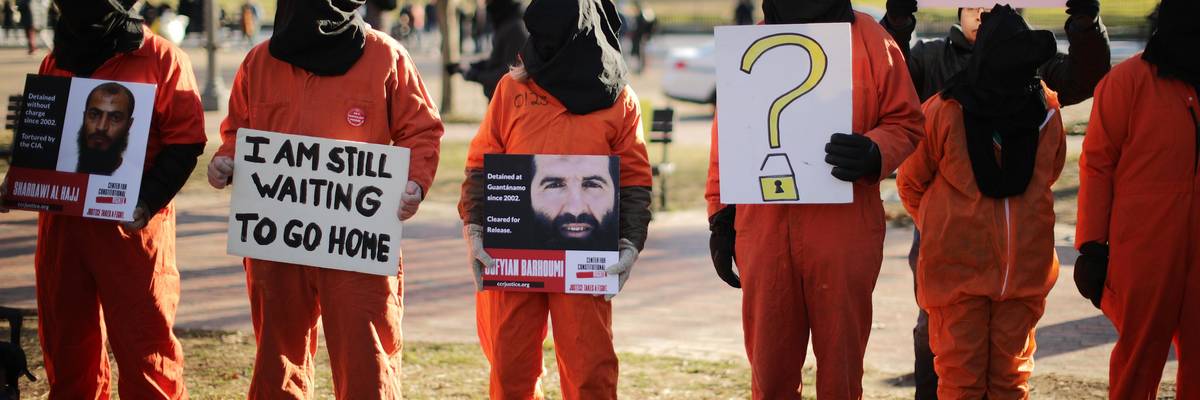
Two weeks after a review board cleared Guantanamo Bay prisoner Asadullah Haroon Gul for release, a federal judge ruled this week that the Afghan's imprisonment by the U.S. military in Cuba for over 14 years without charge or trial is illegal.
"This is such happy, sweet news for our family. We now pray that Asadullah is sent back home quickly--where he belongs."
In a ruling still undergoing classification review, Judge Amit P. Mehta of the U.S. District Court for the District of Columbia on Tuesday granted Gul's petition for a writ of habeas corpus, making him the first Guantanamo detainee in over a decade to win such a case against the government.
Mehta ruled that the United States had no legal basis for imprisoning Gul, a 40-year-old militant captured in Afghanistan in 2007, because he was not a member of al-Qaeda.
"This is a historic victory for the rule of law and a much-needed reminder to the U.S. government that there are limits on what it may do in the name of national security," Tara Plochocki, an attorney for Gul, said in a statement. "I'm hopeful that Asadullah will soon be reunited with his family."
While a prisoner at Guantanamo, Gul has been subjected to physical and psychological torture, "including being beaten, hung by his wrists, deprived of food and water, and prevented from praying," as well as "sleep deprivation, extreme cold temperatures, and solitary confinement," according to the human rights group Reprieve.
Mark Maher, a lawyer at Reprieve U.S. who also represents Gul, said: "We are thrilled for Asad. A federal court has finally affirmed what Asad has known for so long--he should be home with his family, and his detention is unlawful."
"This is a landmark ruling," added Maher. "For 20 years, successive U.S. administrations have asserted their right to imprison people indefinitely, without charge or trial. Guantanamo was built on the shakiest of legal foundations, and that has never been more clear than it is today."
The ruling does not mean that Gul's release is imminent. The Biden administration can appeal the decision, and as The New York Times noted:
In 2008, a federal judge ruled that 17 Muslims from China of the Uyghur minority were unlawfully detained at Guantanamo Bay but, as an oppressed minority, could not go home. The Uyghurs then languished at the prison for years while the Obama administration sought nations to receive them. The last three Uyghurs were sent to Slovakia for resettlement in 2013.
The U.S. government has argued it has the authority to indefinitely imprison Gul, citing his alleged connections to al-Qaeda and the Taliban, and noting the continuation of the 20-year so-called War on Terror.
However, on October 7 the interagency Periodic Review Board--which is tasked with determining whether Guantanamo prisoners pose a security threat to the United States--approved the transfer of Gul and Sanad Yislam al-Kazimi, a Yemeni captured in Dubai in 2003 and accused of being one of slain al-Qaeda chief Osama bin Laden's bodyguards.
There have been approximately 780 men and boys imprisoned at Guantanamo since it opened in 2002. Thirty-nine detainees remain at Gitmo following the transfer last month of Abdul Latif Nasser, a 56-year-old Moroccan held there for 19 years without charge or trial. Of those 39 prisoners, 28 have never been charged with any crime.
Related Content

Back in Afghanistan, Gul's family cheered news of Mehta's ruling.
"This is such happy, sweet news for our family. We now pray that Asadullah is sent back home quickly--where he belongs," Roman Khan, Gul's brother, said in a statement. "The family has eyes only to see him again. We are all waiting for him. His wife, his young daughter Maryam, his parents, me, his nieces and nephews."
"He has spent more than 14 years of his life in this dangerous and terrible prison without charge," added Khan. "We are thankful to the judges and to everyone who continue to press for his freedom."
Two weeks after a review board cleared Guantanamo Bay prisoner Asadullah Haroon Gul for release, a federal judge ruled this week that the Afghan's imprisonment by the U.S. military in Cuba for over 14 years without charge or trial is illegal.
"This is such happy, sweet news for our family. We now pray that Asadullah is sent back home quickly--where he belongs."
In a ruling still undergoing classification review, Judge Amit P. Mehta of the U.S. District Court for the District of Columbia on Tuesday granted Gul's petition for a writ of habeas corpus, making him the first Guantanamo detainee in over a decade to win such a case against the government.
Mehta ruled that the United States had no legal basis for imprisoning Gul, a 40-year-old militant captured in Afghanistan in 2007, because he was not a member of al-Qaeda.
"This is a historic victory for the rule of law and a much-needed reminder to the U.S. government that there are limits on what it may do in the name of national security," Tara Plochocki, an attorney for Gul, said in a statement. "I'm hopeful that Asadullah will soon be reunited with his family."
While a prisoner at Guantanamo, Gul has been subjected to physical and psychological torture, "including being beaten, hung by his wrists, deprived of food and water, and prevented from praying," as well as "sleep deprivation, extreme cold temperatures, and solitary confinement," according to the human rights group Reprieve.
Mark Maher, a lawyer at Reprieve U.S. who also represents Gul, said: "We are thrilled for Asad. A federal court has finally affirmed what Asad has known for so long--he should be home with his family, and his detention is unlawful."
"This is a landmark ruling," added Maher. "For 20 years, successive U.S. administrations have asserted their right to imprison people indefinitely, without charge or trial. Guantanamo was built on the shakiest of legal foundations, and that has never been more clear than it is today."
The ruling does not mean that Gul's release is imminent. The Biden administration can appeal the decision, and as The New York Times noted:
In 2008, a federal judge ruled that 17 Muslims from China of the Uyghur minority were unlawfully detained at Guantanamo Bay but, as an oppressed minority, could not go home. The Uyghurs then languished at the prison for years while the Obama administration sought nations to receive them. The last three Uyghurs were sent to Slovakia for resettlement in 2013.
The U.S. government has argued it has the authority to indefinitely imprison Gul, citing his alleged connections to al-Qaeda and the Taliban, and noting the continuation of the 20-year so-called War on Terror.
However, on October 7 the interagency Periodic Review Board--which is tasked with determining whether Guantanamo prisoners pose a security threat to the United States--approved the transfer of Gul and Sanad Yislam al-Kazimi, a Yemeni captured in Dubai in 2003 and accused of being one of slain al-Qaeda chief Osama bin Laden's bodyguards.
There have been approximately 780 men and boys imprisoned at Guantanamo since it opened in 2002. Thirty-nine detainees remain at Gitmo following the transfer last month of Abdul Latif Nasser, a 56-year-old Moroccan held there for 19 years without charge or trial. Of those 39 prisoners, 28 have never been charged with any crime.
Related Content
Back in Afghanistan, Gul's family cheered news of Mehta's ruling.
"This is such happy, sweet news for our family. We now pray that Asadullah is sent back home quickly--where he belongs," Roman Khan, Gul's brother, said in a statement. "The family has eyes only to see him again. We are all waiting for him. His wife, his young daughter Maryam, his parents, me, his nieces and nephews."
"He has spent more than 14 years of his life in this dangerous and terrible prison without charge," added Khan. "We are thankful to the judges and to everyone who continue to press for his freedom."
Two weeks after a review board cleared Guantanamo Bay prisoner Asadullah Haroon Gul for release, a federal judge ruled this week that the Afghan's imprisonment by the U.S. military in Cuba for over 14 years without charge or trial is illegal.
"This is such happy, sweet news for our family. We now pray that Asadullah is sent back home quickly--where he belongs."
In a ruling still undergoing classification review, Judge Amit P. Mehta of the U.S. District Court for the District of Columbia on Tuesday granted Gul's petition for a writ of habeas corpus, making him the first Guantanamo detainee in over a decade to win such a case against the government.
Mehta ruled that the United States had no legal basis for imprisoning Gul, a 40-year-old militant captured in Afghanistan in 2007, because he was not a member of al-Qaeda.
"This is a historic victory for the rule of law and a much-needed reminder to the U.S. government that there are limits on what it may do in the name of national security," Tara Plochocki, an attorney for Gul, said in a statement. "I'm hopeful that Asadullah will soon be reunited with his family."
While a prisoner at Guantanamo, Gul has been subjected to physical and psychological torture, "including being beaten, hung by his wrists, deprived of food and water, and prevented from praying," as well as "sleep deprivation, extreme cold temperatures, and solitary confinement," according to the human rights group Reprieve.
Mark Maher, a lawyer at Reprieve U.S. who also represents Gul, said: "We are thrilled for Asad. A federal court has finally affirmed what Asad has known for so long--he should be home with his family, and his detention is unlawful."
"This is a landmark ruling," added Maher. "For 20 years, successive U.S. administrations have asserted their right to imprison people indefinitely, without charge or trial. Guantanamo was built on the shakiest of legal foundations, and that has never been more clear than it is today."
The ruling does not mean that Gul's release is imminent. The Biden administration can appeal the decision, and as The New York Times noted:
In 2008, a federal judge ruled that 17 Muslims from China of the Uyghur minority were unlawfully detained at Guantanamo Bay but, as an oppressed minority, could not go home. The Uyghurs then languished at the prison for years while the Obama administration sought nations to receive them. The last three Uyghurs were sent to Slovakia for resettlement in 2013.
The U.S. government has argued it has the authority to indefinitely imprison Gul, citing his alleged connections to al-Qaeda and the Taliban, and noting the continuation of the 20-year so-called War on Terror.
However, on October 7 the interagency Periodic Review Board--which is tasked with determining whether Guantanamo prisoners pose a security threat to the United States--approved the transfer of Gul and Sanad Yislam al-Kazimi, a Yemeni captured in Dubai in 2003 and accused of being one of slain al-Qaeda chief Osama bin Laden's bodyguards.
There have been approximately 780 men and boys imprisoned at Guantanamo since it opened in 2002. Thirty-nine detainees remain at Gitmo following the transfer last month of Abdul Latif Nasser, a 56-year-old Moroccan held there for 19 years without charge or trial. Of those 39 prisoners, 28 have never been charged with any crime.
Related Content
Back in Afghanistan, Gul's family cheered news of Mehta's ruling.
"This is such happy, sweet news for our family. We now pray that Asadullah is sent back home quickly--where he belongs," Roman Khan, Gul's brother, said in a statement. "The family has eyes only to see him again. We are all waiting for him. His wife, his young daughter Maryam, his parents, me, his nieces and nephews."
"He has spent more than 14 years of his life in this dangerous and terrible prison without charge," added Khan. "We are thankful to the judges and to everyone who continue to press for his freedom."