

SUBSCRIBE TO OUR FREE NEWSLETTER
Daily news & progressive opinion—funded by the people, not the corporations—delivered straight to your inbox.
5
#000000
#FFFFFF
To donate by check, phone, or other method, see our More Ways to Give page.
Daily news & progressive opinion—funded by the people, not the corporations—delivered straight to your inbox.
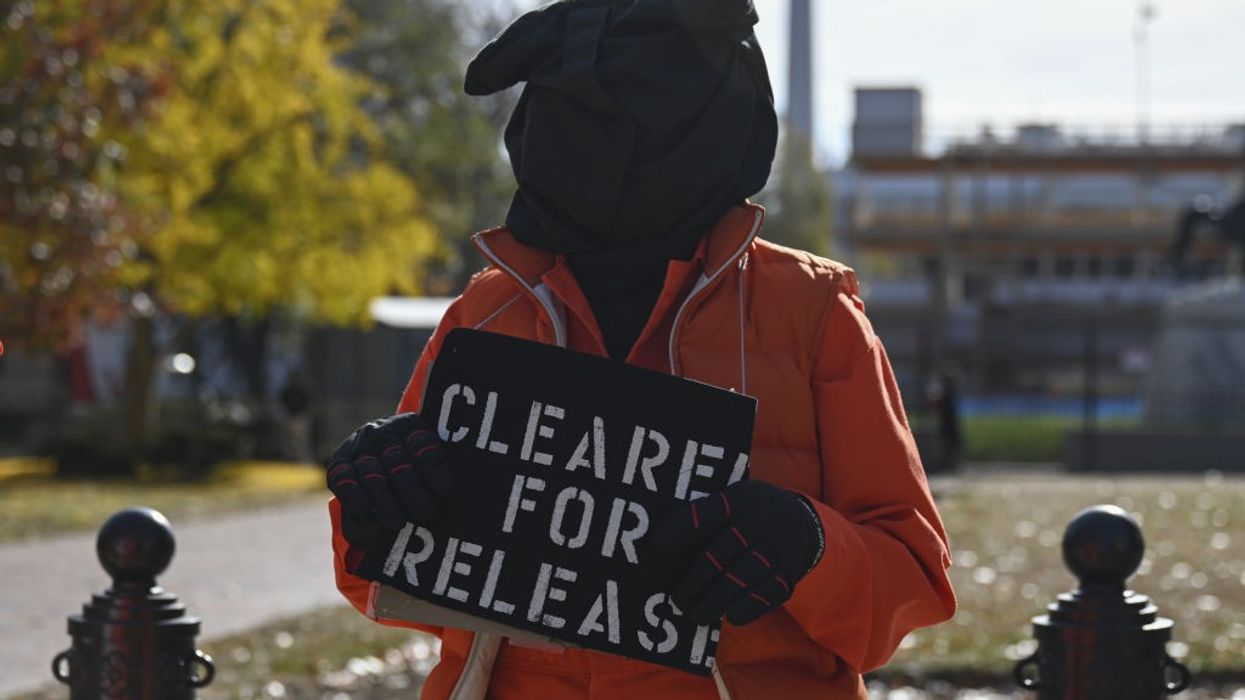
The move came as the Biden administration faced pressure to clear the notorious military prison of all uncharged detainees before Donald Trump takes office.
The Biden administration announced late Monday that it transferred a Tunisian man who was never charged with a crime out of the notorious Guantánamo Bay military prison in Cuba, a move that came more than a decade after the detainee was approved for release.
The man, 59-year-old Ridah bin Saleh al-Yazidi, had been held at Guantánamo since the day former U.S. President George W. Bush opened the prison camp in 2002. The Pentagon said in a statement Monday that al-Yazidi has been repatriated to the government of Tunisia.
With al-Yazidi's transfer, there are now 26 detainees remaining at Guantánamo, the majority of whom have never been charged with a crime and have been approved for release from the prison, which United Nations experts have said is "defined by the systematic use of torture and other cruel, inhuman, or degrading treatment." More detainees have died at Guantánamo than have been convicted of a crime, according to the human rights group Reprieve.
The Biden administration said in 2021 that it intended to shutter the prison, and critics have accused the administration of "a lack of courage" as it has dragged its feet on the matter.
But human rights campaigners have welcomed recent progress. Al-Yazidi was the fourth Guantánamo detainee in two weeks to be transferred from the prison by the Biden administration, which has faced growing pressure to clear the camp of the remaining uncharged men before U.S. President-elect Donald Trump takes power next month.
"Fifteen men remain who have never been charged with any crimes and have long been cleared by U.S. security agencies to leave Guantánamo, some for more than a decade," Daphne Eviatar, director of the Security With Human Rights program at Amnesty International USA, said in a statement earlier this month after the Biden administration announced the transfer of three never-charged men out of the prison camp.
"President Biden must transfer these men before he leaves office, or he will continue to bear responsibility for the abhorrent practice of indefinite detention without charge or trial by the U.S. government," said Eviatar. "It has been 23 years; President Biden can, and must, put an end to this now."
The transfer was announced on the same day that a Pentagon appeals panel "upheld a military judge's finding that the plea deals in the September 11 case are valid, clearing the way at least for now for a guilty plea hearing next week with the accused mastermind of the attack, Khalid Shaikh Mohammed," The New York Times reported Monday. Mohammed is among the Guantánamo detainees who have been charged with a crime by a military commission.
"Col. Matthew N. McCall, the judge in the case, had ruled that Defense Secretary Lloyd J. Austin III acted too late and beyond the scope of his authority when he rescinded the three deals on August 2, two days after a senior Pentagon appointee had signed them," the Times reported. "Under the pretrial agreements, or PTAs, Mr. Mohammed and two co-defendants agreed to plead guilty to war crimes charges in exchange for life prison sentences rather than face a death-penalty trial."
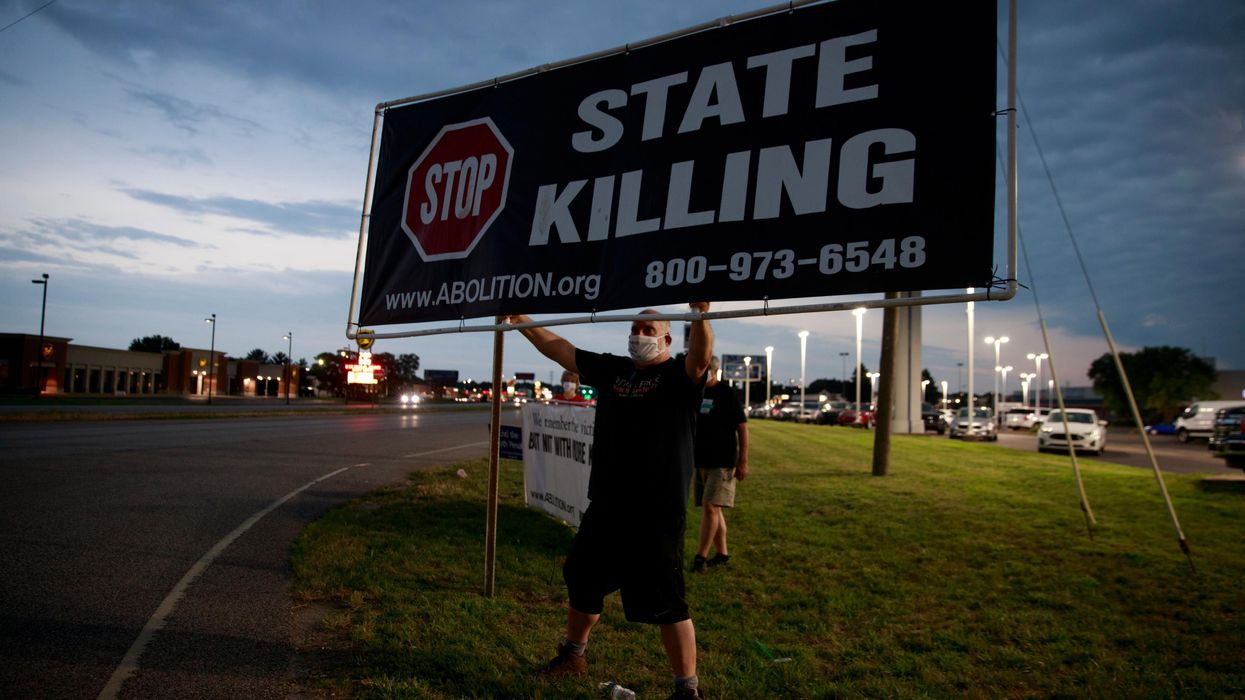
"Drug manufacturers don't want their medicines diverted and misused in torturous executions and the makers of nitrogen gas share the same objection: They do not want their products to be used to kill," said one campaigner.
Three of the leading U.S. manufacturers of medical-grade nitrogen gas said this week that they will not allow their products to be used in executions, a move that came after Louisiana approved the controversial capital punishment method recently used to kill an Alabama prisoner who appeared to be in agony before he died.
Airgas—owned by the French company Air Liquide—along with Air Products, and Matheson Gas told The Guardian that they are banning the use of their nitrogen gas products in the previously untested execution method used to cause death by hypoxia, or deprivation of oxygen to vital tissues.
Veterinarians consider nitrogen gas unethical for euthanizing animals and United Nations human rights experts have asserted that the execution technique may violate international anti-torture law.
"Airgas has not, and will not, supply nitrogen or other inert gases to induce hypoxia for the purpose of human execution," the company said.
Matheson Gas told The Guardian that use of its products in executions is "not consistent with our company values," while Air Products told the U.K.-based newspaper that it has established "prohibited end uses for our products, which includes the use of any of our industrial gas products for the intentional killing of any person (including nitrogen hypoxia)."
Four states—Alabama, Louisiana, Mississippi, and Oklahoma—have approved nitrogen gas for use in executions. Last week, Louisiana Gov. Jeff Landry, a Republican, signed legislation passed by the GOP-controlled state Legislature expanding execution methods to include the electric chair and nitrogen hypoxia. This, despite the agonizing execution in January of 58-year-old Kenneth Smith, who was killed by the state of Alabama by nitrogen hypoxia on January 25 after the U.S. Supreme Court rejected his last-ditch appeal.
Rev. Jeff Hood, a spiritual adviser to U.S. death row inmates, witnessed Smith's killing, which he described as "horrific and cruel." Hood and other witnesses said Smith convulsed violently for several minutes while he was strapped to a gurney and forced to breathe nitrogen gas through a mask. Even prison guards were taken by surprise as the gurney shook and Smith struggled for his life.
Alabama officials had claimed that nitrogen hypoxia is "perhaps the most humane method of execution ever devised."
States have sought alternative means of killing condemned prisoners—including nitrogen gas and firing squads—ever since the European Union banned the sale and export of lethal injection drugs in 2011.
Maya Foa, co-executive director of the anti-death penalty group Reprieve, told The Guardian that "drug manufacturers don't want their medicines diverted and misused in torturous executions and the makers of nitrogen gas share the same objection: They do not want their products to be used to kill."
"States which claim that the lethal injection or gas inhalation are 'humane' methods of execution are merely seeking to mask what it means for a state to forcibly put someone to death," Foa added. "The makers of these products see through the lie and naturally want nothing to do with it."
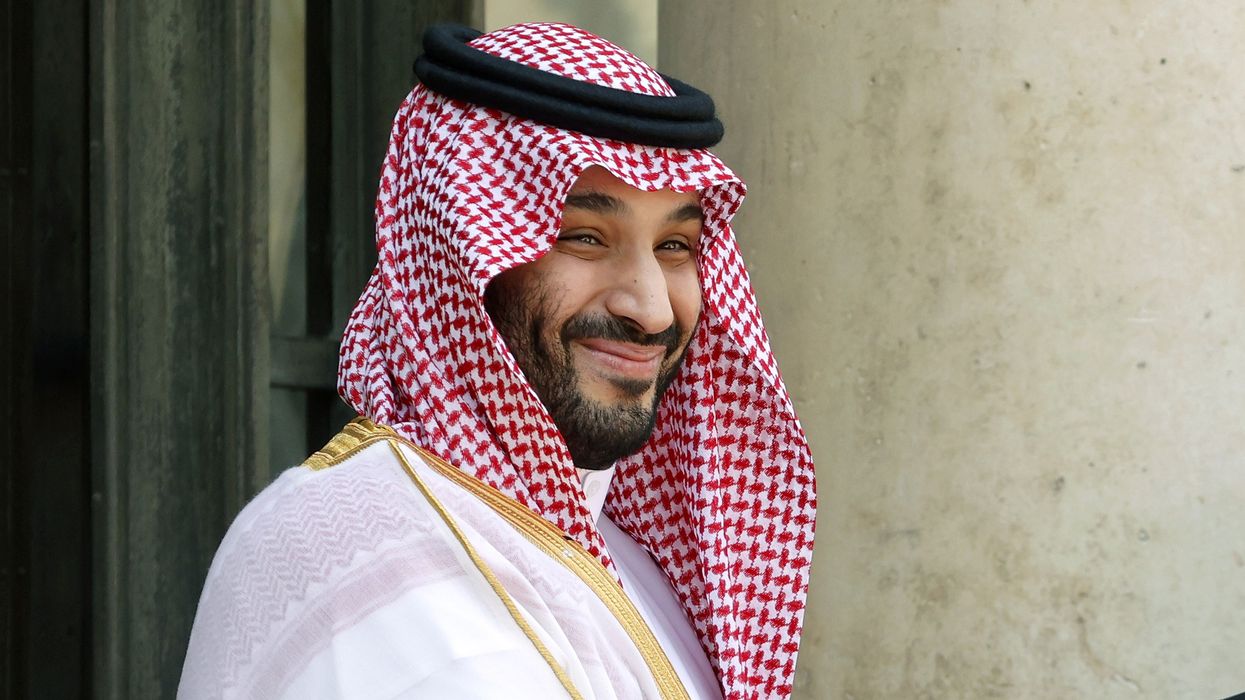
"Behind the mega-investments in sport and the facade of reform, the kingdom remains one of the world's top executioners," said the director of one human rights group.
Since King Salman and his son Crown Prince Mohammed bin Salman took control of Saudia Arabia nine years ago, executions have surged—a trend that continued last year, a pair of human rights organizations said Tuesday.
The crown prince, or MBS—Saudi Arabia's prime minister and de facto leader—has pledged to curb capital punishment in recent years. However, Reprieve and the European Saudi Organization for Human Rights (ESOHR) announced that the kingdom executed at least 172 people in 2023.
The state-controlled Saudi Press Agency put the number at 170, including four on New Year's Eve.
Reprieve and ESOHR previously highlighted that from 2010-14, Saudi Arabia had an average of 70.8 executions per year. After MBS and his father rose to power in 2015 through 2022, it jumped to 129.5—a nearly 83% increase. That was when the tally for 2022 was 147, but the Saudi Human Rights Commission later confirmed it was 196, a modern record.
"It is terrifying to think that this is business as usual in Mohammed bin Salman's Saudi Arabia," Reprieve director Maya Foa said Tuesday. "Behind the mega-investments in sport and the facade of reform, the kingdom remains one of the world's top executioners."
"Owning the wrong books, posting a critical tweet, speaking to a journalist, or disagreeing with the crown prince can earn you a death sentence," she continued. "And while world leaders stare at their shoes and agree to believe the regime's lies, the killing continues relentlessly."
Amnesty International revealed last May that Saudi Arabia ranked third in the world for executions, based on 2022 data. China was in the top spot, followed by Iran, and the group was unable to establish figures for Afghanistan, North Korea, Syria, and Vietnam.
Reprieve and ESOHR noted that Saudia Arabia's "true number of executions cannot be ascertained with confidence" and "there is also no way of knowing how many hundreds or even thousands of people are on death row as the kingdom's capital justice system is almost entirely opaque."
ESOHR legal director Taha al-Hajji stressed that "the crown prince has blamed 'bad laws' and rogue judges for Saudi Arabia's continued execution crisis, but nothing gets done in the kingdom without his approval."
"His endless empty promises of reform are contradicted by the facts: It has been yet another year of bloodshed in Saudi Arabia," al-Hajji added. "Protesters and child defendants remain at imminent risk of execution with a stroke of the ruler's pen."

"There's no humane method of execution," said one human rights group.
The three liberal justices on the U.S. Supreme Court said the right-wing majority was allowing Alabama to use a death row inmate as a "guinea pig" early Friday when the court denied an emergency request to halt James Barber's execution, making him the first person killed by the state since Gov. Kay Ivey suspended capital punishment last year.
Barber, age 64, was pronounced dead just before 2:00 am local time on Friday at the William C. Holman Correctional Facility in Atmore, Alabama, less than two hours after the Supreme Court denied the stay of execution.
Lawyers for Barber, who was convicted of murdering 75-year-old Dorothy Epps in 2001, argued that the inmate's rights under the Eighth Amendment—which forbids cruel and unusual punishment—would be violated if he was put to death via lethal injection in Alabama, where several executions were botched before Ivey halted the death penalty and ordered a review.
The program was suspended following outcry over the executions of Doyle Lee Hamm, who was punctured with needles for two-and-a-half hours as executioners struggled to access a vein in 2018, and Joe Nathan James Jr., whose execution last year took more than three hours.
Two more executions last year were cancelled in the state after prison officials could not access veins.
The "top-to-bottom" review ordered by Ivey, a Republican, resulted in a change in the personnel who work in the death chamber at Holman and an extension of the time given for killing an inmate—neither of which "constitute[s] serious efforts to fix [Alabama's] pattern of botched execution after botched execution," said lawyers for Barber.
In a dissent authored by Justice Sonia Sotomayor and signed by Justices Elena Kagan and Ketanji Brown Jackson, the court's liberals said the Eighth Amendment "demands more than the state's word that this time will be different."
"The court should not allow Alabama to test the efficacy of its internal review by using Barber as its 'guinea pig'," wrote Sotomayor, adding that the conservative justices were allowing Ivey's government "to experiment again with human life."
The human rights organization Reprieve said the state "shouldn't be resuming executions, it should be ending them once and for all."
Judge Jill Pryor of the 11th Circuit Court of Appeals also accused the Alabama Department of Corrections (ADOC) of using Barber "as its guinea pig" in a dissent on Wednesday as the court handed down a 2-1 ruling allowing the state to execute the man.
Pryor noted that Ivey's review was "conducted entirely internally, entirely outside the scope of any court's or the public's scrutiny, and without saying what went wrong or what it fixed as a result."
"Three botched executions in a row are three too many," Pryor wrote. "Each time, ADOC has insisted that the courts should trust it to get it right, only to fail again."
"Mr. Barber has raised a serious and substantial Eighth Amendment claim that the pattern will continue to repeat itself," Pryor added.
The ACLU of Alabama pointed out that Barber was sentenced to death by a non-unanimous jury, a practice permitted only in Alabama and Florida.
"That alone should be reason to question his death sentence," said the group.
Barber was the 15th person executed in the U.S. this year, according to the Death Penalty Information Center.

Following reports that U.S. President Joe Biden may visit Saudi Arabia during his trip to the Middle East next month, a human rights group on Monday highlighted global calls to release Abdullah al-Howaiti, a young man twice sentenced to death by the country's courts.
Reprieve pointed out in a statement that United Nations experts have urged the Saudi government to annul his sentence "because he did not receive a fair trial, as credible reports that he was tortured into making a false confession when he was 14 years old were not investigated."
Sharing the statement on Twitter, the group noted that the U.S. leader is considering a trip to Saudi Arabia and encouraged Biden to review what a trio of U.N. experts has recently said in response to the case.
"From the moment police raided the Howaiti family home and dragged out 14-year-old Abdullah, the Saudi justice system has been on autopilot, punishing him for a crime he cannot have committed," said Jeed Basyouni, who leads Reprieve's work on the death penalty across the Middle East and North Africa.
"Every court knew how young he was," she continued. "Every court heard he had an alibi. Every court was told he was tortured. But they sent him to death row and kept him in a cell, when he should have been playing football with his friends."
"Abdullah will never get back the teenage years he spent fearing for his life, but it's not too late for the Saudi courts to do the right thing," Basyouni added. "The world is watching."
Human Rights Watch (HRW) explained last year that "while Saudi authorities announced an end to the death penalty for children for certain crimes in 2018 and applied this retroactively to previous cases in 2020, the death penalty remains a possible punishment for the type of crime Abdullah al-Howaiti is accused of committing." He is accused of murdering a police officer during a robbery of a jewelry store in Duba.
"Al-Howaiti's court proceedings flouted almost every internationally recognizable fair trial guarantee, and yet a Saudi court still sentenced him to die for a crime allegedly committed when he was 14," said Michael Page, HRW's deputy Middle East director, at the time. "In sentencing a child to die while ignoring torture allegations, the Saudi court made a mockery of the country's alleged 'reforms.'"
Referencing al-Howaiti's plea of not guilty and his written account from January 22, 2019, HRW outlined:
Al-Howaiti said in the letter and to the court that interrogators subjected him to torture and ill treatment to force him to confess. He said they made him stand for hours at a time, beat him and slapped him on the face, flogged him with an electric cable on the soles of his feet and various parts of his body until he lost consciousness, forced him to hold his brother's legs while he was being beaten, and lied that his mother and sisters were also in detention and would only be released once he confessed.
Al-Howaiti eventually signed the confession prepared for him, after which authorities transferred him to a social observation home in Tabuk. He told another investigator there that his confession had been forcibly extracted. He said he was then transferred to a prison cell, where the criminal investigations interrogators from Tabuk arrived after midnight, blindfolded him, and transferred him back to the criminal investigation department.
There, he said, an interrogator threatened to pull out his nails, suspend him from one hand, and torture him in ways he "could not begin to imagine," prompting al-Howaiti to promise him he would not tell anyone else about his ill treatment.
In March, the U.N. experts--Nils Melzer, special rapporteur on torture and other cruel, inhuman, or degrading treatment or punishment; Miriam Estrada-Castillo, vice-chair of the Working Group on Arbitrary Detention; and Morris Tidball-Binz, special rapporteur on extrajudicial, summary, or arbitrary executions--sent their letter to Saudi leadership that Reprieve elevated.
After outlining the allegation about al-Howaiti's treatment since his arrest in 2017, the experts' letter states that "while we do not wish to prejudge the accuracy of the information received, we are deeply concerned by the continuing imposition and execution of the death penalty against persons who were below 18 years of age at the time of committing the crime, which amounts to a serious violation of international human rights law."
Along with reminding the kingdom of its obligations under international law, the letter calls on the government not only "to annul the death sentence imposed on Mr. al-Howaiti," but also "to promptly and thoroughly investigate the allegations of torture, and to ensure that he is re-tried in conformity with international norms and standards."
The letter further calls on the Saudi government "to adopt without delay the necessary legislative measures to abolish the imposition of the death penalty for children for all crimes" as well as "to consider establishing an official moratorium on all executions as a first step towards fully abolishing the death penalty in the country."
Meanwhile, in the United States, though Biden's administration suspended federal executions following what critics called a "killing spree" under his predecessor, death row inmates are still being executed at the state level--conditions that fall short of the president's campaign promise to "work to pass legislation to eliminate the death penalty at the federal level, and incentivize states to follow the federal government's example."

Two weeks after a review board cleared Guantanamo Bay prisoner Asadullah Haroon Gul for release, a federal judge ruled this week that the Afghan's imprisonment by the U.S. military in Cuba for over 14 years without charge or trial is illegal.
"This is such happy, sweet news for our family. We now pray that Asadullah is sent back home quickly--where he belongs."
In a ruling still undergoing classification review, Judge Amit P. Mehta of the U.S. District Court for the District of Columbia on Tuesday granted Gul's petition for a writ of habeas corpus, making him the first Guantanamo detainee in over a decade to win such a case against the government.
Mehta ruled that the United States had no legal basis for imprisoning Gul, a 40-year-old militant captured in Afghanistan in 2007, because he was not a member of al-Qaeda.
"This is a historic victory for the rule of law and a much-needed reminder to the U.S. government that there are limits on what it may do in the name of national security," Tara Plochocki, an attorney for Gul, said in a statement. "I'm hopeful that Asadullah will soon be reunited with his family."
While a prisoner at Guantanamo, Gul has been subjected to physical and psychological torture, "including being beaten, hung by his wrists, deprived of food and water, and prevented from praying," as well as "sleep deprivation, extreme cold temperatures, and solitary confinement," according to the human rights group Reprieve.
Mark Maher, a lawyer at Reprieve U.S. who also represents Gul, said: "We are thrilled for Asad. A federal court has finally affirmed what Asad has known for so long--he should be home with his family, and his detention is unlawful."
"This is a landmark ruling," added Maher. "For 20 years, successive U.S. administrations have asserted their right to imprison people indefinitely, without charge or trial. Guantanamo was built on the shakiest of legal foundations, and that has never been more clear than it is today."
The ruling does not mean that Gul's release is imminent. The Biden administration can appeal the decision, and as The New York Times noted:
In 2008, a federal judge ruled that 17 Muslims from China of the Uyghur minority were unlawfully detained at Guantanamo Bay but, as an oppressed minority, could not go home. The Uyghurs then languished at the prison for years while the Obama administration sought nations to receive them. The last three Uyghurs were sent to Slovakia for resettlement in 2013.
The U.S. government has argued it has the authority to indefinitely imprison Gul, citing his alleged connections to al-Qaeda and the Taliban, and noting the continuation of the 20-year so-called War on Terror.
However, on October 7 the interagency Periodic Review Board--which is tasked with determining whether Guantanamo prisoners pose a security threat to the United States--approved the transfer of Gul and Sanad Yislam al-Kazimi, a Yemeni captured in Dubai in 2003 and accused of being one of slain al-Qaeda chief Osama bin Laden's bodyguards.
There have been approximately 780 men and boys imprisoned at Guantanamo since it opened in 2002. Thirty-nine detainees remain at Gitmo following the transfer last month of Abdul Latif Nasser, a 56-year-old Moroccan held there for 19 years without charge or trial. Of those 39 prisoners, 28 have never been charged with any crime.
Related Content

Back in Afghanistan, Gul's family cheered news of Mehta's ruling.
"This is such happy, sweet news for our family. We now pray that Asadullah is sent back home quickly--where he belongs," Roman Khan, Gul's brother, said in a statement. "The family has eyes only to see him again. We are all waiting for him. His wife, his young daughter Maryam, his parents, me, his nieces and nephews."
"He has spent more than 14 years of his life in this dangerous and terrible prison without charge," added Khan. "We are thankful to the judges and to everyone who continue to press for his freedom."

Building on the recent demands from advocacy groups and ex-detainees, 111 organizations on Tuesday collectively called on President Joe Biden to close the Guantanamo Bay offshore prison, end indefinite military detention, recognize the harmful effects of post-9/11 practices, and chart a new course for U.S. national security policy.
"Guantanamo--designed specifically to evade legal constraints, and where Bush administration officials incubated torture--is the iconic example of the post-9/11 abandonment of the rule of law."
--111 groups
The latest message to Biden on Gitmo came in the form of a letter spearheaded by the Center for Victims of Torture and Center for Constitutional Rights, which represents six of the 40 men still imprisoned at the detention facility that has existed under four administrations, having opened under former President George W. Bush.
In a statement Tuesday, Scott Roehm, Washington director at the Center for Victims of Torture, noted that Biden has long backed closing down the Guantanamo Bay prison--which former President Barack Obama, under whom Biden was vice president, promised but failed to do during his eight years in office.
"If the president is determined to close the prison, he can, and in relatively short order," Roehm said. "Unless and until he does, Guantanamo's corrosive impact--both literally and for what it represents--will continue to deepen and spread."
As PBS NewsHour noted last month, Biden Defense Secretary Gen. LLoyd Austin also "said he would follow through on President Obama's efforts to close Guantanamo Bay."
For over 19 years, the U.S. has drawn global condemnation for mistreating Gitmo prisoners who have been tortured and held without trial. After prosecutors filed charges against three longtime detainees last month, Amnesty International reiterated its demands that Biden end military commissions and close down the facility.
The human rights group's U.S. arm was among the 111 groups that signed on to the new letter to Biden, which declares that "it is long past time for both a sea change in the United States' approach to national and human security, and a meaningful reckoning with the full scope of damage that the post-9/11 approach has caused."
"Closing Guantanamo and ending indefinite detention of those held there is a necessary step towards those ends," the letter continues. "We urge you to act without delay, and in a just manner that considers the harm done to the men who have been imprisoned without charge or fair trials for nearly 20 years."
The letter details parts of the prison's widely denounced history:
Among a broad range of human rights violations perpetrated against predominantly Muslim communities, Guantanamo--designed specifically to evade legal constraints, and where Bush administration officials incubated torture--is the iconic example of the post-9/11 abandonment of the rule of law. Nearly 800 Muslim men and boys were held at Guantanamo after 2002, all but a handful without charge or trial. Forty remain, at the astronomical cost of $540 million per year, making Guantanamo the most expensive prison in the world.
Guantanamo embodies the fact that, for nearly two decades following the September 11, 2001 attacks, the United States government has viewed communities of color--citizens and non-citizens alike--through a security threat lens, to devastating consequences. This is not a problem of the past. Guantanamo continues to cause escalating and profound damage to the men who still languish there, and the approach it exemplifies continues to fuel and justify bigotry, stereotyping, and stigma. Guantanamo entrenches racial divisions and racism more broadly, and risks facilitating additional rights violations.
Biden's predecessor, former President Donald Trump, vowed as a candidate that he would keep Gitmo open and "load it up with some bad dudes."
Trump also "proposed sending undocumented immigrants to Guantanamo to be held as 'enemy combatants,'" the letter notes. "He further built upon the discriminatory animus, policies, and practices that Guantanamo represents through his odious Muslim Ban, each iteration of which was explicitly promulgated under the false pretense of protecting the nation from terrorism. And the Trump administration's militarized federal response to protests against the extrajudicial killings of George Floyd and other Black people was fueled by the war-based post-9/11 security architecture and mindset that Guantanamo epitomizes."
Signatories to the letter include the ACLU, CodePink, MoveOn, Peace Action, Physicians for Human Rights, Reprieve U.S., Veterans for Peace, and Win Without War.
Aliya Hussain of the Center for Constitutional Rights said, "That so many groups are calling for an end to the indefinite detention of Muslim men without charge or fair trial at Guantanamo, and see it as part of a broader movement to uphold human rights, demand accountability for U.S.-sanctioned torture and violence, and fundamentally change the flawed criminal legal system, is significant."
"There is wide-ranging public support for President Biden to close Guantanamo," Hussain added. "He must take bold and decisive action, and we will hold him accountable until he does."
The letter comes after former Gitmo prisoners who have all authored books about what they endured published an open letter to Biden last week in the New York Review of Books which said in part: "Considering the violence that has happened at Guantanamo, we are sure that after more than nineteen years, you agree that imprisoning people indefinitely without trial while subjecting them to torture, cruelty and degrading treatment, with no meaningful access to families or proper legal systems, is the height of injustice. That is why imprisonment at Guantanamo must end."

Two Yemeni families who lost dozens of relatives to U.S. drone strikes and a botched special operations forces raid during the Obama and Trump administrations filed a petition this week against the United States government, accusing it of "unlawful" killing.
"The families are trying in every way they can... to say, 'Hey, wait a minute. You're hitting the wrong people here.'"
--Jennifer Gibson, Reprieve
Agence France-Presse reports the international legal advocacy organization Reprieve filed the petition Monday through the Inter-American Commission on Human Rights, on behalf of the Al-Ameri and Al-Taisy families.
The petition states that "seven attacks at issue have resulted in the unlawful killing of at least 48 people, including 17 children, and in the serious injury of at least seven others, as well as the destruction of their personal property and livelihoods."
Thirty-four of those killed were members of the two families. Vice reports the Al-Ameris and Al-Taisys had come together on December 12, 2013 in al Baydah province to celebrate the marriage of Abdullah Mabkhout Al-Ameri and his wife Wardah Al-Taisy. The families were traveling in a traditional wedding procession from the bride's home when a U.S. unmanned aerial drone launched four missiles at them, killing 12 people.
That was just the beginning. Over the following five years, the families were attacked six more times by U.S. drones. The year 2017 was especially deadly, as 22 members of the families were killed in airstrikes and a ground attack.
The ground raid, which occurred in the village of Al-Ghayil in the Yakla area on January 29, 2017 and involved U.S. Navy SEALs--one of whom was killed--claimed the lives of as many as 30 civilians, including 15 members of the Al-Ameri and Al-Taisy families.
The U.K.-based Bureau of Investigative Journalism reported nine children killed during the Yakla raid. Among these was Nawar al-Awlaki, an 8-year-old U.S. citizen who, according to her grandfather, "was hit with a bullet in her neck and suffered for two hours."
Nawar was the daughter of Anwar al-Awlaki, a radical American cleric who was assassinated by a U.S. drone strike in Yemen in 2011, and the half-brother of Colorado native Abdulrahman al-Awlaki, who at age 16 was killed--along with his 17-year-old cousin and several others while dining at an outdoor restaurant in Yemen--by a drone strike ordered by then-President Barack Obama.
When pressed about why Obama had ordered an attack that killed an innocent American teenager, Robert Gibbs, the president's press secretary, said the child should "have [had] a far more responsible father."
According to the Bureau of Investigative Journalism, the U.S. has carried out at least 336 drone strikes in Yemen between 2004 and 2020. The strikes, which span three presidential administrations, have killed as many as 1,389 people, including up to 225 civilians--among them 44 to 50 children.
Drone strikes in Yemen began during the George W. Bush administration and sharply escalated under Obama. Former President Donald Trump vowed to "bomb the shit out of" militants and "take out their families" and followed through on his promise, dramatically increasing strikes and casualties not only in Yemen but in nearly all of the half-dozen Muslim nations under attack by the U.S. during the so-called War on Terror.
Estimates of the number of civilians killed during the unending 19-year war range from the hundreds of thousands to as many as two million (pdf).
The incessant threat of death from above has terrorized civilians from eastern Africa to Pakistan.
"It's a life with constant fear," Mohammed Ali Mabkhout Al-Ameri, a survivor of four of the attacks listed in the Reprieve petition, told Vice.
"You always feel tense," he added. "If you go out in your vehicle, you're afraid. If you walk out individually, you're always afraid to leave the village because you think you might be mistaken and targeted."
The petitioning families are seeking "precautionary measures"--something like an injunction against assassination--and an explanation from the U.S.
Jennifer Gibson, a human rights attorney and project lead on extrajudicial killing at Reprieve, told AFP that "what the families are hoping for from the Commission is first and foremost recognition of the harm that's been done to them."
Gibson told Vice that the families are "searching for answers, and they've been blocked from getting any sort of answer from the U.S. government."
"So they're now going to the Inter-American Commission, hoping to get from them the answers and the relief that they have not been able to get from the U.S. government or from the U.S. courts," she said.
"The families are trying in every way they can to almost literally raise their hand and say, 'Hey, wait a minute. You're hitting the wrong people here. Please stop hitting us and let us put forward the evidence that we're not whoever you think we are,'" added Gibson.
The U.S. attacks on Yemen came amid a much wider war waged by a U.S.-backed Saudi-led coalition against Houthi rebels and radical militants that has killed more than 100,000 people, thousands of them in airstrikes. Many of the coalition's weapons, including the bombs and the planes that drop them, are made in and sold by the United States.
"We're hoping because there is a new administration in the White House they will look into things differently. We want them to know that we are innocent."
--Abdullah Abdurabuh Obad Al-Taisy
Earlier this week, the Biden administration temporarily halted the sale to Saudi Arabia of nearly half a billion dollars worth of so-called "precision" bombs manufactured by Raytheon Technologies, as well as of Lockheed Martin F-35 fighter jets to the United Arab Emirates.
The bombing of Yemen, along with a Saudi-led economic blockade that has exacerbated famine conditions that have killed tens of thousand of Yemenis, has created what the United Nations and others have called the world's worst humanitarian crisis.
Abdullah Abdurabuh Obad Al-Taisy told Vice he hopes the change in administrations in Washington, D.C. will bring some justice to victims of U.S. attacks.
"We're hoping because there is a new administration in the White House they will look into things differently," he said. "We want them to know that we are innocent. We want them to consider fair reparations for our families and children. All that we ask is a transparent investigation."

An American journalist who alleges he has been targeted for assassination for his reporting on Syria's civil war will challenge his apparent inclusion on the U.S. "kill list" in federal court next week.
Bilal Abdul Kareem, a Peabody Award-winning war reporter from Westchester County, New York who has worked for major international media outlets including CNN, Sky News, and the BBC, will ask a federal court in Washington, D.C. on Monday whether U.S. intelligence marked him for death because of his coverage of the nine-year conflict in Syria. As part of his work, Kareem conducted interviews with members of various armed groups, including militants targeted as the enemy by the U.S.-led coalition that invaded Syria in 2014.
"I have always believed part of being an American meant if you were accused of doing something, you would be given the opportunity to plead your case in court."
--Bilal Abdul Kareem, journalist
Kareem narrowly escaped being killed in five separate U.S. airstrikes in 2016, including an attack on his office and two strikes on vehicles in which he was traveling. Kareem was also wounded when he and his crew came under fire from a Syrian army tank while reporting for Sky News in Idlib last year.
A lower court initially upheld Kareem's right to bring the case, however it dismissed it after the government claimed the proceedings would require disclosure of "state secrets." Now on appeal, the central question before the court is whether the government can secretly authorize the assassination of American citizens without judicial review.
"I have always believed part of being an American meant if you were accused of doing something, you would be given the opportunity to plead your case in court," said Kareem. "But now, here I am, standing at the courthouse doors and the U.S. government is trying to deny me that opportunity. In Syria, in one of the most violent wars the world has seen, I try to champion the American ideals of justice, transparency, and accountability."
"I hope the court will see fit to uphold those same rights--my rights--here at home," he said.
Jennifer Gibson, an attorney who works on cases involving extrajudicial assassination for the U.K.-based international human rights advocacy group Reprieve and who is representing Kareem, accused the Trump administration of "asking the courts to jettison the right to due process, a value which sets America apart from dictatorships."
"The executive should not be allowed to act as judge, jury, and executioner unchecked," Gibson asserted. "In a country founded on the rule of law, Americans must have a right to challenge a secret death sentence."
Clive Stafford Smith, a lawyer who also represents Kareem, said that "this case presents one of the most profound issues of human rights in our lifetime."
"Even George Orwell could not have imagined a lawyer from the 'Department of Justice' standing up in court to say the U.S. president may order the CIA to execute an American journalist in total secrecy, without any judicial oversight," he added.
In 2018, journalist Matt Taibbi, then working for Rolling Stone, offered this profile of Kareem, including a look at the possibility he was placed on the U.S. government's targeted assassination list:
Although Kareem projects a sense of humor--"Most of my drama revolves around having a big mouth; I got it from my mother," he said in a recent interview--he has no illusions about the forces he is up against.
"You take a Black guy who's a Muslim and he's on a kill list he's trying to get himself off. What are the chances of that? I don't really have a lot of optimism," he told Syria Direct in July. "At the end of the day, it would be a long and messy court battle for them to have to prove anything. But why should they even go through all of that when they can just cross state secrets and finish me?"
"You take a Black guy who's a Muslim and he's on a kill list he's trying to get himself off. What are the chances of that? I don't really have a lot of optimism."
--Kareem
In May 2012, the New York Times revealed the existence of a secret Obama administration "kill list"--formally known as the disposition matrix--that included an unspecified number of U.S. citizens deemed mortal enemies in the so-called War on Terror. One of the men on the list, U.S.-born cleric Anwar al-Awlaki, was assassinated in a joint CIA and military drone strike in Yemen in September 2011. His son, 16-year-old Colorado native Abdulrahman al-Awkal, was killed in a similar strike the following month.
When pressed on why an innocent American teenager had been killed, a senior Obama adviser said the boy should have "had a more responsible father."
"Turns out I'm really good at killing people," Obama once boasted, according to the 2013 Mark Halperin and John Heilemann book Double Down. "Didn't know that was gonna be a strong suit of mine."
President Donald Trump has his own assassination list, as the January 2020 drone strike that killed top Iranian general Qasem Soleimani reminded the world. In the first major atrocity of his administration, U.S. and UAE special forces raided the village of Yakla in Yemen in January 2017-- killing 23 civilians including 10 children, among them Anwar al-Awlaki's daughter (and Abdulrahman's little sister), 8-year-old Nawar al-Awlaki, who died slowly and painfully after being shot through the neck.

I am an expert hunger striker now. I have been going for almost nine weeks and have lost thirty pounds. I now weigh now 115 pounds--I checked this morning.
The first three days were hard but after that, my stomach shrank and I was no longer hungry. I drink water because otherwise I would soon die, but I am not feeling thirsty. I am feeling very weak, though.
The new Senior Medical Officer is a decent guy. He comes by to check on me, and says he is sympathetic. He asks if I am going to harm myself or anyone else. I say no, it is just a peaceful protest.
"I don't want to just sit patiently in my cell until I die here. I do not want to die here at all, but I have to do something."
"Give me freedom or give me death." This principle is very important to me. I don't want to just sit patiently in my cell until I die here. I do not want to die here at all, but I have to do something.
I thought of a phrase I learned in English: "It's a dog eat dog world." For now, I am the cannibal, because my body is eating itself. It has nowhere else to go for nutrition.
They still bring the food at every meal. I asked the guards not to but they insist they are under orders to offer me something to eat, so they just leave it there. It is quite torturous, though I have no appetite now.
I find myself slipping away. My immune system is sinking slowly. When I lie down it is hard to stand up. I have trouble focusing. My memory is bad. I forget the names of my family and close friends. I have forgotten parts of the Holy Qur'an that I had memorised. When I pray, I find that I cannot remember my prayers.
If I try to send a letter to my family, I find myself writing the same sentence over and over. They are very important to me, and I am desperately worried about them. Afghanistan is a poor country, without the resources to fight Covid-19, and they live in a crowded refugee camp. I want nothing more than to put food on the table and share it with them.
I have nightmares. They repeat and repeat. I am in a very dirty area. I try to avoid stepping, bare foot, in feces, though it turns out to be a land mine. Sometimes there are snakes, and I must find a path through them. I wake up suddenly, feeling cold, with my heart beating very fast.
"After thirteen years detained without trial, it is the only form of protest left to me--the only way to assert my humanity."
Maybe they will start force feeding me if I go under 110 lbs. They did it to me in 2013. They force you to take liquid nutrient. The nicer guards allow you to drink it in front of them but normally they put a 110 centimeter pipe up your nose. It is very painful. As it goes in you feel you must throw up and become desperate to take it out. It is more painful for me than when I was thrown out of the bus and my bones were broken. And this is every day. It can take an hour and a half but they cheat and do it quicker, which is actually more painful. All this time you are sitting in the Torture Chair, strapped down tightly.
One day a woman tried to put it in and couldn't. She tried for five or ten minutes. She just did not know what she was doing. It was excruciating.
I am prepared to die, if it comes to it. I look ahead, and all I see is suffering. But what is the point of good health in life, if I cannot be home? My daughter was three months old when I last saw her. She is now thirteen, growing up without a father in a refugee camp where school has been closed for five months now because of the virus. If I was there I could help to teach her. I could even teach her the English I have learned here in Guantanamo.
I am not hunger striking to make the military administration unhappy. After thirteen years detained without trial, it is the only form of protest left to me--the only way to assert my humanity. Guantanamo strips us of every human right but the right to life. Perhaps as my life ebbs away, the U.S. will at least be confronted with the pointless cruelty of keeping me here.