SUBSCRIBE TO OUR FREE NEWSLETTER
Daily news & progressive opinion—funded by the people, not the corporations—delivered straight to your inbox.
5
#000000
#FFFFFF
To donate by check, phone, or other method, see our More Ways to Give page.
Daily news & progressive opinion—funded by the people, not the corporations—delivered straight to your inbox.
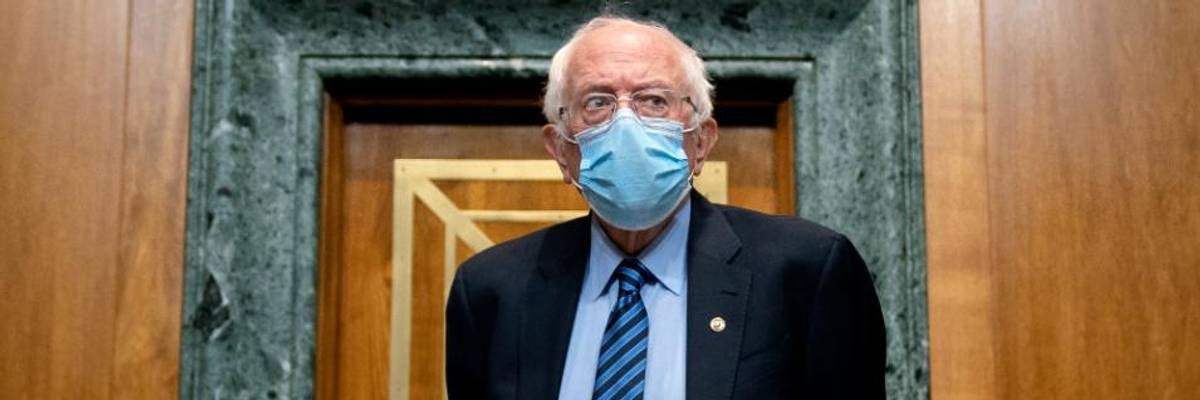
Senate Budget Committee Chairman Bernie Sanders (I-Vt.) arrives at a hearing regarding wages at large corporations on February 25, 2021 in Washington, D.C. (Photo: Stefani Reynolds-Pool/Getty Images)
Amid the ongoing surge in billionaire wealth during the coronavirus crisis and the union drive underway at an Amazon fulfillment center in Bessemer, Alabama, Senate Budget Committee Chairman Bernie Sanders has convened a hearing Wednesday on "the income and wealth inequality crisis in America."
Witnesses who will testify at the hearing include Amazon warehouse worker Jennifer Bates; former Labor Secretary Robert Reich; Sarah Anderson, director of the Global Economy Program at the Institute for Policy Studies, a progressive think tank; and others.
Last week, Sanders (I-Vt.) invited Jeff Bezos, Amazon's founder and chief executive, to provide testimony alongside Bates and others, but the world's wealthiest person--who is currently fighting tooth and nail against his employees' unionization effort despite watching his fortune swell from $113 billion to nearly $180 billion during the devastating Covid-19 pandemic--declined to attend.
The hearing begins at 11:00 am EST.
Watch:
"I was looking forward to hearing Jeff Bezos explain how he justified pocketing a $67 billion increase in his personal fortune during the pandemic while his warehouse workers have to worry about getting fired for taking a restroom break," Anderson told Common Dreams ahead of the hearing. "If he sees nothing wrong with that picture, he should've agreed to participate."
According to the latest research conducted by the Economic Policy Institute (EPI), top CEOs in the U.S. were paid 320 times as much as typical workers in 2019. EPI found that the ratio of CEO-to-typical-worker compensation was 21-to-1 in 1965 and 61-to-1 in 1989.
Anderson attributed the widening gulf between CEO pay and average worker pay, which has been getting worse for decades, to the weakening of the labor movement and the rise of stock-based compensation for CEOs.
"As labor unions have declined in the face of globalization and other challenges, wages have stagnated for most workers," she told Common Dreams. "Meanwhile, stock-based pay has come to dominate CEO pay packages, vastly increasing the size of potential payouts."
According to Anderson, "the argument was that stock-based compensation would ensure 'pay for performance,' but that's a joke." After the 2008 financial crash, she noted, "companies doled out huge stock option grants at market bottom. Executives quickly reaped huge windfalls that had nothing to do with their performance but were instead a result of the taxpayer-subsidized recovery."
The intensification of inequality within the U.S.--of which "Bezos has become a symbol," as Sanders put it--comes with dire social and political consequences, Anderson explained.
"Even in the world's richest nation," she said, "we will never eliminate poverty as long as so much of our nation's resources are flowing to the top, siphoning funds away from needed social programs and enriching a powerful elite that works to block policies that would help reduce inequality."
During the hearing, Anderson will speak about Sanders' newly unveiled bill, the Tax Excessive CEO Pay Act, which she called an "innovative" effort to "increase tax rates on companies with big gaps between CEO and worker pay."
As Common Dreams reported earlier Wednesday, Sanders' legislation would raise taxes on corporations that pay their CEOs over 50 times more than the median worker.
Anderson said that "this would incentivize corporations to both rein in pay at the top and lift up wages--all while generating an estimated $150 billion over 10 years that could be invested in ways that reduce inequality."
"But no one policy is the magic bullet," she added. "We need solutions that both level up the bottom and level down the top. In other words, we need to raise the minimum wage and strengthen union rights while also breaking up wealth concentration through fair taxes."
Ahead of the hearing, fellow witness Reich echoed the points made by Anderson.
"Even before the pandemic, America had the widest inequalities of income and wealth in a century, wider than any other developed nation," said Reich. Despite gains in productivity, he noted, "the median wage barely budged for 40 years."
"The richest 0.01% had almost as much wealth as the bottom 90% put together," Reich continued. "And more than half of Americans were earning so little, they had no choice but to live paycheck to paycheck."
"We got here because unions have shriveled," he added, "to the point where workers have almost no bargaining power."
Dear Common Dreams reader, It’s been nearly 30 years since I co-founded Common Dreams with my late wife, Lina Newhouser. We had the radical notion that journalism should serve the public good, not corporate profits. It was clear to us from the outset what it would take to build such a project. No paid advertisements. No corporate sponsors. No millionaire publisher telling us what to think or do. Many people said we wouldn't last a year, but we proved those doubters wrong. Together with a tremendous team of journalists and dedicated staff, we built an independent media outlet free from the constraints of profits and corporate control. Our mission has always been simple: To inform. To inspire. To ignite change for the common good. Building Common Dreams was not easy. Our survival was never guaranteed. When you take on the most powerful forces—Wall Street greed, fossil fuel industry destruction, Big Tech lobbyists, and uber-rich oligarchs who have spent billions upon billions rigging the economy and democracy in their favor—the only bulwark you have is supporters who believe in your work. But here’s the urgent message from me today. It's never been this bad out there. And it's never been this hard to keep us going. At the very moment Common Dreams is most needed, the threats we face are intensifying. We need your support now more than ever. We don't accept corporate advertising and never will. We don't have a paywall because we don't think people should be blocked from critical news based on their ability to pay. Everything we do is funded by the donations of readers like you. When everyone does the little they can afford, we are strong. But if that support retreats or dries up, so do we. Will you donate now to make sure Common Dreams not only survives but thrives? —Craig Brown, Co-founder |
Amid the ongoing surge in billionaire wealth during the coronavirus crisis and the union drive underway at an Amazon fulfillment center in Bessemer, Alabama, Senate Budget Committee Chairman Bernie Sanders has convened a hearing Wednesday on "the income and wealth inequality crisis in America."
Witnesses who will testify at the hearing include Amazon warehouse worker Jennifer Bates; former Labor Secretary Robert Reich; Sarah Anderson, director of the Global Economy Program at the Institute for Policy Studies, a progressive think tank; and others.
Last week, Sanders (I-Vt.) invited Jeff Bezos, Amazon's founder and chief executive, to provide testimony alongside Bates and others, but the world's wealthiest person--who is currently fighting tooth and nail against his employees' unionization effort despite watching his fortune swell from $113 billion to nearly $180 billion during the devastating Covid-19 pandemic--declined to attend.
The hearing begins at 11:00 am EST.
Watch:
"I was looking forward to hearing Jeff Bezos explain how he justified pocketing a $67 billion increase in his personal fortune during the pandemic while his warehouse workers have to worry about getting fired for taking a restroom break," Anderson told Common Dreams ahead of the hearing. "If he sees nothing wrong with that picture, he should've agreed to participate."
According to the latest research conducted by the Economic Policy Institute (EPI), top CEOs in the U.S. were paid 320 times as much as typical workers in 2019. EPI found that the ratio of CEO-to-typical-worker compensation was 21-to-1 in 1965 and 61-to-1 in 1989.
Anderson attributed the widening gulf between CEO pay and average worker pay, which has been getting worse for decades, to the weakening of the labor movement and the rise of stock-based compensation for CEOs.
"As labor unions have declined in the face of globalization and other challenges, wages have stagnated for most workers," she told Common Dreams. "Meanwhile, stock-based pay has come to dominate CEO pay packages, vastly increasing the size of potential payouts."
According to Anderson, "the argument was that stock-based compensation would ensure 'pay for performance,' but that's a joke." After the 2008 financial crash, she noted, "companies doled out huge stock option grants at market bottom. Executives quickly reaped huge windfalls that had nothing to do with their performance but were instead a result of the taxpayer-subsidized recovery."
The intensification of inequality within the U.S.--of which "Bezos has become a symbol," as Sanders put it--comes with dire social and political consequences, Anderson explained.
"Even in the world's richest nation," she said, "we will never eliminate poverty as long as so much of our nation's resources are flowing to the top, siphoning funds away from needed social programs and enriching a powerful elite that works to block policies that would help reduce inequality."
During the hearing, Anderson will speak about Sanders' newly unveiled bill, the Tax Excessive CEO Pay Act, which she called an "innovative" effort to "increase tax rates on companies with big gaps between CEO and worker pay."
As Common Dreams reported earlier Wednesday, Sanders' legislation would raise taxes on corporations that pay their CEOs over 50 times more than the median worker.
Anderson said that "this would incentivize corporations to both rein in pay at the top and lift up wages--all while generating an estimated $150 billion over 10 years that could be invested in ways that reduce inequality."
"But no one policy is the magic bullet," she added. "We need solutions that both level up the bottom and level down the top. In other words, we need to raise the minimum wage and strengthen union rights while also breaking up wealth concentration through fair taxes."
Ahead of the hearing, fellow witness Reich echoed the points made by Anderson.
"Even before the pandemic, America had the widest inequalities of income and wealth in a century, wider than any other developed nation," said Reich. Despite gains in productivity, he noted, "the median wage barely budged for 40 years."
"The richest 0.01% had almost as much wealth as the bottom 90% put together," Reich continued. "And more than half of Americans were earning so little, they had no choice but to live paycheck to paycheck."
"We got here because unions have shriveled," he added, "to the point where workers have almost no bargaining power."
Amid the ongoing surge in billionaire wealth during the coronavirus crisis and the union drive underway at an Amazon fulfillment center in Bessemer, Alabama, Senate Budget Committee Chairman Bernie Sanders has convened a hearing Wednesday on "the income and wealth inequality crisis in America."
Witnesses who will testify at the hearing include Amazon warehouse worker Jennifer Bates; former Labor Secretary Robert Reich; Sarah Anderson, director of the Global Economy Program at the Institute for Policy Studies, a progressive think tank; and others.
Last week, Sanders (I-Vt.) invited Jeff Bezos, Amazon's founder and chief executive, to provide testimony alongside Bates and others, but the world's wealthiest person--who is currently fighting tooth and nail against his employees' unionization effort despite watching his fortune swell from $113 billion to nearly $180 billion during the devastating Covid-19 pandemic--declined to attend.
The hearing begins at 11:00 am EST.
Watch:
"I was looking forward to hearing Jeff Bezos explain how he justified pocketing a $67 billion increase in his personal fortune during the pandemic while his warehouse workers have to worry about getting fired for taking a restroom break," Anderson told Common Dreams ahead of the hearing. "If he sees nothing wrong with that picture, he should've agreed to participate."
According to the latest research conducted by the Economic Policy Institute (EPI), top CEOs in the U.S. were paid 320 times as much as typical workers in 2019. EPI found that the ratio of CEO-to-typical-worker compensation was 21-to-1 in 1965 and 61-to-1 in 1989.
Anderson attributed the widening gulf between CEO pay and average worker pay, which has been getting worse for decades, to the weakening of the labor movement and the rise of stock-based compensation for CEOs.
"As labor unions have declined in the face of globalization and other challenges, wages have stagnated for most workers," she told Common Dreams. "Meanwhile, stock-based pay has come to dominate CEO pay packages, vastly increasing the size of potential payouts."
According to Anderson, "the argument was that stock-based compensation would ensure 'pay for performance,' but that's a joke." After the 2008 financial crash, she noted, "companies doled out huge stock option grants at market bottom. Executives quickly reaped huge windfalls that had nothing to do with their performance but were instead a result of the taxpayer-subsidized recovery."
The intensification of inequality within the U.S.--of which "Bezos has become a symbol," as Sanders put it--comes with dire social and political consequences, Anderson explained.
"Even in the world's richest nation," she said, "we will never eliminate poverty as long as so much of our nation's resources are flowing to the top, siphoning funds away from needed social programs and enriching a powerful elite that works to block policies that would help reduce inequality."
During the hearing, Anderson will speak about Sanders' newly unveiled bill, the Tax Excessive CEO Pay Act, which she called an "innovative" effort to "increase tax rates on companies with big gaps between CEO and worker pay."
As Common Dreams reported earlier Wednesday, Sanders' legislation would raise taxes on corporations that pay their CEOs over 50 times more than the median worker.
Anderson said that "this would incentivize corporations to both rein in pay at the top and lift up wages--all while generating an estimated $150 billion over 10 years that could be invested in ways that reduce inequality."
"But no one policy is the magic bullet," she added. "We need solutions that both level up the bottom and level down the top. In other words, we need to raise the minimum wage and strengthen union rights while also breaking up wealth concentration through fair taxes."
Ahead of the hearing, fellow witness Reich echoed the points made by Anderson.
"Even before the pandemic, America had the widest inequalities of income and wealth in a century, wider than any other developed nation," said Reich. Despite gains in productivity, he noted, "the median wage barely budged for 40 years."
"The richest 0.01% had almost as much wealth as the bottom 90% put together," Reich continued. "And more than half of Americans were earning so little, they had no choice but to live paycheck to paycheck."
"We got here because unions have shriveled," he added, "to the point where workers have almost no bargaining power."