SUBSCRIBE TO OUR FREE NEWSLETTER
Daily news & progressive opinion—funded by the people, not the corporations—delivered straight to your inbox.
5
#000000
#FFFFFF
To donate by check, phone, or other method, see our More Ways to Give page.
Daily news & progressive opinion—funded by the people, not the corporations—delivered straight to your inbox.
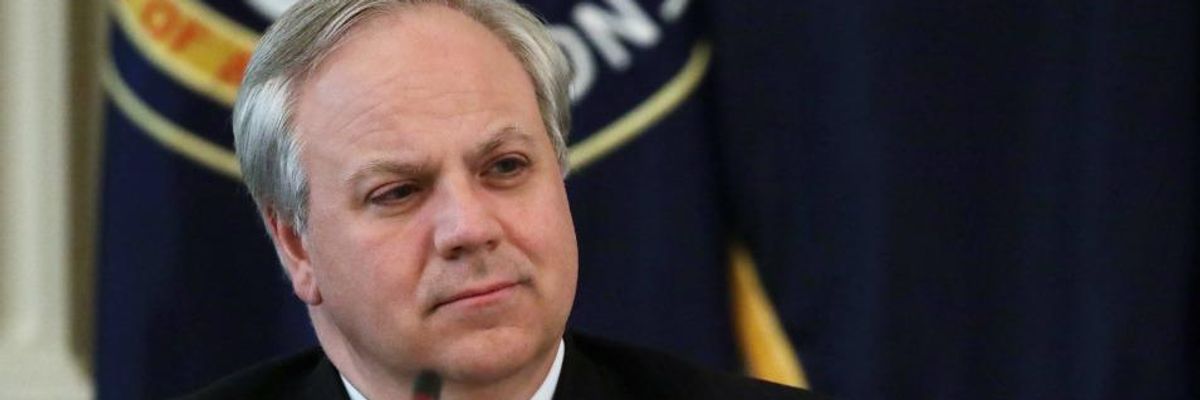
U.S. Secretary of the Interior David Bernhardt listens during a cabinet meeting in the East Room of the White House on May 19, 2020 in Washington, DC. (Photo: Alex Wong/Getty Images)
President Donald Trump's loyalty to the fossil fuel sector has been unremitting throughout his term, with government watchdog Public Citizen reporting Wednesday that nearly two-thirds of high-level meetings at the Interior Department since Trump took office have been attended by oil, gas, and coal companies and lobbyists.
In the group's new report, "Fossil Filled," Public Citizen revealed that out of 679 meetings between non-governmental groups and Interior Secretary David Bernhardt, his predecessor, Ryan Zinke, and five top aides in the first two years of Trump's term, 443 were attended by players in the fossil fuel sector.
The report comes as the industry is working to secure benefits from the coronavirus economic relief packages passed in Congress, even as Wall Street analysts and renewable energy advocates alike warn that fossil fuels are in "the death knell phase."
"With energy corporations mounting an intense lobbying campaign to receive emergency bailouts from the government, it is important to know who has the ear of the Trump administration," said Alan Zibel, research director of Public Citizen's Corporate Presidency Project and author of the report.
Oil and gas companies met with Bernhardt and his senior staffers 225 times, or at 33% of the meetings.
During the same period, the Interior Department--which is tasked with conserving the nation's natural resources--met with conservation groups only 9% of the time and with renewable energy groups just 3% of the time.
The lobbying firm which formerly employed Bernhardt--who carried an index card with a list of all his energy conflicts of interest when he began working at the Interior Department--met with officials 13 times, more than any other lobbying firm.
Now, the companies and representatives who held the Trump administration's attention for more than two years before the pandemic began stand to benefit from economic relief, even as 75% of Americans say the government should prioritize giving financial aid to the renewable energy sector instead.
"In an effort to stabilize its finances, the oil industry and congressional oil state allies have been desperately pushing for federal assistance, including relief from the 12.5% federal royalty payment, which is already lower than typical royalties for land owned by states," Public Citizen reported. "The Trump administration, which has been eager to do favors for friends in the oil and gas industry, has moved to speed up requests for relief on royalty payments."
Trump has said he opposes blanket relief for the industry, but after meeting with Bernhardt in April, Sen. Bill Cassidy (R-La.) said the secretary had "promised to quickly process targeted royalty relief."
Such relief is likely to cut down on funds available for public services and be aimed at helping fossil fuel executives and shareholders rather than rank-and-file workers in the industry, the group said.
"Though laid-off oil workers may indeed need government help, there is no doubt that the Trump administration's sympathies lie with the executives who call Trump a personal friend," Zibel wrote.
In addition to royalties relief, the fossil fuel industry now stands to gain massive tax refunds thanks to the $2 trillion CARES Act that was signed into law in March.
"Tucked into the bill was a massive tax benefits for corporate America, letting all businesses use losses to offset profits for the past five years," the report said. "This tax benefit, while available to all businesses, is especially helpful for industries such as oil that rack up significant losses in bad years."
After aggressive lobbying from the energy industry and the White House, the Federal Reserve opened a lending program to oil and gas companies, and the administration is also reportedly considering bridge loans for the oil industry.
While Trump personally intervened in international oil markets last month to stabilize oil prices--which plunged to below $0 per barrel--the administration has slapped penalties on the steadily-growing renewable energy sector, ending a rent holiday and demanding $50 million in back payments from solar and wind companies this week.
"Under Bernhardt, the Trump administration has been able to exert influence at the highest levels and has consistently favored industry over conservation groups," said Zibel.
Dear Common Dreams reader, It’s been nearly 30 years since I co-founded Common Dreams with my late wife, Lina Newhouser. We had the radical notion that journalism should serve the public good, not corporate profits. It was clear to us from the outset what it would take to build such a project. No paid advertisements. No corporate sponsors. No millionaire publisher telling us what to think or do. Many people said we wouldn't last a year, but we proved those doubters wrong. Together with a tremendous team of journalists and dedicated staff, we built an independent media outlet free from the constraints of profits and corporate control. Our mission has always been simple: To inform. To inspire. To ignite change for the common good. Building Common Dreams was not easy. Our survival was never guaranteed. When you take on the most powerful forces—Wall Street greed, fossil fuel industry destruction, Big Tech lobbyists, and uber-rich oligarchs who have spent billions upon billions rigging the economy and democracy in their favor—the only bulwark you have is supporters who believe in your work. But here’s the urgent message from me today. It's never been this bad out there. And it's never been this hard to keep us going. At the very moment Common Dreams is most needed, the threats we face are intensifying. We need your support now more than ever. We don't accept corporate advertising and never will. We don't have a paywall because we don't think people should be blocked from critical news based on their ability to pay. Everything we do is funded by the donations of readers like you. When everyone does the little they can afford, we are strong. But if that support retreats or dries up, so do we. Will you donate now to make sure Common Dreams not only survives but thrives? —Craig Brown, Co-founder |
President Donald Trump's loyalty to the fossil fuel sector has been unremitting throughout his term, with government watchdog Public Citizen reporting Wednesday that nearly two-thirds of high-level meetings at the Interior Department since Trump took office have been attended by oil, gas, and coal companies and lobbyists.
In the group's new report, "Fossil Filled," Public Citizen revealed that out of 679 meetings between non-governmental groups and Interior Secretary David Bernhardt, his predecessor, Ryan Zinke, and five top aides in the first two years of Trump's term, 443 were attended by players in the fossil fuel sector.
The report comes as the industry is working to secure benefits from the coronavirus economic relief packages passed in Congress, even as Wall Street analysts and renewable energy advocates alike warn that fossil fuels are in "the death knell phase."
"With energy corporations mounting an intense lobbying campaign to receive emergency bailouts from the government, it is important to know who has the ear of the Trump administration," said Alan Zibel, research director of Public Citizen's Corporate Presidency Project and author of the report.
Oil and gas companies met with Bernhardt and his senior staffers 225 times, or at 33% of the meetings.
During the same period, the Interior Department--which is tasked with conserving the nation's natural resources--met with conservation groups only 9% of the time and with renewable energy groups just 3% of the time.
The lobbying firm which formerly employed Bernhardt--who carried an index card with a list of all his energy conflicts of interest when he began working at the Interior Department--met with officials 13 times, more than any other lobbying firm.
Now, the companies and representatives who held the Trump administration's attention for more than two years before the pandemic began stand to benefit from economic relief, even as 75% of Americans say the government should prioritize giving financial aid to the renewable energy sector instead.
"In an effort to stabilize its finances, the oil industry and congressional oil state allies have been desperately pushing for federal assistance, including relief from the 12.5% federal royalty payment, which is already lower than typical royalties for land owned by states," Public Citizen reported. "The Trump administration, which has been eager to do favors for friends in the oil and gas industry, has moved to speed up requests for relief on royalty payments."
Trump has said he opposes blanket relief for the industry, but after meeting with Bernhardt in April, Sen. Bill Cassidy (R-La.) said the secretary had "promised to quickly process targeted royalty relief."
Such relief is likely to cut down on funds available for public services and be aimed at helping fossil fuel executives and shareholders rather than rank-and-file workers in the industry, the group said.
"Though laid-off oil workers may indeed need government help, there is no doubt that the Trump administration's sympathies lie with the executives who call Trump a personal friend," Zibel wrote.
In addition to royalties relief, the fossil fuel industry now stands to gain massive tax refunds thanks to the $2 trillion CARES Act that was signed into law in March.
"Tucked into the bill was a massive tax benefits for corporate America, letting all businesses use losses to offset profits for the past five years," the report said. "This tax benefit, while available to all businesses, is especially helpful for industries such as oil that rack up significant losses in bad years."
After aggressive lobbying from the energy industry and the White House, the Federal Reserve opened a lending program to oil and gas companies, and the administration is also reportedly considering bridge loans for the oil industry.
While Trump personally intervened in international oil markets last month to stabilize oil prices--which plunged to below $0 per barrel--the administration has slapped penalties on the steadily-growing renewable energy sector, ending a rent holiday and demanding $50 million in back payments from solar and wind companies this week.
"Under Bernhardt, the Trump administration has been able to exert influence at the highest levels and has consistently favored industry over conservation groups," said Zibel.
President Donald Trump's loyalty to the fossil fuel sector has been unremitting throughout his term, with government watchdog Public Citizen reporting Wednesday that nearly two-thirds of high-level meetings at the Interior Department since Trump took office have been attended by oil, gas, and coal companies and lobbyists.
In the group's new report, "Fossil Filled," Public Citizen revealed that out of 679 meetings between non-governmental groups and Interior Secretary David Bernhardt, his predecessor, Ryan Zinke, and five top aides in the first two years of Trump's term, 443 were attended by players in the fossil fuel sector.
The report comes as the industry is working to secure benefits from the coronavirus economic relief packages passed in Congress, even as Wall Street analysts and renewable energy advocates alike warn that fossil fuels are in "the death knell phase."
"With energy corporations mounting an intense lobbying campaign to receive emergency bailouts from the government, it is important to know who has the ear of the Trump administration," said Alan Zibel, research director of Public Citizen's Corporate Presidency Project and author of the report.
Oil and gas companies met with Bernhardt and his senior staffers 225 times, or at 33% of the meetings.
During the same period, the Interior Department--which is tasked with conserving the nation's natural resources--met with conservation groups only 9% of the time and with renewable energy groups just 3% of the time.
The lobbying firm which formerly employed Bernhardt--who carried an index card with a list of all his energy conflicts of interest when he began working at the Interior Department--met with officials 13 times, more than any other lobbying firm.
Now, the companies and representatives who held the Trump administration's attention for more than two years before the pandemic began stand to benefit from economic relief, even as 75% of Americans say the government should prioritize giving financial aid to the renewable energy sector instead.
"In an effort to stabilize its finances, the oil industry and congressional oil state allies have been desperately pushing for federal assistance, including relief from the 12.5% federal royalty payment, which is already lower than typical royalties for land owned by states," Public Citizen reported. "The Trump administration, which has been eager to do favors for friends in the oil and gas industry, has moved to speed up requests for relief on royalty payments."
Trump has said he opposes blanket relief for the industry, but after meeting with Bernhardt in April, Sen. Bill Cassidy (R-La.) said the secretary had "promised to quickly process targeted royalty relief."
Such relief is likely to cut down on funds available for public services and be aimed at helping fossil fuel executives and shareholders rather than rank-and-file workers in the industry, the group said.
"Though laid-off oil workers may indeed need government help, there is no doubt that the Trump administration's sympathies lie with the executives who call Trump a personal friend," Zibel wrote.
In addition to royalties relief, the fossil fuel industry now stands to gain massive tax refunds thanks to the $2 trillion CARES Act that was signed into law in March.
"Tucked into the bill was a massive tax benefits for corporate America, letting all businesses use losses to offset profits for the past five years," the report said. "This tax benefit, while available to all businesses, is especially helpful for industries such as oil that rack up significant losses in bad years."
After aggressive lobbying from the energy industry and the White House, the Federal Reserve opened a lending program to oil and gas companies, and the administration is also reportedly considering bridge loans for the oil industry.
While Trump personally intervened in international oil markets last month to stabilize oil prices--which plunged to below $0 per barrel--the administration has slapped penalties on the steadily-growing renewable energy sector, ending a rent holiday and demanding $50 million in back payments from solar and wind companies this week.
"Under Bernhardt, the Trump administration has been able to exert influence at the highest levels and has consistently favored industry over conservation groups," said Zibel.