SUBSCRIBE TO OUR FREE NEWSLETTER
Daily news & progressive opinion—funded by the people, not the corporations—delivered straight to your inbox.
5
#000000
#FFFFFF
To donate by check, phone, or other method, see our More Ways to Give page.
Daily news & progressive opinion—funded by the people, not the corporations—delivered straight to your inbox.
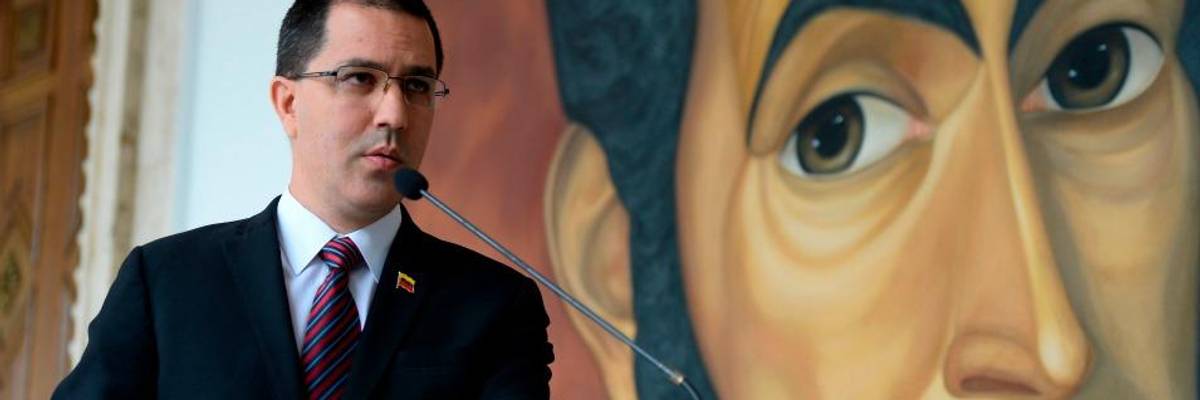
Venezuela's Minister of Foreign Affairs Jorge Arreaza called on the International Criminal Court on Thursday to investigate sanctions imposed on Venezuelan officials and businesses, saying they amounted to crimes against humanity. (Photo: Matias Delacroix/AFP via Getty Images)
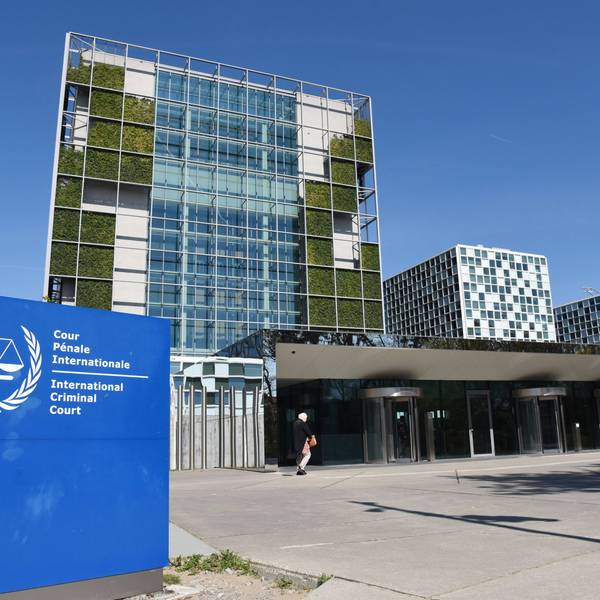
Venezuela's top diplomat called on the International Criminal Court Thursday to open an investigation into sanctions imposed on his country by the Trump administration, saying the economic warfare has caused the suffering of millions of Venezuelans.
"Our government is seeking refuge with international law," Foreign Minister Jorge Arreaza said Thursday. "We are convinced the consequences of the unilateral measures [by the United States] constitute crimes against humanity against the civilian population."
Arreaza's remarks came less than a week after the U.S. announced its latest round of sanctions on the country, this time targeting state-run airline CONVIASA.
"What justifies sanctions on a transport company, a public service?" President Nicolas Maduro said after the sanctions were announced. "What harm do they do to me? The damage is done to the people of Venezuela."
The U.S. has targeted Venezuelan officials and state-run businesses with several rounds of sanctions since Maduro won re-election in 2018 in an election the Trump administration claimed was illegitimate.
In January 2019 the U.S. sanctioned state-owned oil company PDVSA in an attempt to pressure Maduro to resign as the Trump administration became the first of a few dozen countries to claim opposition leader Juan Guaido was the legitimate president of Venezuela.
The administration also froze the U.S. assets of Maduro and other top officials in his government.
Cutting the government off from revenues from its oil reserves--the largest in the world--has amounted to "a death sentence for tens of thousands of Venezuelans per year," Arreaza stated in a 60-page brief he presented to the ICC. This week, Venezuela gave up rights to its own oil in order to keep the economy afloat.
Venezuelan officials said that since the country is part of the court, crimes against humanity within its border fall under its jurisdiction and qualify as war crimes.
Last year, United Nations human rights chief Michele Bachelet warned the sanctions would "significantly exacerbate" the existing food shortage and public health crises in Venezuela.
"I am deeply worried about the potentially severe impact on the human rights of the people of Venezuela of the new set of unilateral sanctions imposed by the U.S.," Michelle Bachelet said in August. "The sanctions are extremely broad and fail to contain sufficient measures to mitigate their impact on the most vulnerable sectors of the population."
The Center for Economic and Policy Research reported last year that 300,000 people were estimated to be at risk due to lack of access to medical treatment resulting from the sanctions, including, 80,000 HIV-positive people, 16,000 cancer patients, and 16,000 people in need of dialysis.
The U.S. has violated "international law and human rights," said Arreaza, calling on the ICC to investigate which U.S. officials should be prosecuted for imposing the sanctions.
Dear Common Dreams reader, It’s been nearly 30 years since I co-founded Common Dreams with my late wife, Lina Newhouser. We had the radical notion that journalism should serve the public good, not corporate profits. It was clear to us from the outset what it would take to build such a project. No paid advertisements. No corporate sponsors. No millionaire publisher telling us what to think or do. Many people said we wouldn't last a year, but we proved those doubters wrong. Together with a tremendous team of journalists and dedicated staff, we built an independent media outlet free from the constraints of profits and corporate control. Our mission has always been simple: To inform. To inspire. To ignite change for the common good. Building Common Dreams was not easy. Our survival was never guaranteed. When you take on the most powerful forces—Wall Street greed, fossil fuel industry destruction, Big Tech lobbyists, and uber-rich oligarchs who have spent billions upon billions rigging the economy and democracy in their favor—the only bulwark you have is supporters who believe in your work. But here’s the urgent message from me today. It's never been this bad out there. And it's never been this hard to keep us going. At the very moment Common Dreams is most needed, the threats we face are intensifying. We need your support now more than ever. We don't accept corporate advertising and never will. We don't have a paywall because we don't think people should be blocked from critical news based on their ability to pay. Everything we do is funded by the donations of readers like you. When everyone does the little they can afford, we are strong. But if that support retreats or dries up, so do we. Will you donate now to make sure Common Dreams not only survives but thrives? —Craig Brown, Co-founder |
Venezuela's top diplomat called on the International Criminal Court Thursday to open an investigation into sanctions imposed on his country by the Trump administration, saying the economic warfare has caused the suffering of millions of Venezuelans.
"Our government is seeking refuge with international law," Foreign Minister Jorge Arreaza said Thursday. "We are convinced the consequences of the unilateral measures [by the United States] constitute crimes against humanity against the civilian population."
Arreaza's remarks came less than a week after the U.S. announced its latest round of sanctions on the country, this time targeting state-run airline CONVIASA.
"What justifies sanctions on a transport company, a public service?" President Nicolas Maduro said after the sanctions were announced. "What harm do they do to me? The damage is done to the people of Venezuela."
The U.S. has targeted Venezuelan officials and state-run businesses with several rounds of sanctions since Maduro won re-election in 2018 in an election the Trump administration claimed was illegitimate.
In January 2019 the U.S. sanctioned state-owned oil company PDVSA in an attempt to pressure Maduro to resign as the Trump administration became the first of a few dozen countries to claim opposition leader Juan Guaido was the legitimate president of Venezuela.
The administration also froze the U.S. assets of Maduro and other top officials in his government.
Cutting the government off from revenues from its oil reserves--the largest in the world--has amounted to "a death sentence for tens of thousands of Venezuelans per year," Arreaza stated in a 60-page brief he presented to the ICC. This week, Venezuela gave up rights to its own oil in order to keep the economy afloat.
Venezuelan officials said that since the country is part of the court, crimes against humanity within its border fall under its jurisdiction and qualify as war crimes.
Last year, United Nations human rights chief Michele Bachelet warned the sanctions would "significantly exacerbate" the existing food shortage and public health crises in Venezuela.
"I am deeply worried about the potentially severe impact on the human rights of the people of Venezuela of the new set of unilateral sanctions imposed by the U.S.," Michelle Bachelet said in August. "The sanctions are extremely broad and fail to contain sufficient measures to mitigate their impact on the most vulnerable sectors of the population."
The Center for Economic and Policy Research reported last year that 300,000 people were estimated to be at risk due to lack of access to medical treatment resulting from the sanctions, including, 80,000 HIV-positive people, 16,000 cancer patients, and 16,000 people in need of dialysis.
The U.S. has violated "international law and human rights," said Arreaza, calling on the ICC to investigate which U.S. officials should be prosecuted for imposing the sanctions.
Venezuela's top diplomat called on the International Criminal Court Thursday to open an investigation into sanctions imposed on his country by the Trump administration, saying the economic warfare has caused the suffering of millions of Venezuelans.
"Our government is seeking refuge with international law," Foreign Minister Jorge Arreaza said Thursday. "We are convinced the consequences of the unilateral measures [by the United States] constitute crimes against humanity against the civilian population."
Arreaza's remarks came less than a week after the U.S. announced its latest round of sanctions on the country, this time targeting state-run airline CONVIASA.
"What justifies sanctions on a transport company, a public service?" President Nicolas Maduro said after the sanctions were announced. "What harm do they do to me? The damage is done to the people of Venezuela."
The U.S. has targeted Venezuelan officials and state-run businesses with several rounds of sanctions since Maduro won re-election in 2018 in an election the Trump administration claimed was illegitimate.
In January 2019 the U.S. sanctioned state-owned oil company PDVSA in an attempt to pressure Maduro to resign as the Trump administration became the first of a few dozen countries to claim opposition leader Juan Guaido was the legitimate president of Venezuela.
The administration also froze the U.S. assets of Maduro and other top officials in his government.
Cutting the government off from revenues from its oil reserves--the largest in the world--has amounted to "a death sentence for tens of thousands of Venezuelans per year," Arreaza stated in a 60-page brief he presented to the ICC. This week, Venezuela gave up rights to its own oil in order to keep the economy afloat.
Venezuelan officials said that since the country is part of the court, crimes against humanity within its border fall under its jurisdiction and qualify as war crimes.
Last year, United Nations human rights chief Michele Bachelet warned the sanctions would "significantly exacerbate" the existing food shortage and public health crises in Venezuela.
"I am deeply worried about the potentially severe impact on the human rights of the people of Venezuela of the new set of unilateral sanctions imposed by the U.S.," Michelle Bachelet said in August. "The sanctions are extremely broad and fail to contain sufficient measures to mitigate their impact on the most vulnerable sectors of the population."
The Center for Economic and Policy Research reported last year that 300,000 people were estimated to be at risk due to lack of access to medical treatment resulting from the sanctions, including, 80,000 HIV-positive people, 16,000 cancer patients, and 16,000 people in need of dialysis.
The U.S. has violated "international law and human rights," said Arreaza, calling on the ICC to investigate which U.S. officials should be prosecuted for imposing the sanctions.