SUBSCRIBE TO OUR FREE NEWSLETTER
Daily news & progressive opinion—funded by the people, not the corporations—delivered straight to your inbox.
5
#000000
#FFFFFF
To donate by check, phone, or other method, see our More Ways to Give page.
Daily news & progressive opinion—funded by the people, not the corporations—delivered straight to your inbox.
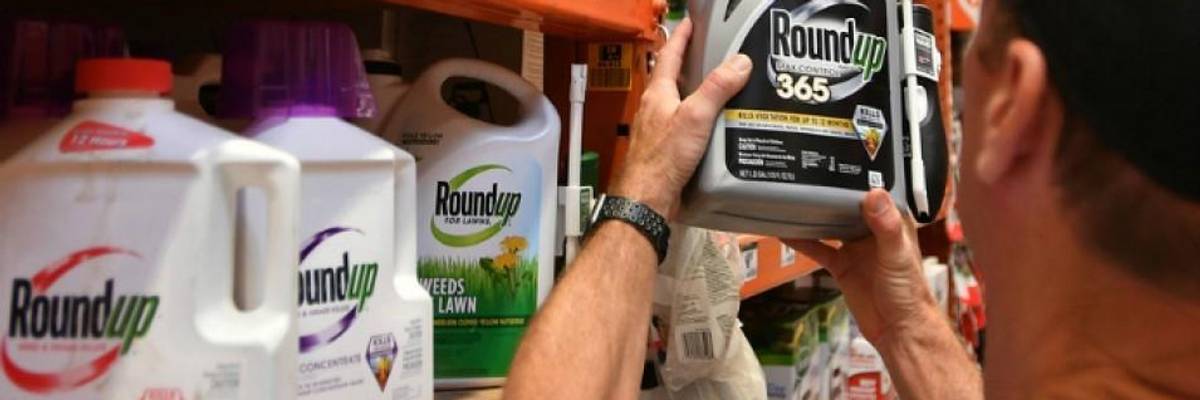
The EPA formally declared Thursday that weedkiller chemical glyphosate poses no threat to human health. Activists were outraged. (Photo: AFP/Getty Images)
President Donald Trump's Environmental Protection Agency on Thursday wrapped up a regulatory review of the safety of the weedkiller glyphosate and found the chemical poses no risk to human healh--a decision that was immediately decried by advocates as another indication of the closeness between the administration and private sector interests.
"The Trump EPA's assertion that glyphosate poses no risks to human health disregards independent science findings in favor of confidential industry research and industry profits," said Lori Ann Burd, the Center for Biological Diversity's director of environmental health. "This administration's troubling allegiance to Bayer/Monsanto and the pesticide industry doesn't change the trove of peer-reviewed research by leading scientists finding troubling links between glyphosate and cancer."
The EPA came to the conclusion after reviewing the chemical's effects on humans, but the determination is unlikely to change views on either side of the conflict over the chemical's safety.
"A whole lot of people will disagree" with the EPA, tweeted Civil Eats founder and editor Naomi Starkman.
As Reuters reported:
The conclusion reaffirms the agency's stance on glyphosate, the key ingredient in Bayer AG's Roundup, despite judgments by U.S. juries that have found that use of the weedkiller was responsible for plaintiffs' cancer in some trials.
...
In 2015, the World Health Organization's cancer arm classified glyphosate as "probably carcinogenic to humans."
There are reportedly tens of thousands of lawsuits against Bayer/Monsanto for the chemical's cancer links, and the company is considering settling the claims for between $10 and $12 billion.
Thursday's decision is not expected to have an effect on those suits. But the message the EPA is sending, the Center for Biological Diversity's Burd said, is clear.
"The EPA's pesticide office is clearly willing to bend over backwards, including disregarding its own guidelines for evaluating cancer risks, to give the industry what it wants," said Burd.
As Common Dreams has reported, Trump's EPA has been criticized by advocates for years for its closeness to Bayer/AG and its treatment of glyphosate.
Media strategist Jen Degtjarewsky gave a blunt assessment on the president's environmental record in the contexxt of Thursday's ruling.
"It's open season on clean air, water, and soil," said Degtjarewsky.
Dear Common Dreams reader, It’s been nearly 30 years since I co-founded Common Dreams with my late wife, Lina Newhouser. We had the radical notion that journalism should serve the public good, not corporate profits. It was clear to us from the outset what it would take to build such a project. No paid advertisements. No corporate sponsors. No millionaire publisher telling us what to think or do. Many people said we wouldn't last a year, but we proved those doubters wrong. Together with a tremendous team of journalists and dedicated staff, we built an independent media outlet free from the constraints of profits and corporate control. Our mission has always been simple: To inform. To inspire. To ignite change for the common good. Building Common Dreams was not easy. Our survival was never guaranteed. When you take on the most powerful forces—Wall Street greed, fossil fuel industry destruction, Big Tech lobbyists, and uber-rich oligarchs who have spent billions upon billions rigging the economy and democracy in their favor—the only bulwark you have is supporters who believe in your work. But here’s the urgent message from me today. It's never been this bad out there. And it's never been this hard to keep us going. At the very moment Common Dreams is most needed, the threats we face are intensifying. We need your support now more than ever. We don't accept corporate advertising and never will. We don't have a paywall because we don't think people should be blocked from critical news based on their ability to pay. Everything we do is funded by the donations of readers like you. When everyone does the little they can afford, we are strong. But if that support retreats or dries up, so do we. Will you donate now to make sure Common Dreams not only survives but thrives? —Craig Brown, Co-founder |
President Donald Trump's Environmental Protection Agency on Thursday wrapped up a regulatory review of the safety of the weedkiller glyphosate and found the chemical poses no risk to human healh--a decision that was immediately decried by advocates as another indication of the closeness between the administration and private sector interests.
"The Trump EPA's assertion that glyphosate poses no risks to human health disregards independent science findings in favor of confidential industry research and industry profits," said Lori Ann Burd, the Center for Biological Diversity's director of environmental health. "This administration's troubling allegiance to Bayer/Monsanto and the pesticide industry doesn't change the trove of peer-reviewed research by leading scientists finding troubling links between glyphosate and cancer."
The EPA came to the conclusion after reviewing the chemical's effects on humans, but the determination is unlikely to change views on either side of the conflict over the chemical's safety.
"A whole lot of people will disagree" with the EPA, tweeted Civil Eats founder and editor Naomi Starkman.
As Reuters reported:
The conclusion reaffirms the agency's stance on glyphosate, the key ingredient in Bayer AG's Roundup, despite judgments by U.S. juries that have found that use of the weedkiller was responsible for plaintiffs' cancer in some trials.
...
In 2015, the World Health Organization's cancer arm classified glyphosate as "probably carcinogenic to humans."
There are reportedly tens of thousands of lawsuits against Bayer/Monsanto for the chemical's cancer links, and the company is considering settling the claims for between $10 and $12 billion.
Thursday's decision is not expected to have an effect on those suits. But the message the EPA is sending, the Center for Biological Diversity's Burd said, is clear.
"The EPA's pesticide office is clearly willing to bend over backwards, including disregarding its own guidelines for evaluating cancer risks, to give the industry what it wants," said Burd.
As Common Dreams has reported, Trump's EPA has been criticized by advocates for years for its closeness to Bayer/AG and its treatment of glyphosate.
Media strategist Jen Degtjarewsky gave a blunt assessment on the president's environmental record in the contexxt of Thursday's ruling.
"It's open season on clean air, water, and soil," said Degtjarewsky.
President Donald Trump's Environmental Protection Agency on Thursday wrapped up a regulatory review of the safety of the weedkiller glyphosate and found the chemical poses no risk to human healh--a decision that was immediately decried by advocates as another indication of the closeness between the administration and private sector interests.
"The Trump EPA's assertion that glyphosate poses no risks to human health disregards independent science findings in favor of confidential industry research and industry profits," said Lori Ann Burd, the Center for Biological Diversity's director of environmental health. "This administration's troubling allegiance to Bayer/Monsanto and the pesticide industry doesn't change the trove of peer-reviewed research by leading scientists finding troubling links between glyphosate and cancer."
The EPA came to the conclusion after reviewing the chemical's effects on humans, but the determination is unlikely to change views on either side of the conflict over the chemical's safety.
"A whole lot of people will disagree" with the EPA, tweeted Civil Eats founder and editor Naomi Starkman.
As Reuters reported:
The conclusion reaffirms the agency's stance on glyphosate, the key ingredient in Bayer AG's Roundup, despite judgments by U.S. juries that have found that use of the weedkiller was responsible for plaintiffs' cancer in some trials.
...
In 2015, the World Health Organization's cancer arm classified glyphosate as "probably carcinogenic to humans."
There are reportedly tens of thousands of lawsuits against Bayer/Monsanto for the chemical's cancer links, and the company is considering settling the claims for between $10 and $12 billion.
Thursday's decision is not expected to have an effect on those suits. But the message the EPA is sending, the Center for Biological Diversity's Burd said, is clear.
"The EPA's pesticide office is clearly willing to bend over backwards, including disregarding its own guidelines for evaluating cancer risks, to give the industry what it wants," said Burd.
As Common Dreams has reported, Trump's EPA has been criticized by advocates for years for its closeness to Bayer/AG and its treatment of glyphosate.
Media strategist Jen Degtjarewsky gave a blunt assessment on the president's environmental record in the contexxt of Thursday's ruling.
"It's open season on clean air, water, and soil," said Degtjarewsky.