SUBSCRIBE TO OUR FREE NEWSLETTER
Daily news & progressive opinion—funded by the people, not the corporations—delivered straight to your inbox.
5
#000000
#FFFFFF
To donate by check, phone, or other method, see our More Ways to Give page.
Daily news & progressive opinion—funded by the people, not the corporations—delivered straight to your inbox.
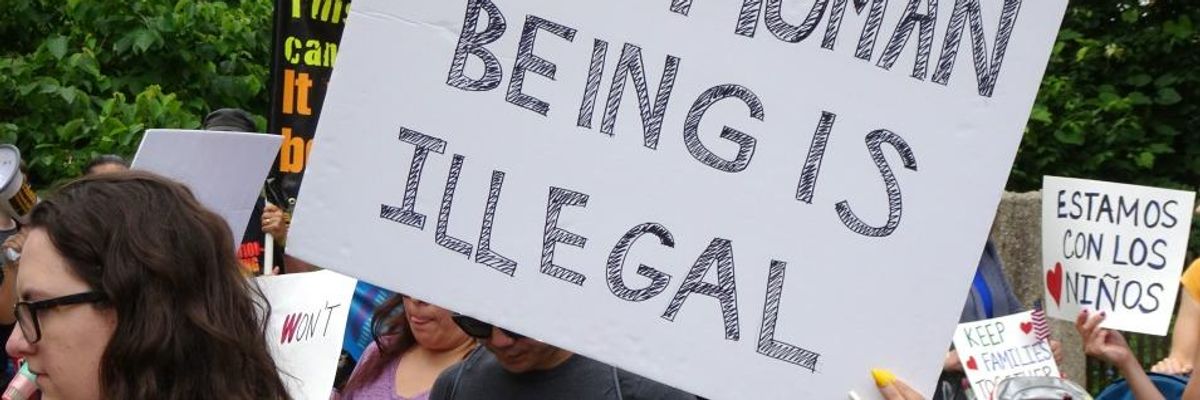
A city in Mississippi is arguing that 41-year-old Ismael Lopez, who was killed by police who apparently mistook him for a domestic violence suspect, had no constitutional rights because he was an undocumented immigrant. (Photo: Kurman Communications/Flickr/cc)
A court filing publicized late last week drew outrage on Monday over the case of Ismael Lopez, a 41-year-old man who was killed by police two years ago in Southaven, Mississippi.
To avoid responsibility for the man's death, attorneys for the city are arguing that Lopez had no constitutional rights due to his status as an undocumented immigrant--blatantly contradicting U.S. law and numerous rulings by the U.S. Supreme Court. Kristen Clarke, executive director of the Lawyers' Committee for Civil Rights Under Law, was among the immigrant rights defenders who drew attention to the case on social media.
Lopez was shot in the back of the head when the police came to his home, where he'd lived for 16 years, in July 2017. His widow, Claudia Linares, filed a wrongful death lawsuit against the city of Southaven this past summer, a year after a grand jury declined to indict the two officers involved in his death.
Southaven officials argued in a court filing revealed late last week that Lopez did not have Fourth Amendment or 14th Amendment rights--leaving him without protection from unreasonable search and seizures or equal protection under law.
"If [Lopez] ever had Fourth Amendment or 14th Amendment civil rights, they were lost by his own conduct and misconduct," reads the court filing. "Ismael Lopez may have been a person on American soil but he was not one of the 'We, the People of the United States' entitled to the civil rights invoked in this lawsuit."
Murray Wells, Lopez's family's attorney, called the city's claim "chilling," "insane," and "ludicrous" in a press conference on Thursday.
"They were residents that the city should be protecting and now that city is directly attacking their very own residents," Wells said. "For 16 years they were happy to take tax money. Happy to let these people spend their money at the store, happy to let them participate. But when [the police] make a mistake now these residents don't have any legal recourse. It is chilling."
Watch:
The brief describes Lopez as "a convicted felon" and "fugitive from justice," despite the fact that police had no outstanding warrants for Lopez's arrest at the time of his death. He had not been arrested since the 1990s, when he was living in Washington State. On social media, critics on Monday expressed shock at the city's attacks on Lopez and its claim that he was not protected by the Constitution.
The city's claim that Lopez was not entitled to constitutional rights contradicts the 2001 Supreme Court decision Zadvydas v. Davis, in which the high court affirmed that the 14th Amendment applies to all immigrants, including those who are undocumented.
The Supreme Court also ruled in 1973 that all constitutional laws pertaining to the treatment of crime suspects, including the Fourth Amendment, apply to undocumented immigrants.
Both decisions echoed the words of James Madison, the fourth U.S. president, who wrote that immigrants are entitled "to their [constitutional] protection and advantage."
"We're stunned that someone put this in writing," Wells said of the city's argument, adding that for undocumented immigrants, according to Southaven officials, "storm troopers can come into your house and kill you without regard to any constitutional results or repercussions whatsoever."
Wells asked the judge overseeing the case to sanction Southaven officials for arguments he said weren't made in good faith.
Dear Common Dreams reader, It’s been nearly 30 years since I co-founded Common Dreams with my late wife, Lina Newhouser. We had the radical notion that journalism should serve the public good, not corporate profits. It was clear to us from the outset what it would take to build such a project. No paid advertisements. No corporate sponsors. No millionaire publisher telling us what to think or do. Many people said we wouldn't last a year, but we proved those doubters wrong. Together with a tremendous team of journalists and dedicated staff, we built an independent media outlet free from the constraints of profits and corporate control. Our mission has always been simple: To inform. To inspire. To ignite change for the common good. Building Common Dreams was not easy. Our survival was never guaranteed. When you take on the most powerful forces—Wall Street greed, fossil fuel industry destruction, Big Tech lobbyists, and uber-rich oligarchs who have spent billions upon billions rigging the economy and democracy in their favor—the only bulwark you have is supporters who believe in your work. But here’s the urgent message from me today. It's never been this bad out there. And it's never been this hard to keep us going. At the very moment Common Dreams is most needed, the threats we face are intensifying. We need your support now more than ever. We don't accept corporate advertising and never will. We don't have a paywall because we don't think people should be blocked from critical news based on their ability to pay. Everything we do is funded by the donations of readers like you. When everyone does the little they can afford, we are strong. But if that support retreats or dries up, so do we. Will you donate now to make sure Common Dreams not only survives but thrives? —Craig Brown, Co-founder |
A court filing publicized late last week drew outrage on Monday over the case of Ismael Lopez, a 41-year-old man who was killed by police two years ago in Southaven, Mississippi.
To avoid responsibility for the man's death, attorneys for the city are arguing that Lopez had no constitutional rights due to his status as an undocumented immigrant--blatantly contradicting U.S. law and numerous rulings by the U.S. Supreme Court. Kristen Clarke, executive director of the Lawyers' Committee for Civil Rights Under Law, was among the immigrant rights defenders who drew attention to the case on social media.
Lopez was shot in the back of the head when the police came to his home, where he'd lived for 16 years, in July 2017. His widow, Claudia Linares, filed a wrongful death lawsuit against the city of Southaven this past summer, a year after a grand jury declined to indict the two officers involved in his death.
Southaven officials argued in a court filing revealed late last week that Lopez did not have Fourth Amendment or 14th Amendment rights--leaving him without protection from unreasonable search and seizures or equal protection under law.
"If [Lopez] ever had Fourth Amendment or 14th Amendment civil rights, they were lost by his own conduct and misconduct," reads the court filing. "Ismael Lopez may have been a person on American soil but he was not one of the 'We, the People of the United States' entitled to the civil rights invoked in this lawsuit."
Murray Wells, Lopez's family's attorney, called the city's claim "chilling," "insane," and "ludicrous" in a press conference on Thursday.
"They were residents that the city should be protecting and now that city is directly attacking their very own residents," Wells said. "For 16 years they were happy to take tax money. Happy to let these people spend their money at the store, happy to let them participate. But when [the police] make a mistake now these residents don't have any legal recourse. It is chilling."
Watch:
The brief describes Lopez as "a convicted felon" and "fugitive from justice," despite the fact that police had no outstanding warrants for Lopez's arrest at the time of his death. He had not been arrested since the 1990s, when he was living in Washington State. On social media, critics on Monday expressed shock at the city's attacks on Lopez and its claim that he was not protected by the Constitution.
The city's claim that Lopez was not entitled to constitutional rights contradicts the 2001 Supreme Court decision Zadvydas v. Davis, in which the high court affirmed that the 14th Amendment applies to all immigrants, including those who are undocumented.
The Supreme Court also ruled in 1973 that all constitutional laws pertaining to the treatment of crime suspects, including the Fourth Amendment, apply to undocumented immigrants.
Both decisions echoed the words of James Madison, the fourth U.S. president, who wrote that immigrants are entitled "to their [constitutional] protection and advantage."
"We're stunned that someone put this in writing," Wells said of the city's argument, adding that for undocumented immigrants, according to Southaven officials, "storm troopers can come into your house and kill you without regard to any constitutional results or repercussions whatsoever."
Wells asked the judge overseeing the case to sanction Southaven officials for arguments he said weren't made in good faith.
A court filing publicized late last week drew outrage on Monday over the case of Ismael Lopez, a 41-year-old man who was killed by police two years ago in Southaven, Mississippi.
To avoid responsibility for the man's death, attorneys for the city are arguing that Lopez had no constitutional rights due to his status as an undocumented immigrant--blatantly contradicting U.S. law and numerous rulings by the U.S. Supreme Court. Kristen Clarke, executive director of the Lawyers' Committee for Civil Rights Under Law, was among the immigrant rights defenders who drew attention to the case on social media.
Lopez was shot in the back of the head when the police came to his home, where he'd lived for 16 years, in July 2017. His widow, Claudia Linares, filed a wrongful death lawsuit against the city of Southaven this past summer, a year after a grand jury declined to indict the two officers involved in his death.
Southaven officials argued in a court filing revealed late last week that Lopez did not have Fourth Amendment or 14th Amendment rights--leaving him without protection from unreasonable search and seizures or equal protection under law.
"If [Lopez] ever had Fourth Amendment or 14th Amendment civil rights, they were lost by his own conduct and misconduct," reads the court filing. "Ismael Lopez may have been a person on American soil but he was not one of the 'We, the People of the United States' entitled to the civil rights invoked in this lawsuit."
Murray Wells, Lopez's family's attorney, called the city's claim "chilling," "insane," and "ludicrous" in a press conference on Thursday.
"They were residents that the city should be protecting and now that city is directly attacking their very own residents," Wells said. "For 16 years they were happy to take tax money. Happy to let these people spend their money at the store, happy to let them participate. But when [the police] make a mistake now these residents don't have any legal recourse. It is chilling."
Watch:
The brief describes Lopez as "a convicted felon" and "fugitive from justice," despite the fact that police had no outstanding warrants for Lopez's arrest at the time of his death. He had not been arrested since the 1990s, when he was living in Washington State. On social media, critics on Monday expressed shock at the city's attacks on Lopez and its claim that he was not protected by the Constitution.
The city's claim that Lopez was not entitled to constitutional rights contradicts the 2001 Supreme Court decision Zadvydas v. Davis, in which the high court affirmed that the 14th Amendment applies to all immigrants, including those who are undocumented.
The Supreme Court also ruled in 1973 that all constitutional laws pertaining to the treatment of crime suspects, including the Fourth Amendment, apply to undocumented immigrants.
Both decisions echoed the words of James Madison, the fourth U.S. president, who wrote that immigrants are entitled "to their [constitutional] protection and advantage."
"We're stunned that someone put this in writing," Wells said of the city's argument, adding that for undocumented immigrants, according to Southaven officials, "storm troopers can come into your house and kill you without regard to any constitutional results or repercussions whatsoever."
Wells asked the judge overseeing the case to sanction Southaven officials for arguments he said weren't made in good faith.