SUBSCRIBE TO OUR FREE NEWSLETTER
Daily news & progressive opinion—funded by the people, not the corporations—delivered straight to your inbox.
5
#000000
#FFFFFF
To donate by check, phone, or other method, see our More Ways to Give page.
Daily news & progressive opinion—funded by the people, not the corporations—delivered straight to your inbox.
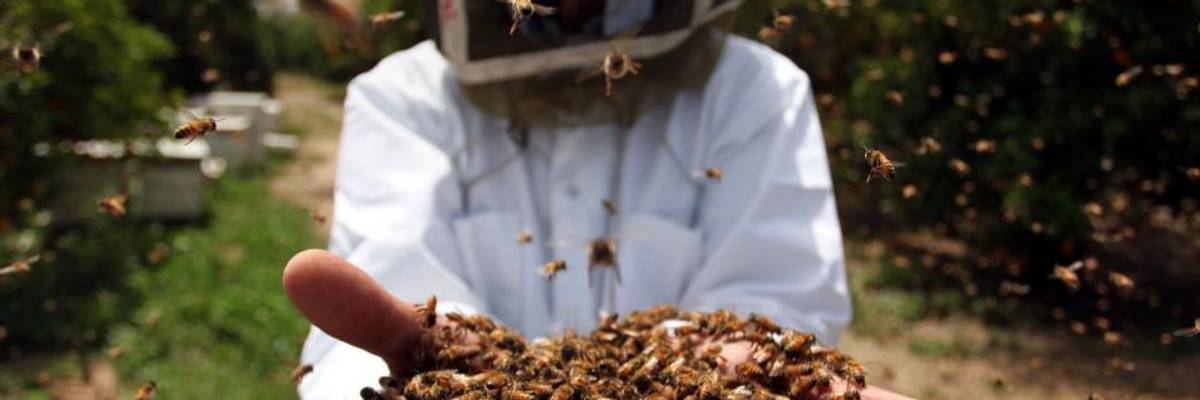
"It is inappropriate for EPA to solely rely on industry studies to justify bringing sulfoxaflor back into our farm fields," said Michele Colopy of the Pollinator Stewardship Council, a party to the suit. "Die-offs of tens of thousands of bee colonies continue to occur and sulfoxaflor plays a huge role in this problem. EPA is harming not just the beekeepers, their livelihood, and bees, but the nation's food system." (Photo: Ashraf Amra/Anadolu Agency/Getty Images)
A group of beekeepers joined forces on Friday against Trump's EPA by filing a lawsuit over the agency's move to put a powerful insecticide--one that scientists warn is part of the massive pollinator die-off across the U.S.--back on the market.
The lawsuit (pdf) charges that the EPA's approval of sulfoxaflor--touted by its manufacturer, agro-chemical giant Corteva, as a "next generation neonicotinoid"--was illegally rendered as it put industry interests ahead of the health of pollinators and ignored the available science.
"EPA is harming not just the beekeepers, their livelihood, and bees, but the nation's food system."
"Honeybees and other pollinators are dying in droves because of insecticides like sulfoxaflor, yet the Trump administration removes restriction just to please the chemical industry," said Greg Loarie, an attorney with Earthjustice, the legal aid group representing the beekeepers. "This is illegal and an affront to our food system, economy, and environment."
According to a statement by Earthjustice:
EPA first approved sulfoxaflor in 2013, but thanks to a lawsuit brought by Pollinator Stewardship Council, the American Beekeeper Federation, and Earthjustice, the Ninth Circuit Court of Appeals overturned that decision. The Court ruled EPA failed to obtain reliable studies regarding the impact of sulfoxaflor on honeybee colonies.
In 2016, EPA re-approved sulfoxaflor subject to significant restrictions to reduce the risk to honeybees and other pollinators. On July 12, 2019, without any public notice, the Trump administration removed these restrictions on sulfoxaflor and approved a host of new uses for the bee-killing insecticide.
Plaintiffs in the lawsuit include beekeeper Jeff Anderson, the Pollinator Stewardship Council, and the American Beekeeper Federation.
"It is inappropriate for EPA to solely rely on industry studies to justify bringing sulfoxaflor back into our farm fields," said Michele Colopy of the Pollinator Stewardship Council. "Die-offs of tens of thousands of bee colonies continue to occur and sulfoxaflor plays a huge role in this problem. EPA is harming not just the beekeepers, their livelihood, and bees, but the nation's food system."
Dear Common Dreams reader, It’s been nearly 30 years since I co-founded Common Dreams with my late wife, Lina Newhouser. We had the radical notion that journalism should serve the public good, not corporate profits. It was clear to us from the outset what it would take to build such a project. No paid advertisements. No corporate sponsors. No millionaire publisher telling us what to think or do. Many people said we wouldn't last a year, but we proved those doubters wrong. Together with a tremendous team of journalists and dedicated staff, we built an independent media outlet free from the constraints of profits and corporate control. Our mission has always been simple: To inform. To inspire. To ignite change for the common good. Building Common Dreams was not easy. Our survival was never guaranteed. When you take on the most powerful forces—Wall Street greed, fossil fuel industry destruction, Big Tech lobbyists, and uber-rich oligarchs who have spent billions upon billions rigging the economy and democracy in their favor—the only bulwark you have is supporters who believe in your work. But here’s the urgent message from me today. It's never been this bad out there. And it's never been this hard to keep us going. At the very moment Common Dreams is most needed, the threats we face are intensifying. We need your support now more than ever. We don't accept corporate advertising and never will. We don't have a paywall because we don't think people should be blocked from critical news based on their ability to pay. Everything we do is funded by the donations of readers like you. When everyone does the little they can afford, we are strong. But if that support retreats or dries up, so do we. Will you donate now to make sure Common Dreams not only survives but thrives? —Craig Brown, Co-founder |
A group of beekeepers joined forces on Friday against Trump's EPA by filing a lawsuit over the agency's move to put a powerful insecticide--one that scientists warn is part of the massive pollinator die-off across the U.S.--back on the market.
The lawsuit (pdf) charges that the EPA's approval of sulfoxaflor--touted by its manufacturer, agro-chemical giant Corteva, as a "next generation neonicotinoid"--was illegally rendered as it put industry interests ahead of the health of pollinators and ignored the available science.
"EPA is harming not just the beekeepers, their livelihood, and bees, but the nation's food system."
"Honeybees and other pollinators are dying in droves because of insecticides like sulfoxaflor, yet the Trump administration removes restriction just to please the chemical industry," said Greg Loarie, an attorney with Earthjustice, the legal aid group representing the beekeepers. "This is illegal and an affront to our food system, economy, and environment."
According to a statement by Earthjustice:
EPA first approved sulfoxaflor in 2013, but thanks to a lawsuit brought by Pollinator Stewardship Council, the American Beekeeper Federation, and Earthjustice, the Ninth Circuit Court of Appeals overturned that decision. The Court ruled EPA failed to obtain reliable studies regarding the impact of sulfoxaflor on honeybee colonies.
In 2016, EPA re-approved sulfoxaflor subject to significant restrictions to reduce the risk to honeybees and other pollinators. On July 12, 2019, without any public notice, the Trump administration removed these restrictions on sulfoxaflor and approved a host of new uses for the bee-killing insecticide.
Plaintiffs in the lawsuit include beekeeper Jeff Anderson, the Pollinator Stewardship Council, and the American Beekeeper Federation.
"It is inappropriate for EPA to solely rely on industry studies to justify bringing sulfoxaflor back into our farm fields," said Michele Colopy of the Pollinator Stewardship Council. "Die-offs of tens of thousands of bee colonies continue to occur and sulfoxaflor plays a huge role in this problem. EPA is harming not just the beekeepers, their livelihood, and bees, but the nation's food system."
A group of beekeepers joined forces on Friday against Trump's EPA by filing a lawsuit over the agency's move to put a powerful insecticide--one that scientists warn is part of the massive pollinator die-off across the U.S.--back on the market.
The lawsuit (pdf) charges that the EPA's approval of sulfoxaflor--touted by its manufacturer, agro-chemical giant Corteva, as a "next generation neonicotinoid"--was illegally rendered as it put industry interests ahead of the health of pollinators and ignored the available science.
"EPA is harming not just the beekeepers, their livelihood, and bees, but the nation's food system."
"Honeybees and other pollinators are dying in droves because of insecticides like sulfoxaflor, yet the Trump administration removes restriction just to please the chemical industry," said Greg Loarie, an attorney with Earthjustice, the legal aid group representing the beekeepers. "This is illegal and an affront to our food system, economy, and environment."
According to a statement by Earthjustice:
EPA first approved sulfoxaflor in 2013, but thanks to a lawsuit brought by Pollinator Stewardship Council, the American Beekeeper Federation, and Earthjustice, the Ninth Circuit Court of Appeals overturned that decision. The Court ruled EPA failed to obtain reliable studies regarding the impact of sulfoxaflor on honeybee colonies.
In 2016, EPA re-approved sulfoxaflor subject to significant restrictions to reduce the risk to honeybees and other pollinators. On July 12, 2019, without any public notice, the Trump administration removed these restrictions on sulfoxaflor and approved a host of new uses for the bee-killing insecticide.
Plaintiffs in the lawsuit include beekeeper Jeff Anderson, the Pollinator Stewardship Council, and the American Beekeeper Federation.
"It is inappropriate for EPA to solely rely on industry studies to justify bringing sulfoxaflor back into our farm fields," said Michele Colopy of the Pollinator Stewardship Council. "Die-offs of tens of thousands of bee colonies continue to occur and sulfoxaflor plays a huge role in this problem. EPA is harming not just the beekeepers, their livelihood, and bees, but the nation's food system."