SUBSCRIBE TO OUR FREE NEWSLETTER
Daily news & progressive opinion—funded by the people, not the corporations—delivered straight to your inbox.
5
#000000
#FFFFFF
To donate by check, phone, or other method, see our More Ways to Give page.
Daily news & progressive opinion—funded by the people, not the corporations—delivered straight to your inbox.
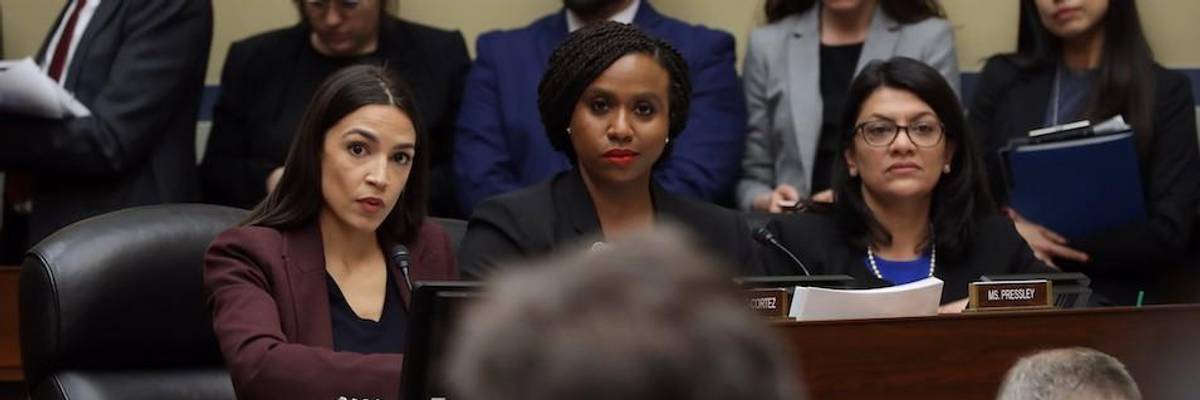
Rep. Alexandria Ocasio-Cortez (D-N.Y.), Rep. Ayanna Pressley (D-Mass.) and Rep. Rashida Tlaib (D-Mich.) listen as Michael Cohen, former attorney and fixer for President Donald Trump, testifies before the House Oversight Committee on Capitol Hill February 27, 2019. (Photo: Chip Somodevilla, Getty Images)
A chorus of criticism over House Speaker Nancy Pelosi's dismissive comments about progressive members of her own caucus in an interview with New York Times columnist Maureen Dowd intensified over the weekend and exposed the rift between the Democratic Party's old guard and new blood.
The Times interview, which was published online on Saturday, featured Pelosi, a California Democrat, disparaging freshman members of the party for their public refusal to support an immigration bill that delivered billions to President Donald Trump's war on immigrants with no strings attached. Pelosi targeted Reps. Alexandria Ocasio-Cortez (N.Y.), Ilhan Omar (Minn.), Rashida Tlaib (Mich.), and Ayanna Pressley (Mass.) for their refusal to vote for the bill, despite the fact that the quartet were part of 102 Democrats that bucked the party line in the final vote, as the Times reported on June 27.
"All these people have their public whatever and their Twitter world," Pelosi told Dowd. "But they didn't have any following. They're four people and that's how many votes they got."
That reference to "whatever" set Ocasio-Cortez off. In a Saturday evening tweet, the New York congresswoman tied her social media following to her work in the House.
"That public 'whatever' is called public sentiment," said Ocasio-Cortez. "And wielding the power to shift it is how we actually achieve meaningful change in this country."
Omar responded to Ocasio-Cortez by tweeting on Sunday afternoon that the real issue was the Democratic establishment watching their control over the party ideology slip away.
"You know they're just salty about WHO is wielding the power to shift 'public sentiment' these days, sis," said Omar. "Sorry not sorry."
Earlier on Sunday, Tlaib, in an appearance on ABC's "Face the Nation," told anchor Martha Raddatz that Pelosi should respect the fact "that 650,000 people are represented by each and every single one of us." Tlaib added that she and her allies on the left in Congress would continue to push back against the actions of the administration, no matter the position of party leadership.
"I'll tell you right now," said Tlaib, "we're not going to stand by and sit idly by and allow brown and dark-skinned children to be ripped away from their parents to be dehumanized."
Reactions across the progressive spectrum to Pelosi's comments made a clear distinction between Pelosi and the freshmen she attacked.
"The world Pelosi describes is completely amoral and based entirely on transactional politics," Slate reporter Ashley Feinberg said on Twitter Saturday. "It's depressing and actively harmful and I cannot imagine a more efficient way of killing whatever momentum might have been left from 2018."
CNN's Dean Obeidallah, in a column Sunday, bemoaned Pelosi's focus on members of her own caucus instead of the president.
"Call me old fashioned, but I thought the Democratic speaker of the House was supposed to bolster House Democrats and hold a Republican president accountable," wrote Obeidallah. "As of late we are seeing just the opposite from Speaker Nancy Pelosi."
The contrast between the old guard and the new, tweeted Rolling Stone writer Jamil Smith, was made clear over the congressional break.
"While @AOC used her break time to inspect the immigrant concentration camps," said Smith, "Pelosi used some of hers to have chocolates with Dowd during a national interview in which she dumped, again, on the four congresswomen who made the bold and correct stand against the administration."
Former Eric Holder and Hillary Clinton aide Brian Fallon, now the head of progressive group We Demand Justice, argued that Pelosi's targets represent the party better than she does.
"The four House freshmen whom Pelosi dismisses in the Dowd column have done more to define the vision and moral center of today's Democratic Party than all of the message bills pushed by the party leadership combined," said Fallon.
In a lengthy column Sunday morning decrying Pelosi's record of party leadership during the Trump years, The Intercept's Medhi Hasan pointed to the speaker's refusal to take the latest rape allegations against the president seriously or entertain impeachment, combined with the ongoing crisis at the border, as evidence that Pelosi is complicit in Trump's crimes.
"So forget the 'you-go-girl memes for literally clapping back at Trump' that Dowd fawns over in her interview with the speaker," wrote Hasan. "It is time for liberals and leftists who lambast Senate Majority Leader Mitch McConnell to admit to themselves that the hippie-punching Pelosi has become a Trump enabler too."
Dear Common Dreams reader, It’s been nearly 30 years since I co-founded Common Dreams with my late wife, Lina Newhouser. We had the radical notion that journalism should serve the public good, not corporate profits. It was clear to us from the outset what it would take to build such a project. No paid advertisements. No corporate sponsors. No millionaire publisher telling us what to think or do. Many people said we wouldn't last a year, but we proved those doubters wrong. Together with a tremendous team of journalists and dedicated staff, we built an independent media outlet free from the constraints of profits and corporate control. Our mission has always been simple: To inform. To inspire. To ignite change for the common good. Building Common Dreams was not easy. Our survival was never guaranteed. When you take on the most powerful forces—Wall Street greed, fossil fuel industry destruction, Big Tech lobbyists, and uber-rich oligarchs who have spent billions upon billions rigging the economy and democracy in their favor—the only bulwark you have is supporters who believe in your work. But here’s the urgent message from me today. It's never been this bad out there. And it's never been this hard to keep us going. At the very moment Common Dreams is most needed, the threats we face are intensifying. We need your support now more than ever. We don't accept corporate advertising and never will. We don't have a paywall because we don't think people should be blocked from critical news based on their ability to pay. Everything we do is funded by the donations of readers like you. When everyone does the little they can afford, we are strong. But if that support retreats or dries up, so do we. Will you donate now to make sure Common Dreams not only survives but thrives? —Craig Brown, Co-founder |
A chorus of criticism over House Speaker Nancy Pelosi's dismissive comments about progressive members of her own caucus in an interview with New York Times columnist Maureen Dowd intensified over the weekend and exposed the rift between the Democratic Party's old guard and new blood.
The Times interview, which was published online on Saturday, featured Pelosi, a California Democrat, disparaging freshman members of the party for their public refusal to support an immigration bill that delivered billions to President Donald Trump's war on immigrants with no strings attached. Pelosi targeted Reps. Alexandria Ocasio-Cortez (N.Y.), Ilhan Omar (Minn.), Rashida Tlaib (Mich.), and Ayanna Pressley (Mass.) for their refusal to vote for the bill, despite the fact that the quartet were part of 102 Democrats that bucked the party line in the final vote, as the Times reported on June 27.
"All these people have their public whatever and their Twitter world," Pelosi told Dowd. "But they didn't have any following. They're four people and that's how many votes they got."
That reference to "whatever" set Ocasio-Cortez off. In a Saturday evening tweet, the New York congresswoman tied her social media following to her work in the House.
"That public 'whatever' is called public sentiment," said Ocasio-Cortez. "And wielding the power to shift it is how we actually achieve meaningful change in this country."
Omar responded to Ocasio-Cortez by tweeting on Sunday afternoon that the real issue was the Democratic establishment watching their control over the party ideology slip away.
"You know they're just salty about WHO is wielding the power to shift 'public sentiment' these days, sis," said Omar. "Sorry not sorry."
Earlier on Sunday, Tlaib, in an appearance on ABC's "Face the Nation," told anchor Martha Raddatz that Pelosi should respect the fact "that 650,000 people are represented by each and every single one of us." Tlaib added that she and her allies on the left in Congress would continue to push back against the actions of the administration, no matter the position of party leadership.
"I'll tell you right now," said Tlaib, "we're not going to stand by and sit idly by and allow brown and dark-skinned children to be ripped away from their parents to be dehumanized."
Reactions across the progressive spectrum to Pelosi's comments made a clear distinction between Pelosi and the freshmen she attacked.
"The world Pelosi describes is completely amoral and based entirely on transactional politics," Slate reporter Ashley Feinberg said on Twitter Saturday. "It's depressing and actively harmful and I cannot imagine a more efficient way of killing whatever momentum might have been left from 2018."
CNN's Dean Obeidallah, in a column Sunday, bemoaned Pelosi's focus on members of her own caucus instead of the president.
"Call me old fashioned, but I thought the Democratic speaker of the House was supposed to bolster House Democrats and hold a Republican president accountable," wrote Obeidallah. "As of late we are seeing just the opposite from Speaker Nancy Pelosi."
The contrast between the old guard and the new, tweeted Rolling Stone writer Jamil Smith, was made clear over the congressional break.
"While @AOC used her break time to inspect the immigrant concentration camps," said Smith, "Pelosi used some of hers to have chocolates with Dowd during a national interview in which she dumped, again, on the four congresswomen who made the bold and correct stand against the administration."
Former Eric Holder and Hillary Clinton aide Brian Fallon, now the head of progressive group We Demand Justice, argued that Pelosi's targets represent the party better than she does.
"The four House freshmen whom Pelosi dismisses in the Dowd column have done more to define the vision and moral center of today's Democratic Party than all of the message bills pushed by the party leadership combined," said Fallon.
In a lengthy column Sunday morning decrying Pelosi's record of party leadership during the Trump years, The Intercept's Medhi Hasan pointed to the speaker's refusal to take the latest rape allegations against the president seriously or entertain impeachment, combined with the ongoing crisis at the border, as evidence that Pelosi is complicit in Trump's crimes.
"So forget the 'you-go-girl memes for literally clapping back at Trump' that Dowd fawns over in her interview with the speaker," wrote Hasan. "It is time for liberals and leftists who lambast Senate Majority Leader Mitch McConnell to admit to themselves that the hippie-punching Pelosi has become a Trump enabler too."
A chorus of criticism over House Speaker Nancy Pelosi's dismissive comments about progressive members of her own caucus in an interview with New York Times columnist Maureen Dowd intensified over the weekend and exposed the rift between the Democratic Party's old guard and new blood.
The Times interview, which was published online on Saturday, featured Pelosi, a California Democrat, disparaging freshman members of the party for their public refusal to support an immigration bill that delivered billions to President Donald Trump's war on immigrants with no strings attached. Pelosi targeted Reps. Alexandria Ocasio-Cortez (N.Y.), Ilhan Omar (Minn.), Rashida Tlaib (Mich.), and Ayanna Pressley (Mass.) for their refusal to vote for the bill, despite the fact that the quartet were part of 102 Democrats that bucked the party line in the final vote, as the Times reported on June 27.
"All these people have their public whatever and their Twitter world," Pelosi told Dowd. "But they didn't have any following. They're four people and that's how many votes they got."
That reference to "whatever" set Ocasio-Cortez off. In a Saturday evening tweet, the New York congresswoman tied her social media following to her work in the House.
"That public 'whatever' is called public sentiment," said Ocasio-Cortez. "And wielding the power to shift it is how we actually achieve meaningful change in this country."
Omar responded to Ocasio-Cortez by tweeting on Sunday afternoon that the real issue was the Democratic establishment watching their control over the party ideology slip away.
"You know they're just salty about WHO is wielding the power to shift 'public sentiment' these days, sis," said Omar. "Sorry not sorry."
Earlier on Sunday, Tlaib, in an appearance on ABC's "Face the Nation," told anchor Martha Raddatz that Pelosi should respect the fact "that 650,000 people are represented by each and every single one of us." Tlaib added that she and her allies on the left in Congress would continue to push back against the actions of the administration, no matter the position of party leadership.
"I'll tell you right now," said Tlaib, "we're not going to stand by and sit idly by and allow brown and dark-skinned children to be ripped away from their parents to be dehumanized."
Reactions across the progressive spectrum to Pelosi's comments made a clear distinction between Pelosi and the freshmen she attacked.
"The world Pelosi describes is completely amoral and based entirely on transactional politics," Slate reporter Ashley Feinberg said on Twitter Saturday. "It's depressing and actively harmful and I cannot imagine a more efficient way of killing whatever momentum might have been left from 2018."
CNN's Dean Obeidallah, in a column Sunday, bemoaned Pelosi's focus on members of her own caucus instead of the president.
"Call me old fashioned, but I thought the Democratic speaker of the House was supposed to bolster House Democrats and hold a Republican president accountable," wrote Obeidallah. "As of late we are seeing just the opposite from Speaker Nancy Pelosi."
The contrast between the old guard and the new, tweeted Rolling Stone writer Jamil Smith, was made clear over the congressional break.
"While @AOC used her break time to inspect the immigrant concentration camps," said Smith, "Pelosi used some of hers to have chocolates with Dowd during a national interview in which she dumped, again, on the four congresswomen who made the bold and correct stand against the administration."
Former Eric Holder and Hillary Clinton aide Brian Fallon, now the head of progressive group We Demand Justice, argued that Pelosi's targets represent the party better than she does.
"The four House freshmen whom Pelosi dismisses in the Dowd column have done more to define the vision and moral center of today's Democratic Party than all of the message bills pushed by the party leadership combined," said Fallon.
In a lengthy column Sunday morning decrying Pelosi's record of party leadership during the Trump years, The Intercept's Medhi Hasan pointed to the speaker's refusal to take the latest rape allegations against the president seriously or entertain impeachment, combined with the ongoing crisis at the border, as evidence that Pelosi is complicit in Trump's crimes.
"So forget the 'you-go-girl memes for literally clapping back at Trump' that Dowd fawns over in her interview with the speaker," wrote Hasan. "It is time for liberals and leftists who lambast Senate Majority Leader Mitch McConnell to admit to themselves that the hippie-punching Pelosi has become a Trump enabler too."