SUBSCRIBE TO OUR FREE NEWSLETTER
Daily news & progressive opinion—funded by the people, not the corporations—delivered straight to your inbox.
5
#000000
#FFFFFF
To donate by check, phone, or other method, see our More Ways to Give page.
Daily news & progressive opinion—funded by the people, not the corporations—delivered straight to your inbox.
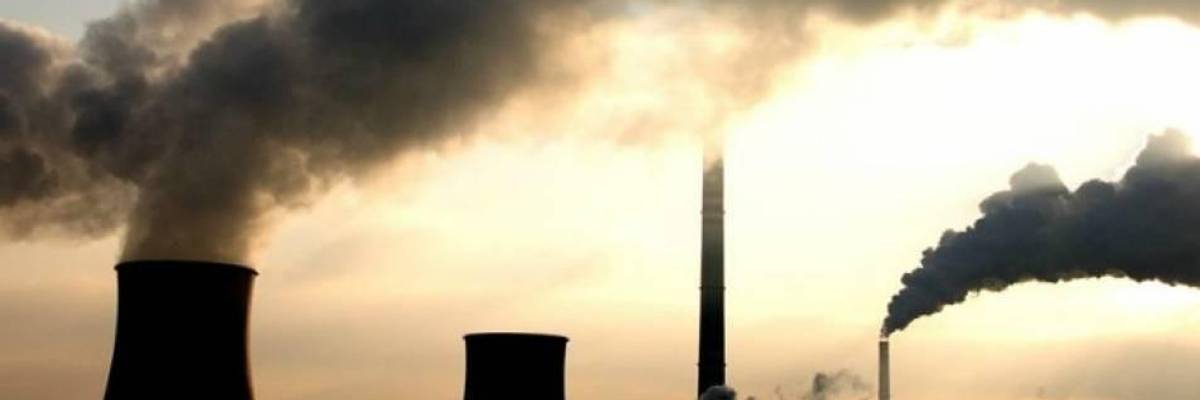
The U.S. House on Wednesday considered a bill to re-authorize the Export-Import Bank, one of the largest sources of federal financing of fossil fuel projects, with only five percent of planned funding going to renewable energy projects. (Photo: Danicek/Shutterstock)
Climate action advocates on Wednesday applauded progressives in Congress for their efforts to stop the nation's Export-Import Bank from funding fossil fuel projects, as the U.S. House debated re-authorizing the bank.
The bank acts as the United States' export credit agency and is one of the largest sources of funding for the coal, oil, and gas industries' overseas projects, providing an average of $5.5 billion per year for fossil fuel extraction, climate action groups say.
"The Export-Import Bank's environmental impacts are now global, as its disproportionate financial support of fossil-fuel projects exacerbates the damage from climate change and harms every American now and into the future."
--Climate action groupsThe House Financial Services Committee considered the bill for reauthorization after it was introduced by Reps. Maxine Waters (D-Calif.) and Patrick McHenry (R-N.C.) without any commitments to end fossil fuel subsidies and with only five percent of the bank's funding going to renewable energy projects under the proposed legislation.
"Every coal power plant the Export-Import Bank props up brings us that much closer to climate catastrophe. This bank needs fundamental reform now," said Brett Hartl, government affairs director at the Center for Biological Diversity, in a statement. "The bank should focus on spreading renewable energy around the world instead of funding dirty fossil fuels."
Friends of the Earth (FOE) thanked Reps. Alexandria Ocasio-Cortez (D-N.Y.) and Rashida Tlaib (D-Mich.) for introducing amendments to restrict the bank's funding of fossil fuel projects.
Waters' and McHenry's decision to leave out provisions to scale back or end fossil fuel funding came months after some of the world's top climate experts warned that the climate crisis will be irreversible by 2040 unless governments rapidly shift toward using sustainable energy sources. A growing number of countries and cities around the world are declaring a climate emergency which fossil fuel extraction has contributed to, amid weekly global protests in which millions have been marching for months to call on governments to take meaningful climate action.
"Reauthorizing the Export-Import Bank without curbing financing for dirty fossil fuel projects defies warnings from scientists about the climate crisis," said Doug Norlen, economic policy program director for FOE. "Additional financing for fossil fuel infrastructure will only exacerbate the climate crisis, harm the health of communities, and accelerate the corruption associated with these projects."
Washington Gov. Jay Inslee, a 2020 Democratic presidential candidate, included in his climate action plan a provision that would end the Export-Import Bank's fossil fuel subsidies.
On Tuesday, 75 conservation groups also wrote to the House Financial Services Committee to call on lawmakers to curb the Export-Import Bank's funding of damaging projects, which have numbered over 160 in the past 12 years.
"Projects and loans from the Export-Import Bank have supported fossil-fuel and other extractive projects that have caused substantial damage to World Heritage sites like the Great Barrier Reef, polluted the environment of local and indigenous communities, harmed human health, contributed to armed conflict and human rights abuse, and worsened corruption in developing nations," wrote the groups, including the Center for Biological Diversity and Food and Water Watch.
Congress must comply with the Endangered Species Act (ESA) and other environmental protection laws by not approving legislation which allows the continued extraction of fossil fuels, the groups wrote.
"The ESA has a global scope--over 650 endangered and threatened foreign species are federally protected around the world," the letter reads. "It therefore makes little sense for the Export-Import Bank to fund projects that hasten the extinction of wildlife and plants when our nation has already declared that we must take action to protect and recover them."
"Simply put, the Export-Import Bank has not lived up to the ideals and principles that our nation cherishes," the groups added. "The Export-Import Bank's environmental impacts are now global, as its disproportionate financial support of fossil-fuel projects exacerbates the damage from climate change and harms every American now and into the future."
Dear Common Dreams reader, It’s been nearly 30 years since I co-founded Common Dreams with my late wife, Lina Newhouser. We had the radical notion that journalism should serve the public good, not corporate profits. It was clear to us from the outset what it would take to build such a project. No paid advertisements. No corporate sponsors. No millionaire publisher telling us what to think or do. Many people said we wouldn't last a year, but we proved those doubters wrong. Together with a tremendous team of journalists and dedicated staff, we built an independent media outlet free from the constraints of profits and corporate control. Our mission has always been simple: To inform. To inspire. To ignite change for the common good. Building Common Dreams was not easy. Our survival was never guaranteed. When you take on the most powerful forces—Wall Street greed, fossil fuel industry destruction, Big Tech lobbyists, and uber-rich oligarchs who have spent billions upon billions rigging the economy and democracy in their favor—the only bulwark you have is supporters who believe in your work. But here’s the urgent message from me today. It's never been this bad out there. And it's never been this hard to keep us going. At the very moment Common Dreams is most needed, the threats we face are intensifying. We need your support now more than ever. We don't accept corporate advertising and never will. We don't have a paywall because we don't think people should be blocked from critical news based on their ability to pay. Everything we do is funded by the donations of readers like you. When everyone does the little they can afford, we are strong. But if that support retreats or dries up, so do we. Will you donate now to make sure Common Dreams not only survives but thrives? —Craig Brown, Co-founder |
Climate action advocates on Wednesday applauded progressives in Congress for their efforts to stop the nation's Export-Import Bank from funding fossil fuel projects, as the U.S. House debated re-authorizing the bank.
The bank acts as the United States' export credit agency and is one of the largest sources of funding for the coal, oil, and gas industries' overseas projects, providing an average of $5.5 billion per year for fossil fuel extraction, climate action groups say.
"The Export-Import Bank's environmental impacts are now global, as its disproportionate financial support of fossil-fuel projects exacerbates the damage from climate change and harms every American now and into the future."
--Climate action groupsThe House Financial Services Committee considered the bill for reauthorization after it was introduced by Reps. Maxine Waters (D-Calif.) and Patrick McHenry (R-N.C.) without any commitments to end fossil fuel subsidies and with only five percent of the bank's funding going to renewable energy projects under the proposed legislation.
"Every coal power plant the Export-Import Bank props up brings us that much closer to climate catastrophe. This bank needs fundamental reform now," said Brett Hartl, government affairs director at the Center for Biological Diversity, in a statement. "The bank should focus on spreading renewable energy around the world instead of funding dirty fossil fuels."
Friends of the Earth (FOE) thanked Reps. Alexandria Ocasio-Cortez (D-N.Y.) and Rashida Tlaib (D-Mich.) for introducing amendments to restrict the bank's funding of fossil fuel projects.
Waters' and McHenry's decision to leave out provisions to scale back or end fossil fuel funding came months after some of the world's top climate experts warned that the climate crisis will be irreversible by 2040 unless governments rapidly shift toward using sustainable energy sources. A growing number of countries and cities around the world are declaring a climate emergency which fossil fuel extraction has contributed to, amid weekly global protests in which millions have been marching for months to call on governments to take meaningful climate action.
"Reauthorizing the Export-Import Bank without curbing financing for dirty fossil fuel projects defies warnings from scientists about the climate crisis," said Doug Norlen, economic policy program director for FOE. "Additional financing for fossil fuel infrastructure will only exacerbate the climate crisis, harm the health of communities, and accelerate the corruption associated with these projects."
Washington Gov. Jay Inslee, a 2020 Democratic presidential candidate, included in his climate action plan a provision that would end the Export-Import Bank's fossil fuel subsidies.
On Tuesday, 75 conservation groups also wrote to the House Financial Services Committee to call on lawmakers to curb the Export-Import Bank's funding of damaging projects, which have numbered over 160 in the past 12 years.
"Projects and loans from the Export-Import Bank have supported fossil-fuel and other extractive projects that have caused substantial damage to World Heritage sites like the Great Barrier Reef, polluted the environment of local and indigenous communities, harmed human health, contributed to armed conflict and human rights abuse, and worsened corruption in developing nations," wrote the groups, including the Center for Biological Diversity and Food and Water Watch.
Congress must comply with the Endangered Species Act (ESA) and other environmental protection laws by not approving legislation which allows the continued extraction of fossil fuels, the groups wrote.
"The ESA has a global scope--over 650 endangered and threatened foreign species are federally protected around the world," the letter reads. "It therefore makes little sense for the Export-Import Bank to fund projects that hasten the extinction of wildlife and plants when our nation has already declared that we must take action to protect and recover them."
"Simply put, the Export-Import Bank has not lived up to the ideals and principles that our nation cherishes," the groups added. "The Export-Import Bank's environmental impacts are now global, as its disproportionate financial support of fossil-fuel projects exacerbates the damage from climate change and harms every American now and into the future."
Climate action advocates on Wednesday applauded progressives in Congress for their efforts to stop the nation's Export-Import Bank from funding fossil fuel projects, as the U.S. House debated re-authorizing the bank.
The bank acts as the United States' export credit agency and is one of the largest sources of funding for the coal, oil, and gas industries' overseas projects, providing an average of $5.5 billion per year for fossil fuel extraction, climate action groups say.
"The Export-Import Bank's environmental impacts are now global, as its disproportionate financial support of fossil-fuel projects exacerbates the damage from climate change and harms every American now and into the future."
--Climate action groupsThe House Financial Services Committee considered the bill for reauthorization after it was introduced by Reps. Maxine Waters (D-Calif.) and Patrick McHenry (R-N.C.) without any commitments to end fossil fuel subsidies and with only five percent of the bank's funding going to renewable energy projects under the proposed legislation.
"Every coal power plant the Export-Import Bank props up brings us that much closer to climate catastrophe. This bank needs fundamental reform now," said Brett Hartl, government affairs director at the Center for Biological Diversity, in a statement. "The bank should focus on spreading renewable energy around the world instead of funding dirty fossil fuels."
Friends of the Earth (FOE) thanked Reps. Alexandria Ocasio-Cortez (D-N.Y.) and Rashida Tlaib (D-Mich.) for introducing amendments to restrict the bank's funding of fossil fuel projects.
Waters' and McHenry's decision to leave out provisions to scale back or end fossil fuel funding came months after some of the world's top climate experts warned that the climate crisis will be irreversible by 2040 unless governments rapidly shift toward using sustainable energy sources. A growing number of countries and cities around the world are declaring a climate emergency which fossil fuel extraction has contributed to, amid weekly global protests in which millions have been marching for months to call on governments to take meaningful climate action.
"Reauthorizing the Export-Import Bank without curbing financing for dirty fossil fuel projects defies warnings from scientists about the climate crisis," said Doug Norlen, economic policy program director for FOE. "Additional financing for fossil fuel infrastructure will only exacerbate the climate crisis, harm the health of communities, and accelerate the corruption associated with these projects."
Washington Gov. Jay Inslee, a 2020 Democratic presidential candidate, included in his climate action plan a provision that would end the Export-Import Bank's fossil fuel subsidies.
On Tuesday, 75 conservation groups also wrote to the House Financial Services Committee to call on lawmakers to curb the Export-Import Bank's funding of damaging projects, which have numbered over 160 in the past 12 years.
"Projects and loans from the Export-Import Bank have supported fossil-fuel and other extractive projects that have caused substantial damage to World Heritage sites like the Great Barrier Reef, polluted the environment of local and indigenous communities, harmed human health, contributed to armed conflict and human rights abuse, and worsened corruption in developing nations," wrote the groups, including the Center for Biological Diversity and Food and Water Watch.
Congress must comply with the Endangered Species Act (ESA) and other environmental protection laws by not approving legislation which allows the continued extraction of fossil fuels, the groups wrote.
"The ESA has a global scope--over 650 endangered and threatened foreign species are federally protected around the world," the letter reads. "It therefore makes little sense for the Export-Import Bank to fund projects that hasten the extinction of wildlife and plants when our nation has already declared that we must take action to protect and recover them."
"Simply put, the Export-Import Bank has not lived up to the ideals and principles that our nation cherishes," the groups added. "The Export-Import Bank's environmental impacts are now global, as its disproportionate financial support of fossil-fuel projects exacerbates the damage from climate change and harms every American now and into the future."