SUBSCRIBE TO OUR FREE NEWSLETTER
Daily news & progressive opinion—funded by the people, not the corporations—delivered straight to your inbox.
5
#000000
#FFFFFF
To donate by check, phone, or other method, see our More Ways to Give page.
Daily news & progressive opinion—funded by the people, not the corporations—delivered straight to your inbox.
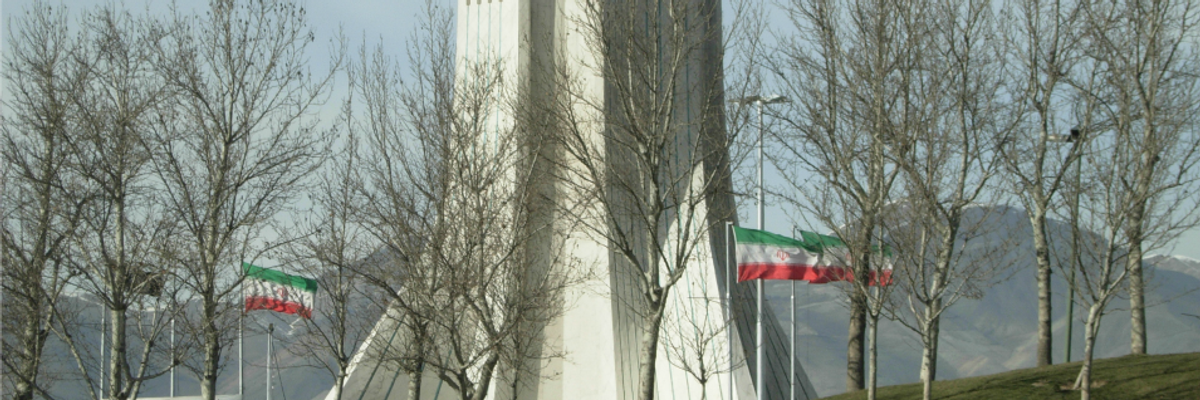
The Iranian Foreign Ministry denounced President Donald Trump's latest sanctions as evidence that his offer of negotiations over Iran's nuclear program was "hollow."(Photo: Xiquinho Silva/Flickr/cc)
Accusing the Trump administration of "economic terrorism," Iran's foreign ministry said Saturday that the latest sanctions imposed by President Donald Trump demonstrate that the U.S. is not serious about pursuing negotiations regarding Iran's nuclear power.
Trump announced the newest round of sanctions on Friday to punish Iran's largest petrochemical company for its indirect support of the Islamic Revolutionary Guard Corps (IRGC). The Trump administration labeled the IRGC as a terrorist group in April.
"This measure by the United States contravenes the basic principles and regulations of international relations and law as well as the U.S. regime's international commitments."
--Abbas Mousavi, Iranian Foreign Ministry
The sanctions came just days after the administration indicated it wanted to pursue negotiations to reach a new deal on Iran's nuclear activity.
"It was only necessary to wait one week until the claim of the president of America about talks with Iran were proven to be hollow," Iranian Foreign Ministry spokesman Abbas Mousavi said, according to Reuters. "The American policy of maximum pressure is a defeated policy."
The sanctions were announced about a month after the administration sent an aircraft carrier, missiles, and B-52 bombers to Iran in an apparent show of force.
Over the objections of a number of U.S. allies, Trump withdrew last year from the Iran nuclear deal which was brokered by the Obama administration and has since imposed sanctions on its oil, shipping, banking, and other industries in an effort to stop other countries from trading with Iran and to force Tehran to comply with Trump's demand that it end its nuclear and ballistic programs.
Iran has maintained that its nuclear program is peaceful, and international investigators found several times when the deal was in place that the country was in compliance with the agreement.
Mousavi called Trump's sanctions and his claim that he wants Iran to return to the negotiating table "deceitful."
"This measure by the United States contravenes the basic principles and regulations of international relations and law as well as the U.S. regime's international commitments," Mousavi told Tasnim News Agency, "and will result in international accountability."
Dear Common Dreams reader, It’s been nearly 30 years since I co-founded Common Dreams with my late wife, Lina Newhouser. We had the radical notion that journalism should serve the public good, not corporate profits. It was clear to us from the outset what it would take to build such a project. No paid advertisements. No corporate sponsors. No millionaire publisher telling us what to think or do. Many people said we wouldn't last a year, but we proved those doubters wrong. Together with a tremendous team of journalists and dedicated staff, we built an independent media outlet free from the constraints of profits and corporate control. Our mission has always been simple: To inform. To inspire. To ignite change for the common good. Building Common Dreams was not easy. Our survival was never guaranteed. When you take on the most powerful forces—Wall Street greed, fossil fuel industry destruction, Big Tech lobbyists, and uber-rich oligarchs who have spent billions upon billions rigging the economy and democracy in their favor—the only bulwark you have is supporters who believe in your work. But here’s the urgent message from me today. It's never been this bad out there. And it's never been this hard to keep us going. At the very moment Common Dreams is most needed, the threats we face are intensifying. We need your support now more than ever. We don't accept corporate advertising and never will. We don't have a paywall because we don't think people should be blocked from critical news based on their ability to pay. Everything we do is funded by the donations of readers like you. When everyone does the little they can afford, we are strong. But if that support retreats or dries up, so do we. Will you donate now to make sure Common Dreams not only survives but thrives? —Craig Brown, Co-founder |
Accusing the Trump administration of "economic terrorism," Iran's foreign ministry said Saturday that the latest sanctions imposed by President Donald Trump demonstrate that the U.S. is not serious about pursuing negotiations regarding Iran's nuclear power.
Trump announced the newest round of sanctions on Friday to punish Iran's largest petrochemical company for its indirect support of the Islamic Revolutionary Guard Corps (IRGC). The Trump administration labeled the IRGC as a terrorist group in April.
"This measure by the United States contravenes the basic principles and regulations of international relations and law as well as the U.S. regime's international commitments."
--Abbas Mousavi, Iranian Foreign Ministry
The sanctions came just days after the administration indicated it wanted to pursue negotiations to reach a new deal on Iran's nuclear activity.
"It was only necessary to wait one week until the claim of the president of America about talks with Iran were proven to be hollow," Iranian Foreign Ministry spokesman Abbas Mousavi said, according to Reuters. "The American policy of maximum pressure is a defeated policy."
The sanctions were announced about a month after the administration sent an aircraft carrier, missiles, and B-52 bombers to Iran in an apparent show of force.
Over the objections of a number of U.S. allies, Trump withdrew last year from the Iran nuclear deal which was brokered by the Obama administration and has since imposed sanctions on its oil, shipping, banking, and other industries in an effort to stop other countries from trading with Iran and to force Tehran to comply with Trump's demand that it end its nuclear and ballistic programs.
Iran has maintained that its nuclear program is peaceful, and international investigators found several times when the deal was in place that the country was in compliance with the agreement.
Mousavi called Trump's sanctions and his claim that he wants Iran to return to the negotiating table "deceitful."
"This measure by the United States contravenes the basic principles and regulations of international relations and law as well as the U.S. regime's international commitments," Mousavi told Tasnim News Agency, "and will result in international accountability."
Accusing the Trump administration of "economic terrorism," Iran's foreign ministry said Saturday that the latest sanctions imposed by President Donald Trump demonstrate that the U.S. is not serious about pursuing negotiations regarding Iran's nuclear power.
Trump announced the newest round of sanctions on Friday to punish Iran's largest petrochemical company for its indirect support of the Islamic Revolutionary Guard Corps (IRGC). The Trump administration labeled the IRGC as a terrorist group in April.
"This measure by the United States contravenes the basic principles and regulations of international relations and law as well as the U.S. regime's international commitments."
--Abbas Mousavi, Iranian Foreign Ministry
The sanctions came just days after the administration indicated it wanted to pursue negotiations to reach a new deal on Iran's nuclear activity.
"It was only necessary to wait one week until the claim of the president of America about talks with Iran were proven to be hollow," Iranian Foreign Ministry spokesman Abbas Mousavi said, according to Reuters. "The American policy of maximum pressure is a defeated policy."
The sanctions were announced about a month after the administration sent an aircraft carrier, missiles, and B-52 bombers to Iran in an apparent show of force.
Over the objections of a number of U.S. allies, Trump withdrew last year from the Iran nuclear deal which was brokered by the Obama administration and has since imposed sanctions on its oil, shipping, banking, and other industries in an effort to stop other countries from trading with Iran and to force Tehran to comply with Trump's demand that it end its nuclear and ballistic programs.
Iran has maintained that its nuclear program is peaceful, and international investigators found several times when the deal was in place that the country was in compliance with the agreement.
Mousavi called Trump's sanctions and his claim that he wants Iran to return to the negotiating table "deceitful."
"This measure by the United States contravenes the basic principles and regulations of international relations and law as well as the U.S. regime's international commitments," Mousavi told Tasnim News Agency, "and will result in international accountability."