

SUBSCRIBE TO OUR FREE NEWSLETTER
Daily news & progressive opinion—funded by the people, not the corporations—delivered straight to your inbox.
5
#000000
#FFFFFF
To donate by check, phone, or other method, see our More Ways to Give page.
Daily news & progressive opinion—funded by the people, not the corporations—delivered straight to your inbox.
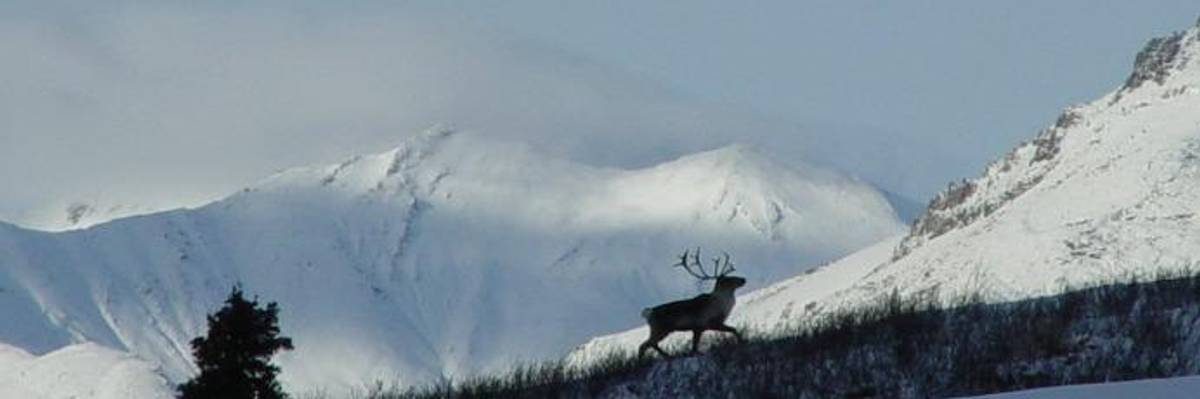
A member of the Porcupine caribou herd, which conservation groups say would be horribly impacted if fossil fuel exploration and extraction takes place in ANWR's coastal plain. New legislation sponsored by Rep. Jared Huffman (D-Calif.) aims to make sure that doesn't happen. (Photo: G MacRae/flickr/cc)
Conservation groups are cheering the introduction on Monday of a measure to stop fossil fuel extraction in a section of the Arctic National Wildlife Refuge (ANWR).
"This bill calls a halt to the administration's headlong rush to sell off this special wilderness to corporate polluters," said John Bowman, senior director for federal affairs at the Natural Resources Defense Council. "And it preserves the fundamental human rights of the Gwich'in people whom these lands have sustained for thousands of years, and who--among two-thirds of all Americans--oppose drilling in the Arctic Refuge."
The legislation is a renewed effort by Rep. Jared Huffman (D-Calif.), and would repeal a provision included in the GOP's 2017 tax bill (pdf). Denounced as "a Big Oil polar payout," the provision opens the refuge's coastal plain to oil and gas exploration and drilling.
"I have seen the coastal plain," said Stan Senner, vice president for bird conservation at National Audubon Society, "and it makes no sense to drill for oil in this unique landscape. Even one season of exploration, to say nothing of full-scale development, will scar it for decades."
The impact could be "catastrophe," said Erik DuMont, public lands campaign director for Environment America.
"Drilling in this area would likely displace the Porcupine caribou herd from their prime calving grounds, leading to a decrease in the survival rate of the calves and decimating the overall size of the herd. But that's just the start," DuMont explained. "It would disrupt nesting grounds for dozens of species of migratory birds who flock there from every U.S. state and six continents. And, even just doing seismic testing, would likely cause irreparable harm to our iconic polar bears."
According to a press statement from Sierra Club, it has 100 co-sponsors.
The announcement of the new legislation comes the same day as a group of teachers and scholars detail their opposition to fossil fuel exploration and drilling in ANWR's coastal plain.
"Ever since drilling proponents sneaked an Arctic Refuge leasing provision into the 2017 Tax Cuts and Jobs Act, the Trump administration has been moving aggressively to rush through the required Environmental Impact Statement," the group writes in an open letter. Summing up the catastrophic impact of the proposed extraction, they note:
Fossil fuel development in the Coastal Plain would devastate an Arctic nursery of global significance. It would violate human rights, jeopardize food security, and threaten the health and safety of Indigenous communities. It would contribute to the escalating crises of climate change and biological annihilation. The Arctic Refuge is an irreplaceable ecological treasure. Its fate should not be decided on an expedited timeline that prioritizes outcome over process to benefit the oil industry and its allies.
The letter will be submitted to the Bureau of Land Management on March 13, 2019, the last day to provide for public comment on the draft Environmental Impact Statement for the Coastal Plain Oil and Gas Leasing Program.
Dear Common Dreams reader, It’s been nearly 30 years since I co-founded Common Dreams with my late wife, Lina Newhouser. We had the radical notion that journalism should serve the public good, not corporate profits. It was clear to us from the outset what it would take to build such a project. No paid advertisements. No corporate sponsors. No millionaire publisher telling us what to think or do. Many people said we wouldn't last a year, but we proved those doubters wrong. Together with a tremendous team of journalists and dedicated staff, we built an independent media outlet free from the constraints of profits and corporate control. Our mission has always been simple: To inform. To inspire. To ignite change for the common good. Building Common Dreams was not easy. Our survival was never guaranteed. When you take on the most powerful forces—Wall Street greed, fossil fuel industry destruction, Big Tech lobbyists, and uber-rich oligarchs who have spent billions upon billions rigging the economy and democracy in their favor—the only bulwark you have is supporters who believe in your work. But here’s the urgent message from me today. It's never been this bad out there. And it's never been this hard to keep us going. At the very moment Common Dreams is most needed, the threats we face are intensifying. We need your support now more than ever. We don't accept corporate advertising and never will. We don't have a paywall because we don't think people should be blocked from critical news based on their ability to pay. Everything we do is funded by the donations of readers like you. When everyone does the little they can afford, we are strong. But if that support retreats or dries up, so do we. Will you donate now to make sure Common Dreams not only survives but thrives? —Craig Brown, Co-founder |
Conservation groups are cheering the introduction on Monday of a measure to stop fossil fuel extraction in a section of the Arctic National Wildlife Refuge (ANWR).
"This bill calls a halt to the administration's headlong rush to sell off this special wilderness to corporate polluters," said John Bowman, senior director for federal affairs at the Natural Resources Defense Council. "And it preserves the fundamental human rights of the Gwich'in people whom these lands have sustained for thousands of years, and who--among two-thirds of all Americans--oppose drilling in the Arctic Refuge."
The legislation is a renewed effort by Rep. Jared Huffman (D-Calif.), and would repeal a provision included in the GOP's 2017 tax bill (pdf). Denounced as "a Big Oil polar payout," the provision opens the refuge's coastal plain to oil and gas exploration and drilling.
"I have seen the coastal plain," said Stan Senner, vice president for bird conservation at National Audubon Society, "and it makes no sense to drill for oil in this unique landscape. Even one season of exploration, to say nothing of full-scale development, will scar it for decades."
The impact could be "catastrophe," said Erik DuMont, public lands campaign director for Environment America.
"Drilling in this area would likely displace the Porcupine caribou herd from their prime calving grounds, leading to a decrease in the survival rate of the calves and decimating the overall size of the herd. But that's just the start," DuMont explained. "It would disrupt nesting grounds for dozens of species of migratory birds who flock there from every U.S. state and six continents. And, even just doing seismic testing, would likely cause irreparable harm to our iconic polar bears."
According to a press statement from Sierra Club, it has 100 co-sponsors.
The announcement of the new legislation comes the same day as a group of teachers and scholars detail their opposition to fossil fuel exploration and drilling in ANWR's coastal plain.
"Ever since drilling proponents sneaked an Arctic Refuge leasing provision into the 2017 Tax Cuts and Jobs Act, the Trump administration has been moving aggressively to rush through the required Environmental Impact Statement," the group writes in an open letter. Summing up the catastrophic impact of the proposed extraction, they note:
Fossil fuel development in the Coastal Plain would devastate an Arctic nursery of global significance. It would violate human rights, jeopardize food security, and threaten the health and safety of Indigenous communities. It would contribute to the escalating crises of climate change and biological annihilation. The Arctic Refuge is an irreplaceable ecological treasure. Its fate should not be decided on an expedited timeline that prioritizes outcome over process to benefit the oil industry and its allies.
The letter will be submitted to the Bureau of Land Management on March 13, 2019, the last day to provide for public comment on the draft Environmental Impact Statement for the Coastal Plain Oil and Gas Leasing Program.
Conservation groups are cheering the introduction on Monday of a measure to stop fossil fuel extraction in a section of the Arctic National Wildlife Refuge (ANWR).
"This bill calls a halt to the administration's headlong rush to sell off this special wilderness to corporate polluters," said John Bowman, senior director for federal affairs at the Natural Resources Defense Council. "And it preserves the fundamental human rights of the Gwich'in people whom these lands have sustained for thousands of years, and who--among two-thirds of all Americans--oppose drilling in the Arctic Refuge."
The legislation is a renewed effort by Rep. Jared Huffman (D-Calif.), and would repeal a provision included in the GOP's 2017 tax bill (pdf). Denounced as "a Big Oil polar payout," the provision opens the refuge's coastal plain to oil and gas exploration and drilling.
"I have seen the coastal plain," said Stan Senner, vice president for bird conservation at National Audubon Society, "and it makes no sense to drill for oil in this unique landscape. Even one season of exploration, to say nothing of full-scale development, will scar it for decades."
The impact could be "catastrophe," said Erik DuMont, public lands campaign director for Environment America.
"Drilling in this area would likely displace the Porcupine caribou herd from their prime calving grounds, leading to a decrease in the survival rate of the calves and decimating the overall size of the herd. But that's just the start," DuMont explained. "It would disrupt nesting grounds for dozens of species of migratory birds who flock there from every U.S. state and six continents. And, even just doing seismic testing, would likely cause irreparable harm to our iconic polar bears."
According to a press statement from Sierra Club, it has 100 co-sponsors.
The announcement of the new legislation comes the same day as a group of teachers and scholars detail their opposition to fossil fuel exploration and drilling in ANWR's coastal plain.
"Ever since drilling proponents sneaked an Arctic Refuge leasing provision into the 2017 Tax Cuts and Jobs Act, the Trump administration has been moving aggressively to rush through the required Environmental Impact Statement," the group writes in an open letter. Summing up the catastrophic impact of the proposed extraction, they note:
Fossil fuel development in the Coastal Plain would devastate an Arctic nursery of global significance. It would violate human rights, jeopardize food security, and threaten the health and safety of Indigenous communities. It would contribute to the escalating crises of climate change and biological annihilation. The Arctic Refuge is an irreplaceable ecological treasure. Its fate should not be decided on an expedited timeline that prioritizes outcome over process to benefit the oil industry and its allies.
The letter will be submitted to the Bureau of Land Management on March 13, 2019, the last day to provide for public comment on the draft Environmental Impact Statement for the Coastal Plain Oil and Gas Leasing Program.

