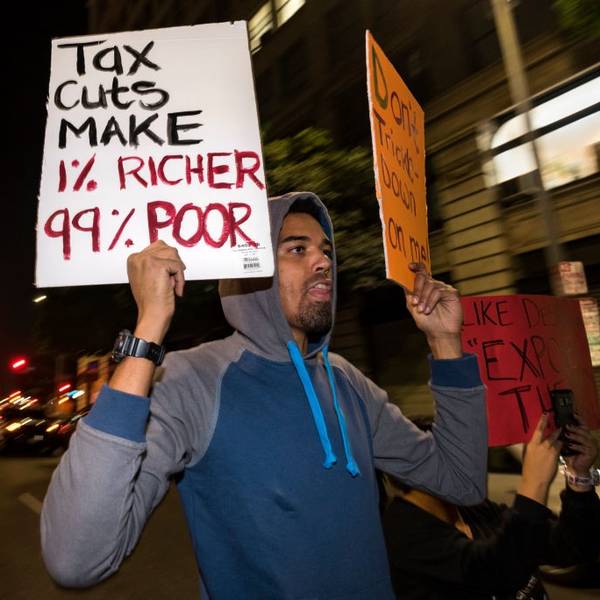

Barack Obama to Sign Package Extending Tax Breaks for the Rich
Passage of bill reflects weakness of both the presidency and the Democratic party after Republican wins in November elections
The US president, Barack Obama, will today sign into law measures
approved by Congress extending tax cuts introduced by George Bush amid
Democratic complaints that the breaks favour the rich.
Despite
objections from many of Obama's fellow Democrats, the House of
Representatives passed the $858bn (PS548bn) package of renewed tax cuts
last night. The package, which also extended benefits for the long-term
unemployed for 13 months, was passed by 277 votes to 148. On Wednesday
the Senate passed it by an overwhelming 83-15 margin.
Passage of
the bill reflects the relative weakness of both the presidency and the
Democratic party after the Republican sweep in November's congressional
elections, giving them a majority in the House and big inroads into the
Democratic majority in the Senate.
Obama has been forced to bend
to the resurgent Republicans, his current position on taxes contrasting
sharply with his stance earlier this year when he and his fellow
Democrats fought against renewing tax reductions for the wealthiest
Americans - those with household incomes above $250,000 - while
supporting continued cuts for middle-class taxpayers.
Congress
was racing to enact the legislation as it faces an end-of-year deadline
when the Bush-era tax cuts from 2001 and 2003 are set to expire. The
bill marked the second economic stimulus package passed by Congress in
the last two years. The first one, Obama's $814bn spending bill, was
opposed by Republicans who complained about its impact on annual
deficits, now hovering at about $1.3tn annually.
The
International Monetary Fund gave a guarded welcome to the package.
Dominique Strauss-Kahn, the IMF managing director, said economic
stimulus was vital for the US because "growth is the main problem to
fix" but cautioned: "But having in mind always that there is no free
lunch. And so what you do today has to be repaid later on. And you
cannot just do it now without saying, 'How are you going to repay it?'"
The
bill will extend tax cuts for two years for millions of Americans, even
the wealthiest. Besides renewing jobless benefits it will provide a
variety of other tax breaks for working families, college students and
businesses. It will also prevent a rise in taxes on capital gains and
dividends.
What galled many Democrats was Republican generosity
on inheritance taxes. At the insistence of Republicans, the first $10m
of a couple's estate could pass to heirs without taxation. The balance
would be subject to a 35% tax rate.
House Democratic leaders want
to bring back the 2009 estate tax levels. That year, individuals could
pass $3.5m to their heirs tax-free. Couples could pass $7m, with a
little tax planning, and the balance was taxed at a top rate of 45%.
Mike
Pence, a Republican congressman, who is exploring a possible run for
president in 2012, criticised the legislation because it only extended
the tax cuts temporarily.
"The reality is uncertainty is the
enemy of prosperity," Pence said. "It's a bad deal for taxpayers, it'll
do little to create jobs."
The bill, though, represents a major
victory for Republicans, who fought hard to keep taxes low on the
highest incomes. Largely marginalised in the negotiations leading to
the bill, House Democrats emphasised their unhappiness with Obama.
Representative Rob Andrews said he was supporting "an imperfect bill"
in hopes of stimulating job creation.
Republican Representative
Eric Cantor, in line to become majority leader, said the measure, while
not perfect, marked a "first step" toward economic recovery.
After
the Senate vote on Wednesday, Obama declared himself still opposed to
portions of the legislation because of the tax breaks for the rich.
Nevertheless, he said, compromise was necessary.
"I know that not
every member of Congress likes every piece of this bill, and it
includes some provisions that I oppose. But as a whole, this package
will grow our economy, create jobs, and help middle class families
across the country," Obama said in a statement.
An Urgent Message From Our Co-Founder
Dear Common Dreams reader, It’s been nearly 30 years since I co-founded Common Dreams with my late wife, Lina Newhouser. We had the radical notion that journalism should serve the public good, not corporate profits. It was clear to us from the outset what it would take to build such a project. No paid advertisements. No corporate sponsors. No millionaire publisher telling us what to think or do. Many people said we wouldn't last a year, but we proved those doubters wrong. Together with a tremendous team of journalists and dedicated staff, we built an independent media outlet free from the constraints of profits and corporate control. Our mission has always been simple: To inform. To inspire. To ignite change for the common good. Building Common Dreams was not easy. Our survival was never guaranteed. When you take on the most powerful forces—Wall Street greed, fossil fuel industry destruction, Big Tech lobbyists, and uber-rich oligarchs who have spent billions upon billions rigging the economy and democracy in their favor—the only bulwark you have is supporters who believe in your work. But here’s the urgent message from me today. It's never been this bad out there. And it's never been this hard to keep us going. At the very moment Common Dreams is most needed, the threats we face are intensifying. We need your support now more than ever. We don't accept corporate advertising and never will. We don't have a paywall because we don't think people should be blocked from critical news based on their ability to pay. Everything we do is funded by the donations of readers like you. When everyone does the little they can afford, we are strong. But if that support retreats or dries up, so do we. Will you donate now to make sure Common Dreams not only survives but thrives? —Craig Brown, Co-founder |
The US president, Barack Obama, will today sign into law measures
approved by Congress extending tax cuts introduced by George Bush amid
Democratic complaints that the breaks favour the rich.
Despite
objections from many of Obama's fellow Democrats, the House of
Representatives passed the $858bn (PS548bn) package of renewed tax cuts
last night. The package, which also extended benefits for the long-term
unemployed for 13 months, was passed by 277 votes to 148. On Wednesday
the Senate passed it by an overwhelming 83-15 margin.
Passage of
the bill reflects the relative weakness of both the presidency and the
Democratic party after the Republican sweep in November's congressional
elections, giving them a majority in the House and big inroads into the
Democratic majority in the Senate.
Obama has been forced to bend
to the resurgent Republicans, his current position on taxes contrasting
sharply with his stance earlier this year when he and his fellow
Democrats fought against renewing tax reductions for the wealthiest
Americans - those with household incomes above $250,000 - while
supporting continued cuts for middle-class taxpayers.
Congress
was racing to enact the legislation as it faces an end-of-year deadline
when the Bush-era tax cuts from 2001 and 2003 are set to expire. The
bill marked the second economic stimulus package passed by Congress in
the last two years. The first one, Obama's $814bn spending bill, was
opposed by Republicans who complained about its impact on annual
deficits, now hovering at about $1.3tn annually.
The
International Monetary Fund gave a guarded welcome to the package.
Dominique Strauss-Kahn, the IMF managing director, said economic
stimulus was vital for the US because "growth is the main problem to
fix" but cautioned: "But having in mind always that there is no free
lunch. And so what you do today has to be repaid later on. And you
cannot just do it now without saying, 'How are you going to repay it?'"
The
bill will extend tax cuts for two years for millions of Americans, even
the wealthiest. Besides renewing jobless benefits it will provide a
variety of other tax breaks for working families, college students and
businesses. It will also prevent a rise in taxes on capital gains and
dividends.
What galled many Democrats was Republican generosity
on inheritance taxes. At the insistence of Republicans, the first $10m
of a couple's estate could pass to heirs without taxation. The balance
would be subject to a 35% tax rate.
House Democratic leaders want
to bring back the 2009 estate tax levels. That year, individuals could
pass $3.5m to their heirs tax-free. Couples could pass $7m, with a
little tax planning, and the balance was taxed at a top rate of 45%.
Mike
Pence, a Republican congressman, who is exploring a possible run for
president in 2012, criticised the legislation because it only extended
the tax cuts temporarily.
"The reality is uncertainty is the
enemy of prosperity," Pence said. "It's a bad deal for taxpayers, it'll
do little to create jobs."
The bill, though, represents a major
victory for Republicans, who fought hard to keep taxes low on the
highest incomes. Largely marginalised in the negotiations leading to
the bill, House Democrats emphasised their unhappiness with Obama.
Representative Rob Andrews said he was supporting "an imperfect bill"
in hopes of stimulating job creation.
Republican Representative
Eric Cantor, in line to become majority leader, said the measure, while
not perfect, marked a "first step" toward economic recovery.
After
the Senate vote on Wednesday, Obama declared himself still opposed to
portions of the legislation because of the tax breaks for the rich.
Nevertheless, he said, compromise was necessary.
"I know that not
every member of Congress likes every piece of this bill, and it
includes some provisions that I oppose. But as a whole, this package
will grow our economy, create jobs, and help middle class families
across the country," Obama said in a statement.
The US president, Barack Obama, will today sign into law measures
approved by Congress extending tax cuts introduced by George Bush amid
Democratic complaints that the breaks favour the rich.
Despite
objections from many of Obama's fellow Democrats, the House of
Representatives passed the $858bn (PS548bn) package of renewed tax cuts
last night. The package, which also extended benefits for the long-term
unemployed for 13 months, was passed by 277 votes to 148. On Wednesday
the Senate passed it by an overwhelming 83-15 margin.
Passage of
the bill reflects the relative weakness of both the presidency and the
Democratic party after the Republican sweep in November's congressional
elections, giving them a majority in the House and big inroads into the
Democratic majority in the Senate.
Obama has been forced to bend
to the resurgent Republicans, his current position on taxes contrasting
sharply with his stance earlier this year when he and his fellow
Democrats fought against renewing tax reductions for the wealthiest
Americans - those with household incomes above $250,000 - while
supporting continued cuts for middle-class taxpayers.
Congress
was racing to enact the legislation as it faces an end-of-year deadline
when the Bush-era tax cuts from 2001 and 2003 are set to expire. The
bill marked the second economic stimulus package passed by Congress in
the last two years. The first one, Obama's $814bn spending bill, was
opposed by Republicans who complained about its impact on annual
deficits, now hovering at about $1.3tn annually.
The
International Monetary Fund gave a guarded welcome to the package.
Dominique Strauss-Kahn, the IMF managing director, said economic
stimulus was vital for the US because "growth is the main problem to
fix" but cautioned: "But having in mind always that there is no free
lunch. And so what you do today has to be repaid later on. And you
cannot just do it now without saying, 'How are you going to repay it?'"
The
bill will extend tax cuts for two years for millions of Americans, even
the wealthiest. Besides renewing jobless benefits it will provide a
variety of other tax breaks for working families, college students and
businesses. It will also prevent a rise in taxes on capital gains and
dividends.
What galled many Democrats was Republican generosity
on inheritance taxes. At the insistence of Republicans, the first $10m
of a couple's estate could pass to heirs without taxation. The balance
would be subject to a 35% tax rate.
House Democratic leaders want
to bring back the 2009 estate tax levels. That year, individuals could
pass $3.5m to their heirs tax-free. Couples could pass $7m, with a
little tax planning, and the balance was taxed at a top rate of 45%.
Mike
Pence, a Republican congressman, who is exploring a possible run for
president in 2012, criticised the legislation because it only extended
the tax cuts temporarily.
"The reality is uncertainty is the
enemy of prosperity," Pence said. "It's a bad deal for taxpayers, it'll
do little to create jobs."
The bill, though, represents a major
victory for Republicans, who fought hard to keep taxes low on the
highest incomes. Largely marginalised in the negotiations leading to
the bill, House Democrats emphasised their unhappiness with Obama.
Representative Rob Andrews said he was supporting "an imperfect bill"
in hopes of stimulating job creation.
Republican Representative
Eric Cantor, in line to become majority leader, said the measure, while
not perfect, marked a "first step" toward economic recovery.
After
the Senate vote on Wednesday, Obama declared himself still opposed to
portions of the legislation because of the tax breaks for the rich.
Nevertheless, he said, compromise was necessary.
"I know that not
every member of Congress likes every piece of this bill, and it
includes some provisions that I oppose. But as a whole, this package
will grow our economy, create jobs, and help middle class families
across the country," Obama said in a statement.