SUBSCRIBE TO OUR FREE NEWSLETTER
Daily news & progressive opinion—funded by the people, not the corporations—delivered straight to your inbox.
5
#000000
#FFFFFF
To donate by check, phone, or other method, see our More Ways to Give page.
Daily news & progressive opinion—funded by the people, not the corporations—delivered straight to your inbox.
Twenty years ago, the great Bill Hicks had a classic stand-up bit in which he imagined ad executives watching his rant against advertising, and saying to each other: "Oh, I see what Bill is doing! He's going after the anti-marketing dollar, the righteous-indignation dollar! That's a good dollar!" Hicks was pointing out the ability of advertising to, in an utterly cynical fashion, monetize anything and everything...even a foul-mouthed critique of the desire of advertising to monetize anything and everything.
Twenty years ago, the great Bill Hicks had a classic stand-up bit in which he imagined ad executives watching his rant against advertising, and saying to each other: "Oh, I see what Bill is doing! He's going after the anti-marketing dollar, the righteous-indignation dollar! That's a good dollar!" Hicks was pointing out the ability of advertising to, in an utterly cynical fashion, monetize anything and everything...even a foul-mouthed critique of the desire of advertising to monetize anything and everything.
As I watch large portions of the media hand-wring over Trump, without a serious discussion of the role of the media itself in creating the hostile, sexist environment within which Trump's grotesque worldview can flourish, it is worth asking if the coverage is in large part about the righteous-indignation dollar.
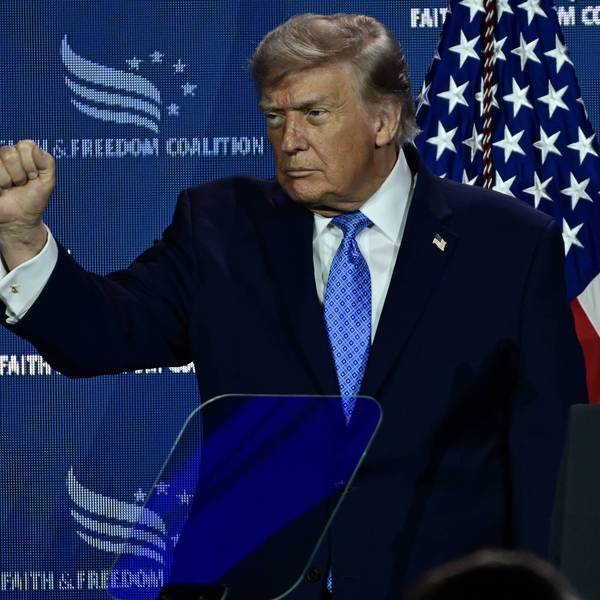
Once again, Trump has exposed himself to be the misogynist many of us suspected. And, again - as with his racism and Islamophobia - the US media has been quick to pitch itself as outraged over his new grotesque comments from 2005.
I do not doubt the sincerity of the attacks on Trump from individual journalists. Nor is this an argument that the responsibility for Trump's words can be found anywhere other than with Trump himself. But Trump's disgusting comments are also a reminder that massive double-standards in how men and women are treated in and by the media are important context for the story.
Trump's words did not emerge in a social vacuum, and, as an industrial collective, the US media's track record on the representation of women is nothing short of shameful. There is more than a drop of irony in newspapers printing articles attacking Trump, while on other pages of their publications near anorexic models advertise clothing and other fashion items, forwarding an ideal body-type that is not only impossible to attain, but physically harmful. There is similar irony in television pundits shaming Trump's shaming and glorification of sexual abuse, while at the same time women "over a certain age" are quietly erased from our screens in favor of younger, more "attractive" talent. Add this to the fact that in popular film and television, women are sorely under-represented and under-heard, and the hypocrisy is only magnified.
Of course, Trump is a great way for the US media to check some progressive boxes.
Against racism? Check.
Against Islamophobia? Check.
Against sexism? Check.
The problem, however, is that Trump's racism, Islamophobia and sexism are not counter-balanced by US media representations of African-Americans, Muslims and women...it is, more often than not, supported by them. Where, one should reasonably ask, were the hand-wringing editorials on how large swathes of the US news and popular media contributed to Trump's rhetoric by giving credence to the very insults (that women are inferior sex objects) they now condemn? Where were the thought-pieces asking why women above a certain weight or age cannot make it as on-air talent in television? Where were the pundit round-tables looking into the role of corporate control and advertising in US media in shaping representations of women? This lack of critical introspection on the role of the media smacks of a deliberate attempt to deflect and obfuscate. It doesn't absolve Trump, but it does implicate those who control our flow of news, information and entertainment.
So, yes, Trump is the villain here. But the broader message of current coverage is that structural sexism, racism or xenophobia are only important when Trump says something outrageous. When we consider US media history, that's as disingenuous as it is hypocritical.
Dear Common Dreams reader, It’s been nearly 30 years since I co-founded Common Dreams with my late wife, Lina Newhouser. We had the radical notion that journalism should serve the public good, not corporate profits. It was clear to us from the outset what it would take to build such a project. No paid advertisements. No corporate sponsors. No millionaire publisher telling us what to think or do. Many people said we wouldn't last a year, but we proved those doubters wrong. Together with a tremendous team of journalists and dedicated staff, we built an independent media outlet free from the constraints of profits and corporate control. Our mission has always been simple: To inform. To inspire. To ignite change for the common good. Building Common Dreams was not easy. Our survival was never guaranteed. When you take on the most powerful forces—Wall Street greed, fossil fuel industry destruction, Big Tech lobbyists, and uber-rich oligarchs who have spent billions upon billions rigging the economy and democracy in their favor—the only bulwark you have is supporters who believe in your work. But here’s the urgent message from me today. It's never been this bad out there. And it's never been this hard to keep us going. At the very moment Common Dreams is most needed, the threats we face are intensifying. We need your support now more than ever. We don't accept corporate advertising and never will. We don't have a paywall because we don't think people should be blocked from critical news based on their ability to pay. Everything we do is funded by the donations of readers like you. When everyone does the little they can afford, we are strong. But if that support retreats or dries up, so do we. Will you donate now to make sure Common Dreams not only survives but thrives? —Craig Brown, Co-founder |
Twenty years ago, the great Bill Hicks had a classic stand-up bit in which he imagined ad executives watching his rant against advertising, and saying to each other: "Oh, I see what Bill is doing! He's going after the anti-marketing dollar, the righteous-indignation dollar! That's a good dollar!" Hicks was pointing out the ability of advertising to, in an utterly cynical fashion, monetize anything and everything...even a foul-mouthed critique of the desire of advertising to monetize anything and everything.
As I watch large portions of the media hand-wring over Trump, without a serious discussion of the role of the media itself in creating the hostile, sexist environment within which Trump's grotesque worldview can flourish, it is worth asking if the coverage is in large part about the righteous-indignation dollar.
Once again, Trump has exposed himself to be the misogynist many of us suspected. And, again - as with his racism and Islamophobia - the US media has been quick to pitch itself as outraged over his new grotesque comments from 2005.
I do not doubt the sincerity of the attacks on Trump from individual journalists. Nor is this an argument that the responsibility for Trump's words can be found anywhere other than with Trump himself. But Trump's disgusting comments are also a reminder that massive double-standards in how men and women are treated in and by the media are important context for the story.
Trump's words did not emerge in a social vacuum, and, as an industrial collective, the US media's track record on the representation of women is nothing short of shameful. There is more than a drop of irony in newspapers printing articles attacking Trump, while on other pages of their publications near anorexic models advertise clothing and other fashion items, forwarding an ideal body-type that is not only impossible to attain, but physically harmful. There is similar irony in television pundits shaming Trump's shaming and glorification of sexual abuse, while at the same time women "over a certain age" are quietly erased from our screens in favor of younger, more "attractive" talent. Add this to the fact that in popular film and television, women are sorely under-represented and under-heard, and the hypocrisy is only magnified.
Of course, Trump is a great way for the US media to check some progressive boxes.
Against racism? Check.
Against Islamophobia? Check.
Against sexism? Check.
The problem, however, is that Trump's racism, Islamophobia and sexism are not counter-balanced by US media representations of African-Americans, Muslims and women...it is, more often than not, supported by them. Where, one should reasonably ask, were the hand-wringing editorials on how large swathes of the US news and popular media contributed to Trump's rhetoric by giving credence to the very insults (that women are inferior sex objects) they now condemn? Where were the thought-pieces asking why women above a certain weight or age cannot make it as on-air talent in television? Where were the pundit round-tables looking into the role of corporate control and advertising in US media in shaping representations of women? This lack of critical introspection on the role of the media smacks of a deliberate attempt to deflect and obfuscate. It doesn't absolve Trump, but it does implicate those who control our flow of news, information and entertainment.
So, yes, Trump is the villain here. But the broader message of current coverage is that structural sexism, racism or xenophobia are only important when Trump says something outrageous. When we consider US media history, that's as disingenuous as it is hypocritical.
Twenty years ago, the great Bill Hicks had a classic stand-up bit in which he imagined ad executives watching his rant against advertising, and saying to each other: "Oh, I see what Bill is doing! He's going after the anti-marketing dollar, the righteous-indignation dollar! That's a good dollar!" Hicks was pointing out the ability of advertising to, in an utterly cynical fashion, monetize anything and everything...even a foul-mouthed critique of the desire of advertising to monetize anything and everything.
As I watch large portions of the media hand-wring over Trump, without a serious discussion of the role of the media itself in creating the hostile, sexist environment within which Trump's grotesque worldview can flourish, it is worth asking if the coverage is in large part about the righteous-indignation dollar.
Once again, Trump has exposed himself to be the misogynist many of us suspected. And, again - as with his racism and Islamophobia - the US media has been quick to pitch itself as outraged over his new grotesque comments from 2005.
I do not doubt the sincerity of the attacks on Trump from individual journalists. Nor is this an argument that the responsibility for Trump's words can be found anywhere other than with Trump himself. But Trump's disgusting comments are also a reminder that massive double-standards in how men and women are treated in and by the media are important context for the story.
Trump's words did not emerge in a social vacuum, and, as an industrial collective, the US media's track record on the representation of women is nothing short of shameful. There is more than a drop of irony in newspapers printing articles attacking Trump, while on other pages of their publications near anorexic models advertise clothing and other fashion items, forwarding an ideal body-type that is not only impossible to attain, but physically harmful. There is similar irony in television pundits shaming Trump's shaming and glorification of sexual abuse, while at the same time women "over a certain age" are quietly erased from our screens in favor of younger, more "attractive" talent. Add this to the fact that in popular film and television, women are sorely under-represented and under-heard, and the hypocrisy is only magnified.
Of course, Trump is a great way for the US media to check some progressive boxes.
Against racism? Check.
Against Islamophobia? Check.
Against sexism? Check.
The problem, however, is that Trump's racism, Islamophobia and sexism are not counter-balanced by US media representations of African-Americans, Muslims and women...it is, more often than not, supported by them. Where, one should reasonably ask, were the hand-wringing editorials on how large swathes of the US news and popular media contributed to Trump's rhetoric by giving credence to the very insults (that women are inferior sex objects) they now condemn? Where were the thought-pieces asking why women above a certain weight or age cannot make it as on-air talent in television? Where were the pundit round-tables looking into the role of corporate control and advertising in US media in shaping representations of women? This lack of critical introspection on the role of the media smacks of a deliberate attempt to deflect and obfuscate. It doesn't absolve Trump, but it does implicate those who control our flow of news, information and entertainment.
So, yes, Trump is the villain here. But the broader message of current coverage is that structural sexism, racism or xenophobia are only important when Trump says something outrageous. When we consider US media history, that's as disingenuous as it is hypocritical.