SUBSCRIBE TO OUR FREE NEWSLETTER
Daily news & progressive opinion—funded by the people, not the corporations—delivered straight to your inbox.
5
#000000
#FFFFFF
To donate by check, phone, or other method, see our More Ways to Give page.
Daily news & progressive opinion—funded by the people, not the corporations—delivered straight to your inbox.
Earlier this month, on the eve of the 5th anniversary of Haiti's tragic earthquake, a U.S. District Court judge ruled against Haitians' class action suit asking the United Nations to take responsibility for the deadly cholera epidemic it triggered in October of 2010. Viewed from both narrow and broad perspectives, the decision in Delama Georges, et al, v. United Nations, et al, was the wrong one, and it will be appealed.
Earlier this month, on the eve of the 5th anniversary of Haiti's tragic earthquake, a U.S. District Court judge ruled against Haitians' class action suit asking the United Nations to take responsibility for the deadly cholera epidemic it triggered in October of 2010. Viewed from both narrow and broad perspectives, the decision in Delama Georges, et al, v. United Nations, et al, was the wrong one, and it will be appealed.
In a narrow sense, the court erred in holding that the UN was immune from any suit. The Convention on the Privileges and Immunities of the United Nations calls for the UN to settle claims like those brought by the Haitian victims, a practice the organization has followed across the globe for decades. Moreover, the UN entered into a specific Status of Forces Agreement with Haiti where it pledged to create a process to address claims by private citizens, a promise the UN never fulfilled.
More broadly, the court's ruling cannot be squared with the basic human right to a remedy for harms like those suffered by thousands of Haitian plaintiffs like Lisette Paul and Delama Georges, who lost family members to cholera. This is especially true when the harm is so grievous: 8,700 Haitians have died and over 700,000 have been sickened by the cholera unleashed by the UN's reckless waste disposal and troop screening practices.
The tragic irony in this case is that the responsible party trying to hide behind a claim of immunity also happens to be the world's foremost promoter of human rights and the rule of law. "This decision implies that there is nowhere in the world that Haitians can turn to seek justice from the UN," said Mario Joseph of the Bureau des Avocats Internationaux in Haiti, a lawyer for the cholera victims. "That is irreconcilable with human rights and basic notions of justice."
But all is not lost here. The anti-slavery movement lost court cases at one time (Dred Scott v. Sandford), as did the civil rights movement (Plessy v. Ferguson) and the women's rights movement (Muller v. Oregon). But these causes ultimately prevailed, and so will the effort to bring justice to the Haitian people.
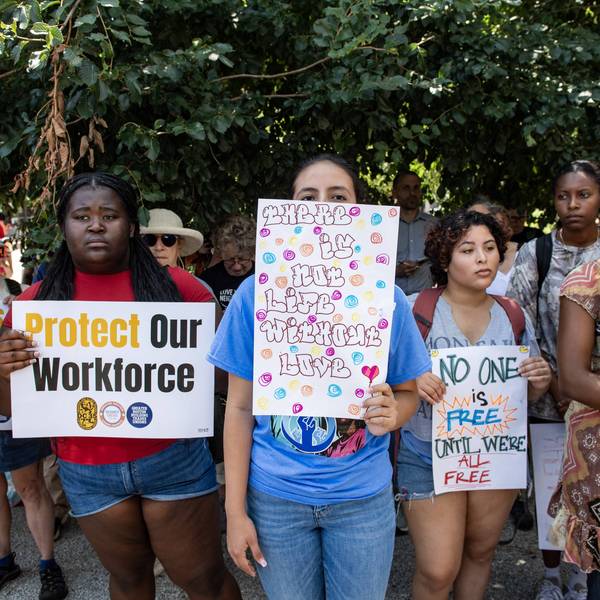
A global movement ignited by Haitian human rights activists now includes passionate demonstrations in the streets of Port-au-Prince and Manhattan, petitions with tens of thousands of signatures, award-winning films, and the support of members of Congress and global leaders, including current and former UN officials. All call on the UN to take responsibility for cholera's devastation, and to make things right.
The arc of the moral universe is long, but it bends toward justice. It will for the Haitian victims of the UN as well, in large part because Mario Joseph, Lisette Paul, and all those standing by their side are going to keep pulling in the same direction until justice is served.
Dear Common Dreams reader, It’s been nearly 30 years since I co-founded Common Dreams with my late wife, Lina Newhouser. We had the radical notion that journalism should serve the public good, not corporate profits. It was clear to us from the outset what it would take to build such a project. No paid advertisements. No corporate sponsors. No millionaire publisher telling us what to think or do. Many people said we wouldn't last a year, but we proved those doubters wrong. Together with a tremendous team of journalists and dedicated staff, we built an independent media outlet free from the constraints of profits and corporate control. Our mission has always been simple: To inform. To inspire. To ignite change for the common good. Building Common Dreams was not easy. Our survival was never guaranteed. When you take on the most powerful forces—Wall Street greed, fossil fuel industry destruction, Big Tech lobbyists, and uber-rich oligarchs who have spent billions upon billions rigging the economy and democracy in their favor—the only bulwark you have is supporters who believe in your work. But here’s the urgent message from me today. It's never been this bad out there. And it's never been this hard to keep us going. At the very moment Common Dreams is most needed, the threats we face are intensifying. We need your support now more than ever. We don't accept corporate advertising and never will. We don't have a paywall because we don't think people should be blocked from critical news based on their ability to pay. Everything we do is funded by the donations of readers like you. When everyone does the little they can afford, we are strong. But if that support retreats or dries up, so do we. Will you donate now to make sure Common Dreams not only survives but thrives? —Craig Brown, Co-founder |
Earlier this month, on the eve of the 5th anniversary of Haiti's tragic earthquake, a U.S. District Court judge ruled against Haitians' class action suit asking the United Nations to take responsibility for the deadly cholera epidemic it triggered in October of 2010. Viewed from both narrow and broad perspectives, the decision in Delama Georges, et al, v. United Nations, et al, was the wrong one, and it will be appealed.
In a narrow sense, the court erred in holding that the UN was immune from any suit. The Convention on the Privileges and Immunities of the United Nations calls for the UN to settle claims like those brought by the Haitian victims, a practice the organization has followed across the globe for decades. Moreover, the UN entered into a specific Status of Forces Agreement with Haiti where it pledged to create a process to address claims by private citizens, a promise the UN never fulfilled.
More broadly, the court's ruling cannot be squared with the basic human right to a remedy for harms like those suffered by thousands of Haitian plaintiffs like Lisette Paul and Delama Georges, who lost family members to cholera. This is especially true when the harm is so grievous: 8,700 Haitians have died and over 700,000 have been sickened by the cholera unleashed by the UN's reckless waste disposal and troop screening practices.
The tragic irony in this case is that the responsible party trying to hide behind a claim of immunity also happens to be the world's foremost promoter of human rights and the rule of law. "This decision implies that there is nowhere in the world that Haitians can turn to seek justice from the UN," said Mario Joseph of the Bureau des Avocats Internationaux in Haiti, a lawyer for the cholera victims. "That is irreconcilable with human rights and basic notions of justice."
But all is not lost here. The anti-slavery movement lost court cases at one time (Dred Scott v. Sandford), as did the civil rights movement (Plessy v. Ferguson) and the women's rights movement (Muller v. Oregon). But these causes ultimately prevailed, and so will the effort to bring justice to the Haitian people.
A global movement ignited by Haitian human rights activists now includes passionate demonstrations in the streets of Port-au-Prince and Manhattan, petitions with tens of thousands of signatures, award-winning films, and the support of members of Congress and global leaders, including current and former UN officials. All call on the UN to take responsibility for cholera's devastation, and to make things right.
The arc of the moral universe is long, but it bends toward justice. It will for the Haitian victims of the UN as well, in large part because Mario Joseph, Lisette Paul, and all those standing by their side are going to keep pulling in the same direction until justice is served.
Earlier this month, on the eve of the 5th anniversary of Haiti's tragic earthquake, a U.S. District Court judge ruled against Haitians' class action suit asking the United Nations to take responsibility for the deadly cholera epidemic it triggered in October of 2010. Viewed from both narrow and broad perspectives, the decision in Delama Georges, et al, v. United Nations, et al, was the wrong one, and it will be appealed.
In a narrow sense, the court erred in holding that the UN was immune from any suit. The Convention on the Privileges and Immunities of the United Nations calls for the UN to settle claims like those brought by the Haitian victims, a practice the organization has followed across the globe for decades. Moreover, the UN entered into a specific Status of Forces Agreement with Haiti where it pledged to create a process to address claims by private citizens, a promise the UN never fulfilled.
More broadly, the court's ruling cannot be squared with the basic human right to a remedy for harms like those suffered by thousands of Haitian plaintiffs like Lisette Paul and Delama Georges, who lost family members to cholera. This is especially true when the harm is so grievous: 8,700 Haitians have died and over 700,000 have been sickened by the cholera unleashed by the UN's reckless waste disposal and troop screening practices.
The tragic irony in this case is that the responsible party trying to hide behind a claim of immunity also happens to be the world's foremost promoter of human rights and the rule of law. "This decision implies that there is nowhere in the world that Haitians can turn to seek justice from the UN," said Mario Joseph of the Bureau des Avocats Internationaux in Haiti, a lawyer for the cholera victims. "That is irreconcilable with human rights and basic notions of justice."
But all is not lost here. The anti-slavery movement lost court cases at one time (Dred Scott v. Sandford), as did the civil rights movement (Plessy v. Ferguson) and the women's rights movement (Muller v. Oregon). But these causes ultimately prevailed, and so will the effort to bring justice to the Haitian people.
A global movement ignited by Haitian human rights activists now includes passionate demonstrations in the streets of Port-au-Prince and Manhattan, petitions with tens of thousands of signatures, award-winning films, and the support of members of Congress and global leaders, including current and former UN officials. All call on the UN to take responsibility for cholera's devastation, and to make things right.
The arc of the moral universe is long, but it bends toward justice. It will for the Haitian victims of the UN as well, in large part because Mario Joseph, Lisette Paul, and all those standing by their side are going to keep pulling in the same direction until justice is served.