SUBSCRIBE TO OUR FREE NEWSLETTER
Daily news & progressive opinion—funded by the people, not the corporations—delivered straight to your inbox.
5
#000000
#FFFFFF
To donate by check, phone, or other method, see our More Ways to Give page.
Daily news & progressive opinion—funded by the people, not the corporations—delivered straight to your inbox.
Last week, Pentagon budget "cuts" were in the headlines, often almost luridly so -- "Pentagon Faces the Knife," "Pentagon to Cut Spending by $78 Billion, Reduce Troop Strength," "U.S.
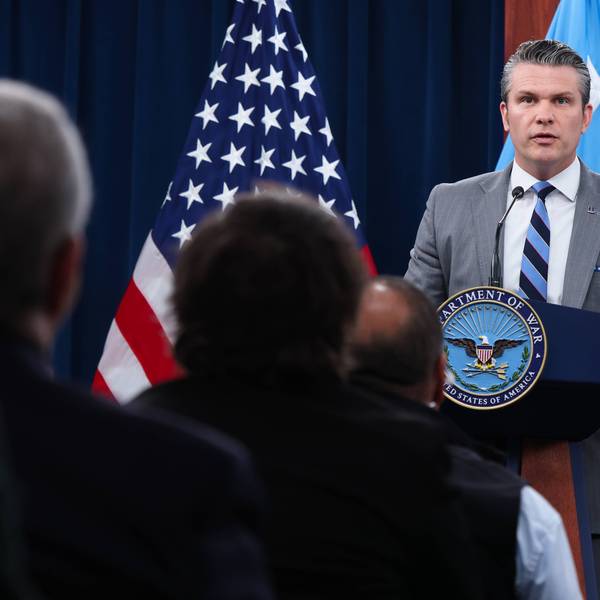
Last week, Pentagon budget "cuts" were in the headlines, often almost luridly so -- "Pentagon Faces the Knife," "Pentagon to Cut Spending by $78 Billion, Reduce Troop Strength," "U.S. Aims to Cut Defense Budget and Slash Troops." Responding to the mood of the moment in Washington ("the fiscal pressures the country is facing"), Secretary of Defense Robert Gates and Chairman of the Joint Chiefs Admiral Mike Mullen made those headlines by calling a news conference to explain prospective "cuts" they were proposing. Summing the situation up, Mullen seconded Gates this way: "The secretary's right, we can't hold ourselves exempt from the belt-tightening."
Gates then appeared on the PBS NewsHour to explain the nature of Pentagon "belt-tightening," while reminding anchor Jim Lehrer that last year the Pentagon announced plans to cap or cut "programs that, had they been built to conclusion, would have cost the taxpayers about $330 billion." The newest $78 billion in cuts over five years was to be considered but an add-on to already supposedly staggering savings, which he described as "changes in the expected dollars that we thought we were going to have when we prepared last year's budget." According to the Secretary of Defense, this massive set of cuts would, in fact, guarantee "modest growth" in the already monstrous Pentagon budget for at least the next three years.
Keeping Mullen's "belt-tightening" image in mind, what you have here, imagistically speaking, is an especially obese man cutting down on his own future expectations for how much he's planning to overeat, even as he continues to increase what he's actually eating. In other words, this is actually a belt-loosening operation. (And by the way, the Secretary of Defense knows perfectly well that some of his "cuts," announced with such flare, will never make it through a Congress where powerful Republicans, among others, prefer to exempt the national security budget from serious cuts, or any cuts at all.)
Consider this indicative of the new thinking we can expect from Washington in a crisis. As new, in fact, as the announcement less than a week into 2011 -- the year President Obama once targeted for a major drawdown of U.S. forces in Afghanistan -- that 1,400 more Marines were being sent into that country. It was a small but striking reminder that, as in 2009 and 2010, when it comes to the widening war in the region, the path of "more" (and more of the same) would invariably trump the idea of "less." This is the war-zone version of "belt-tightening."
Similarly, when the President decided to "shake up" his administration for a new era of split-screen government in Washington, he called on a top JPMorgan Chase exec (also deeply enmeshed in the military-industrial complex and Big Pharma) and a former Goldman Sachs advisor, both Clintonistas of the 1990s, to do the shaking. This passes for "new blood" in our nation's capital. Think of it this way: if you fill the room with the same old same old, you'll always end up with some version of the same old same old.
If, on the other hand, you want to see some new thinking of a sort you won't find in Washington, check out "Why Peace Is the Business of Men (But Shouldn't Be)" from Ann Jones, a hands-on aid worker in Afghanistan and elsewhere and remarkable writer. Her eloquent new book, War Is Not Over When It's Over: Women Speak Out from the Ruins of War, will undoubtedly go largely unreviewed, because when wars "end" even as the destruction of women (and children) continues, it's no longer really news.
Worse yet, she favors the "less" path in Afghanistan, where any path heading vaguely in the direction of "peace" (a word now synonymous with "utopian dolt" or "bleeding heart idiot") will automatically be waved aside as hopeless. Since putting any money behind thinking about or testing out new pathways towards peace in our world is inconceivable, we'll never know what might work. You can put $130 million taxpayer dollars into a new aircraft-fueling system at Bagram Air Base in Afghanistan or billions of taxpayer dollars into the Pakistani military (defending a country in which the rich go notoriously untaxed), but not one cent for peace. As for women, well, too bad.
Dear Common Dreams reader, It’s been nearly 30 years since I co-founded Common Dreams with my late wife, Lina Newhouser. We had the radical notion that journalism should serve the public good, not corporate profits. It was clear to us from the outset what it would take to build such a project. No paid advertisements. No corporate sponsors. No millionaire publisher telling us what to think or do. Many people said we wouldn't last a year, but we proved those doubters wrong. Together with a tremendous team of journalists and dedicated staff, we built an independent media outlet free from the constraints of profits and corporate control. Our mission has always been simple: To inform. To inspire. To ignite change for the common good. Building Common Dreams was not easy. Our survival was never guaranteed. When you take on the most powerful forces—Wall Street greed, fossil fuel industry destruction, Big Tech lobbyists, and uber-rich oligarchs who have spent billions upon billions rigging the economy and democracy in their favor—the only bulwark you have is supporters who believe in your work. But here’s the urgent message from me today. It's never been this bad out there. And it's never been this hard to keep us going. At the very moment Common Dreams is most needed, the threats we face are intensifying. We need your support now more than ever. We don't accept corporate advertising and never will. We don't have a paywall because we don't think people should be blocked from critical news based on their ability to pay. Everything we do is funded by the donations of readers like you. When everyone does the little they can afford, we are strong. But if that support retreats or dries up, so do we. Will you donate now to make sure Common Dreams not only survives but thrives? —Craig Brown, Co-founder |
Last week, Pentagon budget "cuts" were in the headlines, often almost luridly so -- "Pentagon Faces the Knife," "Pentagon to Cut Spending by $78 Billion, Reduce Troop Strength," "U.S. Aims to Cut Defense Budget and Slash Troops." Responding to the mood of the moment in Washington ("the fiscal pressures the country is facing"), Secretary of Defense Robert Gates and Chairman of the Joint Chiefs Admiral Mike Mullen made those headlines by calling a news conference to explain prospective "cuts" they were proposing. Summing the situation up, Mullen seconded Gates this way: "The secretary's right, we can't hold ourselves exempt from the belt-tightening."
Gates then appeared on the PBS NewsHour to explain the nature of Pentagon "belt-tightening," while reminding anchor Jim Lehrer that last year the Pentagon announced plans to cap or cut "programs that, had they been built to conclusion, would have cost the taxpayers about $330 billion." The newest $78 billion in cuts over five years was to be considered but an add-on to already supposedly staggering savings, which he described as "changes in the expected dollars that we thought we were going to have when we prepared last year's budget." According to the Secretary of Defense, this massive set of cuts would, in fact, guarantee "modest growth" in the already monstrous Pentagon budget for at least the next three years.
Keeping Mullen's "belt-tightening" image in mind, what you have here, imagistically speaking, is an especially obese man cutting down on his own future expectations for how much he's planning to overeat, even as he continues to increase what he's actually eating. In other words, this is actually a belt-loosening operation. (And by the way, the Secretary of Defense knows perfectly well that some of his "cuts," announced with such flare, will never make it through a Congress where powerful Republicans, among others, prefer to exempt the national security budget from serious cuts, or any cuts at all.)
Consider this indicative of the new thinking we can expect from Washington in a crisis. As new, in fact, as the announcement less than a week into 2011 -- the year President Obama once targeted for a major drawdown of U.S. forces in Afghanistan -- that 1,400 more Marines were being sent into that country. It was a small but striking reminder that, as in 2009 and 2010, when it comes to the widening war in the region, the path of "more" (and more of the same) would invariably trump the idea of "less." This is the war-zone version of "belt-tightening."
Similarly, when the President decided to "shake up" his administration for a new era of split-screen government in Washington, he called on a top JPMorgan Chase exec (also deeply enmeshed in the military-industrial complex and Big Pharma) and a former Goldman Sachs advisor, both Clintonistas of the 1990s, to do the shaking. This passes for "new blood" in our nation's capital. Think of it this way: if you fill the room with the same old same old, you'll always end up with some version of the same old same old.
If, on the other hand, you want to see some new thinking of a sort you won't find in Washington, check out "Why Peace Is the Business of Men (But Shouldn't Be)" from Ann Jones, a hands-on aid worker in Afghanistan and elsewhere and remarkable writer. Her eloquent new book, War Is Not Over When It's Over: Women Speak Out from the Ruins of War, will undoubtedly go largely unreviewed, because when wars "end" even as the destruction of women (and children) continues, it's no longer really news.
Worse yet, she favors the "less" path in Afghanistan, where any path heading vaguely in the direction of "peace" (a word now synonymous with "utopian dolt" or "bleeding heart idiot") will automatically be waved aside as hopeless. Since putting any money behind thinking about or testing out new pathways towards peace in our world is inconceivable, we'll never know what might work. You can put $130 million taxpayer dollars into a new aircraft-fueling system at Bagram Air Base in Afghanistan or billions of taxpayer dollars into the Pakistani military (defending a country in which the rich go notoriously untaxed), but not one cent for peace. As for women, well, too bad.
Last week, Pentagon budget "cuts" were in the headlines, often almost luridly so -- "Pentagon Faces the Knife," "Pentagon to Cut Spending by $78 Billion, Reduce Troop Strength," "U.S. Aims to Cut Defense Budget and Slash Troops." Responding to the mood of the moment in Washington ("the fiscal pressures the country is facing"), Secretary of Defense Robert Gates and Chairman of the Joint Chiefs Admiral Mike Mullen made those headlines by calling a news conference to explain prospective "cuts" they were proposing. Summing the situation up, Mullen seconded Gates this way: "The secretary's right, we can't hold ourselves exempt from the belt-tightening."
Gates then appeared on the PBS NewsHour to explain the nature of Pentagon "belt-tightening," while reminding anchor Jim Lehrer that last year the Pentagon announced plans to cap or cut "programs that, had they been built to conclusion, would have cost the taxpayers about $330 billion." The newest $78 billion in cuts over five years was to be considered but an add-on to already supposedly staggering savings, which he described as "changes in the expected dollars that we thought we were going to have when we prepared last year's budget." According to the Secretary of Defense, this massive set of cuts would, in fact, guarantee "modest growth" in the already monstrous Pentagon budget for at least the next three years.
Keeping Mullen's "belt-tightening" image in mind, what you have here, imagistically speaking, is an especially obese man cutting down on his own future expectations for how much he's planning to overeat, even as he continues to increase what he's actually eating. In other words, this is actually a belt-loosening operation. (And by the way, the Secretary of Defense knows perfectly well that some of his "cuts," announced with such flare, will never make it through a Congress where powerful Republicans, among others, prefer to exempt the national security budget from serious cuts, or any cuts at all.)
Consider this indicative of the new thinking we can expect from Washington in a crisis. As new, in fact, as the announcement less than a week into 2011 -- the year President Obama once targeted for a major drawdown of U.S. forces in Afghanistan -- that 1,400 more Marines were being sent into that country. It was a small but striking reminder that, as in 2009 and 2010, when it comes to the widening war in the region, the path of "more" (and more of the same) would invariably trump the idea of "less." This is the war-zone version of "belt-tightening."
Similarly, when the President decided to "shake up" his administration for a new era of split-screen government in Washington, he called on a top JPMorgan Chase exec (also deeply enmeshed in the military-industrial complex and Big Pharma) and a former Goldman Sachs advisor, both Clintonistas of the 1990s, to do the shaking. This passes for "new blood" in our nation's capital. Think of it this way: if you fill the room with the same old same old, you'll always end up with some version of the same old same old.
If, on the other hand, you want to see some new thinking of a sort you won't find in Washington, check out "Why Peace Is the Business of Men (But Shouldn't Be)" from Ann Jones, a hands-on aid worker in Afghanistan and elsewhere and remarkable writer. Her eloquent new book, War Is Not Over When It's Over: Women Speak Out from the Ruins of War, will undoubtedly go largely unreviewed, because when wars "end" even as the destruction of women (and children) continues, it's no longer really news.
Worse yet, she favors the "less" path in Afghanistan, where any path heading vaguely in the direction of "peace" (a word now synonymous with "utopian dolt" or "bleeding heart idiot") will automatically be waved aside as hopeless. Since putting any money behind thinking about or testing out new pathways towards peace in our world is inconceivable, we'll never know what might work. You can put $130 million taxpayer dollars into a new aircraft-fueling system at Bagram Air Base in Afghanistan or billions of taxpayer dollars into the Pakistani military (defending a country in which the rich go notoriously untaxed), but not one cent for peace. As for women, well, too bad.