

SUBSCRIBE TO OUR FREE NEWSLETTER
Daily news & progressive opinion—funded by the people, not the corporations—delivered straight to your inbox.
5
#000000
#FFFFFF
To donate by check, phone, or other method, see our More Ways to Give page.
Daily news & progressive opinion—funded by the people, not the corporations—delivered straight to your inbox.
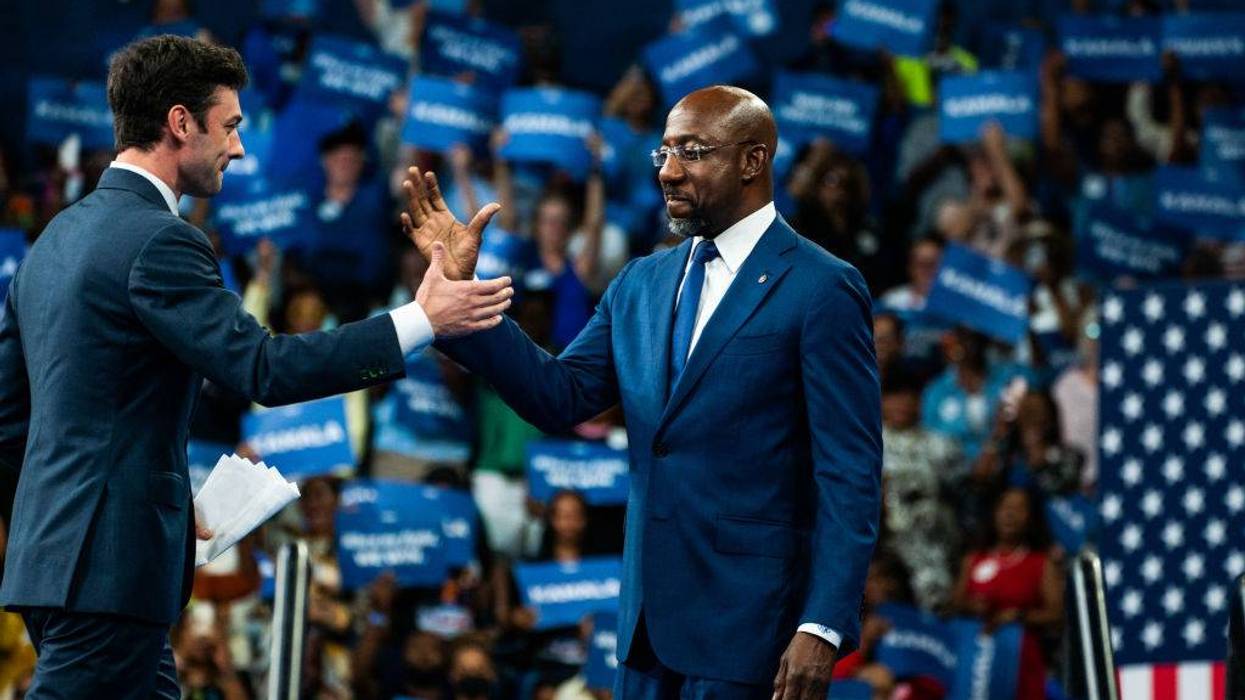
"Today, thanks to the people showing up and showing out, we won. Racist, rigged maps are dead for now."
Democrats in Georgia are celebrating as Republicans in the state abandoned efforts to redraw congressional maps that would have taken effect in 2028.
Eight Georgia Republicans, including Speaker of the House Jon Burns, sent a letter to Gov. Brian Kemp on Wednesday informing him that they would not be going through with his request to enact redistricting ahead of the 2028 election cycle.
"Changes to Georgia's maps should take place only when members of the General Assembly and citizens have been given ample opportunity to gather the facts, provide input, and engage in meaningful discussion," the letter states. "For this reason, we will not be taking up congressional or legislative redistricting for the 2028 election cycle during this special session."
However, there is still a chance that Georgia Republicans could ram through new maps later this year. According to Democracy Docket, Kemp "could still call another special session later this year—and if Republicans lose the midterms, they could try to lock in a 2028 advantage by passing new maps before Kemp leaves office next year."
Democrats in the state nonetheless celebrated Republicans' decision to shelve Kemp's redistricting plan.
In a joint statement, Georgia Senate Minority Leader Harold Jones II and House Minority Leader Carolyn Hugley called on supporters to celebrate "a monumental civil rights victory."
"Republicans thought they could get away with drawing racist, rigged maps without a fight," they said. "Today, thanks to the people showing up and showing out, we won. Racist, rigged maps are dead for now."
Sen. Raphael Warnock (D-Ga.) praised the work of activists who protested against the redistricting plan earlier in the day, putting pressure on Republicans to drop it.
"Hours after I visited the State Capitol with thousands of Georgians, Georgia House Republicans announced they are backing down from gerrymandering our maps, potentially giving them two extra seats," wrote Warnock.
“John Lewis never backed down from getting into good trouble and I won’t either," he added, referring to the late civil rights icon and Democratic member of Congress.
Trump last year sparked an unprecedented mid-decade redistricting battle when he pushed Texas to redraw its congressional map to gain extra Republican seats, and GOP-led states including North Carolina, Missouri, and Florida have since followed suit.
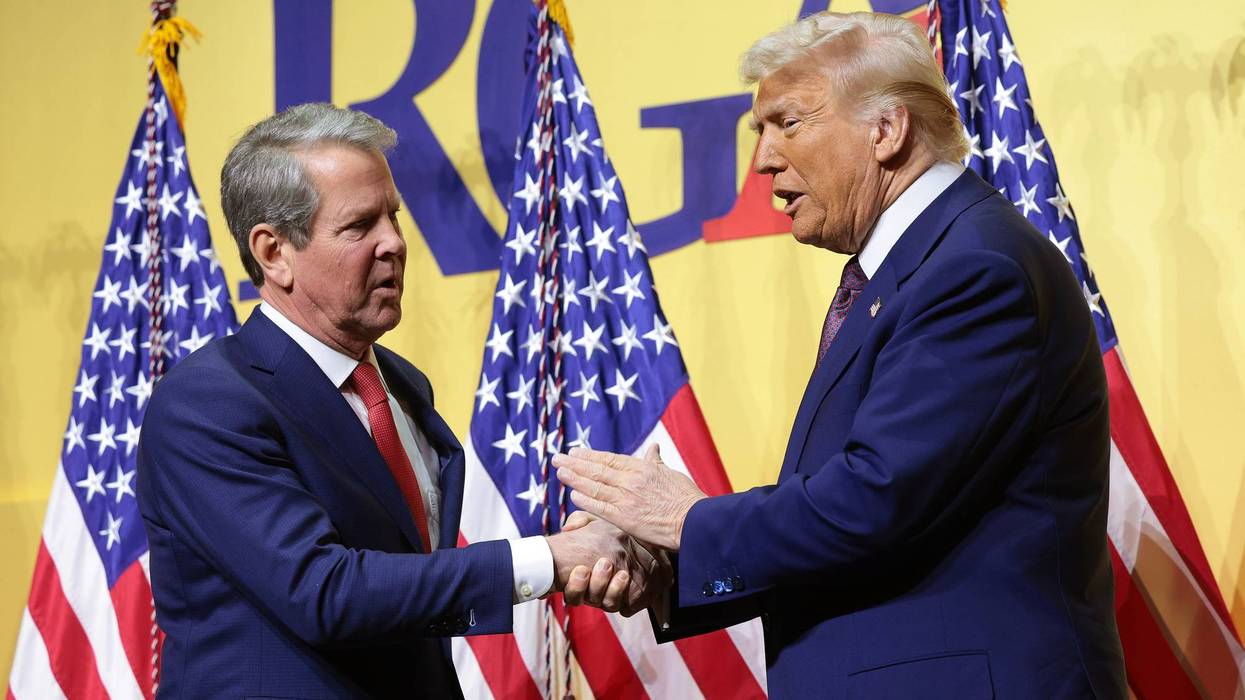
"We will not sit back and watch while Gov. Kemp takes orders from a felon-in-chief to turn Dr. King's dream into a nightmare," said the head of Common Cause Georgia.
Republican state leaders are forging ahead with President Donald Trump's campaign to rig congressional districts for the GOP, with Georgia Gov. Brian Kemp on Wednesday signing a proclamation for a special legislative session and South Carolina Gov. Henry McMaster expected to make a similar announcement soon.
While GOP policymakers facing pressure from Trump have pursued mid-decade redistricting in several states ahead of the November midterm elections—in which Democrats aim to reclaim majorities in both chambers of Congress—Kemp's proclamation explicitly states that any changes in Georgia would be for 2028, which is the next presidential cycle.
Kemp's proclamation cites the US Supreme Court's decision last month that a Louisiana map predating Trump's redistricting push was "an unconstitutional racial gerrymander," which gutted the remnants of Section 2 of the Voting Rights Act (VRA) of 1965.
In a statement condemning the proclamation, Common Cause Georgia director Rosario Palacios pointed to the late Rev. Martin Luther King Jr., a key figure in the movement that led to the VRA as well as the Civil Rights Act the previous year.
"We will not sit back and watch while Gov. Kemp takes orders from a felon-in-chief to turn Dr. King's dream into a nightmare. Too many civil rights leaders have done work in our state for us [to] take this sitting down," Palacios declared. "Common Cause is mobilizing thousands of people to stop state lawmakers from passing any new maps before 2030 that destroy Black voters' power for political gain. Voters should not have to rely on lawsuits to protect their right to fair representation. Congress must end this abuse once and for all so every voter can cast a ballot in free and fair elections, no matter their political party."
US Sen. Raphael Warnock (D-Ga.), who is up for reelection in 2028, similarly ripped the Georgia redistricting effort on social media Wednesday: "There is an extreme movement in this country that will stop at nothing to hold on to power, even if it means stripping representation away from millions. I will fight this with everything I have."
Republicans in various states have moved to "shamelessly capitalize" on the April ruling from the high court's right-wing supermajority. On Monday, as the Supreme Court cleared the way for the Alabama GOP to rescind the creation of its second Black-majority district, Memphis voters sued over a new map targeting Tennessee's only majority-Black congressional district.
On Tuesday, as the Missouri Supreme Court declined to strike down a new congressional map that state voters are working to challenge with a referendum, five Republican South Carolina senators joined Democrats in blocking a GOP effort to advance Trump's gerrymandering campaign in their state.
However, The Post and Courier's Nick Reynolds reported Wednesday that South Carolina Senate Majority Leader Shane Massey (R-25) believes the governor "will call legislators back into a special session amid the redistricting fight."
Also reporting on the anticipated move Wednesday, Politico's Andrew Howard and Alec Hernandez noted that "McMaster's plan—confirmed by four people familiar with the decision, who were granted anonymity to share private details—is a reversal of his position earlier this month and follows pressure" from the president and his allies.
A redistricting push in South Carolina is expected to target the seat held by Democratic Congressman Jim Clyburn—who last month warned that the Supreme Court ruling on Louisiana's map and the VRA "threatens to send our country deeper into the thicket of never-ending redistricting fights, with repeated aggressive map redraws, protracted legal battles, and relentless partisan tugs-of-war, all of which are destined to result in more regressive court decisions."
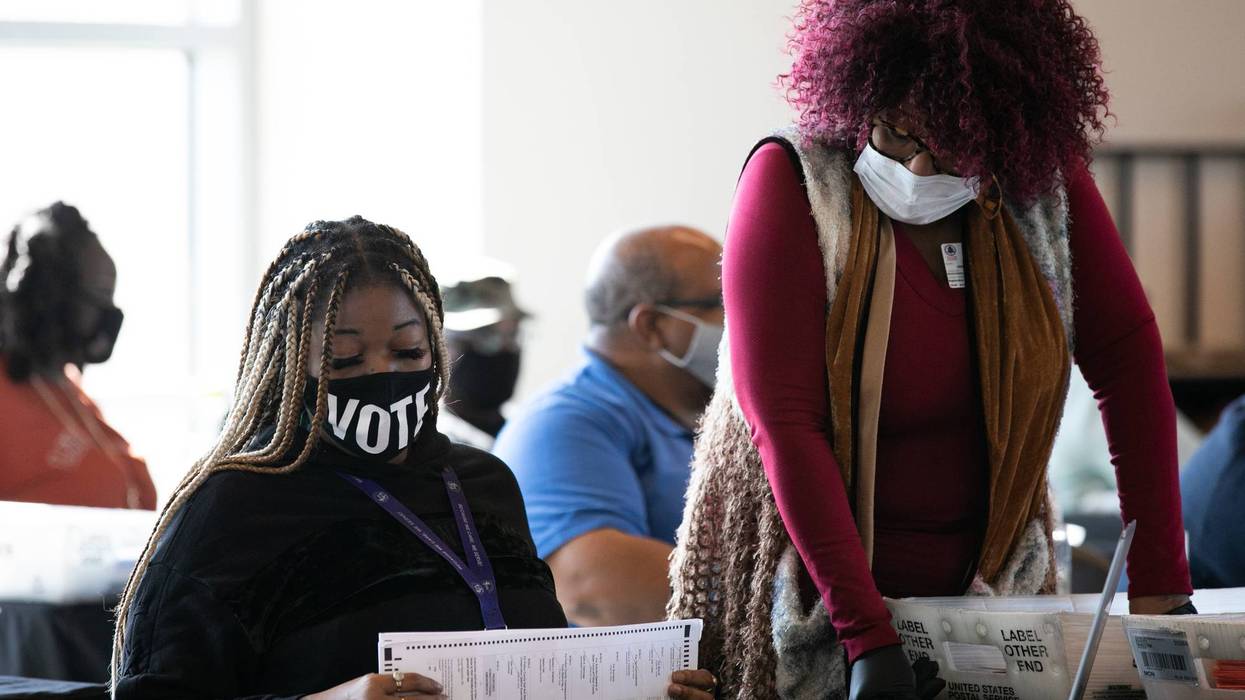
"This is a clear attempt to seize and hold power over our elections by sending a message that any county or state that doesn't vote in favor of the president or his preferred candidates may be subjected to a harassment campaign."
Democracy defenders sounded the alarm just over three months ago, when the Federal Bureau of Investigation executed a search warrant at a Georgia election hub. They expressed concerns again after a court filing revealed late Monday that President Donald Trump's Department of Justice is demanding the names of Fulton County's 2020 election workers.
For years, the Republican president has "obsessively propagated the debunked conspiracy theory that Fulton County 'stole' the 2020 election from him. And he has made it clear that he seeks retribution against those who refuse to indulge his baseless claims," notes the county's Monday filing aimed at blocking the April 20 grand jury subpoena for election workers' personal data.
The largely Democratic county—which includes most of Atlanta—argued that it should not have to turn over workers' names, home addresses, emails, and telephone numbers due to federal overreach and First Amendment concerns, according to CBS News. It also suggested the subpoena is politically motivated and highlighted the statute of limitations for 2020 election crimes.
"After illegally seizing our election records in January, the federal government once again is attempting to misuse criminal process," Fulton County Commission Chairman Robb Pitts said in a statement announcing the motion.
"This is yet another act of outrageous federal overreach designed to intimidate and to chill participation in elections. This harassment should not be allowed, so we have asked the court to act," he continued. "I will always stand up for our elections workers and for the truth. Let me be crystal clear. Fulton County will not be intimidated."
Voting rights advocates echoed the concerns noted by the filing and Pitts. Lauren Groh-Wargo, who leads Fair Fight Action, told The New York Times that election workers across the United States now face heightened threats and harassment.
"Roughly a third of election officials are threatened on the job, and more than half worry it's making it harder to hire and keep election workers," Groh-Wargo said. "They're trying to break our democracy by attacking the infrastructure, but we are fighting back hard."
Trump's DOJ is losing in Fulton County – so they've resorted to harassing election workers. In 2020, workers saw death threats due to false claims.This case was initially rejected by ATL's FBI Chief. It's built on false claims that were investigated and rejected, including by Republican officials.
[image or embed]
— Max Flugrath🗳️ (@maxflugrath.bsky.social) May 5, 2026 at 8:31 AM
All Voting Is Local Georgia state director Kristin Nabers stressed in a statement that "the conspiracy theories and lies that dictate White House policy have real-world consequences beyond appeasing the president's fragile ego—they are being weaponized to target the people from our communities who run our elections and ensure our votes are counted."
"This is a clear attempt to seize and hold power over our elections by sending a message that any county or state that doesn't vote in favor of the president or his preferred candidates may be subjected to a harassment campaign like that of Fulton County," she continued. "This intimidation tactic is a slap in the face to the millions of county election workers and volunteers around the country who work tirelessly to make sure our elections run smoothly."
Nabers added that "the all-out assault on Fulton County and its poll workers creates a blueprint for the administration to see what it can get away with during the midterm elections when results in key counties and states don't go its way. Election workers in Fulton County and beyond will not be intimidated by this desperate bullying."
The fight in Fulton County—where Trump and others initially faced criminal charges for their effort to overturn his 2020 loss—comes as some primary elections are underway across the country, and amid mounting concerns about what the president may try in November, particularly if the GOP-controlled Congress passes the attack on voting rights that the White House is pushing.
Michael McNulty, policy director of the group Issue One, said Tuesday that "Americans should be furious" about Trump's demands in Georgia, which "are based solely on debunked conspiracy theories from 2020 that courts and post-election audits have repeatedly rejected."
"Targeting these heroic election workers does nothing to strengthen our democracy—it puts ordinary public servants at risk in an attempt to erode trust in elections," he warned. “The Trump administration's goal is to make Americans feel distrust and cynicism about the election process. While the administration is framing its actions using the 2020 elections, it is proceeding with this year's midterms in mind."
As McNulty detailed, Trump's "election takeover playbook" includes:
"If this playbook is left unchecked, the Trump administration will continue to abuse its power and attempt to meddle in elections like authoritarian leaders in other countries," he said. "Congress must stop this."
"It should use oversight and funding authority to halt the executive branch from weaponizing federal power against the heroes who run our elections," McNulty argued. "Members of Congress swore an oath to the Constitution when they agreed to serve, and now is a test of whether they are willing to live up to that oath and protect the American people."
Some members of Congress joined voting rights advocates in speaking out against the subpoena this week. Sharing the Times report on social media Tuesday, Sen. Mark Warner (D-Va.) declared that "Trump's attacks on our free and fair elections won't stop."