SUBSCRIBE TO OUR FREE NEWSLETTER
Daily news & progressive opinion—funded by the people, not the corporations—delivered straight to your inbox.
5
#000000
#FFFFFF
To donate by check, phone, or other method, see our More Ways to Give page.
Daily news & progressive opinion—funded by the people, not the corporations—delivered straight to your inbox.
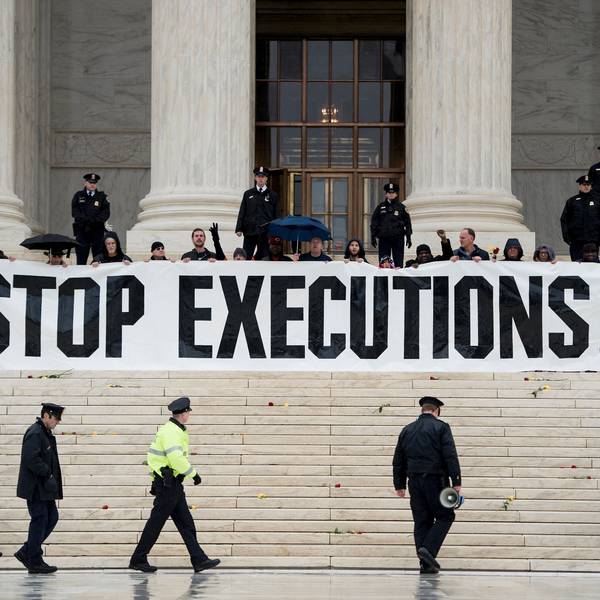
Time is running out for lawyers to stop the state of Arkansas from carrying out its plan for an "execution assembly line"--killing seven men within an 11-day span.
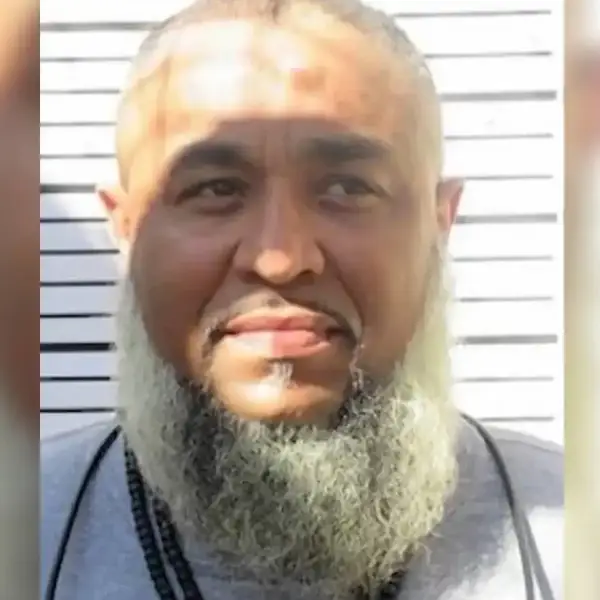
The first executions for two of the men, Don Davis and Bruce Ward, are set for the same day, April 17.
The Guardian's Ed Pilkington writes:
On Monday, lawyers for the seven will present a collective case to a federal judge in the eastern district of Arkansas in which they will call for a permanent block on the planned killings which they denounce as "execution by assembly line." In a bold expression of disgust directed at the Republican governor of Arkansas, Asa Hutchinson, they state: "Our country does not participate in mass executions."
The plan has been met with outrage by civil liberties and human rights groups.
"Arkansas's plan to execute eight men over eleven days obscenely exalts speed over justice," said Christina Swarns, NAACP's Legal Defense Fund's director of litigation.
The short time frame for the state-sanctioned killings, said Hutchinson, is because of the end-of-the-month expiration date on the state's supply of midazolam, one of the three drugs that will be used in the lethal injection cocktail.
The Intercept's Liliana Segura wrote in a lengthy piece outlining the situation:
Attorneys for the condemned have raised particular alarm over the planned use of midazolam, which replaces a longtime anesthetic--sodium thiopental--that became unavailable years ago. Midazolam has a short but grisly track record; a complaint filed in federal court last month points to several executions where the sedative appeared to fail, most recently in Alabama, during the execution of Robert Bert Smith, who heaved and coughed as he died.
According to Brian Stull, a senior staff attorney with the ACLU's Capital Punishment Project, "By racing to use a drug known to play a part in botched executions, the governor risks debasing the state of Arkansas, its citizens, and the very American traditions of justice by torturing prisoners to death."
He adds that "when midazolam is combined with the two other drugs used during the execution--vecuronium bromide and potassium chloride--it produces unspeakable pain before death."
The problematic issues go on.
Best-selling author and former lawyer John Grisham writes in a USA Today op-ed that the men "have court-appointed lawyers," and some "share the same lawyer. It is literally impossible for the lawyers to provide comprehensive representation in the hour when their clients need them the most."
There's also the issue of the state not following a needed safeguard--the clemency process. Grisham writes:
Arkansas is preparing to arbitrarily violate its own policies and laws regarding clemency in order to accommodate this frantic execution schedule. Clemency hearings are required to be held 30 days prior to the execution, with each prisoner allotted a two-hour audience with the board. Some of the [seven] were not able to file their petitions in time. Those who did will be given only one hour. The board will not have the full 30 days for careful deliberation of each case.
Amnesty International, Equal Justice USA, and the ACLU are circulation a petition calling on the governor to stop the "unusual killing spree" because "it violates basic decency and is not justice."
The Associated Press writes: "Judge Kristine Baker, who was appointed to U.S. District Court for the Eastern District of Arkansas by President Barack Obama, will consider the legality of Arkansas' aggressive plan this week."
Dear Common Dreams reader, It’s been nearly 30 years since I co-founded Common Dreams with my late wife, Lina Newhouser. We had the radical notion that journalism should serve the public good, not corporate profits. It was clear to us from the outset what it would take to build such a project. No paid advertisements. No corporate sponsors. No millionaire publisher telling us what to think or do. Many people said we wouldn't last a year, but we proved those doubters wrong. Together with a tremendous team of journalists and dedicated staff, we built an independent media outlet free from the constraints of profits and corporate control. Our mission has always been simple: To inform. To inspire. To ignite change for the common good. Building Common Dreams was not easy. Our survival was never guaranteed. When you take on the most powerful forces—Wall Street greed, fossil fuel industry destruction, Big Tech lobbyists, and uber-rich oligarchs who have spent billions upon billions rigging the economy and democracy in their favor—the only bulwark you have is supporters who believe in your work. But here’s the urgent message from me today. It's never been this bad out there. And it's never been this hard to keep us going. At the very moment Common Dreams is most needed, the threats we face are intensifying. We need your support now more than ever. We don't accept corporate advertising and never will. We don't have a paywall because we don't think people should be blocked from critical news based on their ability to pay. Everything we do is funded by the donations of readers like you. When everyone does the little they can afford, we are strong. But if that support retreats or dries up, so do we. Will you donate now to make sure Common Dreams not only survives but thrives? —Craig Brown, Co-founder |
Time is running out for lawyers to stop the state of Arkansas from carrying out its plan for an "execution assembly line"--killing seven men within an 11-day span.
The first executions for two of the men, Don Davis and Bruce Ward, are set for the same day, April 17.
The Guardian's Ed Pilkington writes:
On Monday, lawyers for the seven will present a collective case to a federal judge in the eastern district of Arkansas in which they will call for a permanent block on the planned killings which they denounce as "execution by assembly line." In a bold expression of disgust directed at the Republican governor of Arkansas, Asa Hutchinson, they state: "Our country does not participate in mass executions."
The plan has been met with outrage by civil liberties and human rights groups.
"Arkansas's plan to execute eight men over eleven days obscenely exalts speed over justice," said Christina Swarns, NAACP's Legal Defense Fund's director of litigation.
The short time frame for the state-sanctioned killings, said Hutchinson, is because of the end-of-the-month expiration date on the state's supply of midazolam, one of the three drugs that will be used in the lethal injection cocktail.
The Intercept's Liliana Segura wrote in a lengthy piece outlining the situation:
Attorneys for the condemned have raised particular alarm over the planned use of midazolam, which replaces a longtime anesthetic--sodium thiopental--that became unavailable years ago. Midazolam has a short but grisly track record; a complaint filed in federal court last month points to several executions where the sedative appeared to fail, most recently in Alabama, during the execution of Robert Bert Smith, who heaved and coughed as he died.
According to Brian Stull, a senior staff attorney with the ACLU's Capital Punishment Project, "By racing to use a drug known to play a part in botched executions, the governor risks debasing the state of Arkansas, its citizens, and the very American traditions of justice by torturing prisoners to death."
He adds that "when midazolam is combined with the two other drugs used during the execution--vecuronium bromide and potassium chloride--it produces unspeakable pain before death."
The problematic issues go on.
Best-selling author and former lawyer John Grisham writes in a USA Today op-ed that the men "have court-appointed lawyers," and some "share the same lawyer. It is literally impossible for the lawyers to provide comprehensive representation in the hour when their clients need them the most."
There's also the issue of the state not following a needed safeguard--the clemency process. Grisham writes:
Arkansas is preparing to arbitrarily violate its own policies and laws regarding clemency in order to accommodate this frantic execution schedule. Clemency hearings are required to be held 30 days prior to the execution, with each prisoner allotted a two-hour audience with the board. Some of the [seven] were not able to file their petitions in time. Those who did will be given only one hour. The board will not have the full 30 days for careful deliberation of each case.
Amnesty International, Equal Justice USA, and the ACLU are circulation a petition calling on the governor to stop the "unusual killing spree" because "it violates basic decency and is not justice."
The Associated Press writes: "Judge Kristine Baker, who was appointed to U.S. District Court for the Eastern District of Arkansas by President Barack Obama, will consider the legality of Arkansas' aggressive plan this week."
Time is running out for lawyers to stop the state of Arkansas from carrying out its plan for an "execution assembly line"--killing seven men within an 11-day span.
The first executions for two of the men, Don Davis and Bruce Ward, are set for the same day, April 17.
The Guardian's Ed Pilkington writes:
On Monday, lawyers for the seven will present a collective case to a federal judge in the eastern district of Arkansas in which they will call for a permanent block on the planned killings which they denounce as "execution by assembly line." In a bold expression of disgust directed at the Republican governor of Arkansas, Asa Hutchinson, they state: "Our country does not participate in mass executions."
The plan has been met with outrage by civil liberties and human rights groups.
"Arkansas's plan to execute eight men over eleven days obscenely exalts speed over justice," said Christina Swarns, NAACP's Legal Defense Fund's director of litigation.
The short time frame for the state-sanctioned killings, said Hutchinson, is because of the end-of-the-month expiration date on the state's supply of midazolam, one of the three drugs that will be used in the lethal injection cocktail.
The Intercept's Liliana Segura wrote in a lengthy piece outlining the situation:
Attorneys for the condemned have raised particular alarm over the planned use of midazolam, which replaces a longtime anesthetic--sodium thiopental--that became unavailable years ago. Midazolam has a short but grisly track record; a complaint filed in federal court last month points to several executions where the sedative appeared to fail, most recently in Alabama, during the execution of Robert Bert Smith, who heaved and coughed as he died.
According to Brian Stull, a senior staff attorney with the ACLU's Capital Punishment Project, "By racing to use a drug known to play a part in botched executions, the governor risks debasing the state of Arkansas, its citizens, and the very American traditions of justice by torturing prisoners to death."
He adds that "when midazolam is combined with the two other drugs used during the execution--vecuronium bromide and potassium chloride--it produces unspeakable pain before death."
The problematic issues go on.
Best-selling author and former lawyer John Grisham writes in a USA Today op-ed that the men "have court-appointed lawyers," and some "share the same lawyer. It is literally impossible for the lawyers to provide comprehensive representation in the hour when their clients need them the most."
There's also the issue of the state not following a needed safeguard--the clemency process. Grisham writes:
Arkansas is preparing to arbitrarily violate its own policies and laws regarding clemency in order to accommodate this frantic execution schedule. Clemency hearings are required to be held 30 days prior to the execution, with each prisoner allotted a two-hour audience with the board. Some of the [seven] were not able to file their petitions in time. Those who did will be given only one hour. The board will not have the full 30 days for careful deliberation of each case.
Amnesty International, Equal Justice USA, and the ACLU are circulation a petition calling on the governor to stop the "unusual killing spree" because "it violates basic decency and is not justice."
The Associated Press writes: "Judge Kristine Baker, who was appointed to U.S. District Court for the Eastern District of Arkansas by President Barack Obama, will consider the legality of Arkansas' aggressive plan this week."