SUBSCRIBE TO OUR FREE NEWSLETTER
Daily news & progressive opinion—funded by the people, not the corporations—delivered straight to your inbox.
5
#000000
#FFFFFF
To donate by check, phone, or other method, see our More Ways to Give page.
Less than six months after two oil spills in the Peruvian Amazon devastated Indigenous communities and the local ecosystem, yet another spill in the region has been reported.
"Somehow virtually none of the profits generated by the oil industry over decades is available to ensure that Amazonian communities don't have to watch their primary sources of livelihoods--the river, the forest--become irrevocably polluted by spills."
--Andrew Miller, Amazon WatchOn Friday afternoon, a leak was discovered in the Nothern Peruvian Pipeline--the same pipeline responsible for the earlier spills. The latest spill eventually coated over 16,000 square meters of Amazon rainforest in Peru's northeast Loreto region with crude oil, according to OEFA, the country's environmental regulator.
The pipeline is operated by the state-run company PetroPeru.
"Upon initial reports of the spill on June 24th, PetroPeru went into crisis response mode, issuing statements via Twitter to national and international journalists. PetroPeru claimed that the Northern Peruvian Pipeline still isn't pumping oil following the disastrous spills in early 2016, but the OEFA report belies that, stating that they found 'indicators that PetroPeru is pumping hydrocarbons through the pipeline,'" said Andrew Miller, advocacy director of Amazon Watch.
"So it appears that PetroPeru is currently pumping oil, though they publicly deny it," Miller added, "without having carried out the proper reparation and replacement of deteriorated pipeline sections ordered by the OEFA after the prior spills."
As with previous spills, local Indigenous residents have been employed to help with the cleanup--but health officials on Tuesday reported (pdf) a lack of proper safety equipment, which puts those Indigenous people at risk for "poisoning and burns" from direct contact with the crude.
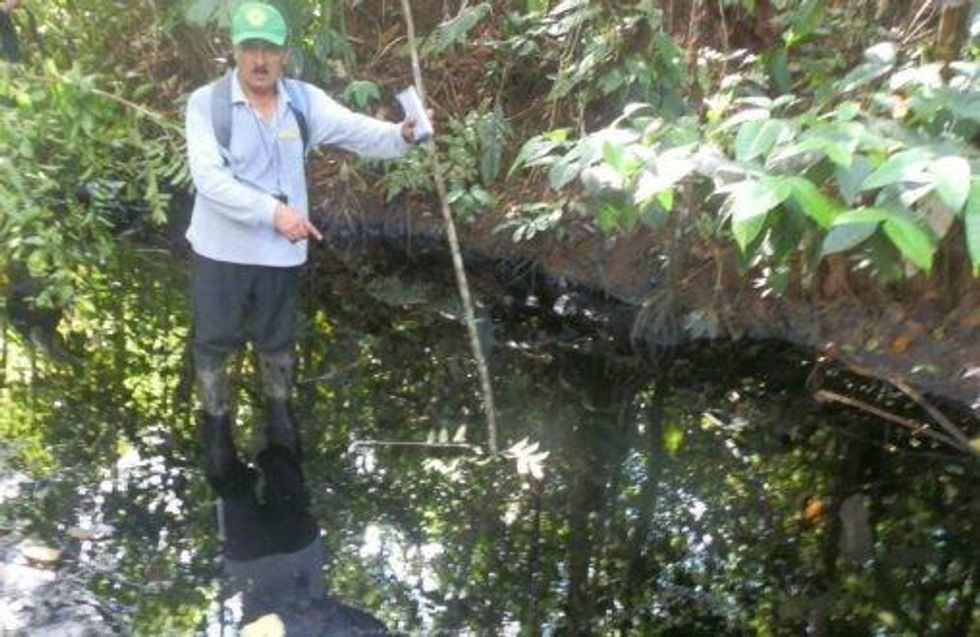
Moreover, while PetroPeru "personnel arrived at the spill site at 10pm [on Friday] and tried to contain the spill using makeshift barriers of leaves and branches," Mongabay writes, the health officials' report states that this "did not help much, because the oil continued to leak and affect lower areas."
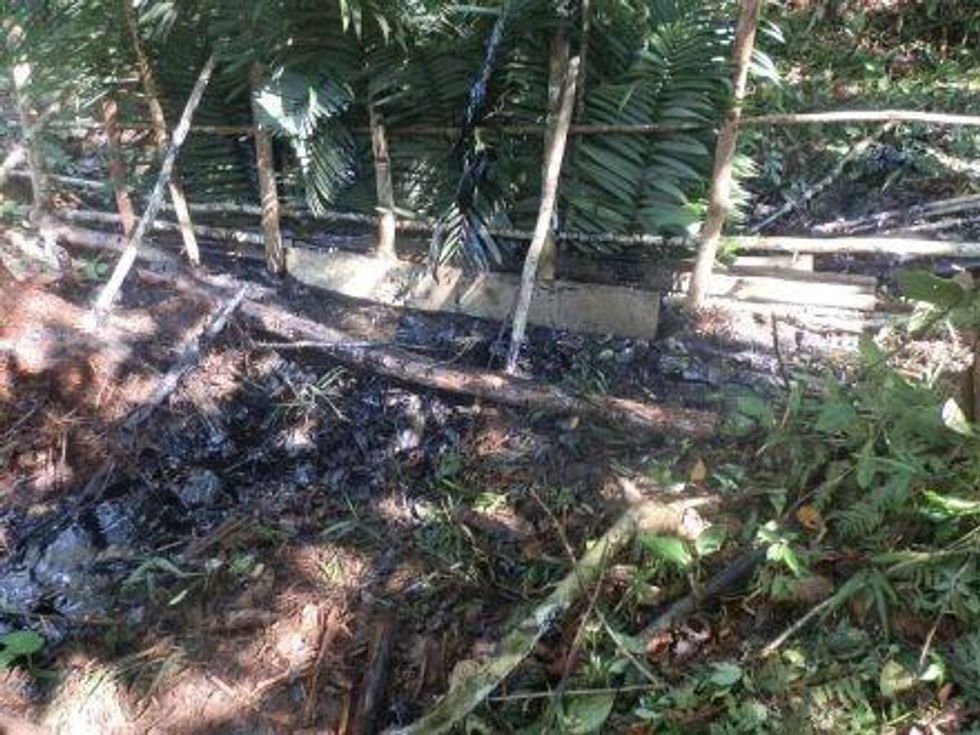
Miller asserted that at least 430 people are affected by this latest spill.
The health officials found that the "community of Barranca, which is close to the spill site, is most directly threatened," observes Mongabay. "The community of about 725 people lacks basic services, such as safe drinking water and electricity, making it even more vulnerable. If the oil should reach the stream known as Barranca Cano, it would pose a serious risk, because the stream is the community's main source of drinking water."
Amidst this current scandal, "OEFA announced yesterday that they are fining PetroPeru some 10 million soles (a little over $3 million) for improper clean-up of the Cuninico oil spill in mid-2014," Miller said. "This follows a recent report that Kukama indigenous villagers in Cuninico have high levels of mercury and cadmium in their urine. There's no reason to assume the fate of the at least 430 people impacted by the most recent spill will be much different."
"The third oil spill in the Amazon [this year] and still no preventive actions," noted Henderson Rengifo, of local Indigenous rights group AIDESEP.
Miller roundly condemned what he described as "a system of environmental racism":
Overall at play here is a system of environmental racism in which indigenous villages along the pipeline route become de facto 'sacrifice zones.' Somehow virtually none of the profits generated by the oil industry over decades is available to ensure that Amazonian communities don't have to watch their primary sources of livelihoods--the river, the forest--become irrevocably polluted by spills.
"The situation is criminal," Miller added, "and responsibility extends through PetroPeru to national politicians who weakened environmental regulations in recent years and the international oil companies that benefit from the pipeline."
Less than six months after two oil spills in the Peruvian Amazon devastated Indigenous communities and the local ecosystem, yet another spill in the region has been reported.
"Somehow virtually none of the profits generated by the oil industry over decades is available to ensure that Amazonian communities don't have to watch their primary sources of livelihoods--the river, the forest--become irrevocably polluted by spills."
--Andrew Miller, Amazon WatchOn Friday afternoon, a leak was discovered in the Nothern Peruvian Pipeline--the same pipeline responsible for the earlier spills. The latest spill eventually coated over 16,000 square meters of Amazon rainforest in Peru's northeast Loreto region with crude oil, according to OEFA, the country's environmental regulator.
The pipeline is operated by the state-run company PetroPeru.
"Upon initial reports of the spill on June 24th, PetroPeru went into crisis response mode, issuing statements via Twitter to national and international journalists. PetroPeru claimed that the Northern Peruvian Pipeline still isn't pumping oil following the disastrous spills in early 2016, but the OEFA report belies that, stating that they found 'indicators that PetroPeru is pumping hydrocarbons through the pipeline,'" said Andrew Miller, advocacy director of Amazon Watch.
"So it appears that PetroPeru is currently pumping oil, though they publicly deny it," Miller added, "without having carried out the proper reparation and replacement of deteriorated pipeline sections ordered by the OEFA after the prior spills."
As with previous spills, local Indigenous residents have been employed to help with the cleanup--but health officials on Tuesday reported (pdf) a lack of proper safety equipment, which puts those Indigenous people at risk for "poisoning and burns" from direct contact with the crude.
Moreover, while PetroPeru "personnel arrived at the spill site at 10pm [on Friday] and tried to contain the spill using makeshift barriers of leaves and branches," Mongabay writes, the health officials' report states that this "did not help much, because the oil continued to leak and affect lower areas."
Miller asserted that at least 430 people are affected by this latest spill.
The health officials found that the "community of Barranca, which is close to the spill site, is most directly threatened," observes Mongabay. "The community of about 725 people lacks basic services, such as safe drinking water and electricity, making it even more vulnerable. If the oil should reach the stream known as Barranca Cano, it would pose a serious risk, because the stream is the community's main source of drinking water."
Amidst this current scandal, "OEFA announced yesterday that they are fining PetroPeru some 10 million soles (a little over $3 million) for improper clean-up of the Cuninico oil spill in mid-2014," Miller said. "This follows a recent report that Kukama indigenous villagers in Cuninico have high levels of mercury and cadmium in their urine. There's no reason to assume the fate of the at least 430 people impacted by the most recent spill will be much different."
"The third oil spill in the Amazon [this year] and still no preventive actions," noted Henderson Rengifo, of local Indigenous rights group AIDESEP.
Miller roundly condemned what he described as "a system of environmental racism":
Overall at play here is a system of environmental racism in which indigenous villages along the pipeline route become de facto 'sacrifice zones.' Somehow virtually none of the profits generated by the oil industry over decades is available to ensure that Amazonian communities don't have to watch their primary sources of livelihoods--the river, the forest--become irrevocably polluted by spills.
"The situation is criminal," Miller added, "and responsibility extends through PetroPeru to national politicians who weakened environmental regulations in recent years and the international oil companies that benefit from the pipeline."
Less than six months after two oil spills in the Peruvian Amazon devastated Indigenous communities and the local ecosystem, yet another spill in the region has been reported.
"Somehow virtually none of the profits generated by the oil industry over decades is available to ensure that Amazonian communities don't have to watch their primary sources of livelihoods--the river, the forest--become irrevocably polluted by spills."
--Andrew Miller, Amazon WatchOn Friday afternoon, a leak was discovered in the Nothern Peruvian Pipeline--the same pipeline responsible for the earlier spills. The latest spill eventually coated over 16,000 square meters of Amazon rainforest in Peru's northeast Loreto region with crude oil, according to OEFA, the country's environmental regulator.
The pipeline is operated by the state-run company PetroPeru.
"Upon initial reports of the spill on June 24th, PetroPeru went into crisis response mode, issuing statements via Twitter to national and international journalists. PetroPeru claimed that the Northern Peruvian Pipeline still isn't pumping oil following the disastrous spills in early 2016, but the OEFA report belies that, stating that they found 'indicators that PetroPeru is pumping hydrocarbons through the pipeline,'" said Andrew Miller, advocacy director of Amazon Watch.
"So it appears that PetroPeru is currently pumping oil, though they publicly deny it," Miller added, "without having carried out the proper reparation and replacement of deteriorated pipeline sections ordered by the OEFA after the prior spills."
As with previous spills, local Indigenous residents have been employed to help with the cleanup--but health officials on Tuesday reported (pdf) a lack of proper safety equipment, which puts those Indigenous people at risk for "poisoning and burns" from direct contact with the crude.
Moreover, while PetroPeru "personnel arrived at the spill site at 10pm [on Friday] and tried to contain the spill using makeshift barriers of leaves and branches," Mongabay writes, the health officials' report states that this "did not help much, because the oil continued to leak and affect lower areas."
Miller asserted that at least 430 people are affected by this latest spill.
The health officials found that the "community of Barranca, which is close to the spill site, is most directly threatened," observes Mongabay. "The community of about 725 people lacks basic services, such as safe drinking water and electricity, making it even more vulnerable. If the oil should reach the stream known as Barranca Cano, it would pose a serious risk, because the stream is the community's main source of drinking water."
Amidst this current scandal, "OEFA announced yesterday that they are fining PetroPeru some 10 million soles (a little over $3 million) for improper clean-up of the Cuninico oil spill in mid-2014," Miller said. "This follows a recent report that Kukama indigenous villagers in Cuninico have high levels of mercury and cadmium in their urine. There's no reason to assume the fate of the at least 430 people impacted by the most recent spill will be much different."
"The third oil spill in the Amazon [this year] and still no preventive actions," noted Henderson Rengifo, of local Indigenous rights group AIDESEP.
Miller roundly condemned what he described as "a system of environmental racism":
Overall at play here is a system of environmental racism in which indigenous villages along the pipeline route become de facto 'sacrifice zones.' Somehow virtually none of the profits generated by the oil industry over decades is available to ensure that Amazonian communities don't have to watch their primary sources of livelihoods--the river, the forest--become irrevocably polluted by spills.
"The situation is criminal," Miller added, "and responsibility extends through PetroPeru to national politicians who weakened environmental regulations in recent years and the international oil companies that benefit from the pipeline."