Monsanto Under Fire: Maker of Cancer-Causing Herbicide Sued by US Workers
Two separate lawsuits allege agrochemical giant deliberately misled public and regulators over dangers of product exposure
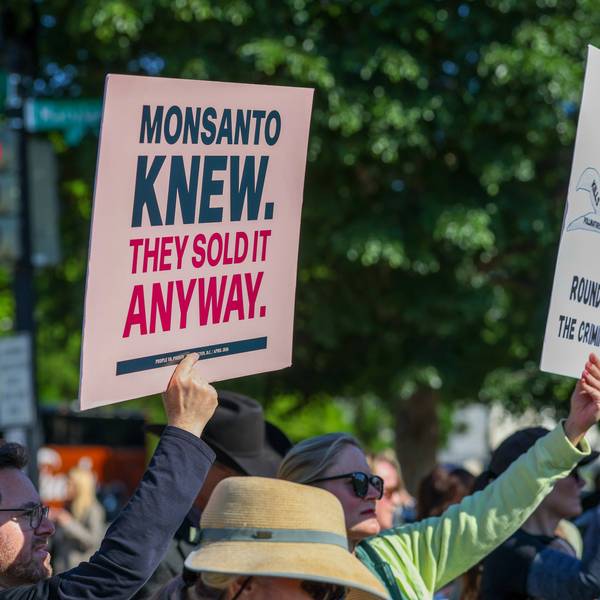
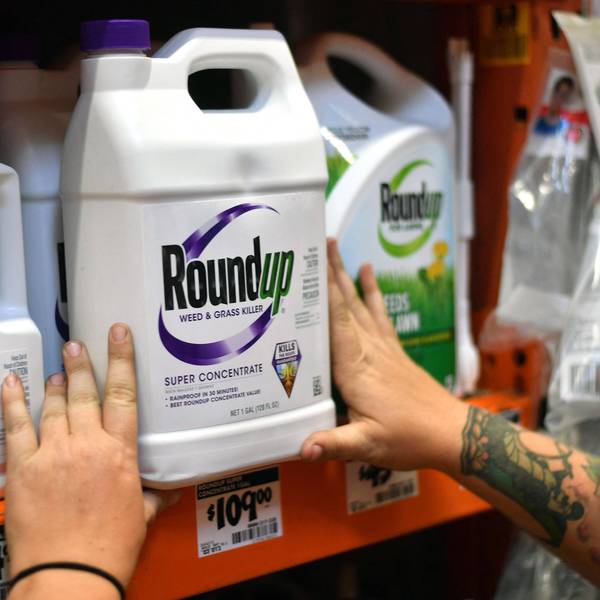
Two U.S. workers are suing Monsanto over charges that the company's Roundup herbicide caused their cancers while accusing the agrochemical giant of deliberately misleading the public and regulators about the dangers of being exposed to its product.
The suits, both filed separately last week, come six months after the World Health Organization declared glyphosate, the key weed-killing ingredient in the herbicide, a "probable carcinogen." Earlier this month the California Environmental Protection Agency also announced it would begin labeling the chemical with the same designation.
One suit, filed Sept. 22 in a New York federal court, claims that plaintiff Judi Fitzgerald's exposure to Roundup while working at a horticultural products company in the 1990s was a contributing cause of her 2012 leukemia diagnosis.
Filed on the same day in a Los Angeles District Court, the second suit (pdf) charges that former farm worker Enrique Rubio's weekly exposure to Roundup products--which he sprayed on fruit and vegetable fields in Oregon and California-- was "a substantial and contributing facto[r] in causing [his] grave injuries," referring to his 1995 bone cancer diagnosis.
"For nearly 40 years, farms across the world have used Roundup without knowing of the dangers its use poses," Rubio's suit states. "That is because when Monsanto first introduced Roundup, it touted glyphosate as a tehnological breakthrough: it could kill almost every weed without causing harm either to people or to the environment."
"Of course, history has shown that not to be truth," the statement continues, citing the WHO's recent designation.
"Those most at risk are farm workers and other individuals with workplace exposure to Roundup, such as workers in garden centers, nurseries, and landscapers. Agricultural workers are, once again, victims of corporate greed," the suit states. "Monsanto assured the public that Roundup was harmless," the suit continues, adding that the company "championed falsified data and attacked legitimate studies that revealed its dangers."
"Monsanto led a prolonged campaign of misinformation to convince government agencies, farmers and the general population that roundup was safe," it adds.
The lawsuits further claim that the federal Environmental Protection Agency (EPA) changed an initial classification for glyphosate from "possibly carcinogenic to humans" to "evidence of non-carcinogenicity in humans" after pressure from Monsanto.
In a related development, the EPA announced Monday a series of landmark rules to protect agricultural workers from hazardous chemical exposure.
One of Rubio's attorneys, Robin Greenwald, said she anticipates more suits targeting Monsanto and other biotech companies to follow, as awareness over glyphosate's cancer-causing properties become more widely known. "I believe there will be hundreds of lawsuits brought over time," Greenwald said.
The U.S. lawsuits follows a French court ruling earlier this month that found Monsanto "responsible" for the health problems suffered by a local farmer, who argued that the company's Lasso herbicide did not have proper warning labels. That decision upheld a lower court conviction.
Urgent. It's never been this bad.
Dear Common Dreams reader, It’s been nearly 30 years since I co-founded Common Dreams with my late wife, Lina Newhouser. We had the radical notion that journalism should serve the public good, not corporate profits. It was clear to us from the outset what it would take to build such a project. No paid advertisements. No corporate sponsors. No millionaire publisher telling us what to think or do. Many people said we wouldn't last a year, but we proved those doubters wrong. Together with a tremendous team of journalists and dedicated staff, we built an independent media outlet free from the constraints of profits and corporate control. Our mission from the outset was simple. To inform. To inspire. To ignite change for the common good. Building Common Dreams was not easy. Our survival was never guaranteed. When you take on the most powerful forces—Wall Street greed, fossil fuel industry destruction, Big Tech lobbyists, and uber-rich oligarchs who have spent billions upon billions rigging the economy and democracy in their favor—the only bulwark you have is supporters who believe in your work. But here’s the urgent message from me today. It’s never been this bad out there. And it’s never been this hard to keep us going. At the very moment Common Dreams is most needed and doing some of its best and most important work, the threats we face are intensifying. Right now, with just four days to go in our Spring Campaign, we are not even halfway to our goal. When everyone does the little they can afford, we are strong. But if that support retreats or dries up, so do we. Can you make a gift right now to make sure Common Dreams not only survives but thrives? There is no backup plan or rainy day fund. There is only you. —Craig Brown, Co-founder |
Two U.S. workers are suing Monsanto over charges that the company's Roundup herbicide caused their cancers while accusing the agrochemical giant of deliberately misleading the public and regulators about the dangers of being exposed to its product.
The suits, both filed separately last week, come six months after the World Health Organization declared glyphosate, the key weed-killing ingredient in the herbicide, a "probable carcinogen." Earlier this month the California Environmental Protection Agency also announced it would begin labeling the chemical with the same designation.
One suit, filed Sept. 22 in a New York federal court, claims that plaintiff Judi Fitzgerald's exposure to Roundup while working at a horticultural products company in the 1990s was a contributing cause of her 2012 leukemia diagnosis.
Filed on the same day in a Los Angeles District Court, the second suit (pdf) charges that former farm worker Enrique Rubio's weekly exposure to Roundup products--which he sprayed on fruit and vegetable fields in Oregon and California-- was "a substantial and contributing facto[r] in causing [his] grave injuries," referring to his 1995 bone cancer diagnosis.
"For nearly 40 years, farms across the world have used Roundup without knowing of the dangers its use poses," Rubio's suit states. "That is because when Monsanto first introduced Roundup, it touted glyphosate as a tehnological breakthrough: it could kill almost every weed without causing harm either to people or to the environment."
"Of course, history has shown that not to be truth," the statement continues, citing the WHO's recent designation.
"Those most at risk are farm workers and other individuals with workplace exposure to Roundup, such as workers in garden centers, nurseries, and landscapers. Agricultural workers are, once again, victims of corporate greed," the suit states. "Monsanto assured the public that Roundup was harmless," the suit continues, adding that the company "championed falsified data and attacked legitimate studies that revealed its dangers."
"Monsanto led a prolonged campaign of misinformation to convince government agencies, farmers and the general population that roundup was safe," it adds.
The lawsuits further claim that the federal Environmental Protection Agency (EPA) changed an initial classification for glyphosate from "possibly carcinogenic to humans" to "evidence of non-carcinogenicity in humans" after pressure from Monsanto.
In a related development, the EPA announced Monday a series of landmark rules to protect agricultural workers from hazardous chemical exposure.
One of Rubio's attorneys, Robin Greenwald, said she anticipates more suits targeting Monsanto and other biotech companies to follow, as awareness over glyphosate's cancer-causing properties become more widely known. "I believe there will be hundreds of lawsuits brought over time," Greenwald said.
The U.S. lawsuits follows a French court ruling earlier this month that found Monsanto "responsible" for the health problems suffered by a local farmer, who argued that the company's Lasso herbicide did not have proper warning labels. That decision upheld a lower court conviction.
Two U.S. workers are suing Monsanto over charges that the company's Roundup herbicide caused their cancers while accusing the agrochemical giant of deliberately misleading the public and regulators about the dangers of being exposed to its product.
The suits, both filed separately last week, come six months after the World Health Organization declared glyphosate, the key weed-killing ingredient in the herbicide, a "probable carcinogen." Earlier this month the California Environmental Protection Agency also announced it would begin labeling the chemical with the same designation.
One suit, filed Sept. 22 in a New York federal court, claims that plaintiff Judi Fitzgerald's exposure to Roundup while working at a horticultural products company in the 1990s was a contributing cause of her 2012 leukemia diagnosis.
Filed on the same day in a Los Angeles District Court, the second suit (pdf) charges that former farm worker Enrique Rubio's weekly exposure to Roundup products--which he sprayed on fruit and vegetable fields in Oregon and California-- was "a substantial and contributing facto[r] in causing [his] grave injuries," referring to his 1995 bone cancer diagnosis.
"For nearly 40 years, farms across the world have used Roundup without knowing of the dangers its use poses," Rubio's suit states. "That is because when Monsanto first introduced Roundup, it touted glyphosate as a tehnological breakthrough: it could kill almost every weed without causing harm either to people or to the environment."
"Of course, history has shown that not to be truth," the statement continues, citing the WHO's recent designation.
"Those most at risk are farm workers and other individuals with workplace exposure to Roundup, such as workers in garden centers, nurseries, and landscapers. Agricultural workers are, once again, victims of corporate greed," the suit states. "Monsanto assured the public that Roundup was harmless," the suit continues, adding that the company "championed falsified data and attacked legitimate studies that revealed its dangers."
"Monsanto led a prolonged campaign of misinformation to convince government agencies, farmers and the general population that roundup was safe," it adds.
The lawsuits further claim that the federal Environmental Protection Agency (EPA) changed an initial classification for glyphosate from "possibly carcinogenic to humans" to "evidence of non-carcinogenicity in humans" after pressure from Monsanto.
In a related development, the EPA announced Monday a series of landmark rules to protect agricultural workers from hazardous chemical exposure.
One of Rubio's attorneys, Robin Greenwald, said she anticipates more suits targeting Monsanto and other biotech companies to follow, as awareness over glyphosate's cancer-causing properties become more widely known. "I believe there will be hundreds of lawsuits brought over time," Greenwald said.
The U.S. lawsuits follows a French court ruling earlier this month that found Monsanto "responsible" for the health problems suffered by a local farmer, who argued that the company's Lasso herbicide did not have proper warning labels. That decision upheld a lower court conviction.