SUBSCRIBE TO OUR FREE NEWSLETTER
Daily news & progressive opinion—funded by the people, not the corporations—delivered straight to your inbox.
5
#000000
#FFFFFF
To donate by check, phone, or other method, see our More Ways to Give page.
Daily news & progressive opinion—funded by the people, not the corporations—delivered straight to your inbox.
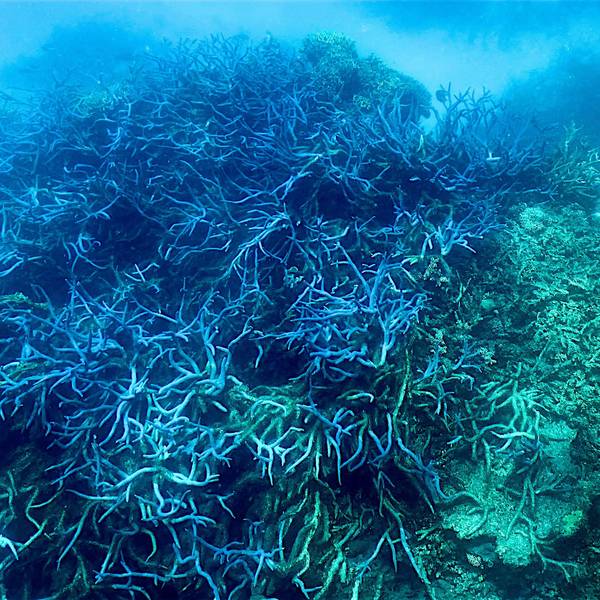
As climate change continues to threaten ocean ecosystems and the communities that rely on them, the U.S. National Oceanic and Atmospheric Administration (NOAA) this week outlined a new "Climate Science Strategy" to increase fisheries' resilience to global warming.
"NOAA just announced that for the globe, the month of July--and actually, the entire year so far--was the warmest ever recorded, driven largely by record warm ocean temperatures," said Eileen Sobeck, assistant NOAA administrator for fisheries. "Those warmer waters--along with rising seas, coastal droughts, and ocean acidification--are already putting people, businesses, and communities at risk."
The strategy aims to increase "the production, delivery, and use of climate-related information" to mitigate global warming's impact on marine and coastal industries.
That impact is already being seen, noted Richard Merrick, NOAA Fisheries director of scientific programs and chief science advisor. "We are already seeing marine animals change where they live to deal with changing climate," he said. "We're even seeing population numbers of some species drop."
As Lisa Suatoni, a senior scientist in the oceans program at the Natural Resources Defense Council, noted in a blog post about the strategy on Thursday, "climate change and ocean acidification have already changed the contours of the fishing industry in our country."
She wrote: "American lobster fisheries in Connecticut and New York have nearly vanished due to warming waters and increased disease incidence. Some scientists believe that rising temperatures have thwarted the recovery of the long-overfished Atlantic cod in the Northeast. Rising acidity along the coast of the Pacific Northwest has caused massive die-offs of oyster larvae. As fish move northward and into deeper waters as a result of rising water temperatures, historic fisheries will fade and new ones will arise in coastal fishing communities around the United States."
NOAA's move comes as the U.S. government makes public its desire for the United Nations Intergovernmental Panel on Climate Change (IPCC) to devote more research to how climate change affects the world's oceans. According to the Guardian on Thursday, the U.S. will raise the issue at United Nations climate talks in Paris later this year.
"In my judgment, more attention needs to be paid to the effects of climate change on ocean areas of the world," David Balton, deputy assistant secretary for oceans and fisheries at the State Department, told the Guardian. "We need to keep pushing up until the Paris conference and beyond. Ultimately, we need to change how we live to keep the planet in the safe zone."
Climate change is not the only human-caused threat facing the world's oceans.
The Scotland Herald reported Wednesday on a study that found up to 80 tons of microplastic waste entering the sea every year from using these cosmetics in the UK alone.
Meanwhile, a fleet of about 30 vessels connected with the Netherlands-based Ocean Cleanup returned from a month-long expedition on Sunday. They sampled the concentration of plastic in the Pacific in preparation for a large-scale cleanup of the Great Pacific Garbage Patch, scheduled to begin by 2020. What they found was troubling.
"I've studied plastic in all the world's oceans but never seen any area as polluted as the Great Pacific Garbage Patch," said Dr. Julia Reisser, lead oceanographer at The Ocean Cleanup. "With every trawl we completed, thousands of miles from land, we just found lots and lots of plastic."
Dear Common Dreams reader, It’s been nearly 30 years since I co-founded Common Dreams with my late wife, Lina Newhouser. We had the radical notion that journalism should serve the public good, not corporate profits. It was clear to us from the outset what it would take to build such a project. No paid advertisements. No corporate sponsors. No millionaire publisher telling us what to think or do. Many people said we wouldn't last a year, but we proved those doubters wrong. Together with a tremendous team of journalists and dedicated staff, we built an independent media outlet free from the constraints of profits and corporate control. Our mission has always been simple: To inform. To inspire. To ignite change for the common good. Building Common Dreams was not easy. Our survival was never guaranteed. When you take on the most powerful forces—Wall Street greed, fossil fuel industry destruction, Big Tech lobbyists, and uber-rich oligarchs who have spent billions upon billions rigging the economy and democracy in their favor—the only bulwark you have is supporters who believe in your work. But here’s the urgent message from me today. It's never been this bad out there. And it's never been this hard to keep us going. At the very moment Common Dreams is most needed, the threats we face are intensifying. We need your support now more than ever. We don't accept corporate advertising and never will. We don't have a paywall because we don't think people should be blocked from critical news based on their ability to pay. Everything we do is funded by the donations of readers like you. When everyone does the little they can afford, we are strong. But if that support retreats or dries up, so do we. Will you donate now to make sure Common Dreams not only survives but thrives? —Craig Brown, Co-founder |
As climate change continues to threaten ocean ecosystems and the communities that rely on them, the U.S. National Oceanic and Atmospheric Administration (NOAA) this week outlined a new "Climate Science Strategy" to increase fisheries' resilience to global warming.
"NOAA just announced that for the globe, the month of July--and actually, the entire year so far--was the warmest ever recorded, driven largely by record warm ocean temperatures," said Eileen Sobeck, assistant NOAA administrator for fisheries. "Those warmer waters--along with rising seas, coastal droughts, and ocean acidification--are already putting people, businesses, and communities at risk."
The strategy aims to increase "the production, delivery, and use of climate-related information" to mitigate global warming's impact on marine and coastal industries.
That impact is already being seen, noted Richard Merrick, NOAA Fisheries director of scientific programs and chief science advisor. "We are already seeing marine animals change where they live to deal with changing climate," he said. "We're even seeing population numbers of some species drop."
As Lisa Suatoni, a senior scientist in the oceans program at the Natural Resources Defense Council, noted in a blog post about the strategy on Thursday, "climate change and ocean acidification have already changed the contours of the fishing industry in our country."
She wrote: "American lobster fisheries in Connecticut and New York have nearly vanished due to warming waters and increased disease incidence. Some scientists believe that rising temperatures have thwarted the recovery of the long-overfished Atlantic cod in the Northeast. Rising acidity along the coast of the Pacific Northwest has caused massive die-offs of oyster larvae. As fish move northward and into deeper waters as a result of rising water temperatures, historic fisheries will fade and new ones will arise in coastal fishing communities around the United States."
NOAA's move comes as the U.S. government makes public its desire for the United Nations Intergovernmental Panel on Climate Change (IPCC) to devote more research to how climate change affects the world's oceans. According to the Guardian on Thursday, the U.S. will raise the issue at United Nations climate talks in Paris later this year.
"In my judgment, more attention needs to be paid to the effects of climate change on ocean areas of the world," David Balton, deputy assistant secretary for oceans and fisheries at the State Department, told the Guardian. "We need to keep pushing up until the Paris conference and beyond. Ultimately, we need to change how we live to keep the planet in the safe zone."
Climate change is not the only human-caused threat facing the world's oceans.
The Scotland Herald reported Wednesday on a study that found up to 80 tons of microplastic waste entering the sea every year from using these cosmetics in the UK alone.
Meanwhile, a fleet of about 30 vessels connected with the Netherlands-based Ocean Cleanup returned from a month-long expedition on Sunday. They sampled the concentration of plastic in the Pacific in preparation for a large-scale cleanup of the Great Pacific Garbage Patch, scheduled to begin by 2020. What they found was troubling.
"I've studied plastic in all the world's oceans but never seen any area as polluted as the Great Pacific Garbage Patch," said Dr. Julia Reisser, lead oceanographer at The Ocean Cleanup. "With every trawl we completed, thousands of miles from land, we just found lots and lots of plastic."
As climate change continues to threaten ocean ecosystems and the communities that rely on them, the U.S. National Oceanic and Atmospheric Administration (NOAA) this week outlined a new "Climate Science Strategy" to increase fisheries' resilience to global warming.
"NOAA just announced that for the globe, the month of July--and actually, the entire year so far--was the warmest ever recorded, driven largely by record warm ocean temperatures," said Eileen Sobeck, assistant NOAA administrator for fisheries. "Those warmer waters--along with rising seas, coastal droughts, and ocean acidification--are already putting people, businesses, and communities at risk."
The strategy aims to increase "the production, delivery, and use of climate-related information" to mitigate global warming's impact on marine and coastal industries.
That impact is already being seen, noted Richard Merrick, NOAA Fisheries director of scientific programs and chief science advisor. "We are already seeing marine animals change where they live to deal with changing climate," he said. "We're even seeing population numbers of some species drop."
As Lisa Suatoni, a senior scientist in the oceans program at the Natural Resources Defense Council, noted in a blog post about the strategy on Thursday, "climate change and ocean acidification have already changed the contours of the fishing industry in our country."
She wrote: "American lobster fisheries in Connecticut and New York have nearly vanished due to warming waters and increased disease incidence. Some scientists believe that rising temperatures have thwarted the recovery of the long-overfished Atlantic cod in the Northeast. Rising acidity along the coast of the Pacific Northwest has caused massive die-offs of oyster larvae. As fish move northward and into deeper waters as a result of rising water temperatures, historic fisheries will fade and new ones will arise in coastal fishing communities around the United States."
NOAA's move comes as the U.S. government makes public its desire for the United Nations Intergovernmental Panel on Climate Change (IPCC) to devote more research to how climate change affects the world's oceans. According to the Guardian on Thursday, the U.S. will raise the issue at United Nations climate talks in Paris later this year.
"In my judgment, more attention needs to be paid to the effects of climate change on ocean areas of the world," David Balton, deputy assistant secretary for oceans and fisheries at the State Department, told the Guardian. "We need to keep pushing up until the Paris conference and beyond. Ultimately, we need to change how we live to keep the planet in the safe zone."
Climate change is not the only human-caused threat facing the world's oceans.
The Scotland Herald reported Wednesday on a study that found up to 80 tons of microplastic waste entering the sea every year from using these cosmetics in the UK alone.
Meanwhile, a fleet of about 30 vessels connected with the Netherlands-based Ocean Cleanup returned from a month-long expedition on Sunday. They sampled the concentration of plastic in the Pacific in preparation for a large-scale cleanup of the Great Pacific Garbage Patch, scheduled to begin by 2020. What they found was troubling.
"I've studied plastic in all the world's oceans but never seen any area as polluted as the Great Pacific Garbage Patch," said Dr. Julia Reisser, lead oceanographer at The Ocean Cleanup. "With every trawl we completed, thousands of miles from land, we just found lots and lots of plastic."