SUBSCRIBE TO OUR FREE NEWSLETTER
Daily news & progressive opinion—funded by the people, not the corporations—delivered straight to your inbox.
5
#000000
#FFFFFF
To donate by check, phone, or other method, see our More Ways to Give page.


Daily news & progressive opinion—funded by the people, not the corporations—delivered straight to your inbox.
The Obama administration is continuing its efforts to block from the public eye video evidence of force feedings of hunger striking men at Guantanamo.
The videotapes in question, currently classified as secret, show forcible cell removals and force feedings of Abu Wa'el Dhiab, a 43-year-old Syrian who has been held at the offshore prison since 2002 and cleared for release since 2009.
An attorney for Dhiab has called the hunger strikes he's undertaken to protest his treatment at Guantanamo "a cry of humanity from a person who feels he has no choice left."
Federal Judge Gladys Kessler in October ordered the U.S. government to publicly release redacted versions of the videos, but classified they remain.
The UK Independent reported this week:
The ruling in October to release the tapes was the first of its kind and followed sustained pressure from more than 15 media organisations who argued that the videos should be made public under the First Amendment of the US Constitution.
But the disclosure was halted at the eleventh-hour after the Justice Department argued releasing the tapes during an appeal period would deprive the government of any meaningful opportunity to contest public release of classified information.
The Justice Department this week notified a federal appeals court that it would be seeking to overturn Kessler's decision.
As Carol Rosenberg reported Wednesday for the Miami Herald, the Justice Department's new legal effort was accompanied a declaration from a Pentagon official who insists on the one hand the videos show "adherence to standard operating procedures and humane treatment," but at the same time insists they cannot be shown because they would spark anti-American backlash and jeopardize national security.
In his statement, U.S. Navy Rear Adm. Sinclair Harris, Vice Director of Operations at the Department of Defense Joint Staff, states that "official release of the [Forcible Cell Extraction] videos, in whole or in part, could reasonably be expected to seriously harm national security," including by harming security conditions in Afghanistan and Iraq and by aiding in recruitment efforts by extremists.
Harris cited as an example the infamous 2012 video which showed U.S. Marines urinating on corpses in Afghanistan which he stated "was used as a recruitment tool for the Taliban."
Cori Crider, a director at UK-based charity Reprieve and attorney for Dhiab, said that the administration's continued bids to block release of the videos exposes as false Obama's claims of openness.
"President Obama promised us the most transparent administration in history--at this point is that promise anything other than a joke?" Crider said in a media statement issued Tuesday. "You have to ask who actually watched this footage when making the decision to hide this evidence from the American people. It boggles the mind that the same President who makes speeches asking whether force-feeding is 'who we are' can ask a Court, with a straight face, to hide the reality of force-feeding from the press and public," she continued.
"The tapes are a national scandal--but the best approach is to rip off the Band-Aid, confess the mistake, and fix the abuse going on at the base. Obama made the wrong call, but Reprieve will keep fighting to get the truth in these videotapes out. We believe Americans can handle the truth. They have the right to see the tapes," Crider stated.
The United Nations Committee Against Torture last month said that the force feeding of hunger striking prisoners was a violation of the UN Convention Against Torture, and the heads of the Congressional Progressive Caucus (CPC) also recently criticized the concealment of the tapes, stating in a letter to President Obama that "ongoing secrecy is untenable."

Dear Common Dreams reader, It’s been nearly 30 years since I co-founded Common Dreams with my late wife, Lina Newhouser. We had the radical notion that journalism should serve the public good, not corporate profits. It was clear to us from the outset what it would take to build such a project. No paid advertisements. No corporate sponsors. No millionaire publisher telling us what to think or do. Many people said we wouldn't last a year, but we proved those doubters wrong. Together with a tremendous team of journalists and dedicated staff, we built an independent media outlet free from the constraints of profits and corporate control. Our mission has always been simple: To inform. To inspire. To ignite change for the common good. Building Common Dreams was not easy. Our survival was never guaranteed. When you take on the most powerful forces—Wall Street greed, fossil fuel industry destruction, Big Tech lobbyists, and uber-rich oligarchs who have spent billions upon billions rigging the economy and democracy in their favor—the only bulwark you have is supporters who believe in your work. But here’s the urgent message from me today. It's never been this bad out there. And it's never been this hard to keep us going. At the very moment Common Dreams is most needed, the threats we face are intensifying. We need your support now more than ever. We don't accept corporate advertising and never will. We don't have a paywall because we don't think people should be blocked from critical news based on their ability to pay. Everything we do is funded by the donations of readers like you. When everyone does the little they can afford, we are strong. But if that support retreats or dries up, so do we. Will you donate now to make sure Common Dreams not only survives but thrives? —Craig Brown, Co-founder |
The Obama administration is continuing its efforts to block from the public eye video evidence of force feedings of hunger striking men at Guantanamo.
The videotapes in question, currently classified as secret, show forcible cell removals and force feedings of Abu Wa'el Dhiab, a 43-year-old Syrian who has been held at the offshore prison since 2002 and cleared for release since 2009.
An attorney for Dhiab has called the hunger strikes he's undertaken to protest his treatment at Guantanamo "a cry of humanity from a person who feels he has no choice left."
Federal Judge Gladys Kessler in October ordered the U.S. government to publicly release redacted versions of the videos, but classified they remain.
The UK Independent reported this week:
The ruling in October to release the tapes was the first of its kind and followed sustained pressure from more than 15 media organisations who argued that the videos should be made public under the First Amendment of the US Constitution.
But the disclosure was halted at the eleventh-hour after the Justice Department argued releasing the tapes during an appeal period would deprive the government of any meaningful opportunity to contest public release of classified information.
The Justice Department this week notified a federal appeals court that it would be seeking to overturn Kessler's decision.
As Carol Rosenberg reported Wednesday for the Miami Herald, the Justice Department's new legal effort was accompanied a declaration from a Pentagon official who insists on the one hand the videos show "adherence to standard operating procedures and humane treatment," but at the same time insists they cannot be shown because they would spark anti-American backlash and jeopardize national security.
In his statement, U.S. Navy Rear Adm. Sinclair Harris, Vice Director of Operations at the Department of Defense Joint Staff, states that "official release of the [Forcible Cell Extraction] videos, in whole or in part, could reasonably be expected to seriously harm national security," including by harming security conditions in Afghanistan and Iraq and by aiding in recruitment efforts by extremists.
Harris cited as an example the infamous 2012 video which showed U.S. Marines urinating on corpses in Afghanistan which he stated "was used as a recruitment tool for the Taliban."
Cori Crider, a director at UK-based charity Reprieve and attorney for Dhiab, said that the administration's continued bids to block release of the videos exposes as false Obama's claims of openness.
"President Obama promised us the most transparent administration in history--at this point is that promise anything other than a joke?" Crider said in a media statement issued Tuesday. "You have to ask who actually watched this footage when making the decision to hide this evidence from the American people. It boggles the mind that the same President who makes speeches asking whether force-feeding is 'who we are' can ask a Court, with a straight face, to hide the reality of force-feeding from the press and public," she continued.
"The tapes are a national scandal--but the best approach is to rip off the Band-Aid, confess the mistake, and fix the abuse going on at the base. Obama made the wrong call, but Reprieve will keep fighting to get the truth in these videotapes out. We believe Americans can handle the truth. They have the right to see the tapes," Crider stated.
The United Nations Committee Against Torture last month said that the force feeding of hunger striking prisoners was a violation of the UN Convention Against Torture, and the heads of the Congressional Progressive Caucus (CPC) also recently criticized the concealment of the tapes, stating in a letter to President Obama that "ongoing secrecy is untenable."
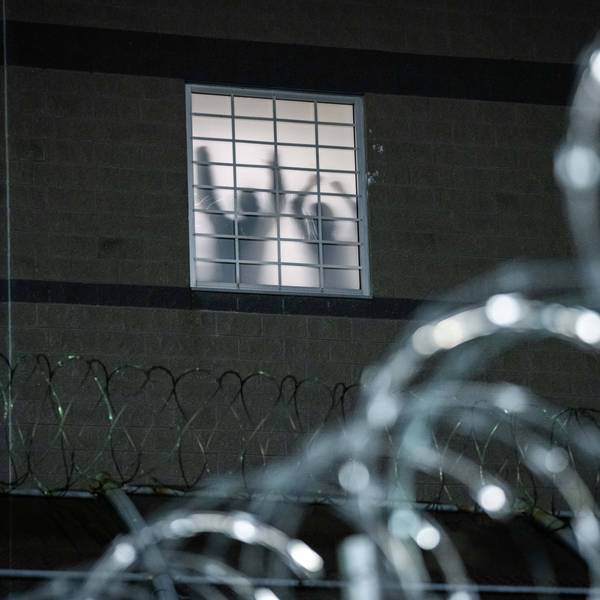
The Obama administration is continuing its efforts to block from the public eye video evidence of force feedings of hunger striking men at Guantanamo.
The videotapes in question, currently classified as secret, show forcible cell removals and force feedings of Abu Wa'el Dhiab, a 43-year-old Syrian who has been held at the offshore prison since 2002 and cleared for release since 2009.
An attorney for Dhiab has called the hunger strikes he's undertaken to protest his treatment at Guantanamo "a cry of humanity from a person who feels he has no choice left."
Federal Judge Gladys Kessler in October ordered the U.S. government to publicly release redacted versions of the videos, but classified they remain.
The UK Independent reported this week:
The ruling in October to release the tapes was the first of its kind and followed sustained pressure from more than 15 media organisations who argued that the videos should be made public under the First Amendment of the US Constitution.
But the disclosure was halted at the eleventh-hour after the Justice Department argued releasing the tapes during an appeal period would deprive the government of any meaningful opportunity to contest public release of classified information.
The Justice Department this week notified a federal appeals court that it would be seeking to overturn Kessler's decision.
As Carol Rosenberg reported Wednesday for the Miami Herald, the Justice Department's new legal effort was accompanied a declaration from a Pentagon official who insists on the one hand the videos show "adherence to standard operating procedures and humane treatment," but at the same time insists they cannot be shown because they would spark anti-American backlash and jeopardize national security.
In his statement, U.S. Navy Rear Adm. Sinclair Harris, Vice Director of Operations at the Department of Defense Joint Staff, states that "official release of the [Forcible Cell Extraction] videos, in whole or in part, could reasonably be expected to seriously harm national security," including by harming security conditions in Afghanistan and Iraq and by aiding in recruitment efforts by extremists.
Harris cited as an example the infamous 2012 video which showed U.S. Marines urinating on corpses in Afghanistan which he stated "was used as a recruitment tool for the Taliban."
Cori Crider, a director at UK-based charity Reprieve and attorney for Dhiab, said that the administration's continued bids to block release of the videos exposes as false Obama's claims of openness.
"President Obama promised us the most transparent administration in history--at this point is that promise anything other than a joke?" Crider said in a media statement issued Tuesday. "You have to ask who actually watched this footage when making the decision to hide this evidence from the American people. It boggles the mind that the same President who makes speeches asking whether force-feeding is 'who we are' can ask a Court, with a straight face, to hide the reality of force-feeding from the press and public," she continued.
"The tapes are a national scandal--but the best approach is to rip off the Band-Aid, confess the mistake, and fix the abuse going on at the base. Obama made the wrong call, but Reprieve will keep fighting to get the truth in these videotapes out. We believe Americans can handle the truth. They have the right to see the tapes," Crider stated.
The United Nations Committee Against Torture last month said that the force feeding of hunger striking prisoners was a violation of the UN Convention Against Torture, and the heads of the Congressional Progressive Caucus (CPC) also recently criticized the concealment of the tapes, stating in a letter to President Obama that "ongoing secrecy is untenable."