SUBSCRIBE TO OUR FREE NEWSLETTER
Daily news & progressive opinion—funded by the people, not the corporations—delivered straight to your inbox.
5
#000000
#FFFFFF
To donate by check, phone, or other method, see our More Ways to Give page.
Daily news & progressive opinion—funded by the people, not the corporations—delivered straight to your inbox.
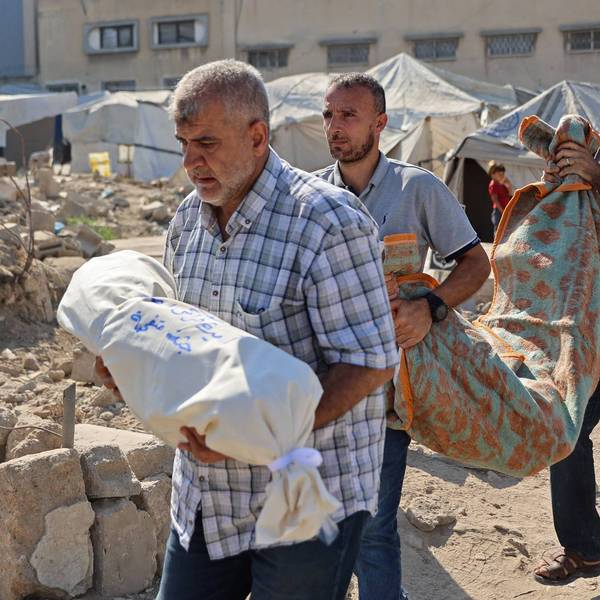
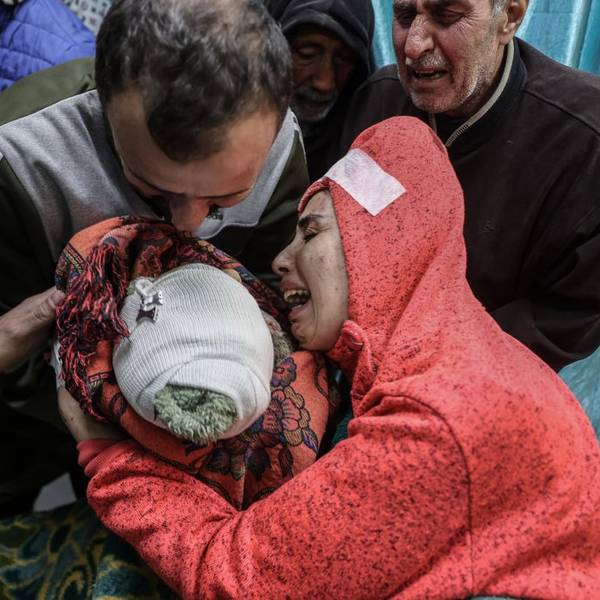
A 72-hour cease fire has commenced between Palestinian factions and Israel on Tuesday and IDF ground forces have reportedly withdrawn from the Gaza Strip after a nearly month-long bombardment and military offensive that left nearly 1,900 Palestinians dead-- including huge numbers of civilians and hundreds of children--and close to 10,000 people injured.
Sixty-four IDF soldiers and three civilians were killed in Israel during more than three weeks of fighting began that began on July 8.
The truce was reached in Cairo late on Monday, with both Israeli and Hamas representatives saying they had agreed to both the language and the terms.
Indications from Israeli officials were that the accomplishment of their mission--and not outside pressure to end the assault on Gaza--was the primary reason for agreeing to the deal and the withdrawal of troops.
On Tuesday morning the IDF tweeted: "Mission accomplished: We have destroyed Hamas' tunnels leading from Gaza into Israel. All of Israel is now safer."
Lt. Col. Peter Lerner, an IDF spokesman, said Israel had destroyed dozens of underground tunnels and thousands of rockets belonging to Hamas and Palestinian Islamic Jihad.
"Overnight, we completed the destruction of 32 tunnels in the Gaza Strip," Lerner said, fulfilling promises by Israeli government officials that the attack on Gaza would not stop until all known tunnels were destroyed. Lerner said that troops would remain on standby for the duration of the cease fire and that IDF would "maintain defensive positions from the air, the coast and the ground outside the Gaza Strip."
With the temporary truce now activated, delegations in Cairo are expected to discuss the prospects of a longer-term agreement, though no one expects that to be easily achieved. As the Associated Press reports:
Gaps between the Israeli and Palestinian positions are wide, and it's not clear how much can be achieved once talks get under way.
The situation on the ground remains volatile, and any cease-fire violation could quickly derail the Cairo talks.
Any reconstruction plan would require a lifting of the Israeli-Egyptian border closure of Gaza, imposed after the violent Hamas takeover of the territory in 2007. The Palestinian delegation has told Egypt an end to the closure is key to any solution for Gaza.
Amid hopes that the current cease fire will hold, relief agencies and humanitarian organizations have stressed that the unprecedented destruction in Gaza will not be easy to repair and that the humanitarian crisis for Gazans is far from over.
Nishant Pandey, head of Oxfam in the Occupied Palestinian Territory and Israel, described the level of destruction as "outrageous" and said it was "much worse than anything we have seen in previous military operations" by Israel.
Not only were thousands of homes and scores of neighborhoods destroyed, but a number of hospitals, economic centers, and the Gaza Strip's main power plant were targeted and damaged during the operation, elevating a pre-existing water and economic crisis for the people living there.
The New York Times reported:
The damage to Gaza's infrastructure from the current conflict is more severe than the destruction caused by either of the last two Gaza wars, according to the United Nations Relief and Works Agency (UNRWA) and other organizations with staff on the ground, like Oxfam and Human Rights Watch. The fighting has displaced about a fourth of Gaza's population. Nearly 60,000 people have lost their homes, and the number of people taking shelter in UNRWA schools is nearly five times as many as in 2009.
According to the Palestinian Center for Human Rights, "the Gaza Strip is a disaster area and there is an urgent need to treat the disastrous humanitarian situation resulting from deliberate Israeli attacks on the civilian infrastructure, including electricity, water, hospitals, shelters and houses, forcible displacement of more than 500,000 civilians and systematic and mass destruction of civilian communities."
Writing for the Electronic Intifada, PCHR's director Raji Sourani, describes why a cease fire simply isn't enough for the people of Gaza. He argues that in addition to ending the economic blockade and military siege, Gazans are entitled to justice, the rule of law, and to be treated fairly as human beings with equal rights to others in the world, writing:
We want to be treated as equals. We want to have our rights respected and protected. We ask that international law be applied, equally, to Israel and Palestine, to Israelis and Palestinians. The rule of international law must be adhered to, and all those responsible for its violations must be held to account.
We ask that suspected war crimes be investigated and those responsible prosecuted. Is this unreasonable?
We want an end to the closure. The illegality of Israel's closure policy is not in doubt. In a rare public statement the International Committee of the Red Cross explicitly stated that Israel's closure policy constitutes collective punishment in violation of international law. The consequences of the policy are evident in the reality of the Gaza Strip.
We ask that the closure be lifted. We want the opportunity to live a life in dignity. Is this unreasonable?
These are not political demands. They are a demand to be treated as human.
A ceasefire is not enough. It will not end the suffering. It will only move us from the horror of death by bombardment to the horror of death by slow strangulation.
We cannot go back to being prisoners in a cage that Israel rattles when it chooses with brutal destructive offensives.
Dear Common Dreams reader, It’s been nearly 30 years since I co-founded Common Dreams with my late wife, Lina Newhouser. We had the radical notion that journalism should serve the public good, not corporate profits. It was clear to us from the outset what it would take to build such a project. No paid advertisements. No corporate sponsors. No millionaire publisher telling us what to think or do. Many people said we wouldn't last a year, but we proved those doubters wrong. Together with a tremendous team of journalists and dedicated staff, we built an independent media outlet free from the constraints of profits and corporate control. Our mission has always been simple: To inform. To inspire. To ignite change for the common good. Building Common Dreams was not easy. Our survival was never guaranteed. When you take on the most powerful forces—Wall Street greed, fossil fuel industry destruction, Big Tech lobbyists, and uber-rich oligarchs who have spent billions upon billions rigging the economy and democracy in their favor—the only bulwark you have is supporters who believe in your work. But here’s the urgent message from me today. It's never been this bad out there. And it's never been this hard to keep us going. At the very moment Common Dreams is most needed, the threats we face are intensifying. We need your support now more than ever. We don't accept corporate advertising and never will. We don't have a paywall because we don't think people should be blocked from critical news based on their ability to pay. Everything we do is funded by the donations of readers like you. When everyone does the little they can afford, we are strong. But if that support retreats or dries up, so do we. Will you donate now to make sure Common Dreams not only survives but thrives? —Craig Brown, Co-founder |
A 72-hour cease fire has commenced between Palestinian factions and Israel on Tuesday and IDF ground forces have reportedly withdrawn from the Gaza Strip after a nearly month-long bombardment and military offensive that left nearly 1,900 Palestinians dead-- including huge numbers of civilians and hundreds of children--and close to 10,000 people injured.
Sixty-four IDF soldiers and three civilians were killed in Israel during more than three weeks of fighting began that began on July 8.
The truce was reached in Cairo late on Monday, with both Israeli and Hamas representatives saying they had agreed to both the language and the terms.
Indications from Israeli officials were that the accomplishment of their mission--and not outside pressure to end the assault on Gaza--was the primary reason for agreeing to the deal and the withdrawal of troops.
On Tuesday morning the IDF tweeted: "Mission accomplished: We have destroyed Hamas' tunnels leading from Gaza into Israel. All of Israel is now safer."
Lt. Col. Peter Lerner, an IDF spokesman, said Israel had destroyed dozens of underground tunnels and thousands of rockets belonging to Hamas and Palestinian Islamic Jihad.
"Overnight, we completed the destruction of 32 tunnels in the Gaza Strip," Lerner said, fulfilling promises by Israeli government officials that the attack on Gaza would not stop until all known tunnels were destroyed. Lerner said that troops would remain on standby for the duration of the cease fire and that IDF would "maintain defensive positions from the air, the coast and the ground outside the Gaza Strip."
With the temporary truce now activated, delegations in Cairo are expected to discuss the prospects of a longer-term agreement, though no one expects that to be easily achieved. As the Associated Press reports:
Gaps between the Israeli and Palestinian positions are wide, and it's not clear how much can be achieved once talks get under way.
The situation on the ground remains volatile, and any cease-fire violation could quickly derail the Cairo talks.
Any reconstruction plan would require a lifting of the Israeli-Egyptian border closure of Gaza, imposed after the violent Hamas takeover of the territory in 2007. The Palestinian delegation has told Egypt an end to the closure is key to any solution for Gaza.
Amid hopes that the current cease fire will hold, relief agencies and humanitarian organizations have stressed that the unprecedented destruction in Gaza will not be easy to repair and that the humanitarian crisis for Gazans is far from over.
Nishant Pandey, head of Oxfam in the Occupied Palestinian Territory and Israel, described the level of destruction as "outrageous" and said it was "much worse than anything we have seen in previous military operations" by Israel.
Not only were thousands of homes and scores of neighborhoods destroyed, but a number of hospitals, economic centers, and the Gaza Strip's main power plant were targeted and damaged during the operation, elevating a pre-existing water and economic crisis for the people living there.
The New York Times reported:
The damage to Gaza's infrastructure from the current conflict is more severe than the destruction caused by either of the last two Gaza wars, according to the United Nations Relief and Works Agency (UNRWA) and other organizations with staff on the ground, like Oxfam and Human Rights Watch. The fighting has displaced about a fourth of Gaza's population. Nearly 60,000 people have lost their homes, and the number of people taking shelter in UNRWA schools is nearly five times as many as in 2009.
According to the Palestinian Center for Human Rights, "the Gaza Strip is a disaster area and there is an urgent need to treat the disastrous humanitarian situation resulting from deliberate Israeli attacks on the civilian infrastructure, including electricity, water, hospitals, shelters and houses, forcible displacement of more than 500,000 civilians and systematic and mass destruction of civilian communities."
Writing for the Electronic Intifada, PCHR's director Raji Sourani, describes why a cease fire simply isn't enough for the people of Gaza. He argues that in addition to ending the economic blockade and military siege, Gazans are entitled to justice, the rule of law, and to be treated fairly as human beings with equal rights to others in the world, writing:
We want to be treated as equals. We want to have our rights respected and protected. We ask that international law be applied, equally, to Israel and Palestine, to Israelis and Palestinians. The rule of international law must be adhered to, and all those responsible for its violations must be held to account.
We ask that suspected war crimes be investigated and those responsible prosecuted. Is this unreasonable?
We want an end to the closure. The illegality of Israel's closure policy is not in doubt. In a rare public statement the International Committee of the Red Cross explicitly stated that Israel's closure policy constitutes collective punishment in violation of international law. The consequences of the policy are evident in the reality of the Gaza Strip.
We ask that the closure be lifted. We want the opportunity to live a life in dignity. Is this unreasonable?
These are not political demands. They are a demand to be treated as human.
A ceasefire is not enough. It will not end the suffering. It will only move us from the horror of death by bombardment to the horror of death by slow strangulation.
We cannot go back to being prisoners in a cage that Israel rattles when it chooses with brutal destructive offensives.
A 72-hour cease fire has commenced between Palestinian factions and Israel on Tuesday and IDF ground forces have reportedly withdrawn from the Gaza Strip after a nearly month-long bombardment and military offensive that left nearly 1,900 Palestinians dead-- including huge numbers of civilians and hundreds of children--and close to 10,000 people injured.
Sixty-four IDF soldiers and three civilians were killed in Israel during more than three weeks of fighting began that began on July 8.
The truce was reached in Cairo late on Monday, with both Israeli and Hamas representatives saying they had agreed to both the language and the terms.
Indications from Israeli officials were that the accomplishment of their mission--and not outside pressure to end the assault on Gaza--was the primary reason for agreeing to the deal and the withdrawal of troops.
On Tuesday morning the IDF tweeted: "Mission accomplished: We have destroyed Hamas' tunnels leading from Gaza into Israel. All of Israel is now safer."
Lt. Col. Peter Lerner, an IDF spokesman, said Israel had destroyed dozens of underground tunnels and thousands of rockets belonging to Hamas and Palestinian Islamic Jihad.
"Overnight, we completed the destruction of 32 tunnels in the Gaza Strip," Lerner said, fulfilling promises by Israeli government officials that the attack on Gaza would not stop until all known tunnels were destroyed. Lerner said that troops would remain on standby for the duration of the cease fire and that IDF would "maintain defensive positions from the air, the coast and the ground outside the Gaza Strip."
With the temporary truce now activated, delegations in Cairo are expected to discuss the prospects of a longer-term agreement, though no one expects that to be easily achieved. As the Associated Press reports:
Gaps between the Israeli and Palestinian positions are wide, and it's not clear how much can be achieved once talks get under way.
The situation on the ground remains volatile, and any cease-fire violation could quickly derail the Cairo talks.
Any reconstruction plan would require a lifting of the Israeli-Egyptian border closure of Gaza, imposed after the violent Hamas takeover of the territory in 2007. The Palestinian delegation has told Egypt an end to the closure is key to any solution for Gaza.
Amid hopes that the current cease fire will hold, relief agencies and humanitarian organizations have stressed that the unprecedented destruction in Gaza will not be easy to repair and that the humanitarian crisis for Gazans is far from over.
Nishant Pandey, head of Oxfam in the Occupied Palestinian Territory and Israel, described the level of destruction as "outrageous" and said it was "much worse than anything we have seen in previous military operations" by Israel.
Not only were thousands of homes and scores of neighborhoods destroyed, but a number of hospitals, economic centers, and the Gaza Strip's main power plant were targeted and damaged during the operation, elevating a pre-existing water and economic crisis for the people living there.
The New York Times reported:
The damage to Gaza's infrastructure from the current conflict is more severe than the destruction caused by either of the last two Gaza wars, according to the United Nations Relief and Works Agency (UNRWA) and other organizations with staff on the ground, like Oxfam and Human Rights Watch. The fighting has displaced about a fourth of Gaza's population. Nearly 60,000 people have lost their homes, and the number of people taking shelter in UNRWA schools is nearly five times as many as in 2009.
According to the Palestinian Center for Human Rights, "the Gaza Strip is a disaster area and there is an urgent need to treat the disastrous humanitarian situation resulting from deliberate Israeli attacks on the civilian infrastructure, including electricity, water, hospitals, shelters and houses, forcible displacement of more than 500,000 civilians and systematic and mass destruction of civilian communities."
Writing for the Electronic Intifada, PCHR's director Raji Sourani, describes why a cease fire simply isn't enough for the people of Gaza. He argues that in addition to ending the economic blockade and military siege, Gazans are entitled to justice, the rule of law, and to be treated fairly as human beings with equal rights to others in the world, writing:
We want to be treated as equals. We want to have our rights respected and protected. We ask that international law be applied, equally, to Israel and Palestine, to Israelis and Palestinians. The rule of international law must be adhered to, and all those responsible for its violations must be held to account.
We ask that suspected war crimes be investigated and those responsible prosecuted. Is this unreasonable?
We want an end to the closure. The illegality of Israel's closure policy is not in doubt. In a rare public statement the International Committee of the Red Cross explicitly stated that Israel's closure policy constitutes collective punishment in violation of international law. The consequences of the policy are evident in the reality of the Gaza Strip.
We ask that the closure be lifted. We want the opportunity to live a life in dignity. Is this unreasonable?
These are not political demands. They are a demand to be treated as human.
A ceasefire is not enough. It will not end the suffering. It will only move us from the horror of death by bombardment to the horror of death by slow strangulation.
We cannot go back to being prisoners in a cage that Israel rattles when it chooses with brutal destructive offensives.