SUBSCRIBE TO OUR FREE NEWSLETTER
Daily news & progressive opinion—funded by the people, not the corporations—delivered straight to your inbox.
5
#000000
#FFFFFF
To donate by check, phone, or other method, see our More Ways to Give page.
For the first time since U.S. troops were pulled out of Somalia following the "Black Hawk Down" incident in 1993, the U.S. military has quietly sent "a small number of trainers and advisers..to the war-ravaged country," The Washington Post reports.
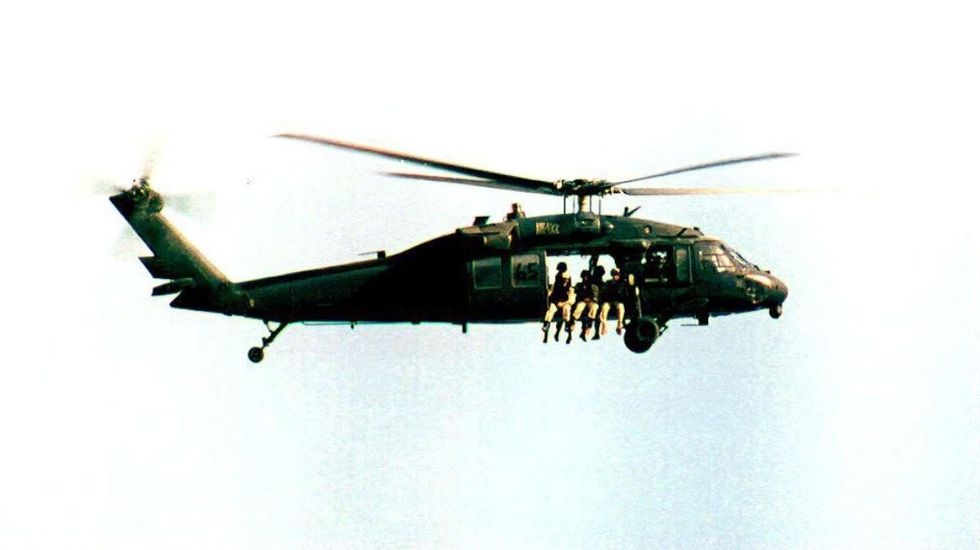
According to the newspaper, a group of U.S. military personnel has been in the Somali capital of Mogadishu since October, with orders to "advise and coordinate operations with African troops fighting to wrest control of the country from the al-Shabab militia."
Army Col. Thomas Davis, a spokesman for the Africa Command, confirmed the deployment on Friday, saying the military cell "is now fully operational."
A U.S. presence has not been absent from the country by any means, as the "CIA has quietly operated a base in Somalia for years and finances Somali security forces, but largely keeps its activities there under wraps," the Washington Post notes. And the U.S. has conducted numerous drone strikes in the country in the last decade.
However, the move to place active military personnel there marks a new shift in the U.S.'s approach in the region, The Washington Post reports:
The previously undisclosed deployment -- of fewer than two dozen troops -- reverses two decades of U.S. policy that effectively prohibited military "boots on the ground" in Somalia. Even as Somali pirates and terrorists emerged as the top security threat in the region, successive presidential administrations and the Pentagon shied away from sending troops there for fear of a repeat of the Black Hawk Down debacle.
In recent years, the Obama administration has slowly and cautiously become more directly involved in Somalia.[...]
U.S. intentions to become more involved militarily became apparent last summer, when Gen. David Rodriguez, the commander of U.S. forces in Africa, visited Mogadishu.
_______________________
For the first time since U.S. troops were pulled out of Somalia following the "Black Hawk Down" incident in 1993, the U.S. military has quietly sent "a small number of trainers and advisers..to the war-ravaged country," The Washington Post reports.
According to the newspaper, a group of U.S. military personnel has been in the Somali capital of Mogadishu since October, with orders to "advise and coordinate operations with African troops fighting to wrest control of the country from the al-Shabab militia."
Army Col. Thomas Davis, a spokesman for the Africa Command, confirmed the deployment on Friday, saying the military cell "is now fully operational."
A U.S. presence has not been absent from the country by any means, as the "CIA has quietly operated a base in Somalia for years and finances Somali security forces, but largely keeps its activities there under wraps," the Washington Post notes. And the U.S. has conducted numerous drone strikes in the country in the last decade.
However, the move to place active military personnel there marks a new shift in the U.S.'s approach in the region, The Washington Post reports:
The previously undisclosed deployment -- of fewer than two dozen troops -- reverses two decades of U.S. policy that effectively prohibited military "boots on the ground" in Somalia. Even as Somali pirates and terrorists emerged as the top security threat in the region, successive presidential administrations and the Pentagon shied away from sending troops there for fear of a repeat of the Black Hawk Down debacle.
In recent years, the Obama administration has slowly and cautiously become more directly involved in Somalia.[...]
U.S. intentions to become more involved militarily became apparent last summer, when Gen. David Rodriguez, the commander of U.S. forces in Africa, visited Mogadishu.
_______________________
For the first time since U.S. troops were pulled out of Somalia following the "Black Hawk Down" incident in 1993, the U.S. military has quietly sent "a small number of trainers and advisers..to the war-ravaged country," The Washington Post reports.
According to the newspaper, a group of U.S. military personnel has been in the Somali capital of Mogadishu since October, with orders to "advise and coordinate operations with African troops fighting to wrest control of the country from the al-Shabab militia."
Army Col. Thomas Davis, a spokesman for the Africa Command, confirmed the deployment on Friday, saying the military cell "is now fully operational."
A U.S. presence has not been absent from the country by any means, as the "CIA has quietly operated a base in Somalia for years and finances Somali security forces, but largely keeps its activities there under wraps," the Washington Post notes. And the U.S. has conducted numerous drone strikes in the country in the last decade.
However, the move to place active military personnel there marks a new shift in the U.S.'s approach in the region, The Washington Post reports:
The previously undisclosed deployment -- of fewer than two dozen troops -- reverses two decades of U.S. policy that effectively prohibited military "boots on the ground" in Somalia. Even as Somali pirates and terrorists emerged as the top security threat in the region, successive presidential administrations and the Pentagon shied away from sending troops there for fear of a repeat of the Black Hawk Down debacle.
In recent years, the Obama administration has slowly and cautiously become more directly involved in Somalia.[...]
U.S. intentions to become more involved militarily became apparent last summer, when Gen. David Rodriguez, the commander of U.S. forces in Africa, visited Mogadishu.
_______________________