

SUBSCRIBE TO OUR FREE NEWSLETTER
Daily news & progressive opinion—funded by the people, not the corporations—delivered straight to your inbox.
5
#000000
#FFFFFF
To donate by check, phone, or other method, see our More Ways to Give page.
As McClatchy reports, both France and Germany officials responded with fury and "amazement" following reports that first appeared in Der Speigel on the weekend.
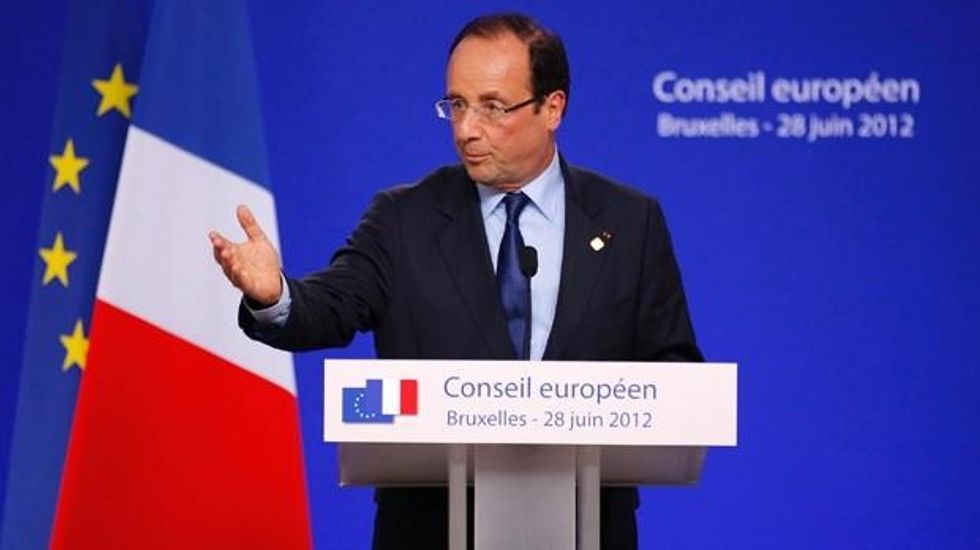
French President Francois Hollande said the spying must "cease immediately," adding, "we cannot accept this kind of behavior from partners and allies." And German Chancellor Angela Merkel said that the "monitoring of friends...can't be tolerated," adding, "we're no longer in the Cold War."
However, Anke Domscheit-Berg, a member of the German Pirate Party, had even stronger words for the U.S., who said Merkel's condemnations were not bold enough and raised the possibility that the German government has been well aware of the NSA actions and could be involved in similar activities, as McClatchy noted.
"Immediately, we should stop all data deliveries to the United States," Domscheit-Berg said. "Flight passenger records, financial transactions, etc. . . . We must make it very clear that the United States cannot expect any more data until we have an agreement on how our citizens' privacy will be treated. We are not powerless in this matter. It's not as if the United States can do whatever it wants without repercussions."
Likewise, German Green Party parliamentarian Hans-Christian Stroebele called for more concrete action Tuesday, adding that Snowden should be protected from U.S. persecution--a promise that EU leaders have thus far failed to make.
"With federal prosecutors investigating possible espionage against Germany, the government shouldn't just offer Snowden asylum, but perhaps even witness protection," Stroebele stated.
Additionally, with the likelihood of European leaders such as Hollande and Merkel actually taking action against the Obama administration's actions still uncertain, German citizens themselves have begun filing criminal charges against the U.S. government--a trend that German federal prosecutors are now "officially observing," McClatchy reports.
Either way, relations between the world leaders are in limbo, at least in public comments. This could have implications for the already secretive--and highly criticized--trade deal scheduled to begin next week, as the Electronic Frontier Foundation reports. Information gathered by the NSA could have been used to benefit the U.S. in the forthcoming Transatlantic Trade and Investment Partnership (TTIP), also known as the Trans-Atlantic Free Trade Agreement (TAFTA).
According to the leaked documents, the U.S. spying tactics aimed "to gather inside knowledge of policy disagreements on global issues and other rifts between member states" of the EU.
The first round of negotiations over a new trade agreement between the U.S. and the European Union are scheduled to start next week, but it may be doomed before it even begins. EU officials are demanding answers and threatening to call off the negotiations in light of the latest NSA revelations released this week showing how the US has been involved in extensive spying on EU diplomats. The diminishing trust between the two allies could have a knock-on effect on global copyright regulation, and stiffen Europe's resolve to better protect its own citizens' online privacy.
Hollande announced Wednesday that the negotiations should be suspended for two weeks amid the controversy, the Associated Press reports.
_______________________
As McClatchy reports, both France and Germany officials responded with fury and "amazement" following reports that first appeared in Der Speigel on the weekend.
French President Francois Hollande said the spying must "cease immediately," adding, "we cannot accept this kind of behavior from partners and allies." And German Chancellor Angela Merkel said that the "monitoring of friends...can't be tolerated," adding, "we're no longer in the Cold War."
However, Anke Domscheit-Berg, a member of the German Pirate Party, had even stronger words for the U.S., who said Merkel's condemnations were not bold enough and raised the possibility that the German government has been well aware of the NSA actions and could be involved in similar activities, as McClatchy noted.
"Immediately, we should stop all data deliveries to the United States," Domscheit-Berg said. "Flight passenger records, financial transactions, etc. . . . We must make it very clear that the United States cannot expect any more data until we have an agreement on how our citizens' privacy will be treated. We are not powerless in this matter. It's not as if the United States can do whatever it wants without repercussions."
Likewise, German Green Party parliamentarian Hans-Christian Stroebele called for more concrete action Tuesday, adding that Snowden should be protected from U.S. persecution--a promise that EU leaders have thus far failed to make.
"With federal prosecutors investigating possible espionage against Germany, the government shouldn't just offer Snowden asylum, but perhaps even witness protection," Stroebele stated.
Additionally, with the likelihood of European leaders such as Hollande and Merkel actually taking action against the Obama administration's actions still uncertain, German citizens themselves have begun filing criminal charges against the U.S. government--a trend that German federal prosecutors are now "officially observing," McClatchy reports.
Either way, relations between the world leaders are in limbo, at least in public comments. This could have implications for the already secretive--and highly criticized--trade deal scheduled to begin next week, as the Electronic Frontier Foundation reports. Information gathered by the NSA could have been used to benefit the U.S. in the forthcoming Transatlantic Trade and Investment Partnership (TTIP), also known as the Trans-Atlantic Free Trade Agreement (TAFTA).
According to the leaked documents, the U.S. spying tactics aimed "to gather inside knowledge of policy disagreements on global issues and other rifts between member states" of the EU.
The first round of negotiations over a new trade agreement between the U.S. and the European Union are scheduled to start next week, but it may be doomed before it even begins. EU officials are demanding answers and threatening to call off the negotiations in light of the latest NSA revelations released this week showing how the US has been involved in extensive spying on EU diplomats. The diminishing trust between the two allies could have a knock-on effect on global copyright regulation, and stiffen Europe's resolve to better protect its own citizens' online privacy.
Hollande announced Wednesday that the negotiations should be suspended for two weeks amid the controversy, the Associated Press reports.
_______________________
As McClatchy reports, both France and Germany officials responded with fury and "amazement" following reports that first appeared in Der Speigel on the weekend.
French President Francois Hollande said the spying must "cease immediately," adding, "we cannot accept this kind of behavior from partners and allies." And German Chancellor Angela Merkel said that the "monitoring of friends...can't be tolerated," adding, "we're no longer in the Cold War."
However, Anke Domscheit-Berg, a member of the German Pirate Party, had even stronger words for the U.S., who said Merkel's condemnations were not bold enough and raised the possibility that the German government has been well aware of the NSA actions and could be involved in similar activities, as McClatchy noted.
"Immediately, we should stop all data deliveries to the United States," Domscheit-Berg said. "Flight passenger records, financial transactions, etc. . . . We must make it very clear that the United States cannot expect any more data until we have an agreement on how our citizens' privacy will be treated. We are not powerless in this matter. It's not as if the United States can do whatever it wants without repercussions."
Likewise, German Green Party parliamentarian Hans-Christian Stroebele called for more concrete action Tuesday, adding that Snowden should be protected from U.S. persecution--a promise that EU leaders have thus far failed to make.
"With federal prosecutors investigating possible espionage against Germany, the government shouldn't just offer Snowden asylum, but perhaps even witness protection," Stroebele stated.
Additionally, with the likelihood of European leaders such as Hollande and Merkel actually taking action against the Obama administration's actions still uncertain, German citizens themselves have begun filing criminal charges against the U.S. government--a trend that German federal prosecutors are now "officially observing," McClatchy reports.
Either way, relations between the world leaders are in limbo, at least in public comments. This could have implications for the already secretive--and highly criticized--trade deal scheduled to begin next week, as the Electronic Frontier Foundation reports. Information gathered by the NSA could have been used to benefit the U.S. in the forthcoming Transatlantic Trade and Investment Partnership (TTIP), also known as the Trans-Atlantic Free Trade Agreement (TAFTA).
According to the leaked documents, the U.S. spying tactics aimed "to gather inside knowledge of policy disagreements on global issues and other rifts between member states" of the EU.
The first round of negotiations over a new trade agreement between the U.S. and the European Union are scheduled to start next week, but it may be doomed before it even begins. EU officials are demanding answers and threatening to call off the negotiations in light of the latest NSA revelations released this week showing how the US has been involved in extensive spying on EU diplomats. The diminishing trust between the two allies could have a knock-on effect on global copyright regulation, and stiffen Europe's resolve to better protect its own citizens' online privacy.
Hollande announced Wednesday that the negotiations should be suspended for two weeks amid the controversy, the Associated Press reports.
_______________________

