SUBSCRIBE TO OUR FREE NEWSLETTER
Daily news & progressive opinion—funded by the people, not the corporations—delivered straight to your inbox.
5
#000000
#FFFFFF
To donate by check, phone, or other method, see our More Ways to Give page.
Daily news & progressive opinion—funded by the people, not the corporations—delivered straight to your inbox.
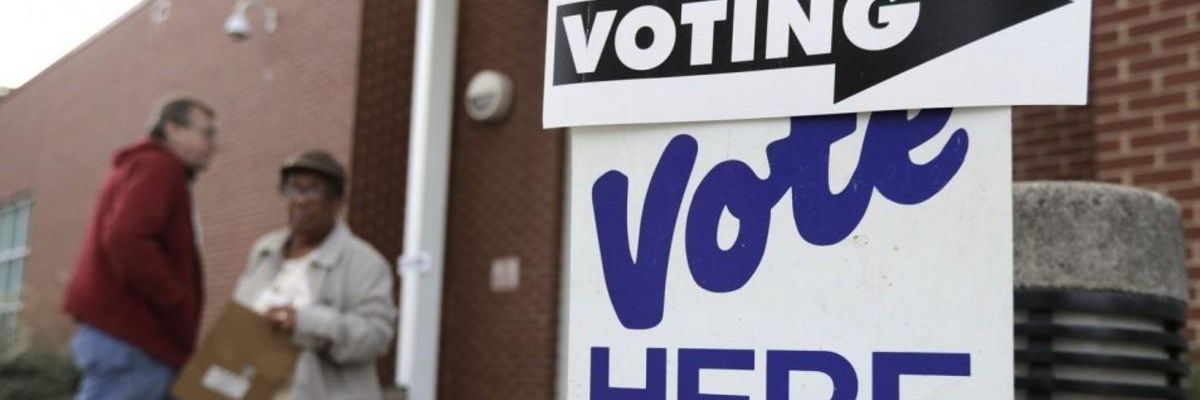
Why would swing voters consider casting their ballots for the current version of the GOP? (Photo: Chuck Burton / Associated Press)
American voters seem poised to hand the Republican Party control of the House of Representatives, and possibly the Senate as well, in November's midterm elections. The same goes for many state races, where polls show Republicans gaining ground.
Rising inequality is not a new phenomenon, and economic disparities have worsened dramatically under Republican presidents, owing in part to tax cuts for the wealthy under Presidents Reagan, George W. Bush, and Trump.
Such an outcome could have profound consequences for American democracy, especially if it results in even greater degradation of the U.S. electoral system. Given the large number of 2020 election deniers running for offices in 2022 and the enormous power over how votes are cast and counted that victory would give them, this prospect is increasingly worrisome.
The Republicans' likely midterm victory is baffling. The GOP is now dominated by an extremist faction whose prominent members claim (or have claimed) not only that former President Trump won the 2020 presidential election, but also that climate change is a hoax, COVID-19 is a conspiracy and former President Obama was not born in the United States. While many Republicans do not say such things (and many who do probably do not believe what they are saying), the Trumpian extremists are in charge.
To be sure, many elected Democrats, including some on the party's far left, also make contentious statements. But they are far fewer and less prone to factual falsehoods. In any case, this election's outcome--like most--will probably be determined by those who are neither die-hard Trump loyalists nor left-wing progressives. So, the question becomes, why would swing voters consider casting their ballots for the current version of the GOP?
The answer, of course, is that voters consider economic issues their top priority. They are far more concerned about surging prices than they are interested in conspiracy theories about past or future elections. Some voters seem to believe that Republican presidents have a better economic track record, and cite current high inflation and fears of recession as evidence that Democrats are mishandling the economy.
The actual historic economic record, however, is strikingly different from what people think. And, while the Biden administration has made some policy mistakes, the U.S. economy is currently strong. It is remarkable that so many Americans believe that the economy is in awful shape when the unemployment rate is at 3.5%. The last time unemployment was lower than that, in May 1969, the Beatles were still together. Similarly, there have been almost two job vacancies per unemployed worker over the past year, signaling the tightest labor market since records began in August 2007. Typically, this ratio would be lower than 1 to 1.
Even though the probability of a recession in 2023 or 2024 is higher than usual because of the Federal Reserve's rapid interest-rate hikes, it is unlikely that the U.S. is already in one. Nor is it certain that a recession is imminent. Europe, on the other hand, is more likely to experience a severe slump, given that European economies are more vulnerable to energy prices than the U.S.
Nonetheless, voters are understandably angry about inflation. In September, the Consumer Price Index increased by 8.2% year on year. Core inflation, which excludes volatile food and energy prices, was lower, at 6.6%. But this is of little comfort to Americans suffering sticker shock every time they go to the supermarket. The price of milk, for example, has increased by 30% since February 2020, to an average of $4.41 per gallon. It is no wonder that many voters fear a rerun of the Great Inflation of the 1970s and '80s.
As prices rise, so should incomes. It may be surprising to learn that, in the aggregate, U.S. nominal income has kept up with prices. But wages are not rising as fast, and the share of U.S. income going to the top earners has been growing, as it has for more than 40 years. Rising inequality is not a new phenomenon, and economic disparities have worsened dramatically under Republican presidents, owing in part to tax cuts for the wealthy under Presidents Reagan, George W. Bush, and Trump.
If voters were concerned about growing inequality, it would make more sense for them to support Democratic policies. Over the past few years, Democrats have extended Obamacare, thus increasing the number of Americans who have health insurance, and reduced drug prices through the Inflation Reduction Act. They have also tried (and so far failed) to close the carried-interest loophole, raise taxes on the rich and establish high-quality universal preschool.
Such policies will run into a brick wall if the party of Trump prevails in November. And yet, despite their hostility to most voters' economic interests--and to democracy itself--the Republicans are still favored to win. That is inexplicable, and alarming.
Dear Common Dreams reader, It’s been nearly 30 years since I co-founded Common Dreams with my late wife, Lina Newhouser. We had the radical notion that journalism should serve the public good, not corporate profits. It was clear to us from the outset what it would take to build such a project. No paid advertisements. No corporate sponsors. No millionaire publisher telling us what to think or do. Many people said we wouldn't last a year, but we proved those doubters wrong. Together with a tremendous team of journalists and dedicated staff, we built an independent media outlet free from the constraints of profits and corporate control. Our mission has always been simple: To inform. To inspire. To ignite change for the common good. Building Common Dreams was not easy. Our survival was never guaranteed. When you take on the most powerful forces—Wall Street greed, fossil fuel industry destruction, Big Tech lobbyists, and uber-rich oligarchs who have spent billions upon billions rigging the economy and democracy in their favor—the only bulwark you have is supporters who believe in your work. But here’s the urgent message from me today. It's never been this bad out there. And it's never been this hard to keep us going. At the very moment Common Dreams is most needed, the threats we face are intensifying. We need your support now more than ever. We don't accept corporate advertising and never will. We don't have a paywall because we don't think people should be blocked from critical news based on their ability to pay. Everything we do is funded by the donations of readers like you. When everyone does the little they can afford, we are strong. But if that support retreats or dries up, so do we. Will you donate now to make sure Common Dreams not only survives but thrives? —Craig Brown, Co-founder |
American voters seem poised to hand the Republican Party control of the House of Representatives, and possibly the Senate as well, in November's midterm elections. The same goes for many state races, where polls show Republicans gaining ground.
Rising inequality is not a new phenomenon, and economic disparities have worsened dramatically under Republican presidents, owing in part to tax cuts for the wealthy under Presidents Reagan, George W. Bush, and Trump.
Such an outcome could have profound consequences for American democracy, especially if it results in even greater degradation of the U.S. electoral system. Given the large number of 2020 election deniers running for offices in 2022 and the enormous power over how votes are cast and counted that victory would give them, this prospect is increasingly worrisome.
The Republicans' likely midterm victory is baffling. The GOP is now dominated by an extremist faction whose prominent members claim (or have claimed) not only that former President Trump won the 2020 presidential election, but also that climate change is a hoax, COVID-19 is a conspiracy and former President Obama was not born in the United States. While many Republicans do not say such things (and many who do probably do not believe what they are saying), the Trumpian extremists are in charge.
To be sure, many elected Democrats, including some on the party's far left, also make contentious statements. But they are far fewer and less prone to factual falsehoods. In any case, this election's outcome--like most--will probably be determined by those who are neither die-hard Trump loyalists nor left-wing progressives. So, the question becomes, why would swing voters consider casting their ballots for the current version of the GOP?
The answer, of course, is that voters consider economic issues their top priority. They are far more concerned about surging prices than they are interested in conspiracy theories about past or future elections. Some voters seem to believe that Republican presidents have a better economic track record, and cite current high inflation and fears of recession as evidence that Democrats are mishandling the economy.
The actual historic economic record, however, is strikingly different from what people think. And, while the Biden administration has made some policy mistakes, the U.S. economy is currently strong. It is remarkable that so many Americans believe that the economy is in awful shape when the unemployment rate is at 3.5%. The last time unemployment was lower than that, in May 1969, the Beatles were still together. Similarly, there have been almost two job vacancies per unemployed worker over the past year, signaling the tightest labor market since records began in August 2007. Typically, this ratio would be lower than 1 to 1.
Even though the probability of a recession in 2023 or 2024 is higher than usual because of the Federal Reserve's rapid interest-rate hikes, it is unlikely that the U.S. is already in one. Nor is it certain that a recession is imminent. Europe, on the other hand, is more likely to experience a severe slump, given that European economies are more vulnerable to energy prices than the U.S.
Nonetheless, voters are understandably angry about inflation. In September, the Consumer Price Index increased by 8.2% year on year. Core inflation, which excludes volatile food and energy prices, was lower, at 6.6%. But this is of little comfort to Americans suffering sticker shock every time they go to the supermarket. The price of milk, for example, has increased by 30% since February 2020, to an average of $4.41 per gallon. It is no wonder that many voters fear a rerun of the Great Inflation of the 1970s and '80s.
As prices rise, so should incomes. It may be surprising to learn that, in the aggregate, U.S. nominal income has kept up with prices. But wages are not rising as fast, and the share of U.S. income going to the top earners has been growing, as it has for more than 40 years. Rising inequality is not a new phenomenon, and economic disparities have worsened dramatically under Republican presidents, owing in part to tax cuts for the wealthy under Presidents Reagan, George W. Bush, and Trump.
If voters were concerned about growing inequality, it would make more sense for them to support Democratic policies. Over the past few years, Democrats have extended Obamacare, thus increasing the number of Americans who have health insurance, and reduced drug prices through the Inflation Reduction Act. They have also tried (and so far failed) to close the carried-interest loophole, raise taxes on the rich and establish high-quality universal preschool.
Such policies will run into a brick wall if the party of Trump prevails in November. And yet, despite their hostility to most voters' economic interests--and to democracy itself--the Republicans are still favored to win. That is inexplicable, and alarming.
American voters seem poised to hand the Republican Party control of the House of Representatives, and possibly the Senate as well, in November's midterm elections. The same goes for many state races, where polls show Republicans gaining ground.
Rising inequality is not a new phenomenon, and economic disparities have worsened dramatically under Republican presidents, owing in part to tax cuts for the wealthy under Presidents Reagan, George W. Bush, and Trump.
Such an outcome could have profound consequences for American democracy, especially if it results in even greater degradation of the U.S. electoral system. Given the large number of 2020 election deniers running for offices in 2022 and the enormous power over how votes are cast and counted that victory would give them, this prospect is increasingly worrisome.
The Republicans' likely midterm victory is baffling. The GOP is now dominated by an extremist faction whose prominent members claim (or have claimed) not only that former President Trump won the 2020 presidential election, but also that climate change is a hoax, COVID-19 is a conspiracy and former President Obama was not born in the United States. While many Republicans do not say such things (and many who do probably do not believe what they are saying), the Trumpian extremists are in charge.
To be sure, many elected Democrats, including some on the party's far left, also make contentious statements. But they are far fewer and less prone to factual falsehoods. In any case, this election's outcome--like most--will probably be determined by those who are neither die-hard Trump loyalists nor left-wing progressives. So, the question becomes, why would swing voters consider casting their ballots for the current version of the GOP?
The answer, of course, is that voters consider economic issues their top priority. They are far more concerned about surging prices than they are interested in conspiracy theories about past or future elections. Some voters seem to believe that Republican presidents have a better economic track record, and cite current high inflation and fears of recession as evidence that Democrats are mishandling the economy.
The actual historic economic record, however, is strikingly different from what people think. And, while the Biden administration has made some policy mistakes, the U.S. economy is currently strong. It is remarkable that so many Americans believe that the economy is in awful shape when the unemployment rate is at 3.5%. The last time unemployment was lower than that, in May 1969, the Beatles were still together. Similarly, there have been almost two job vacancies per unemployed worker over the past year, signaling the tightest labor market since records began in August 2007. Typically, this ratio would be lower than 1 to 1.
Even though the probability of a recession in 2023 or 2024 is higher than usual because of the Federal Reserve's rapid interest-rate hikes, it is unlikely that the U.S. is already in one. Nor is it certain that a recession is imminent. Europe, on the other hand, is more likely to experience a severe slump, given that European economies are more vulnerable to energy prices than the U.S.
Nonetheless, voters are understandably angry about inflation. In September, the Consumer Price Index increased by 8.2% year on year. Core inflation, which excludes volatile food and energy prices, was lower, at 6.6%. But this is of little comfort to Americans suffering sticker shock every time they go to the supermarket. The price of milk, for example, has increased by 30% since February 2020, to an average of $4.41 per gallon. It is no wonder that many voters fear a rerun of the Great Inflation of the 1970s and '80s.
As prices rise, so should incomes. It may be surprising to learn that, in the aggregate, U.S. nominal income has kept up with prices. But wages are not rising as fast, and the share of U.S. income going to the top earners has been growing, as it has for more than 40 years. Rising inequality is not a new phenomenon, and economic disparities have worsened dramatically under Republican presidents, owing in part to tax cuts for the wealthy under Presidents Reagan, George W. Bush, and Trump.
If voters were concerned about growing inequality, it would make more sense for them to support Democratic policies. Over the past few years, Democrats have extended Obamacare, thus increasing the number of Americans who have health insurance, and reduced drug prices through the Inflation Reduction Act. They have also tried (and so far failed) to close the carried-interest loophole, raise taxes on the rich and establish high-quality universal preschool.
Such policies will run into a brick wall if the party of Trump prevails in November. And yet, despite their hostility to most voters' economic interests--and to democracy itself--the Republicans are still favored to win. That is inexplicable, and alarming.