

SUBSCRIBE TO OUR FREE NEWSLETTER
Daily news & progressive opinion—funded by the people, not the corporations—delivered straight to your inbox.
5
#000000
#FFFFFF
To donate by check, phone, or other method, see our More Ways to Give page.
Daily news & progressive opinion—funded by the people, not the corporations—delivered straight to your inbox.
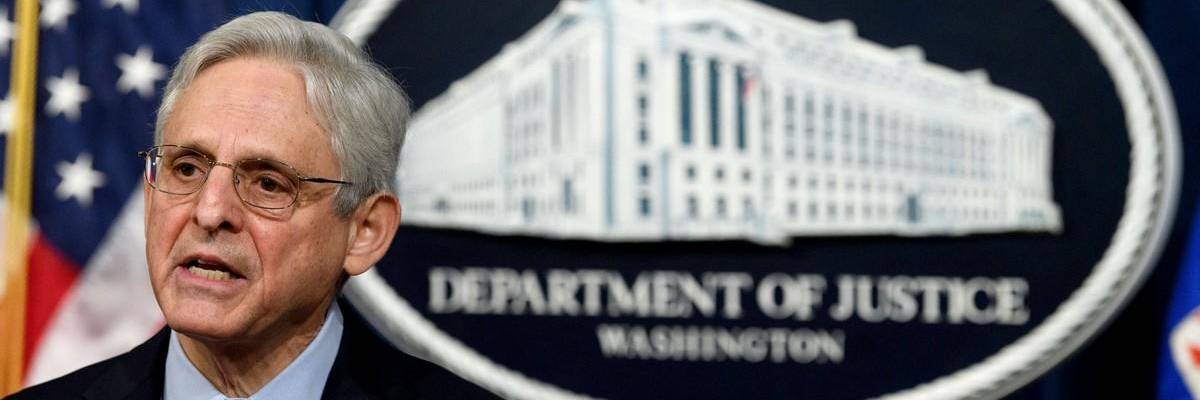
U.S. Attorney General Merrick Garland speaks to the press at the Justice Department in Washington, D.C. on February 22, 2022. (Photo: Nicholas Kamm/POOL/AFP via Getty Images)
The January 6 committee, whose hearings wrapped up earlier this month, revealed many details about the attempt to overturn the 2020 election. Some of the most troubling showed just how far Donald Trump went in trying to weaponize the Department of Justice to help validate his false claims of a stolen election. The effort came closer to succeeding than many people realized at the time. While the department's leadership ultimately resisted, we may not be so lucky next time. Congress needs to ensure that future presidents cannot use the DOJ to subvert democracy.
Efforts to pressure the DOJ to help overturn the 2020 election were part of a longstanding pattern--and there is no guarantee that a future attempt won't succeed.
Former Acting Attorney General Jeffrey Rosen, who took over the department after the resignation of Attorney General Bill Barr on December 14, 2020, testified that Trump contacted him "virtually every day" to request that the DOJ do more to "investigate election fraud," including by appointing a special counsel and pursuing Supreme Court litigation. Trump also wanted the department to promote his baseless claims of widespread voter fraud by sending letters to six state legislatures urging them to overturn the election results. According to the testimony of former Acting Deputy Attorney General Richard Donoghue, Trump requested that the DOJ seize voting machines from state governments and implored the department "to say [the election] was corrupt."
Both Rosen and Donoghue further testified that Jeffrey Clark, the head of the department's energy and natural resources division who began having direct contact with the president, asked them to sign one of the letters he and another DOJ attorney, Ken Klukowski, had drafted, recommending that the Georgia legislature overturn the state's certified election results. The letter, which former White House Counsel Pat Cipollone reportedly dismissed as a "murder-suicide pact," is the subject of a disciplinary case before the D.C. bar. (Clark is also the subject of an ongoing criminal investigation.) Trump's campaign to involve the DOJ in his effort to overturn the election culminated in a brazen effort to replace Rosen with Clark as acting attorney general, which appears to have been foiled only when Rosen, Donoghue, and other DOJ officials met with the president at the White House and threatened to resign.
The DOJ's acting leaders deserve credit for the courage they showed in the weeks leading up to January 6, 2021, but the department could hardly be characterized as a defender of democracy throughout the 2020 election cycle. In the run-up to the election, then-Attorney General Barr made public statements that appeared to validate Trump's efforts to cast doubt on the validity of mail voting, claiming without evidence that "elections that have been held with mail have found substantial fraud and coercion." He also defended Trump's threat to deploy law enforcement personnel to the polls on Election Day, saying that it would be legal for the president to do so if it were in response to "a particular criminal threat." And immediately after the election, Barr ordered DOJ personnel to investigate unfounded claims of voting and vote tabulation irregularities while ballots were still being counted, reversing longstanding department policy that prevents prosecutors from taking overt actions in voter fraud investigations before states certify election results.
These events followed a long history of Trump administration efforts to subvert the independence of the DOJ, from White House meddling in the investigation into Russian interference in the 2016 presidential election to recent revelations from former Acting U.S. Attorney Geoffrey Berman that Trump administration officials pressured him to prosecute prominent Democrats ahead of the 2018 midterm elections. And it is important to remember that these episodes are not unique to the Trump administration. Prior episodes of politicization of the DOJ include the George W. Bush administration's U.S. attorney firing scandal and the Saturday Night Massacre during Richard Nixon's presidency.
In short, efforts to pressure the DOJ to help overturn the 2020 election were part of a longstanding pattern--and there is no guarantee that a future attempt won't succeed.
One way to prevent future abuse of power with respect to the Justice Department is to hold individual bad actors accountable. But Congress also needs to do much more to establish durable guardrails against abuse going forward to prevent the politicization of federal law enforcement. For instance, Congress should require every administration to adopt a policy limiting who in the White House may talk to DOJ officials about specific prosecutions and investigations and requiring the disclosure of the details of those conversations to Congress. Congress should also give the DOJ's inspector general (and those at other enforcement agencies) express authority to investigate political meddling in law enforcement matters.
These and other reforms are included in the Protecting Our Democracy Act, which passed the House last December. They would go a long way towards ensuring that the Justice Department does not become a political weapon in a future president's attempt to undermine democracy.
Dear Common Dreams reader, It’s been nearly 30 years since I co-founded Common Dreams with my late wife, Lina Newhouser. We had the radical notion that journalism should serve the public good, not corporate profits. It was clear to us from the outset what it would take to build such a project. No paid advertisements. No corporate sponsors. No millionaire publisher telling us what to think or do. Many people said we wouldn't last a year, but we proved those doubters wrong. Together with a tremendous team of journalists and dedicated staff, we built an independent media outlet free from the constraints of profits and corporate control. Our mission has always been simple: To inform. To inspire. To ignite change for the common good. Building Common Dreams was not easy. Our survival was never guaranteed. When you take on the most powerful forces—Wall Street greed, fossil fuel industry destruction, Big Tech lobbyists, and uber-rich oligarchs who have spent billions upon billions rigging the economy and democracy in their favor—the only bulwark you have is supporters who believe in your work. But here’s the urgent message from me today. It's never been this bad out there. And it's never been this hard to keep us going. At the very moment Common Dreams is most needed, the threats we face are intensifying. We need your support now more than ever. We don't accept corporate advertising and never will. We don't have a paywall because we don't think people should be blocked from critical news based on their ability to pay. Everything we do is funded by the donations of readers like you. When everyone does the little they can afford, we are strong. But if that support retreats or dries up, so do we. Will you donate now to make sure Common Dreams not only survives but thrives? —Craig Brown, Co-founder |
The January 6 committee, whose hearings wrapped up earlier this month, revealed many details about the attempt to overturn the 2020 election. Some of the most troubling showed just how far Donald Trump went in trying to weaponize the Department of Justice to help validate his false claims of a stolen election. The effort came closer to succeeding than many people realized at the time. While the department's leadership ultimately resisted, we may not be so lucky next time. Congress needs to ensure that future presidents cannot use the DOJ to subvert democracy.
Efforts to pressure the DOJ to help overturn the 2020 election were part of a longstanding pattern--and there is no guarantee that a future attempt won't succeed.
Former Acting Attorney General Jeffrey Rosen, who took over the department after the resignation of Attorney General Bill Barr on December 14, 2020, testified that Trump contacted him "virtually every day" to request that the DOJ do more to "investigate election fraud," including by appointing a special counsel and pursuing Supreme Court litigation. Trump also wanted the department to promote his baseless claims of widespread voter fraud by sending letters to six state legislatures urging them to overturn the election results. According to the testimony of former Acting Deputy Attorney General Richard Donoghue, Trump requested that the DOJ seize voting machines from state governments and implored the department "to say [the election] was corrupt."
Both Rosen and Donoghue further testified that Jeffrey Clark, the head of the department's energy and natural resources division who began having direct contact with the president, asked them to sign one of the letters he and another DOJ attorney, Ken Klukowski, had drafted, recommending that the Georgia legislature overturn the state's certified election results. The letter, which former White House Counsel Pat Cipollone reportedly dismissed as a "murder-suicide pact," is the subject of a disciplinary case before the D.C. bar. (Clark is also the subject of an ongoing criminal investigation.) Trump's campaign to involve the DOJ in his effort to overturn the election culminated in a brazen effort to replace Rosen with Clark as acting attorney general, which appears to have been foiled only when Rosen, Donoghue, and other DOJ officials met with the president at the White House and threatened to resign.
The DOJ's acting leaders deserve credit for the courage they showed in the weeks leading up to January 6, 2021, but the department could hardly be characterized as a defender of democracy throughout the 2020 election cycle. In the run-up to the election, then-Attorney General Barr made public statements that appeared to validate Trump's efforts to cast doubt on the validity of mail voting, claiming without evidence that "elections that have been held with mail have found substantial fraud and coercion." He also defended Trump's threat to deploy law enforcement personnel to the polls on Election Day, saying that it would be legal for the president to do so if it were in response to "a particular criminal threat." And immediately after the election, Barr ordered DOJ personnel to investigate unfounded claims of voting and vote tabulation irregularities while ballots were still being counted, reversing longstanding department policy that prevents prosecutors from taking overt actions in voter fraud investigations before states certify election results.
These events followed a long history of Trump administration efforts to subvert the independence of the DOJ, from White House meddling in the investigation into Russian interference in the 2016 presidential election to recent revelations from former Acting U.S. Attorney Geoffrey Berman that Trump administration officials pressured him to prosecute prominent Democrats ahead of the 2018 midterm elections. And it is important to remember that these episodes are not unique to the Trump administration. Prior episodes of politicization of the DOJ include the George W. Bush administration's U.S. attorney firing scandal and the Saturday Night Massacre during Richard Nixon's presidency.
In short, efforts to pressure the DOJ to help overturn the 2020 election were part of a longstanding pattern--and there is no guarantee that a future attempt won't succeed.
One way to prevent future abuse of power with respect to the Justice Department is to hold individual bad actors accountable. But Congress also needs to do much more to establish durable guardrails against abuse going forward to prevent the politicization of federal law enforcement. For instance, Congress should require every administration to adopt a policy limiting who in the White House may talk to DOJ officials about specific prosecutions and investigations and requiring the disclosure of the details of those conversations to Congress. Congress should also give the DOJ's inspector general (and those at other enforcement agencies) express authority to investigate political meddling in law enforcement matters.
These and other reforms are included in the Protecting Our Democracy Act, which passed the House last December. They would go a long way towards ensuring that the Justice Department does not become a political weapon in a future president's attempt to undermine democracy.
The January 6 committee, whose hearings wrapped up earlier this month, revealed many details about the attempt to overturn the 2020 election. Some of the most troubling showed just how far Donald Trump went in trying to weaponize the Department of Justice to help validate his false claims of a stolen election. The effort came closer to succeeding than many people realized at the time. While the department's leadership ultimately resisted, we may not be so lucky next time. Congress needs to ensure that future presidents cannot use the DOJ to subvert democracy.
Efforts to pressure the DOJ to help overturn the 2020 election were part of a longstanding pattern--and there is no guarantee that a future attempt won't succeed.
Former Acting Attorney General Jeffrey Rosen, who took over the department after the resignation of Attorney General Bill Barr on December 14, 2020, testified that Trump contacted him "virtually every day" to request that the DOJ do more to "investigate election fraud," including by appointing a special counsel and pursuing Supreme Court litigation. Trump also wanted the department to promote his baseless claims of widespread voter fraud by sending letters to six state legislatures urging them to overturn the election results. According to the testimony of former Acting Deputy Attorney General Richard Donoghue, Trump requested that the DOJ seize voting machines from state governments and implored the department "to say [the election] was corrupt."
Both Rosen and Donoghue further testified that Jeffrey Clark, the head of the department's energy and natural resources division who began having direct contact with the president, asked them to sign one of the letters he and another DOJ attorney, Ken Klukowski, had drafted, recommending that the Georgia legislature overturn the state's certified election results. The letter, which former White House Counsel Pat Cipollone reportedly dismissed as a "murder-suicide pact," is the subject of a disciplinary case before the D.C. bar. (Clark is also the subject of an ongoing criminal investigation.) Trump's campaign to involve the DOJ in his effort to overturn the election culminated in a brazen effort to replace Rosen with Clark as acting attorney general, which appears to have been foiled only when Rosen, Donoghue, and other DOJ officials met with the president at the White House and threatened to resign.
The DOJ's acting leaders deserve credit for the courage they showed in the weeks leading up to January 6, 2021, but the department could hardly be characterized as a defender of democracy throughout the 2020 election cycle. In the run-up to the election, then-Attorney General Barr made public statements that appeared to validate Trump's efforts to cast doubt on the validity of mail voting, claiming without evidence that "elections that have been held with mail have found substantial fraud and coercion." He also defended Trump's threat to deploy law enforcement personnel to the polls on Election Day, saying that it would be legal for the president to do so if it were in response to "a particular criminal threat." And immediately after the election, Barr ordered DOJ personnel to investigate unfounded claims of voting and vote tabulation irregularities while ballots were still being counted, reversing longstanding department policy that prevents prosecutors from taking overt actions in voter fraud investigations before states certify election results.
These events followed a long history of Trump administration efforts to subvert the independence of the DOJ, from White House meddling in the investigation into Russian interference in the 2016 presidential election to recent revelations from former Acting U.S. Attorney Geoffrey Berman that Trump administration officials pressured him to prosecute prominent Democrats ahead of the 2018 midterm elections. And it is important to remember that these episodes are not unique to the Trump administration. Prior episodes of politicization of the DOJ include the George W. Bush administration's U.S. attorney firing scandal and the Saturday Night Massacre during Richard Nixon's presidency.
In short, efforts to pressure the DOJ to help overturn the 2020 election were part of a longstanding pattern--and there is no guarantee that a future attempt won't succeed.
One way to prevent future abuse of power with respect to the Justice Department is to hold individual bad actors accountable. But Congress also needs to do much more to establish durable guardrails against abuse going forward to prevent the politicization of federal law enforcement. For instance, Congress should require every administration to adopt a policy limiting who in the White House may talk to DOJ officials about specific prosecutions and investigations and requiring the disclosure of the details of those conversations to Congress. Congress should also give the DOJ's inspector general (and those at other enforcement agencies) express authority to investigate political meddling in law enforcement matters.
These and other reforms are included in the Protecting Our Democracy Act, which passed the House last December. They would go a long way towards ensuring that the Justice Department does not become a political weapon in a future president's attempt to undermine democracy.

