SUBSCRIBE TO OUR FREE NEWSLETTER
Daily news & progressive opinion—funded by the people, not the corporations—delivered straight to your inbox.
5
#000000
#FFFFFF
To donate by check, phone, or other method, see our More Ways to Give page.
Daily news & progressive opinion—funded by the people, not the corporations—delivered straight to your inbox.
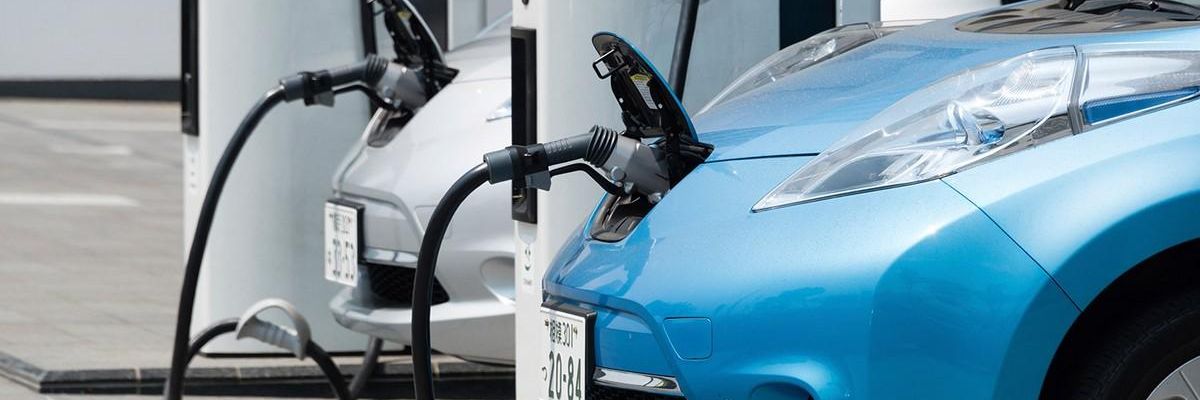
While electric vehicle sales are increasing rapidly, they're still far outnumbered by gasoline and diesel car sales. (Photo: joel-t/iStock)
That was illustrated at the recent 26th Conference of the Parties (COP26) climate summit, in Glasgow, where governments, automakers and airlines worked on deals to cut global transport emissions. Because transportation is responsible for one-fifth to one-quarter of global emissions, that seems like a good step.
But there are problems.
Shifting away from consumerism and supporting local businesses and production would go as far or farther in reducing shipping emissions, although cleaner ways to fuel ships are needed.
With aviation and shipping, the main idea is to switch from polluting fossil fuels to "biofuels." But with expected increases in both sectors, that could mean destroying more natural areas or displacing food-growing lands with crops for fuel production.
And as George Monbiot points out, "Flying accounts for most of the greenhouse gas emissions of the super-rich, which is why the wealthiest 1% generate roughly half the world's aviation emissions. If everyone lived as they do, aviation would be the biggest of all the causes of climate breakdown." Finding better fuels is important, but cutting back on flying--which would mostly affect the affluent--is just as critical. But, of course, that doesn't fit with the current growth-and-profit economic paradigm.
As for shipping, Reuters notes around 90 per cent of traded goods travel by sea, and shipping accounts for about three per cent of global emissions. Our current global economic system encourages corporations to go where resources and labour are cheap and standards are often low to maximize profits. Shifting away from consumerism and supporting local businesses and production would go as far or farther in reducing shipping emissions, although cleaner ways to fuel ships are needed.
With the automobile industry, it's all about electric vehicles. And the focus is on direct emissions rather than the many other environmental impacts, from production to massive infrastructure requirements. Few people even question car culture--why we've decided so many people should each have large machines to transport them in isolation. And why they should be provided with the massive infrastructure to make it possible, from roads and parking to malls and drive-throughs.
This idea of constant economic growth--with the excessive consumption and waste required to fuel it--has become so ingrained that we resort to incremental measures in the midst of a crisis. We just can't imagine different ways of seeing, and so we try to shoehorn solutions into an outdated system that wasn't designed to be sustainable.
As for the COP26 automakers' pledge--which would require all cars and vans sold to be zero-emission by 2040--as inadequate as it is, not everyone is on board.
Again, electric vehicles are important. They pollute far less than internal combustion engine vehicles and can last longer. But what we should really focus on is reducing private automobile use, through good public transit, active transport like cycling and walking, increasingly popular modes like e-bikes and scooters, better urban planning and design, and new technologies like self-driving vehicles that can facilitate car sharing and efficient ride-hailing services. All this would dramatically reduce congestion and pollution, and would even make it possible to convert massive amounts of road and parking to green space.
And while electric vehicle sales are increasing rapidly, they're still far outnumbered by gasoline and diesel car sales. As for the COP26 automakers' pledge--which would require all cars and vans sold to be zero-emission by 2040--as inadequate as it is, not everyone is on board. Even though Volkswagen and Toyota are major electric and hybrid vehicle manufacturers, they didn't back the commitment. The U.S., China and Germany also refused to support the pledge.
According to Reuters, "The wider lesson is that private players can't be relied on to stick their necks out if public action is absent." This shows how essential it is for society to get involved. It's mainly up to governments, business, industry and international agencies to resolve the climate crisis, but without massive public pressure, they'll continue down the status quo road until it's too late to keep the planet from heating to catastrophic levels.
Climate conferences such as COP are important, and perhaps they're more than just "blah, blah, blah," but until we replace the outdated human-invented systems that got us into this mess, we'll only be downshifting rather than putting on the brakes. That's not good enough.
Dear Common Dreams reader, It’s been nearly 30 years since I co-founded Common Dreams with my late wife, Lina Newhouser. We had the radical notion that journalism should serve the public good, not corporate profits. It was clear to us from the outset what it would take to build such a project. No paid advertisements. No corporate sponsors. No millionaire publisher telling us what to think or do. Many people said we wouldn't last a year, but we proved those doubters wrong. Together with a tremendous team of journalists and dedicated staff, we built an independent media outlet free from the constraints of profits and corporate control. Our mission has always been simple: To inform. To inspire. To ignite change for the common good. Building Common Dreams was not easy. Our survival was never guaranteed. When you take on the most powerful forces—Wall Street greed, fossil fuel industry destruction, Big Tech lobbyists, and uber-rich oligarchs who have spent billions upon billions rigging the economy and democracy in their favor—the only bulwark you have is supporters who believe in your work. But here’s the urgent message from me today. It's never been this bad out there. And it's never been this hard to keep us going. At the very moment Common Dreams is most needed, the threats we face are intensifying. We need your support now more than ever. We don't accept corporate advertising and never will. We don't have a paywall because we don't think people should be blocked from critical news based on their ability to pay. Everything we do is funded by the donations of readers like you. When everyone does the little they can afford, we are strong. But if that support retreats or dries up, so do we. Will you donate now to make sure Common Dreams not only survives but thrives? —Craig Brown, Co-founder |
That was illustrated at the recent 26th Conference of the Parties (COP26) climate summit, in Glasgow, where governments, automakers and airlines worked on deals to cut global transport emissions. Because transportation is responsible for one-fifth to one-quarter of global emissions, that seems like a good step.
But there are problems.
Shifting away from consumerism and supporting local businesses and production would go as far or farther in reducing shipping emissions, although cleaner ways to fuel ships are needed.
With aviation and shipping, the main idea is to switch from polluting fossil fuels to "biofuels." But with expected increases in both sectors, that could mean destroying more natural areas or displacing food-growing lands with crops for fuel production.
And as George Monbiot points out, "Flying accounts for most of the greenhouse gas emissions of the super-rich, which is why the wealthiest 1% generate roughly half the world's aviation emissions. If everyone lived as they do, aviation would be the biggest of all the causes of climate breakdown." Finding better fuels is important, but cutting back on flying--which would mostly affect the affluent--is just as critical. But, of course, that doesn't fit with the current growth-and-profit economic paradigm.
As for shipping, Reuters notes around 90 per cent of traded goods travel by sea, and shipping accounts for about three per cent of global emissions. Our current global economic system encourages corporations to go where resources and labour are cheap and standards are often low to maximize profits. Shifting away from consumerism and supporting local businesses and production would go as far or farther in reducing shipping emissions, although cleaner ways to fuel ships are needed.
With the automobile industry, it's all about electric vehicles. And the focus is on direct emissions rather than the many other environmental impacts, from production to massive infrastructure requirements. Few people even question car culture--why we've decided so many people should each have large machines to transport them in isolation. And why they should be provided with the massive infrastructure to make it possible, from roads and parking to malls and drive-throughs.
This idea of constant economic growth--with the excessive consumption and waste required to fuel it--has become so ingrained that we resort to incremental measures in the midst of a crisis. We just can't imagine different ways of seeing, and so we try to shoehorn solutions into an outdated system that wasn't designed to be sustainable.
As for the COP26 automakers' pledge--which would require all cars and vans sold to be zero-emission by 2040--as inadequate as it is, not everyone is on board.
Again, electric vehicles are important. They pollute far less than internal combustion engine vehicles and can last longer. But what we should really focus on is reducing private automobile use, through good public transit, active transport like cycling and walking, increasingly popular modes like e-bikes and scooters, better urban planning and design, and new technologies like self-driving vehicles that can facilitate car sharing and efficient ride-hailing services. All this would dramatically reduce congestion and pollution, and would even make it possible to convert massive amounts of road and parking to green space.
And while electric vehicle sales are increasing rapidly, they're still far outnumbered by gasoline and diesel car sales. As for the COP26 automakers' pledge--which would require all cars and vans sold to be zero-emission by 2040--as inadequate as it is, not everyone is on board. Even though Volkswagen and Toyota are major electric and hybrid vehicle manufacturers, they didn't back the commitment. The U.S., China and Germany also refused to support the pledge.
According to Reuters, "The wider lesson is that private players can't be relied on to stick their necks out if public action is absent." This shows how essential it is for society to get involved. It's mainly up to governments, business, industry and international agencies to resolve the climate crisis, but without massive public pressure, they'll continue down the status quo road until it's too late to keep the planet from heating to catastrophic levels.
Climate conferences such as COP are important, and perhaps they're more than just "blah, blah, blah," but until we replace the outdated human-invented systems that got us into this mess, we'll only be downshifting rather than putting on the brakes. That's not good enough.
That was illustrated at the recent 26th Conference of the Parties (COP26) climate summit, in Glasgow, where governments, automakers and airlines worked on deals to cut global transport emissions. Because transportation is responsible for one-fifth to one-quarter of global emissions, that seems like a good step.
But there are problems.
Shifting away from consumerism and supporting local businesses and production would go as far or farther in reducing shipping emissions, although cleaner ways to fuel ships are needed.
With aviation and shipping, the main idea is to switch from polluting fossil fuels to "biofuels." But with expected increases in both sectors, that could mean destroying more natural areas or displacing food-growing lands with crops for fuel production.
And as George Monbiot points out, "Flying accounts for most of the greenhouse gas emissions of the super-rich, which is why the wealthiest 1% generate roughly half the world's aviation emissions. If everyone lived as they do, aviation would be the biggest of all the causes of climate breakdown." Finding better fuels is important, but cutting back on flying--which would mostly affect the affluent--is just as critical. But, of course, that doesn't fit with the current growth-and-profit economic paradigm.
As for shipping, Reuters notes around 90 per cent of traded goods travel by sea, and shipping accounts for about three per cent of global emissions. Our current global economic system encourages corporations to go where resources and labour are cheap and standards are often low to maximize profits. Shifting away from consumerism and supporting local businesses and production would go as far or farther in reducing shipping emissions, although cleaner ways to fuel ships are needed.
With the automobile industry, it's all about electric vehicles. And the focus is on direct emissions rather than the many other environmental impacts, from production to massive infrastructure requirements. Few people even question car culture--why we've decided so many people should each have large machines to transport them in isolation. And why they should be provided with the massive infrastructure to make it possible, from roads and parking to malls and drive-throughs.
This idea of constant economic growth--with the excessive consumption and waste required to fuel it--has become so ingrained that we resort to incremental measures in the midst of a crisis. We just can't imagine different ways of seeing, and so we try to shoehorn solutions into an outdated system that wasn't designed to be sustainable.
As for the COP26 automakers' pledge--which would require all cars and vans sold to be zero-emission by 2040--as inadequate as it is, not everyone is on board.
Again, electric vehicles are important. They pollute far less than internal combustion engine vehicles and can last longer. But what we should really focus on is reducing private automobile use, through good public transit, active transport like cycling and walking, increasingly popular modes like e-bikes and scooters, better urban planning and design, and new technologies like self-driving vehicles that can facilitate car sharing and efficient ride-hailing services. All this would dramatically reduce congestion and pollution, and would even make it possible to convert massive amounts of road and parking to green space.
And while electric vehicle sales are increasing rapidly, they're still far outnumbered by gasoline and diesel car sales. As for the COP26 automakers' pledge--which would require all cars and vans sold to be zero-emission by 2040--as inadequate as it is, not everyone is on board. Even though Volkswagen and Toyota are major electric and hybrid vehicle manufacturers, they didn't back the commitment. The U.S., China and Germany also refused to support the pledge.
According to Reuters, "The wider lesson is that private players can't be relied on to stick their necks out if public action is absent." This shows how essential it is for society to get involved. It's mainly up to governments, business, industry and international agencies to resolve the climate crisis, but without massive public pressure, they'll continue down the status quo road until it's too late to keep the planet from heating to catastrophic levels.
Climate conferences such as COP are important, and perhaps they're more than just "blah, blah, blah," but until we replace the outdated human-invented systems that got us into this mess, we'll only be downshifting rather than putting on the brakes. That's not good enough.