SUBSCRIBE TO OUR FREE NEWSLETTER
Daily news & progressive opinion—funded by the people, not the corporations—delivered straight to your inbox.
5
#000000
#FFFFFF
To donate by check, phone, or other method, see our More Ways to Give page.
Daily news & progressive opinion—funded by the people, not the corporations—delivered straight to your inbox.
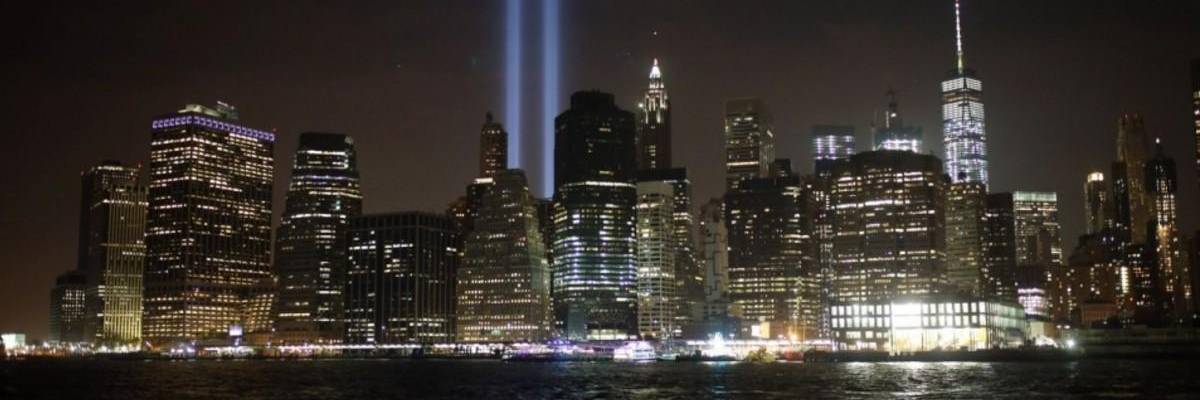
"Monuments and memorials should help us learn about our history and grow from it," write the authors.
What comes after the anniversary of a tragedy? Earlier this month, many of us participated in memorials and retrospectives on the changes to American society in the two decades since the attacks of 9/11. We were among the many American Muslims who wrote about the impact of 9/11 on civil rights. As co-executive directors of Muslim Advocates, we were asked to document how the Patriot Act enabled mass surveillance and profiling of Muslims by local and national government, how a Bush-era immigrant registration program (NSEERS) effectively created a Muslim registry, and the many ways that the stereotype of Muslims as terrorists has fueled decades of anti-Muslim hate crimes and bullying. So what comes next?
Profiling, surveillance and over-prosecution of marginalized populations in this country are nothing new.
After 9/11, we were part of a group of Muslim lawyers who helped create a Muslim legal advocacy organization because we knew that things could get much worse for American Muslims. We knew and took seriously the way this country has discriminated against Black Muslims and other marginalized communities.
Simply put, profiling, surveillance and over-prosecution of marginalized populations in this country are nothing new. Trump's frenzy about an "invasion" of gangs across our southern border was not all that different from Democratic politicians' warnings about "super predators" during the passage of the 1994 crime bill. Martin Luther King, Jr. and Malcolm X were just two of many civil rights leaders under constant FBI surveillance, and the Black Panthers were targeted with the blunter, more violent end of that stick. Many in our families were alive when Japanese Americans were sent to internment camps upon zero evidence of wrongdoing. Anti-German sentiment led to bans against teaching the German language and COINTELPRO and the McCarthy hearings painted anyone with communist beliefs as an enemy of the state. Even further back in our history, the Chinese Exclusion Act explicitly banned an entire race from emigrating to this country, and Jim Crow laws did everything short of slavery to control non-whites. And of course, all of this took place on the land of the many Native peoples who were killed or forcibly removed from their homes over centuries of repeated falsehoods and betrayal by the United States government.
So, yes, it has been twenty years since 9/11. But it has also been 77 years since Korematsu, 100 years since the Tulsa massacre, 131 years since the massacre at Wounded Knee, 139 years since the passage of the Chinese Exclusion Act and 199 years since the Denmark Vesey rebellion. In other words, we need to see the bigger picture. We believe something much more transformative is possible if we demand that post-9/11 reflections are connected to the rest of American history and that we learn from all of it.
There is a terrible theme that runs throughout the story of the United States: when a group of people are seen as a threat, state power has been used to oppress them. More specifically, political interests have built and solidified their power by ramping up fear--not just stoking a fire, but creating it. American communities are thus pitted against each other, and eventually there is public support for government overreach that is outrageously outsized to the supposed threat.
Monuments and memorials should help us learn about our history and grow from it. When we were asked to opine about all the ways American Muslims suffered in the aftermath of 9/11, we knew it wasn't enough. We want to also talk about what this means for today. What does this mean for oppression in all its forms right now? And then the really difficult question: are we complicit in any of it?
Abuse of power hurts not just the abused, but also the abuser. Everyone needs to heal from these past harms, so we all must ask these questions. We could start on anniversaries. What if every commemoration of every atrocity was a step on a path toward truth and reconciliation? Maybe, then, we could see our way out of this dangerous cycle, heal the fractures in our society, and finally write a new American story.
Dear Common Dreams reader, It’s been nearly 30 years since I co-founded Common Dreams with my late wife, Lina Newhouser. We had the radical notion that journalism should serve the public good, not corporate profits. It was clear to us from the outset what it would take to build such a project. No paid advertisements. No corporate sponsors. No millionaire publisher telling us what to think or do. Many people said we wouldn't last a year, but we proved those doubters wrong. Together with a tremendous team of journalists and dedicated staff, we built an independent media outlet free from the constraints of profits and corporate control. Our mission has always been simple: To inform. To inspire. To ignite change for the common good. Building Common Dreams was not easy. Our survival was never guaranteed. When you take on the most powerful forces—Wall Street greed, fossil fuel industry destruction, Big Tech lobbyists, and uber-rich oligarchs who have spent billions upon billions rigging the economy and democracy in their favor—the only bulwark you have is supporters who believe in your work. But here’s the urgent message from me today. It's never been this bad out there. And it's never been this hard to keep us going. At the very moment Common Dreams is most needed, the threats we face are intensifying. We need your support now more than ever. We don't accept corporate advertising and never will. We don't have a paywall because we don't think people should be blocked from critical news based on their ability to pay. Everything we do is funded by the donations of readers like you. When everyone does the little they can afford, we are strong. But if that support retreats or dries up, so do we. Will you donate now to make sure Common Dreams not only survives but thrives? —Craig Brown, Co-founder |
What comes after the anniversary of a tragedy? Earlier this month, many of us participated in memorials and retrospectives on the changes to American society in the two decades since the attacks of 9/11. We were among the many American Muslims who wrote about the impact of 9/11 on civil rights. As co-executive directors of Muslim Advocates, we were asked to document how the Patriot Act enabled mass surveillance and profiling of Muslims by local and national government, how a Bush-era immigrant registration program (NSEERS) effectively created a Muslim registry, and the many ways that the stereotype of Muslims as terrorists has fueled decades of anti-Muslim hate crimes and bullying. So what comes next?
Profiling, surveillance and over-prosecution of marginalized populations in this country are nothing new.
After 9/11, we were part of a group of Muslim lawyers who helped create a Muslim legal advocacy organization because we knew that things could get much worse for American Muslims. We knew and took seriously the way this country has discriminated against Black Muslims and other marginalized communities.
Simply put, profiling, surveillance and over-prosecution of marginalized populations in this country are nothing new. Trump's frenzy about an "invasion" of gangs across our southern border was not all that different from Democratic politicians' warnings about "super predators" during the passage of the 1994 crime bill. Martin Luther King, Jr. and Malcolm X were just two of many civil rights leaders under constant FBI surveillance, and the Black Panthers were targeted with the blunter, more violent end of that stick. Many in our families were alive when Japanese Americans were sent to internment camps upon zero evidence of wrongdoing. Anti-German sentiment led to bans against teaching the German language and COINTELPRO and the McCarthy hearings painted anyone with communist beliefs as an enemy of the state. Even further back in our history, the Chinese Exclusion Act explicitly banned an entire race from emigrating to this country, and Jim Crow laws did everything short of slavery to control non-whites. And of course, all of this took place on the land of the many Native peoples who were killed or forcibly removed from their homes over centuries of repeated falsehoods and betrayal by the United States government.
So, yes, it has been twenty years since 9/11. But it has also been 77 years since Korematsu, 100 years since the Tulsa massacre, 131 years since the massacre at Wounded Knee, 139 years since the passage of the Chinese Exclusion Act and 199 years since the Denmark Vesey rebellion. In other words, we need to see the bigger picture. We believe something much more transformative is possible if we demand that post-9/11 reflections are connected to the rest of American history and that we learn from all of it.
There is a terrible theme that runs throughout the story of the United States: when a group of people are seen as a threat, state power has been used to oppress them. More specifically, political interests have built and solidified their power by ramping up fear--not just stoking a fire, but creating it. American communities are thus pitted against each other, and eventually there is public support for government overreach that is outrageously outsized to the supposed threat.
Monuments and memorials should help us learn about our history and grow from it. When we were asked to opine about all the ways American Muslims suffered in the aftermath of 9/11, we knew it wasn't enough. We want to also talk about what this means for today. What does this mean for oppression in all its forms right now? And then the really difficult question: are we complicit in any of it?
Abuse of power hurts not just the abused, but also the abuser. Everyone needs to heal from these past harms, so we all must ask these questions. We could start on anniversaries. What if every commemoration of every atrocity was a step on a path toward truth and reconciliation? Maybe, then, we could see our way out of this dangerous cycle, heal the fractures in our society, and finally write a new American story.
What comes after the anniversary of a tragedy? Earlier this month, many of us participated in memorials and retrospectives on the changes to American society in the two decades since the attacks of 9/11. We were among the many American Muslims who wrote about the impact of 9/11 on civil rights. As co-executive directors of Muslim Advocates, we were asked to document how the Patriot Act enabled mass surveillance and profiling of Muslims by local and national government, how a Bush-era immigrant registration program (NSEERS) effectively created a Muslim registry, and the many ways that the stereotype of Muslims as terrorists has fueled decades of anti-Muslim hate crimes and bullying. So what comes next?
Profiling, surveillance and over-prosecution of marginalized populations in this country are nothing new.
After 9/11, we were part of a group of Muslim lawyers who helped create a Muslim legal advocacy organization because we knew that things could get much worse for American Muslims. We knew and took seriously the way this country has discriminated against Black Muslims and other marginalized communities.
Simply put, profiling, surveillance and over-prosecution of marginalized populations in this country are nothing new. Trump's frenzy about an "invasion" of gangs across our southern border was not all that different from Democratic politicians' warnings about "super predators" during the passage of the 1994 crime bill. Martin Luther King, Jr. and Malcolm X were just two of many civil rights leaders under constant FBI surveillance, and the Black Panthers were targeted with the blunter, more violent end of that stick. Many in our families were alive when Japanese Americans were sent to internment camps upon zero evidence of wrongdoing. Anti-German sentiment led to bans against teaching the German language and COINTELPRO and the McCarthy hearings painted anyone with communist beliefs as an enemy of the state. Even further back in our history, the Chinese Exclusion Act explicitly banned an entire race from emigrating to this country, and Jim Crow laws did everything short of slavery to control non-whites. And of course, all of this took place on the land of the many Native peoples who were killed or forcibly removed from their homes over centuries of repeated falsehoods and betrayal by the United States government.
So, yes, it has been twenty years since 9/11. But it has also been 77 years since Korematsu, 100 years since the Tulsa massacre, 131 years since the massacre at Wounded Knee, 139 years since the passage of the Chinese Exclusion Act and 199 years since the Denmark Vesey rebellion. In other words, we need to see the bigger picture. We believe something much more transformative is possible if we demand that post-9/11 reflections are connected to the rest of American history and that we learn from all of it.
There is a terrible theme that runs throughout the story of the United States: when a group of people are seen as a threat, state power has been used to oppress them. More specifically, political interests have built and solidified their power by ramping up fear--not just stoking a fire, but creating it. American communities are thus pitted against each other, and eventually there is public support for government overreach that is outrageously outsized to the supposed threat.
Monuments and memorials should help us learn about our history and grow from it. When we were asked to opine about all the ways American Muslims suffered in the aftermath of 9/11, we knew it wasn't enough. We want to also talk about what this means for today. What does this mean for oppression in all its forms right now? And then the really difficult question: are we complicit in any of it?
Abuse of power hurts not just the abused, but also the abuser. Everyone needs to heal from these past harms, so we all must ask these questions. We could start on anniversaries. What if every commemoration of every atrocity was a step on a path toward truth and reconciliation? Maybe, then, we could see our way out of this dangerous cycle, heal the fractures in our society, and finally write a new American story.