

SUBSCRIBE TO OUR FREE NEWSLETTER
Daily news & progressive opinion—funded by the people, not the corporations—delivered straight to your inbox.
5
#000000
#FFFFFF
To donate by check, phone, or other method, see our More Ways to Give page.
Daily news & progressive opinion—funded by the people, not the corporations—delivered straight to your inbox.
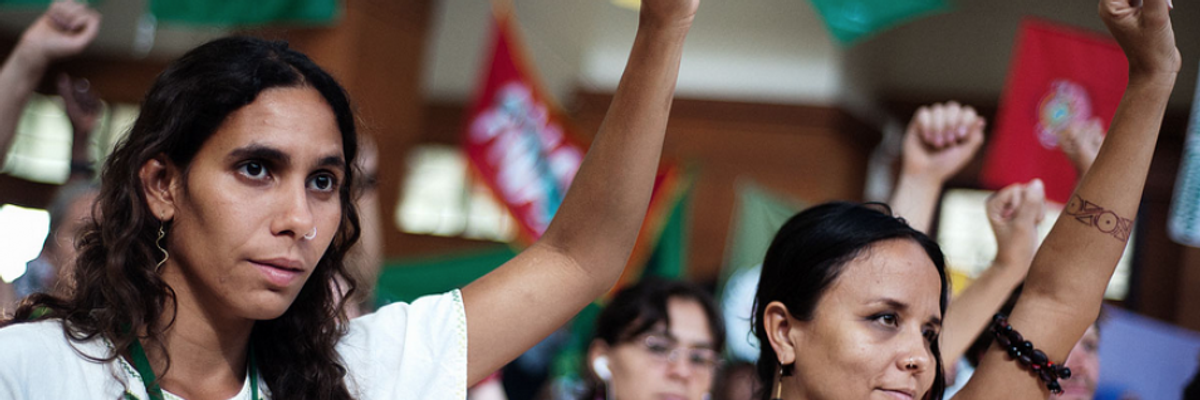
The creation and compilation of reading lists, toolkits, and syllabi by those working day in and day out on these issues and that challenge our understandings of critical issues can help us learn more and take principled action. (Photo: La Via Campesina)
As we navigate this moment and respond to the many threats against our individual bodies and collective sense of democracy, many of us are evaluating our roles and considering how we can best support and participate in movements fighting for justice. We're all involved in different organizing efforts: marching against anti-Black racism and police violence, filling grocery bags to bring to neighbors, fighting voter suppression and discriminatory restrictions, striking against unsafe working conditions and economic injustice. We practice multiple tactics from mutual aid and direct service to direct action. As we engage in all these necessary efforts, community education should also be central to our organizing. Community education, a process of both learning and teaching collectively toward meaningful social change. Through community education, we develop learning opportunities, curricula and pedagogies, drawing upon the knowledge, information, and resources created by those who have been working on these issues for years.
One reason community education is so important is because it requires us to consider who is part of our communities. We might belong to an affinity group for protests, or we join our neighborhood mutual aid group, or organizations that represent our values and commitments. Our community education grows from and within those relationships, but is also tied to all the other connections we've nurtured. Who are we engaged with, or do we want to continue to build with, in an ongoing way? With whom do we build knowledge and meaning, practice accountability, learn and grow? The answers don't need to be aspirational; we often can reflect on our daily connections. For instance, I can look to my relationships within NYC music and art communities, parent groups, and the community education and research center that I'm part of, among other relationships of mutual accountability.
Some of us may be new to organizing against systemic injustice, while others have been confronting and responding to these urgent and mobilizing issues, such as racial and gender justice in relation to police and prison abolition, for decades. We can learn and build with generations of activists, writers, and educators who have made critical, intersectional, and narrative-shifting connections between the many manifestations of injustice we see and feel. We are fortunate also to understand that those who have been most impacted by these injustices should be central to defining the issues and the solutions. Community education requires doing the critical work that makes our communities, our partnerships, and our justice work stronger, ensuring that our learning is inextricable from our action.
As a result of all our organizing, learning together, caring about each other, critically examining our work and our intentions, many of us are pulling together resources to highlight and share information, which makes our community education more accessible and integrated. Technology, political urgency, and this pandemic may all be factors in why there are so many study groups popping up, webinars organized, Google docs assembled. Donation links for individuals and organizations, and to bail funds, have come together in an unprecedented way; similarly, resources and information have been compiled and shared to support those on the frontlines of the struggle, and all of us.
Below are some resources connected to anti-racism and abolition, and there are many others -- often interrelated-- about COVID-19, disability justice, and decolonization, to name a few, that support our knowledge, care, accountability, and action. These resources have been shared and used widely, point to and actually comprise a collective meaning-making process. They are an expression of, and way to build upon our community education: National Resource List Minneapolis Uprising & Beyond, If You're New to Abolition: Study Group Guide, The Queer Futures Collective Resources, Community Organizations & Reading Lists #BLACKLIVESMATTER & Prison Abolition Work, Grounding Movements in Disability Justice, Resources for parents, caregivers, teachers, and community
The creation and compilation of reading lists, toolkits and syllabi by those working day in and day out on these issues and that challenge our understandings of critical issues can help us learn more and take principled action. These, and other examples, are what community education is: the intersection of learning, acting, reflecting, and collectively moving onward. We build community through learning together and moving as a community toward accountable action.
Dear Common Dreams reader, It’s been nearly 30 years since I co-founded Common Dreams with my late wife, Lina Newhouser. We had the radical notion that journalism should serve the public good, not corporate profits. It was clear to us from the outset what it would take to build such a project. No paid advertisements. No corporate sponsors. No millionaire publisher telling us what to think or do. Many people said we wouldn't last a year, but we proved those doubters wrong. Together with a tremendous team of journalists and dedicated staff, we built an independent media outlet free from the constraints of profits and corporate control. Our mission has always been simple: To inform. To inspire. To ignite change for the common good. Building Common Dreams was not easy. Our survival was never guaranteed. When you take on the most powerful forces—Wall Street greed, fossil fuel industry destruction, Big Tech lobbyists, and uber-rich oligarchs who have spent billions upon billions rigging the economy and democracy in their favor—the only bulwark you have is supporters who believe in your work. But here’s the urgent message from me today. It's never been this bad out there. And it's never been this hard to keep us going. At the very moment Common Dreams is most needed, the threats we face are intensifying. We need your support now more than ever. We don't accept corporate advertising and never will. We don't have a paywall because we don't think people should be blocked from critical news based on their ability to pay. Everything we do is funded by the donations of readers like you. When everyone does the little they can afford, we are strong. But if that support retreats or dries up, so do we. Will you donate now to make sure Common Dreams not only survives but thrives? —Craig Brown, Co-founder |
As we navigate this moment and respond to the many threats against our individual bodies and collective sense of democracy, many of us are evaluating our roles and considering how we can best support and participate in movements fighting for justice. We're all involved in different organizing efforts: marching against anti-Black racism and police violence, filling grocery bags to bring to neighbors, fighting voter suppression and discriminatory restrictions, striking against unsafe working conditions and economic injustice. We practice multiple tactics from mutual aid and direct service to direct action. As we engage in all these necessary efforts, community education should also be central to our organizing. Community education, a process of both learning and teaching collectively toward meaningful social change. Through community education, we develop learning opportunities, curricula and pedagogies, drawing upon the knowledge, information, and resources created by those who have been working on these issues for years.
One reason community education is so important is because it requires us to consider who is part of our communities. We might belong to an affinity group for protests, or we join our neighborhood mutual aid group, or organizations that represent our values and commitments. Our community education grows from and within those relationships, but is also tied to all the other connections we've nurtured. Who are we engaged with, or do we want to continue to build with, in an ongoing way? With whom do we build knowledge and meaning, practice accountability, learn and grow? The answers don't need to be aspirational; we often can reflect on our daily connections. For instance, I can look to my relationships within NYC music and art communities, parent groups, and the community education and research center that I'm part of, among other relationships of mutual accountability.
Some of us may be new to organizing against systemic injustice, while others have been confronting and responding to these urgent and mobilizing issues, such as racial and gender justice in relation to police and prison abolition, for decades. We can learn and build with generations of activists, writers, and educators who have made critical, intersectional, and narrative-shifting connections between the many manifestations of injustice we see and feel. We are fortunate also to understand that those who have been most impacted by these injustices should be central to defining the issues and the solutions. Community education requires doing the critical work that makes our communities, our partnerships, and our justice work stronger, ensuring that our learning is inextricable from our action.
As a result of all our organizing, learning together, caring about each other, critically examining our work and our intentions, many of us are pulling together resources to highlight and share information, which makes our community education more accessible and integrated. Technology, political urgency, and this pandemic may all be factors in why there are so many study groups popping up, webinars organized, Google docs assembled. Donation links for individuals and organizations, and to bail funds, have come together in an unprecedented way; similarly, resources and information have been compiled and shared to support those on the frontlines of the struggle, and all of us.
Below are some resources connected to anti-racism and abolition, and there are many others -- often interrelated-- about COVID-19, disability justice, and decolonization, to name a few, that support our knowledge, care, accountability, and action. These resources have been shared and used widely, point to and actually comprise a collective meaning-making process. They are an expression of, and way to build upon our community education: National Resource List Minneapolis Uprising & Beyond, If You're New to Abolition: Study Group Guide, The Queer Futures Collective Resources, Community Organizations & Reading Lists #BLACKLIVESMATTER & Prison Abolition Work, Grounding Movements in Disability Justice, Resources for parents, caregivers, teachers, and community
The creation and compilation of reading lists, toolkits and syllabi by those working day in and day out on these issues and that challenge our understandings of critical issues can help us learn more and take principled action. These, and other examples, are what community education is: the intersection of learning, acting, reflecting, and collectively moving onward. We build community through learning together and moving as a community toward accountable action.
As we navigate this moment and respond to the many threats against our individual bodies and collective sense of democracy, many of us are evaluating our roles and considering how we can best support and participate in movements fighting for justice. We're all involved in different organizing efforts: marching against anti-Black racism and police violence, filling grocery bags to bring to neighbors, fighting voter suppression and discriminatory restrictions, striking against unsafe working conditions and economic injustice. We practice multiple tactics from mutual aid and direct service to direct action. As we engage in all these necessary efforts, community education should also be central to our organizing. Community education, a process of both learning and teaching collectively toward meaningful social change. Through community education, we develop learning opportunities, curricula and pedagogies, drawing upon the knowledge, information, and resources created by those who have been working on these issues for years.
One reason community education is so important is because it requires us to consider who is part of our communities. We might belong to an affinity group for protests, or we join our neighborhood mutual aid group, or organizations that represent our values and commitments. Our community education grows from and within those relationships, but is also tied to all the other connections we've nurtured. Who are we engaged with, or do we want to continue to build with, in an ongoing way? With whom do we build knowledge and meaning, practice accountability, learn and grow? The answers don't need to be aspirational; we often can reflect on our daily connections. For instance, I can look to my relationships within NYC music and art communities, parent groups, and the community education and research center that I'm part of, among other relationships of mutual accountability.
Some of us may be new to organizing against systemic injustice, while others have been confronting and responding to these urgent and mobilizing issues, such as racial and gender justice in relation to police and prison abolition, for decades. We can learn and build with generations of activists, writers, and educators who have made critical, intersectional, and narrative-shifting connections between the many manifestations of injustice we see and feel. We are fortunate also to understand that those who have been most impacted by these injustices should be central to defining the issues and the solutions. Community education requires doing the critical work that makes our communities, our partnerships, and our justice work stronger, ensuring that our learning is inextricable from our action.
As a result of all our organizing, learning together, caring about each other, critically examining our work and our intentions, many of us are pulling together resources to highlight and share information, which makes our community education more accessible and integrated. Technology, political urgency, and this pandemic may all be factors in why there are so many study groups popping up, webinars organized, Google docs assembled. Donation links for individuals and organizations, and to bail funds, have come together in an unprecedented way; similarly, resources and information have been compiled and shared to support those on the frontlines of the struggle, and all of us.
Below are some resources connected to anti-racism and abolition, and there are many others -- often interrelated-- about COVID-19, disability justice, and decolonization, to name a few, that support our knowledge, care, accountability, and action. These resources have been shared and used widely, point to and actually comprise a collective meaning-making process. They are an expression of, and way to build upon our community education: National Resource List Minneapolis Uprising & Beyond, If You're New to Abolition: Study Group Guide, The Queer Futures Collective Resources, Community Organizations & Reading Lists #BLACKLIVESMATTER & Prison Abolition Work, Grounding Movements in Disability Justice, Resources for parents, caregivers, teachers, and community
The creation and compilation of reading lists, toolkits and syllabi by those working day in and day out on these issues and that challenge our understandings of critical issues can help us learn more and take principled action. These, and other examples, are what community education is: the intersection of learning, acting, reflecting, and collectively moving onward. We build community through learning together and moving as a community toward accountable action.

