SUBSCRIBE TO OUR FREE NEWSLETTER
Daily news & progressive opinion—funded by the people, not the corporations—delivered straight to your inbox.
5
#000000
#FFFFFF
To donate by check, phone, or other method, see our More Ways to Give page.
Daily news & progressive opinion—funded by the people, not the corporations—delivered straight to your inbox.
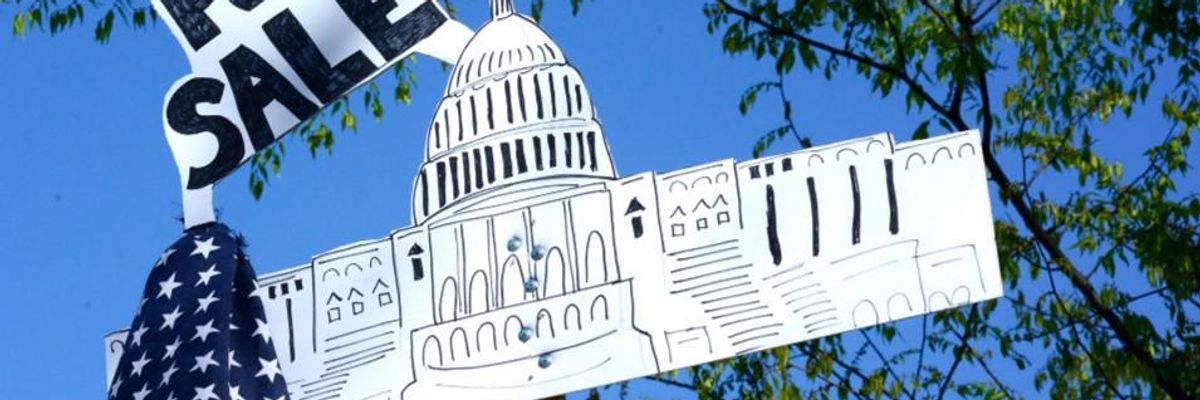
"Large corporations, Wall Street banks, and a relative handful of exceedingly rich individuals have gained enough political power to game the system," writes Reich. (Photo: Stephen Melkisethian/flickr/cc)
On Labor Day, just eight weeks before one of the most consequential elections in American history, it's useful to consider the economic reality that fueled Donald Trump's victory four years ago.
"The main reason is that large corporations, Wall Street banks, and a relative handful of exceedingly rich individuals have gained enough political power to game the system."
No other developed nation has nearly the inequalities of income and wealth found in the U.S., even though all have been exposed to the same forces of globalization and technological change. The three richest people in America have as much wealth as the bottom half of all Americans combined, even as 30 million Americans reported their households didn't have enough food.
American capitalism is off the rails.
The main reason is that large corporations, Wall Street banks, and a relative handful of exceedingly rich individuals have gained enough political power to game the system.
Chief executives have done everything possible to prevent the wages of most workers rising in tandem with productivity gains, so most gains go instead into the pockets of top executives and major investors.
They've outsourced abroad, installed labor-replacing technologies and switched to part-time and contract work. They've busted unions, whose membership shrank from 35% of the private-sector workforce 40 years ago to 6.2% today. They've defanged antitrust enforcement, allowing their monopolies free rein.
The so-called free market has been taken over by crony capitalism, corporate bailouts and corporate welfare.
This massive power shift laid the groundwork for Trump. In 1964, almost two thirds of Americans believed government was run for the benefit of all the people. By 2013 almost 80% believed government was run by a few big interests.
Much of the political establishment wants to attribute Trump's rise solely to racism. Racism did play a part, to be sure, but racism's sordid history in American politics long predates Trump.
"His deal with the moneyed interests was simple: he'd stoke divisiveness so Americans wouldn't see how the oligarchy has taken over the reins, twisted government to its benefit, and siphoned off the economic rewards."
What has given Trump's racism--as well as his hateful xenophobia and misogyny--particular virulence has been his capacity to channel the intensifying anger of the white working class. It is hardly the first time a demagogue has used scapegoats to deflect public attention from the real causes of its distress.
Trump speaks the language of authoritarian populism but acts in the interests of America's emerging oligarchy. His deal with the moneyed interests was simple: he'd stoke divisiveness so Americans wouldn't see how the oligarchy has taken over the reins, twisted government to its benefit, and siphoned off the economic rewards.
He'd make Americans so angry at each other that they wouldn't pay attention to CEOs getting exorbitant pay while slicing the pay of average workers, won't notice the giant tax cut that went to big corporations and the wealthy, and won't be outraged by a boardroom culture that tolerates financial conflicts of interest, insider trading and the outright bribery of public officials through unlimited campaign donations.
This way, the moneyed interests can rig the system while Trump complains that the system is rigged by a "deep state."
Notwithstanding all this, Trump's inexcusable failure to contain the coronavirus is having a larger impact on swing voters than the divisiveness he foments. Death has a way of concentrating the mind.
But if Joe Biden is elected, he would be well advised to remember the forces Trump exploited to gain power, and begin the task of remedying them. The solution is not found in mere redistribution of income. It is found in redistributing power.
If wealth continues to concentrate at the top, no one will be able to contain the corrupting influence of big money on the American system and the anger it unleashes. As Justice Louis D Brandeis once said, "We can have democracy in this country or we can have great wealth concentrated in the hands of a few, but we can't have both."
Dear Common Dreams reader, It’s been nearly 30 years since I co-founded Common Dreams with my late wife, Lina Newhouser. We had the radical notion that journalism should serve the public good, not corporate profits. It was clear to us from the outset what it would take to build such a project. No paid advertisements. No corporate sponsors. No millionaire publisher telling us what to think or do. Many people said we wouldn't last a year, but we proved those doubters wrong. Together with a tremendous team of journalists and dedicated staff, we built an independent media outlet free from the constraints of profits and corporate control. Our mission has always been simple: To inform. To inspire. To ignite change for the common good. Building Common Dreams was not easy. Our survival was never guaranteed. When you take on the most powerful forces—Wall Street greed, fossil fuel industry destruction, Big Tech lobbyists, and uber-rich oligarchs who have spent billions upon billions rigging the economy and democracy in their favor—the only bulwark you have is supporters who believe in your work. But here’s the urgent message from me today. It's never been this bad out there. And it's never been this hard to keep us going. At the very moment Common Dreams is most needed, the threats we face are intensifying. We need your support now more than ever. We don't accept corporate advertising and never will. We don't have a paywall because we don't think people should be blocked from critical news based on their ability to pay. Everything we do is funded by the donations of readers like you. When everyone does the little they can afford, we are strong. But if that support retreats or dries up, so do we. Will you donate now to make sure Common Dreams not only survives but thrives? —Craig Brown, Co-founder |
On Labor Day, just eight weeks before one of the most consequential elections in American history, it's useful to consider the economic reality that fueled Donald Trump's victory four years ago.
"The main reason is that large corporations, Wall Street banks, and a relative handful of exceedingly rich individuals have gained enough political power to game the system."
No other developed nation has nearly the inequalities of income and wealth found in the U.S., even though all have been exposed to the same forces of globalization and technological change. The three richest people in America have as much wealth as the bottom half of all Americans combined, even as 30 million Americans reported their households didn't have enough food.
American capitalism is off the rails.
The main reason is that large corporations, Wall Street banks, and a relative handful of exceedingly rich individuals have gained enough political power to game the system.
Chief executives have done everything possible to prevent the wages of most workers rising in tandem with productivity gains, so most gains go instead into the pockets of top executives and major investors.
They've outsourced abroad, installed labor-replacing technologies and switched to part-time and contract work. They've busted unions, whose membership shrank from 35% of the private-sector workforce 40 years ago to 6.2% today. They've defanged antitrust enforcement, allowing their monopolies free rein.
The so-called free market has been taken over by crony capitalism, corporate bailouts and corporate welfare.
This massive power shift laid the groundwork for Trump. In 1964, almost two thirds of Americans believed government was run for the benefit of all the people. By 2013 almost 80% believed government was run by a few big interests.
Much of the political establishment wants to attribute Trump's rise solely to racism. Racism did play a part, to be sure, but racism's sordid history in American politics long predates Trump.
"His deal with the moneyed interests was simple: he'd stoke divisiveness so Americans wouldn't see how the oligarchy has taken over the reins, twisted government to its benefit, and siphoned off the economic rewards."
What has given Trump's racism--as well as his hateful xenophobia and misogyny--particular virulence has been his capacity to channel the intensifying anger of the white working class. It is hardly the first time a demagogue has used scapegoats to deflect public attention from the real causes of its distress.
Trump speaks the language of authoritarian populism but acts in the interests of America's emerging oligarchy. His deal with the moneyed interests was simple: he'd stoke divisiveness so Americans wouldn't see how the oligarchy has taken over the reins, twisted government to its benefit, and siphoned off the economic rewards.
He'd make Americans so angry at each other that they wouldn't pay attention to CEOs getting exorbitant pay while slicing the pay of average workers, won't notice the giant tax cut that went to big corporations and the wealthy, and won't be outraged by a boardroom culture that tolerates financial conflicts of interest, insider trading and the outright bribery of public officials through unlimited campaign donations.
This way, the moneyed interests can rig the system while Trump complains that the system is rigged by a "deep state."
Notwithstanding all this, Trump's inexcusable failure to contain the coronavirus is having a larger impact on swing voters than the divisiveness he foments. Death has a way of concentrating the mind.
But if Joe Biden is elected, he would be well advised to remember the forces Trump exploited to gain power, and begin the task of remedying them. The solution is not found in mere redistribution of income. It is found in redistributing power.
If wealth continues to concentrate at the top, no one will be able to contain the corrupting influence of big money on the American system and the anger it unleashes. As Justice Louis D Brandeis once said, "We can have democracy in this country or we can have great wealth concentrated in the hands of a few, but we can't have both."
On Labor Day, just eight weeks before one of the most consequential elections in American history, it's useful to consider the economic reality that fueled Donald Trump's victory four years ago.
"The main reason is that large corporations, Wall Street banks, and a relative handful of exceedingly rich individuals have gained enough political power to game the system."
No other developed nation has nearly the inequalities of income and wealth found in the U.S., even though all have been exposed to the same forces of globalization and technological change. The three richest people in America have as much wealth as the bottom half of all Americans combined, even as 30 million Americans reported their households didn't have enough food.
American capitalism is off the rails.
The main reason is that large corporations, Wall Street banks, and a relative handful of exceedingly rich individuals have gained enough political power to game the system.
Chief executives have done everything possible to prevent the wages of most workers rising in tandem with productivity gains, so most gains go instead into the pockets of top executives and major investors.
They've outsourced abroad, installed labor-replacing technologies and switched to part-time and contract work. They've busted unions, whose membership shrank from 35% of the private-sector workforce 40 years ago to 6.2% today. They've defanged antitrust enforcement, allowing their monopolies free rein.
The so-called free market has been taken over by crony capitalism, corporate bailouts and corporate welfare.
This massive power shift laid the groundwork for Trump. In 1964, almost two thirds of Americans believed government was run for the benefit of all the people. By 2013 almost 80% believed government was run by a few big interests.
Much of the political establishment wants to attribute Trump's rise solely to racism. Racism did play a part, to be sure, but racism's sordid history in American politics long predates Trump.
"His deal with the moneyed interests was simple: he'd stoke divisiveness so Americans wouldn't see how the oligarchy has taken over the reins, twisted government to its benefit, and siphoned off the economic rewards."
What has given Trump's racism--as well as his hateful xenophobia and misogyny--particular virulence has been his capacity to channel the intensifying anger of the white working class. It is hardly the first time a demagogue has used scapegoats to deflect public attention from the real causes of its distress.
Trump speaks the language of authoritarian populism but acts in the interests of America's emerging oligarchy. His deal with the moneyed interests was simple: he'd stoke divisiveness so Americans wouldn't see how the oligarchy has taken over the reins, twisted government to its benefit, and siphoned off the economic rewards.
He'd make Americans so angry at each other that they wouldn't pay attention to CEOs getting exorbitant pay while slicing the pay of average workers, won't notice the giant tax cut that went to big corporations and the wealthy, and won't be outraged by a boardroom culture that tolerates financial conflicts of interest, insider trading and the outright bribery of public officials through unlimited campaign donations.
This way, the moneyed interests can rig the system while Trump complains that the system is rigged by a "deep state."
Notwithstanding all this, Trump's inexcusable failure to contain the coronavirus is having a larger impact on swing voters than the divisiveness he foments. Death has a way of concentrating the mind.
But if Joe Biden is elected, he would be well advised to remember the forces Trump exploited to gain power, and begin the task of remedying them. The solution is not found in mere redistribution of income. It is found in redistributing power.
If wealth continues to concentrate at the top, no one will be able to contain the corrupting influence of big money on the American system and the anger it unleashes. As Justice Louis D Brandeis once said, "We can have democracy in this country or we can have great wealth concentrated in the hands of a few, but we can't have both."