SUBSCRIBE TO OUR FREE NEWSLETTER
Daily news & progressive opinion—funded by the people, not the corporations—delivered straight to your inbox.
5
#000000
#FFFFFF
To donate by check, phone, or other method, see our More Ways to Give page.
Daily news & progressive opinion—funded by the people, not the corporations—delivered straight to your inbox.
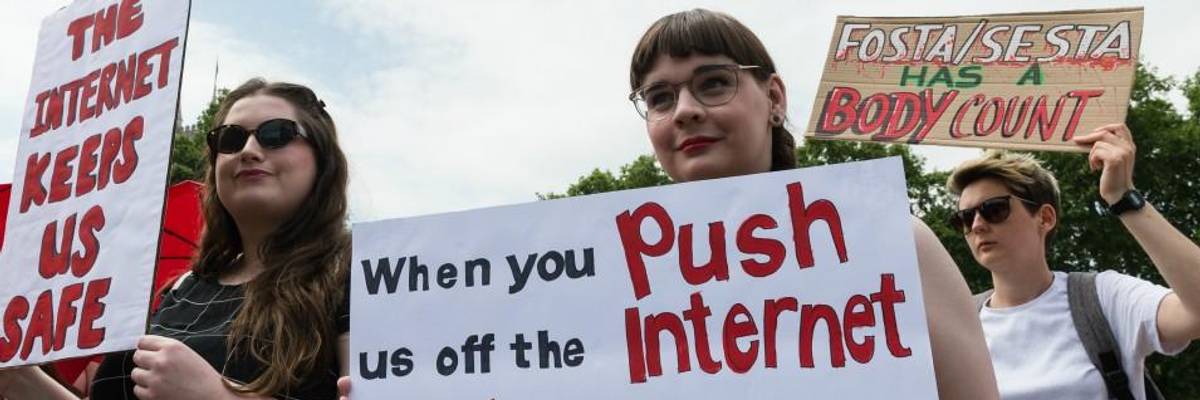
EARN IT would give the Trump Administration a sledge hammer to dismantle free digital speech and privacy as we know it, while endangering countless LGBTQ+ humans. (Photo: Wiktor Szymanowicz/Barcroft Media via Getty Images)
The modern queer liberation movement began 51 years ago with the Stonewall Riots, where Black and Brown LGBTQ+ consensual sex workers and homeless youth demanded a space to congregate and freely express themselves. Today, the internet is the quintessential refuge for this community to work safely and share vital survival tactics. However, the Senate Judiciary Committee is poised to vote on the EARN IT Act, a death blow to internet privacy, and the end of needed online mediums the most marginalized LGBTQ+ communities rely on to survive. Like its predecessor SESTA/FOSTA, which has already endangered countless consensual LGBTQ+ sex workers, preventing the passage of the EARN IT Act is a matter of life or death for our community.
Well-connected advocates claim the "Eliminating Abuse and Rampant Neglect of Interactive Technology Act" will combat online child exploitation. In reality, it gives Attorney General William Barr and his office carte blanche authority to establish coercive guidelines that will force online platforms to moderate and censor content. Further, Barr wants to use EARN IT to coerce platforms to create backdoors for law enforcement to access encrypted data. This will destroy any sense of privacy that marginalized communities have to live free of intrusion from law enforcement. If online platforms do not follow Barr's guidelines, they could lose their liability protection under Section 230 of the Communications Decency Act, which would make them susceptible to lawsuits. To avoid liability, many platforms will simply ban all sex-related content and communications.
EARN IT, like SESTA, which many lawmakers now regret, is one of the most pernicious attacks on the community I've seen, and passing this law would be an abrogation of allyship with queer people for any lawmaker that supports this bill.
LGBTQ+ sex workers create online networks to keep fellow community members safe, minimize harms, and fight exploitation. I know, because I was a young queer sex worker before becoming an attorney, and I now work alongside many sex workers on advocacy efforts. EARN IT, like SESTA, which many lawmakers now regret, is one of the most pernicious attacks on the community I've seen, and passing this law would be an abrogation of allyship with queer people for any lawmaker that supports this bill. LGBTQ+ young people are up to eight times more likely than their peers to trade sex for survival for a multitude of reasons, including employment discrimination, housing instability, for sexual liberation, and the many existing biases transgender community members encounter. Thus, being pro-LGBTQ+ requires recognizing the humanity and needs of queer and trans sex workers. This is a priority for countless queer advocacy groups, including the Human Rights Campaign and the ACLU. Simply put, elected officials cannot be both pro-LGBTQ+ and pro-EARN IT.
At the height of the COVID-19 pandemic, users leveraged online platforms to raise millions of dollars in mutual aid for sex workers, and also provided harm reduction tips for workers who needed to work. These funds enabled many workers to refrain from working, which could have exposed them to the virus. For undocumented sex workers excluded from the CARES Act, these funds were their only source of income.
Outside of the pandemic, sex workers use online platforms to warn other sex workers of dangerous clients and to connect workers with legal, social, and medical services. Importantly, direct peer outreach networks provide a lifeline for help and resources to sex workers at risk of exploitation.
Since before Stonewall, Black and Brown LGBTQ+ sex workers have operated networks to protect the most vulnerable community members. Transgender Stonewall heroes like Marsha P. Johnson and Sylvia Rivera raised money and provided housing for LGBTQ+ homeless young people in the sex trade. The internet expands the efficacy and visibility of these acts of extraordinary kindness tenfold, which saves countless lives. However, SESTA crippled many efforts, and EARN IT would coerce online platforms to ban or censor sex-related content, thereby dismantling these vital survival networks.
Similarly, encryption is more important than ever for these communities. Sex work is criminalized in most of the country. Sex workers cannot operate these networks without fear if the Trump administration coerces platforms to give law enforcement a back door to learn their information. Fears of being tracked by law enforcement already discourages some undocumented sex workers from accessing the networks that survived SESTA, and EARN IT would only exacerbate these fears.
Importantly, many LGBTQ+ sex workers' political voices have been amplified since the passage of SESTA. In numerous cities they are fearlessly calling out the injustices they face from enforcement, including harassment, coercion for sexual favors, rape, and discriminatory enforcement of statutes. However, enabling law enforcement to access digital conversations between sex worker organizers could be chilling to their political organizing, and potentially deadly.
Protecting children from exploitation is a laudable goal, but the EARN IT Act does not do that. There are existing federal laws that the government can use to combat child exploitation that it does not consistently enforce. EARN IT would give the Trump Administration a sledge hammer to dismantle free digital speech and privacy as we know it, while endangering countless LGBTQ+ humans.
Dear Common Dreams reader, It’s been nearly 30 years since I co-founded Common Dreams with my late wife, Lina Newhouser. We had the radical notion that journalism should serve the public good, not corporate profits. It was clear to us from the outset what it would take to build such a project. No paid advertisements. No corporate sponsors. No millionaire publisher telling us what to think or do. Many people said we wouldn't last a year, but we proved those doubters wrong. Together with a tremendous team of journalists and dedicated staff, we built an independent media outlet free from the constraints of profits and corporate control. Our mission has always been simple: To inform. To inspire. To ignite change for the common good. Building Common Dreams was not easy. Our survival was never guaranteed. When you take on the most powerful forces—Wall Street greed, fossil fuel industry destruction, Big Tech lobbyists, and uber-rich oligarchs who have spent billions upon billions rigging the economy and democracy in their favor—the only bulwark you have is supporters who believe in your work. But here’s the urgent message from me today. It's never been this bad out there. And it's never been this hard to keep us going. At the very moment Common Dreams is most needed, the threats we face are intensifying. We need your support now more than ever. We don't accept corporate advertising and never will. We don't have a paywall because we don't think people should be blocked from critical news based on their ability to pay. Everything we do is funded by the donations of readers like you. When everyone does the little they can afford, we are strong. But if that support retreats or dries up, so do we. Will you donate now to make sure Common Dreams not only survives but thrives? —Craig Brown, Co-founder |
The modern queer liberation movement began 51 years ago with the Stonewall Riots, where Black and Brown LGBTQ+ consensual sex workers and homeless youth demanded a space to congregate and freely express themselves. Today, the internet is the quintessential refuge for this community to work safely and share vital survival tactics. However, the Senate Judiciary Committee is poised to vote on the EARN IT Act, a death blow to internet privacy, and the end of needed online mediums the most marginalized LGBTQ+ communities rely on to survive. Like its predecessor SESTA/FOSTA, which has already endangered countless consensual LGBTQ+ sex workers, preventing the passage of the EARN IT Act is a matter of life or death for our community.
Well-connected advocates claim the "Eliminating Abuse and Rampant Neglect of Interactive Technology Act" will combat online child exploitation. In reality, it gives Attorney General William Barr and his office carte blanche authority to establish coercive guidelines that will force online platforms to moderate and censor content. Further, Barr wants to use EARN IT to coerce platforms to create backdoors for law enforcement to access encrypted data. This will destroy any sense of privacy that marginalized communities have to live free of intrusion from law enforcement. If online platforms do not follow Barr's guidelines, they could lose their liability protection under Section 230 of the Communications Decency Act, which would make them susceptible to lawsuits. To avoid liability, many platforms will simply ban all sex-related content and communications.
EARN IT, like SESTA, which many lawmakers now regret, is one of the most pernicious attacks on the community I've seen, and passing this law would be an abrogation of allyship with queer people for any lawmaker that supports this bill.
LGBTQ+ sex workers create online networks to keep fellow community members safe, minimize harms, and fight exploitation. I know, because I was a young queer sex worker before becoming an attorney, and I now work alongside many sex workers on advocacy efforts. EARN IT, like SESTA, which many lawmakers now regret, is one of the most pernicious attacks on the community I've seen, and passing this law would be an abrogation of allyship with queer people for any lawmaker that supports this bill. LGBTQ+ young people are up to eight times more likely than their peers to trade sex for survival for a multitude of reasons, including employment discrimination, housing instability, for sexual liberation, and the many existing biases transgender community members encounter. Thus, being pro-LGBTQ+ requires recognizing the humanity and needs of queer and trans sex workers. This is a priority for countless queer advocacy groups, including the Human Rights Campaign and the ACLU. Simply put, elected officials cannot be both pro-LGBTQ+ and pro-EARN IT.
At the height of the COVID-19 pandemic, users leveraged online platforms to raise millions of dollars in mutual aid for sex workers, and also provided harm reduction tips for workers who needed to work. These funds enabled many workers to refrain from working, which could have exposed them to the virus. For undocumented sex workers excluded from the CARES Act, these funds were their only source of income.
Outside of the pandemic, sex workers use online platforms to warn other sex workers of dangerous clients and to connect workers with legal, social, and medical services. Importantly, direct peer outreach networks provide a lifeline for help and resources to sex workers at risk of exploitation.
Since before Stonewall, Black and Brown LGBTQ+ sex workers have operated networks to protect the most vulnerable community members. Transgender Stonewall heroes like Marsha P. Johnson and Sylvia Rivera raised money and provided housing for LGBTQ+ homeless young people in the sex trade. The internet expands the efficacy and visibility of these acts of extraordinary kindness tenfold, which saves countless lives. However, SESTA crippled many efforts, and EARN IT would coerce online platforms to ban or censor sex-related content, thereby dismantling these vital survival networks.
Similarly, encryption is more important than ever for these communities. Sex work is criminalized in most of the country. Sex workers cannot operate these networks without fear if the Trump administration coerces platforms to give law enforcement a back door to learn their information. Fears of being tracked by law enforcement already discourages some undocumented sex workers from accessing the networks that survived SESTA, and EARN IT would only exacerbate these fears.
Importantly, many LGBTQ+ sex workers' political voices have been amplified since the passage of SESTA. In numerous cities they are fearlessly calling out the injustices they face from enforcement, including harassment, coercion for sexual favors, rape, and discriminatory enforcement of statutes. However, enabling law enforcement to access digital conversations between sex worker organizers could be chilling to their political organizing, and potentially deadly.
Protecting children from exploitation is a laudable goal, but the EARN IT Act does not do that. There are existing federal laws that the government can use to combat child exploitation that it does not consistently enforce. EARN IT would give the Trump Administration a sledge hammer to dismantle free digital speech and privacy as we know it, while endangering countless LGBTQ+ humans.
The modern queer liberation movement began 51 years ago with the Stonewall Riots, where Black and Brown LGBTQ+ consensual sex workers and homeless youth demanded a space to congregate and freely express themselves. Today, the internet is the quintessential refuge for this community to work safely and share vital survival tactics. However, the Senate Judiciary Committee is poised to vote on the EARN IT Act, a death blow to internet privacy, and the end of needed online mediums the most marginalized LGBTQ+ communities rely on to survive. Like its predecessor SESTA/FOSTA, which has already endangered countless consensual LGBTQ+ sex workers, preventing the passage of the EARN IT Act is a matter of life or death for our community.
Well-connected advocates claim the "Eliminating Abuse and Rampant Neglect of Interactive Technology Act" will combat online child exploitation. In reality, it gives Attorney General William Barr and his office carte blanche authority to establish coercive guidelines that will force online platforms to moderate and censor content. Further, Barr wants to use EARN IT to coerce platforms to create backdoors for law enforcement to access encrypted data. This will destroy any sense of privacy that marginalized communities have to live free of intrusion from law enforcement. If online platforms do not follow Barr's guidelines, they could lose their liability protection under Section 230 of the Communications Decency Act, which would make them susceptible to lawsuits. To avoid liability, many platforms will simply ban all sex-related content and communications.
EARN IT, like SESTA, which many lawmakers now regret, is one of the most pernicious attacks on the community I've seen, and passing this law would be an abrogation of allyship with queer people for any lawmaker that supports this bill.
LGBTQ+ sex workers create online networks to keep fellow community members safe, minimize harms, and fight exploitation. I know, because I was a young queer sex worker before becoming an attorney, and I now work alongside many sex workers on advocacy efforts. EARN IT, like SESTA, which many lawmakers now regret, is one of the most pernicious attacks on the community I've seen, and passing this law would be an abrogation of allyship with queer people for any lawmaker that supports this bill. LGBTQ+ young people are up to eight times more likely than their peers to trade sex for survival for a multitude of reasons, including employment discrimination, housing instability, for sexual liberation, and the many existing biases transgender community members encounter. Thus, being pro-LGBTQ+ requires recognizing the humanity and needs of queer and trans sex workers. This is a priority for countless queer advocacy groups, including the Human Rights Campaign and the ACLU. Simply put, elected officials cannot be both pro-LGBTQ+ and pro-EARN IT.
At the height of the COVID-19 pandemic, users leveraged online platforms to raise millions of dollars in mutual aid for sex workers, and also provided harm reduction tips for workers who needed to work. These funds enabled many workers to refrain from working, which could have exposed them to the virus. For undocumented sex workers excluded from the CARES Act, these funds were their only source of income.
Outside of the pandemic, sex workers use online platforms to warn other sex workers of dangerous clients and to connect workers with legal, social, and medical services. Importantly, direct peer outreach networks provide a lifeline for help and resources to sex workers at risk of exploitation.
Since before Stonewall, Black and Brown LGBTQ+ sex workers have operated networks to protect the most vulnerable community members. Transgender Stonewall heroes like Marsha P. Johnson and Sylvia Rivera raised money and provided housing for LGBTQ+ homeless young people in the sex trade. The internet expands the efficacy and visibility of these acts of extraordinary kindness tenfold, which saves countless lives. However, SESTA crippled many efforts, and EARN IT would coerce online platforms to ban or censor sex-related content, thereby dismantling these vital survival networks.
Similarly, encryption is more important than ever for these communities. Sex work is criminalized in most of the country. Sex workers cannot operate these networks without fear if the Trump administration coerces platforms to give law enforcement a back door to learn their information. Fears of being tracked by law enforcement already discourages some undocumented sex workers from accessing the networks that survived SESTA, and EARN IT would only exacerbate these fears.
Importantly, many LGBTQ+ sex workers' political voices have been amplified since the passage of SESTA. In numerous cities they are fearlessly calling out the injustices they face from enforcement, including harassment, coercion for sexual favors, rape, and discriminatory enforcement of statutes. However, enabling law enforcement to access digital conversations between sex worker organizers could be chilling to their political organizing, and potentially deadly.
Protecting children from exploitation is a laudable goal, but the EARN IT Act does not do that. There are existing federal laws that the government can use to combat child exploitation that it does not consistently enforce. EARN IT would give the Trump Administration a sledge hammer to dismantle free digital speech and privacy as we know it, while endangering countless LGBTQ+ humans.