SUBSCRIBE TO OUR FREE NEWSLETTER
Daily news & progressive opinion—funded by the people, not the corporations—delivered straight to your inbox.
5
#000000
#FFFFFF
To donate by check, phone, or other method, see our More Ways to Give page.
Daily news & progressive opinion—funded by the people, not the corporations—delivered straight to your inbox.
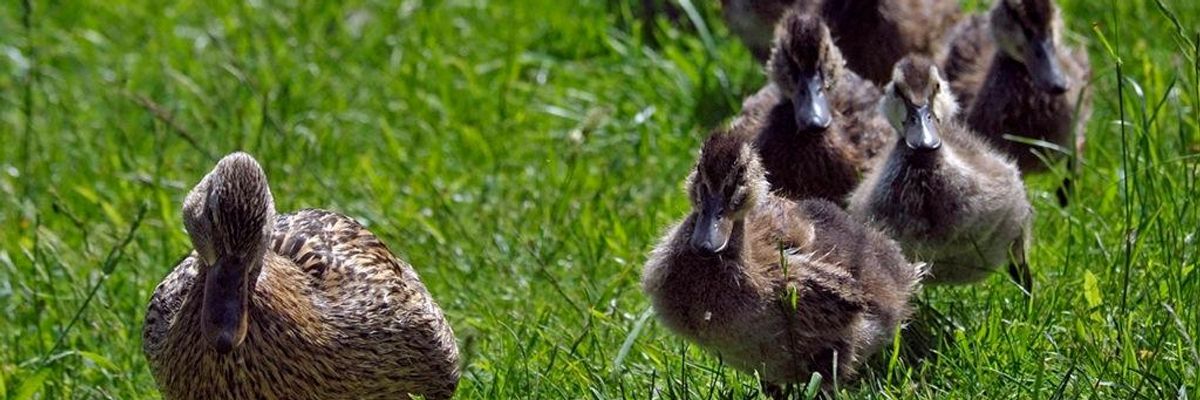
In the midst of so much fury, trauma, and terror, hearts refuse to be crushed. (Photo: Oleksandr Lapin/ Ukrinform/Barcroft Media via Getty Images)
Sometimes it's not the thing that should make you crack that makes you crack.
You keep it together as a pandemic takes half a million people who die alone gasping for breath and throws millions into unrelenting poverty. You keep it together as you watch people killed simply because of the color of their skin, and millions more who share that skin color traumatized and terrorized over and over again. You keep it together knowing girls are sold into sex slavery, and tens of millions of people live enslaved at this very moment around the world. You keep it together as the temperature in the Arctic soars, coral reefs bleach, rainforests are razed, and species become extinct before they've even been given names. You keep it together as sentient animals, without pain relief or anesthesia, are castrated, branded, debeaked, dehorned, and crammed together so tightly they can't move just so people who would never allow their pets to be treated this way can eat their flesh and eggs and consume their milk.
And then a small thing happens, and you crack.
For me--someone who has not lost a friend or family member to COVID-19, and whose white skin, U.S. citizenship, and tremendous privileges makes me so much safer than so many other people--that small thing was missing ducklings. A mother mallard hatched her eleven chicks by the pond at our house. Every day I saw her fuzzy ducklings waddling in a row behind her as she emerged from the lupine meadow to take them for a float or a feed.
Then one day, there were only two ducklings. I was heartbroken for the mother, but at least she still had these two, who never ventured more than a foot from her side. She was a doting mama. Every evening she'd bring her remaining two ducklings to the birdfeeder to eat the seeds the goldfinches had dropped below. She stood on alert, not eating, guarding her babies while they ate. Then she'd walk them back to the pond and settle them under a bush for the night.
A few weeks later I didn't see the ducklings at all, only mama waddling on the path through the meadow. I didn't see them the next day either, but I saw mama under the birdfeeder, eating by herself. Hours later she was standing on the path looking all around her, and I was convinced her ducklings were gone, killed by a predator, and that she was in mourning, desperate to find them.
And that's when I cracked.
I put my head in my hands, and I began to weep, and I was scared that I might not be able to stop, because I knew that this one, small, natural, but awful thing could, inexplicably, open the floodgates for all that I'd not allowed myself to cry about over the past four months.
And then my husband, who hadn't lost hope as I had and was still looking out the window at the duck, said, "There they are."
Sure enough, the ducklings were still alive; they'd been hidden in the lupines, and now they were out on the path with their mama. I felt I like I'd been given a reprieve by this small blessing, which fortified my resolve to do the seemingly endless but necessary work to bend the arc of the moral universe toward justice, as Martin Luther King, Jr. implored us to do.
I posted this story about the ducklings on Facebook, and hundreds of people responded, and I realized this story was deeper and truer than my own small experience. We all crack at inexplicable moments while holding it together when the deepest sorrows threaten to consume us if we give them the smallest toehold. Consciously or unconsciously we may notice that anger and anxiety often eclipse sadness, perhaps because they carry with them sparks of energy that keep us going. I know that for me, sorrow breaks me while rage fuels me. Sorrow threatens to topple what might turn out to be a precarious house of cards, leaving in its path no capacity to move forward at all.
But sorrow demands its day, and a little thing like a mother duck losing all her babies may be all it takes for the heart to say: No more. You must feel this thing, however small so that your humanity is not turned into outrage and fear alone. You must feel this thing so that your heart does not shrivel under the weight of your rageful shouting lungs or your racing fearful mind.
I take it as a good sign that so many people could relate to my Facebook post. It means that in the midst of so much fury, trauma, and terror, hearts refuse to be crushed. There is hope in that: hope that our human love and compassion will ultimately eclipse our human cruelty, myopia, selfishness, and apathy; hope that our arguing may subside, and our willingness to collaborate to solve our systemic problems may gain traction; hope that we will learn how to be solutionaries so that a mother losing her ducklings may one day become among the worst of our sorrows, not the least.
Dear Common Dreams reader, It’s been nearly 30 years since I co-founded Common Dreams with my late wife, Lina Newhouser. We had the radical notion that journalism should serve the public good, not corporate profits. It was clear to us from the outset what it would take to build such a project. No paid advertisements. No corporate sponsors. No millionaire publisher telling us what to think or do. Many people said we wouldn't last a year, but we proved those doubters wrong. Together with a tremendous team of journalists and dedicated staff, we built an independent media outlet free from the constraints of profits and corporate control. Our mission has always been simple: To inform. To inspire. To ignite change for the common good. Building Common Dreams was not easy. Our survival was never guaranteed. When you take on the most powerful forces—Wall Street greed, fossil fuel industry destruction, Big Tech lobbyists, and uber-rich oligarchs who have spent billions upon billions rigging the economy and democracy in their favor—the only bulwark you have is supporters who believe in your work. But here’s the urgent message from me today. It's never been this bad out there. And it's never been this hard to keep us going. At the very moment Common Dreams is most needed, the threats we face are intensifying. We need your support now more than ever. We don't accept corporate advertising and never will. We don't have a paywall because we don't think people should be blocked from critical news based on their ability to pay. Everything we do is funded by the donations of readers like you. When everyone does the little they can afford, we are strong. But if that support retreats or dries up, so do we. Will you donate now to make sure Common Dreams not only survives but thrives? —Craig Brown, Co-founder |
Sometimes it's not the thing that should make you crack that makes you crack.
You keep it together as a pandemic takes half a million people who die alone gasping for breath and throws millions into unrelenting poverty. You keep it together as you watch people killed simply because of the color of their skin, and millions more who share that skin color traumatized and terrorized over and over again. You keep it together knowing girls are sold into sex slavery, and tens of millions of people live enslaved at this very moment around the world. You keep it together as the temperature in the Arctic soars, coral reefs bleach, rainforests are razed, and species become extinct before they've even been given names. You keep it together as sentient animals, without pain relief or anesthesia, are castrated, branded, debeaked, dehorned, and crammed together so tightly they can't move just so people who would never allow their pets to be treated this way can eat their flesh and eggs and consume their milk.
And then a small thing happens, and you crack.
For me--someone who has not lost a friend or family member to COVID-19, and whose white skin, U.S. citizenship, and tremendous privileges makes me so much safer than so many other people--that small thing was missing ducklings. A mother mallard hatched her eleven chicks by the pond at our house. Every day I saw her fuzzy ducklings waddling in a row behind her as she emerged from the lupine meadow to take them for a float or a feed.
Then one day, there were only two ducklings. I was heartbroken for the mother, but at least she still had these two, who never ventured more than a foot from her side. She was a doting mama. Every evening she'd bring her remaining two ducklings to the birdfeeder to eat the seeds the goldfinches had dropped below. She stood on alert, not eating, guarding her babies while they ate. Then she'd walk them back to the pond and settle them under a bush for the night.
A few weeks later I didn't see the ducklings at all, only mama waddling on the path through the meadow. I didn't see them the next day either, but I saw mama under the birdfeeder, eating by herself. Hours later she was standing on the path looking all around her, and I was convinced her ducklings were gone, killed by a predator, and that she was in mourning, desperate to find them.
And that's when I cracked.
I put my head in my hands, and I began to weep, and I was scared that I might not be able to stop, because I knew that this one, small, natural, but awful thing could, inexplicably, open the floodgates for all that I'd not allowed myself to cry about over the past four months.
And then my husband, who hadn't lost hope as I had and was still looking out the window at the duck, said, "There they are."
Sure enough, the ducklings were still alive; they'd been hidden in the lupines, and now they were out on the path with their mama. I felt I like I'd been given a reprieve by this small blessing, which fortified my resolve to do the seemingly endless but necessary work to bend the arc of the moral universe toward justice, as Martin Luther King, Jr. implored us to do.
I posted this story about the ducklings on Facebook, and hundreds of people responded, and I realized this story was deeper and truer than my own small experience. We all crack at inexplicable moments while holding it together when the deepest sorrows threaten to consume us if we give them the smallest toehold. Consciously or unconsciously we may notice that anger and anxiety often eclipse sadness, perhaps because they carry with them sparks of energy that keep us going. I know that for me, sorrow breaks me while rage fuels me. Sorrow threatens to topple what might turn out to be a precarious house of cards, leaving in its path no capacity to move forward at all.
But sorrow demands its day, and a little thing like a mother duck losing all her babies may be all it takes for the heart to say: No more. You must feel this thing, however small so that your humanity is not turned into outrage and fear alone. You must feel this thing so that your heart does not shrivel under the weight of your rageful shouting lungs or your racing fearful mind.
I take it as a good sign that so many people could relate to my Facebook post. It means that in the midst of so much fury, trauma, and terror, hearts refuse to be crushed. There is hope in that: hope that our human love and compassion will ultimately eclipse our human cruelty, myopia, selfishness, and apathy; hope that our arguing may subside, and our willingness to collaborate to solve our systemic problems may gain traction; hope that we will learn how to be solutionaries so that a mother losing her ducklings may one day become among the worst of our sorrows, not the least.
Sometimes it's not the thing that should make you crack that makes you crack.
You keep it together as a pandemic takes half a million people who die alone gasping for breath and throws millions into unrelenting poverty. You keep it together as you watch people killed simply because of the color of their skin, and millions more who share that skin color traumatized and terrorized over and over again. You keep it together knowing girls are sold into sex slavery, and tens of millions of people live enslaved at this very moment around the world. You keep it together as the temperature in the Arctic soars, coral reefs bleach, rainforests are razed, and species become extinct before they've even been given names. You keep it together as sentient animals, without pain relief or anesthesia, are castrated, branded, debeaked, dehorned, and crammed together so tightly they can't move just so people who would never allow their pets to be treated this way can eat their flesh and eggs and consume their milk.
And then a small thing happens, and you crack.
For me--someone who has not lost a friend or family member to COVID-19, and whose white skin, U.S. citizenship, and tremendous privileges makes me so much safer than so many other people--that small thing was missing ducklings. A mother mallard hatched her eleven chicks by the pond at our house. Every day I saw her fuzzy ducklings waddling in a row behind her as she emerged from the lupine meadow to take them for a float or a feed.
Then one day, there were only two ducklings. I was heartbroken for the mother, but at least she still had these two, who never ventured more than a foot from her side. She was a doting mama. Every evening she'd bring her remaining two ducklings to the birdfeeder to eat the seeds the goldfinches had dropped below. She stood on alert, not eating, guarding her babies while they ate. Then she'd walk them back to the pond and settle them under a bush for the night.
A few weeks later I didn't see the ducklings at all, only mama waddling on the path through the meadow. I didn't see them the next day either, but I saw mama under the birdfeeder, eating by herself. Hours later she was standing on the path looking all around her, and I was convinced her ducklings were gone, killed by a predator, and that she was in mourning, desperate to find them.
And that's when I cracked.
I put my head in my hands, and I began to weep, and I was scared that I might not be able to stop, because I knew that this one, small, natural, but awful thing could, inexplicably, open the floodgates for all that I'd not allowed myself to cry about over the past four months.
And then my husband, who hadn't lost hope as I had and was still looking out the window at the duck, said, "There they are."
Sure enough, the ducklings were still alive; they'd been hidden in the lupines, and now they were out on the path with their mama. I felt I like I'd been given a reprieve by this small blessing, which fortified my resolve to do the seemingly endless but necessary work to bend the arc of the moral universe toward justice, as Martin Luther King, Jr. implored us to do.
I posted this story about the ducklings on Facebook, and hundreds of people responded, and I realized this story was deeper and truer than my own small experience. We all crack at inexplicable moments while holding it together when the deepest sorrows threaten to consume us if we give them the smallest toehold. Consciously or unconsciously we may notice that anger and anxiety often eclipse sadness, perhaps because they carry with them sparks of energy that keep us going. I know that for me, sorrow breaks me while rage fuels me. Sorrow threatens to topple what might turn out to be a precarious house of cards, leaving in its path no capacity to move forward at all.
But sorrow demands its day, and a little thing like a mother duck losing all her babies may be all it takes for the heart to say: No more. You must feel this thing, however small so that your humanity is not turned into outrage and fear alone. You must feel this thing so that your heart does not shrivel under the weight of your rageful shouting lungs or your racing fearful mind.
I take it as a good sign that so many people could relate to my Facebook post. It means that in the midst of so much fury, trauma, and terror, hearts refuse to be crushed. There is hope in that: hope that our human love and compassion will ultimately eclipse our human cruelty, myopia, selfishness, and apathy; hope that our arguing may subside, and our willingness to collaborate to solve our systemic problems may gain traction; hope that we will learn how to be solutionaries so that a mother losing her ducklings may one day become among the worst of our sorrows, not the least.