SUBSCRIBE TO OUR FREE NEWSLETTER
Daily news & progressive opinion—funded by the people, not the corporations—delivered straight to your inbox.
5
#000000
#FFFFFF
To donate by check, phone, or other method, see our More Ways to Give page.
Daily news & progressive opinion—funded by the people, not the corporations—delivered straight to your inbox.
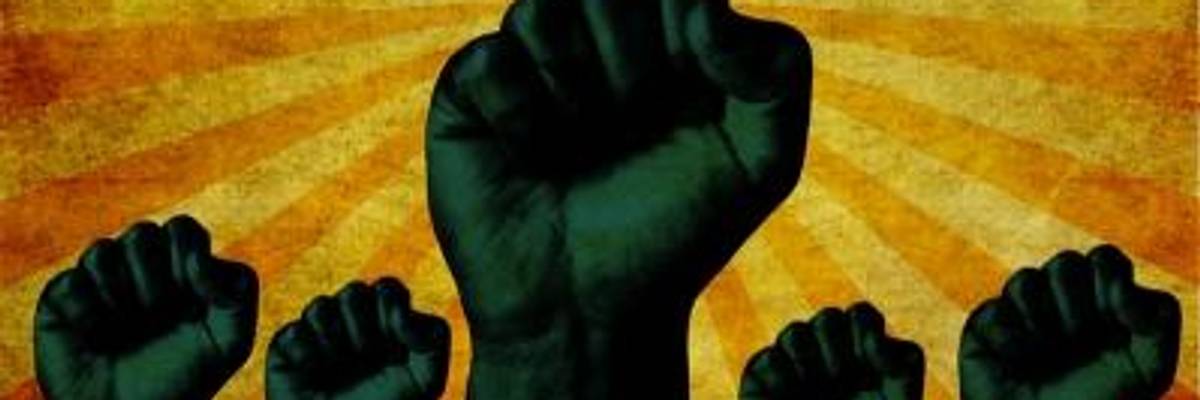
We are entering a time when the US American people as a whole are going to be hearing about and talking about progressive approaches to the issues much more than they have been for the last couple of years. (Photo: Shutterstock)
From my vantage point, one "positive" effect of the election of Mafioso Don is the marginalization of the position taken by some on the political left that elections in the US are a sham, and the correct approach to them is to non-participate.
Elections do have consequences, potentially very big, very negative consequences, like a neo-fascist government.
Young people in general are most likely to view elections as a sham, for understandable reasons. Young people tend to be more idealistic so that they are turned off by the often-cynical and dishonest political maneuvering from both Republicans and Democrats.
That's why the 2015-16 Bernie Sanders campaign generated so much active support from young people. Here was someone who spoke truth to power, who didn't accept Super PAC money or mega-donations from rich people, who articulated a strong, positive program consistent with positions he had been taking for literally decades, who had a history of winning elections and using his elected office positively, and who consciously reached out to young people and working-class people.
Articulating the truth about what is needed and taking strategic risks in support of that program, as she did in Nancy Pelosi's office in November in support of a Green New Deal, is exactly what is needed to inspire and mobilize the tens of millions of potential voters who don't vote because they correctly think the system is rigged.
Alexandria Ocasio-Cortez, a young person herself, was elected and has become a political star since for similar reasons. Articulating the truth about what is needed and taking strategic risks in support of that program, as she did in Nancy Pelosi's office in November in support of a Green New Deal, is exactly what is needed to inspire and mobilize the tens of millions of potential voters who don't vote because they correctly think the system is rigged.
However, it's essential that progressive candidates and elected progressives are pushed, if necessary, by their supporters to take steps to ensure that they are continually in contact with the people they are representing and with organizations rooted among progressive-oriented constituencies. This is particularly essential in this time when corporate money is so much a factor in elections.
Even without the influence of corporate money, there's something about running for office, becoming THE dominant person in a campaign organization, always being in the public eye, getting media coverage, that often leads progressives elected to office down the egotistical and I'm-the-man (or -woman) road. It leads many to opportunist compromises in order to curry favor with monied or powerful interests whose support they want.
There is a long, long history in the US of genuine progressives elected to office becoming someone very different after they were elected.
There is a long, long history in the US of genuine progressives elected to office becoming someone very different after they were elected.
This is another reason why so many people are turned off from voting. If voting in someone who says they care about the issues important to you only leads to disappointment when they half-step it or worse, that's not going to encourage you to vote next time.
And that's where organizing and movement-building are so critical.
To keep progressives elected to office consistently speaking, voting and acting the way they should, accountability is key. And to have accountability there need to be broadly-based organizations at a community level which are actively organizing on behalf of the needs and issues important to local working-class and progressive people, especially low-income people, people of color, women, lgbtq+ people and youth. Part of that work of community organizing is to maintain contact with elected officials who are supposed to be representing local people. When they're not doing so, actions of various kinds need to be taken, from call-in days and petitions, to demonstrations outside of and sit-ins inside their offices.
Here's a good example: the Sunrise movement taking direct action a week after last November's election to hold Nancy Pelosi accountable when it comes to using her power in the House to ensure there is strong legislation on the climate crisis, wealth inequality and environmental justice.
It's a time when movement-building across issue and constituency lines, the building of a stronger, multi-cultural, nationwide alliance, can make major advances.
In 2019 there are a lot more progressives in Congress, and people who realize they need to advocate for a progressive platform, than there have been for a while. Some of them have announced their intention to run for President, and more are coming. We are entering a time when the US American people as a whole are going to be hearing about and talking about progressive approaches to the issues much more than they have been for the last couple of years. It's a time when movement-building across issue and constituency lines, the building of a stronger, multi-cultural, nationwide alliance, can make major advances.
In 2016 the Sanders campaign played this role. The political success of that campaign had a lot to do with the coming forward from the very first day Trump took office of a mass resistance movement against him. That campaign and the Our Revolution organization emerging out of it also helped both to take control of the House away from Republicans and to strengthen the progressive movement inside and outside the Democratic Party.
Let's resolve in this first month of the new year to make the next 22 months the decisive period in history that they absolutely need to be. Let's keep hearing the voices of our still-unborn, great, great grandchildren calling on us to step it up right now.
Dear Common Dreams reader, It’s been nearly 30 years since I co-founded Common Dreams with my late wife, Lina Newhouser. We had the radical notion that journalism should serve the public good, not corporate profits. It was clear to us from the outset what it would take to build such a project. No paid advertisements. No corporate sponsors. No millionaire publisher telling us what to think or do. Many people said we wouldn't last a year, but we proved those doubters wrong. Together with a tremendous team of journalists and dedicated staff, we built an independent media outlet free from the constraints of profits and corporate control. Our mission has always been simple: To inform. To inspire. To ignite change for the common good. Building Common Dreams was not easy. Our survival was never guaranteed. When you take on the most powerful forces—Wall Street greed, fossil fuel industry destruction, Big Tech lobbyists, and uber-rich oligarchs who have spent billions upon billions rigging the economy and democracy in their favor—the only bulwark you have is supporters who believe in your work. But here’s the urgent message from me today. It's never been this bad out there. And it's never been this hard to keep us going. At the very moment Common Dreams is most needed, the threats we face are intensifying. We need your support now more than ever. We don't accept corporate advertising and never will. We don't have a paywall because we don't think people should be blocked from critical news based on their ability to pay. Everything we do is funded by the donations of readers like you. When everyone does the little they can afford, we are strong. But if that support retreats or dries up, so do we. Will you donate now to make sure Common Dreams not only survives but thrives? —Craig Brown, Co-founder |
From my vantage point, one "positive" effect of the election of Mafioso Don is the marginalization of the position taken by some on the political left that elections in the US are a sham, and the correct approach to them is to non-participate.
Elections do have consequences, potentially very big, very negative consequences, like a neo-fascist government.
Young people in general are most likely to view elections as a sham, for understandable reasons. Young people tend to be more idealistic so that they are turned off by the often-cynical and dishonest political maneuvering from both Republicans and Democrats.
That's why the 2015-16 Bernie Sanders campaign generated so much active support from young people. Here was someone who spoke truth to power, who didn't accept Super PAC money or mega-donations from rich people, who articulated a strong, positive program consistent with positions he had been taking for literally decades, who had a history of winning elections and using his elected office positively, and who consciously reached out to young people and working-class people.
Articulating the truth about what is needed and taking strategic risks in support of that program, as she did in Nancy Pelosi's office in November in support of a Green New Deal, is exactly what is needed to inspire and mobilize the tens of millions of potential voters who don't vote because they correctly think the system is rigged.
Alexandria Ocasio-Cortez, a young person herself, was elected and has become a political star since for similar reasons. Articulating the truth about what is needed and taking strategic risks in support of that program, as she did in Nancy Pelosi's office in November in support of a Green New Deal, is exactly what is needed to inspire and mobilize the tens of millions of potential voters who don't vote because they correctly think the system is rigged.
However, it's essential that progressive candidates and elected progressives are pushed, if necessary, by their supporters to take steps to ensure that they are continually in contact with the people they are representing and with organizations rooted among progressive-oriented constituencies. This is particularly essential in this time when corporate money is so much a factor in elections.
Even without the influence of corporate money, there's something about running for office, becoming THE dominant person in a campaign organization, always being in the public eye, getting media coverage, that often leads progressives elected to office down the egotistical and I'm-the-man (or -woman) road. It leads many to opportunist compromises in order to curry favor with monied or powerful interests whose support they want.
There is a long, long history in the US of genuine progressives elected to office becoming someone very different after they were elected.
There is a long, long history in the US of genuine progressives elected to office becoming someone very different after they were elected.
This is another reason why so many people are turned off from voting. If voting in someone who says they care about the issues important to you only leads to disappointment when they half-step it or worse, that's not going to encourage you to vote next time.
And that's where organizing and movement-building are so critical.
To keep progressives elected to office consistently speaking, voting and acting the way they should, accountability is key. And to have accountability there need to be broadly-based organizations at a community level which are actively organizing on behalf of the needs and issues important to local working-class and progressive people, especially low-income people, people of color, women, lgbtq+ people and youth. Part of that work of community organizing is to maintain contact with elected officials who are supposed to be representing local people. When they're not doing so, actions of various kinds need to be taken, from call-in days and petitions, to demonstrations outside of and sit-ins inside their offices.
Here's a good example: the Sunrise movement taking direct action a week after last November's election to hold Nancy Pelosi accountable when it comes to using her power in the House to ensure there is strong legislation on the climate crisis, wealth inequality and environmental justice.
It's a time when movement-building across issue and constituency lines, the building of a stronger, multi-cultural, nationwide alliance, can make major advances.
In 2019 there are a lot more progressives in Congress, and people who realize they need to advocate for a progressive platform, than there have been for a while. Some of them have announced their intention to run for President, and more are coming. We are entering a time when the US American people as a whole are going to be hearing about and talking about progressive approaches to the issues much more than they have been for the last couple of years. It's a time when movement-building across issue and constituency lines, the building of a stronger, multi-cultural, nationwide alliance, can make major advances.
In 2016 the Sanders campaign played this role. The political success of that campaign had a lot to do with the coming forward from the very first day Trump took office of a mass resistance movement against him. That campaign and the Our Revolution organization emerging out of it also helped both to take control of the House away from Republicans and to strengthen the progressive movement inside and outside the Democratic Party.
Let's resolve in this first month of the new year to make the next 22 months the decisive period in history that they absolutely need to be. Let's keep hearing the voices of our still-unborn, great, great grandchildren calling on us to step it up right now.
From my vantage point, one "positive" effect of the election of Mafioso Don is the marginalization of the position taken by some on the political left that elections in the US are a sham, and the correct approach to them is to non-participate.
Elections do have consequences, potentially very big, very negative consequences, like a neo-fascist government.
Young people in general are most likely to view elections as a sham, for understandable reasons. Young people tend to be more idealistic so that they are turned off by the often-cynical and dishonest political maneuvering from both Republicans and Democrats.
That's why the 2015-16 Bernie Sanders campaign generated so much active support from young people. Here was someone who spoke truth to power, who didn't accept Super PAC money or mega-donations from rich people, who articulated a strong, positive program consistent with positions he had been taking for literally decades, who had a history of winning elections and using his elected office positively, and who consciously reached out to young people and working-class people.
Articulating the truth about what is needed and taking strategic risks in support of that program, as she did in Nancy Pelosi's office in November in support of a Green New Deal, is exactly what is needed to inspire and mobilize the tens of millions of potential voters who don't vote because they correctly think the system is rigged.
Alexandria Ocasio-Cortez, a young person herself, was elected and has become a political star since for similar reasons. Articulating the truth about what is needed and taking strategic risks in support of that program, as she did in Nancy Pelosi's office in November in support of a Green New Deal, is exactly what is needed to inspire and mobilize the tens of millions of potential voters who don't vote because they correctly think the system is rigged.
However, it's essential that progressive candidates and elected progressives are pushed, if necessary, by their supporters to take steps to ensure that they are continually in contact with the people they are representing and with organizations rooted among progressive-oriented constituencies. This is particularly essential in this time when corporate money is so much a factor in elections.
Even without the influence of corporate money, there's something about running for office, becoming THE dominant person in a campaign organization, always being in the public eye, getting media coverage, that often leads progressives elected to office down the egotistical and I'm-the-man (or -woman) road. It leads many to opportunist compromises in order to curry favor with monied or powerful interests whose support they want.
There is a long, long history in the US of genuine progressives elected to office becoming someone very different after they were elected.
There is a long, long history in the US of genuine progressives elected to office becoming someone very different after they were elected.
This is another reason why so many people are turned off from voting. If voting in someone who says they care about the issues important to you only leads to disappointment when they half-step it or worse, that's not going to encourage you to vote next time.
And that's where organizing and movement-building are so critical.
To keep progressives elected to office consistently speaking, voting and acting the way they should, accountability is key. And to have accountability there need to be broadly-based organizations at a community level which are actively organizing on behalf of the needs and issues important to local working-class and progressive people, especially low-income people, people of color, women, lgbtq+ people and youth. Part of that work of community organizing is to maintain contact with elected officials who are supposed to be representing local people. When they're not doing so, actions of various kinds need to be taken, from call-in days and petitions, to demonstrations outside of and sit-ins inside their offices.
Here's a good example: the Sunrise movement taking direct action a week after last November's election to hold Nancy Pelosi accountable when it comes to using her power in the House to ensure there is strong legislation on the climate crisis, wealth inequality and environmental justice.
It's a time when movement-building across issue and constituency lines, the building of a stronger, multi-cultural, nationwide alliance, can make major advances.
In 2019 there are a lot more progressives in Congress, and people who realize they need to advocate for a progressive platform, than there have been for a while. Some of them have announced their intention to run for President, and more are coming. We are entering a time when the US American people as a whole are going to be hearing about and talking about progressive approaches to the issues much more than they have been for the last couple of years. It's a time when movement-building across issue and constituency lines, the building of a stronger, multi-cultural, nationwide alliance, can make major advances.
In 2016 the Sanders campaign played this role. The political success of that campaign had a lot to do with the coming forward from the very first day Trump took office of a mass resistance movement against him. That campaign and the Our Revolution organization emerging out of it also helped both to take control of the House away from Republicans and to strengthen the progressive movement inside and outside the Democratic Party.
Let's resolve in this first month of the new year to make the next 22 months the decisive period in history that they absolutely need to be. Let's keep hearing the voices of our still-unborn, great, great grandchildren calling on us to step it up right now.