SUBSCRIBE TO OUR FREE NEWSLETTER
Daily news & progressive opinion—funded by the people, not the corporations—delivered straight to your inbox.
5
#000000
#FFFFFF
To donate by check, phone, or other method, see our More Ways to Give page.
Daily news & progressive opinion—funded by the people, not the corporations—delivered straight to your inbox.
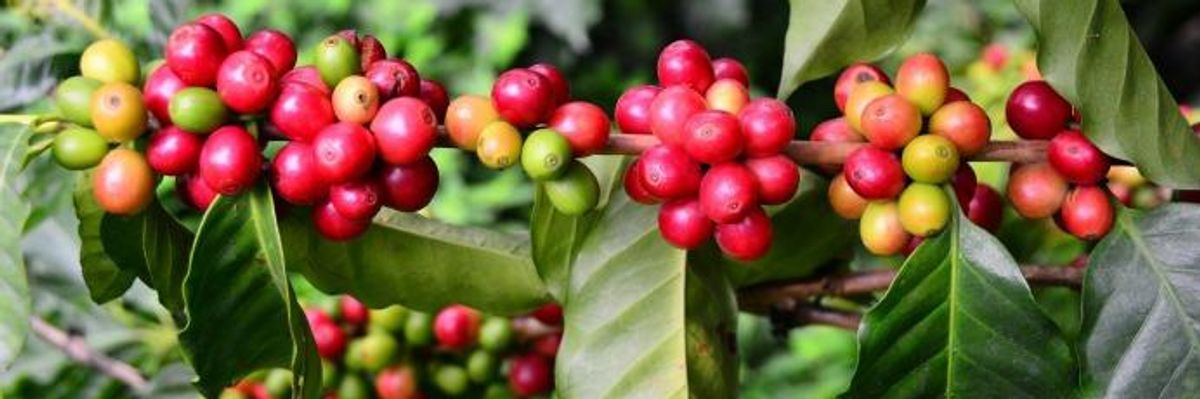
The current situation is critical for most of the more than 3000 coffee farms in Puerto Rico. (Photo: GA CAES/Extension/flickr/cc)
In Naomi Klein's framework, The Shock Doctrine is the well-worn strategy of capitalist development in the "shock" mode. Part of this framework contends that in the aftermath of disasters, capitalists will descend, purchasing land and other capital goods at basement bottom prices, using their deep pockets to undercut anything or anyone who would strive to relieve the hardship. Why? Because disaster is a profit opportunity. Today it would be difficult to imagine a more perfect example than Puerto Rico. Triggered by Hurricane Maria, a Class 4 storm with winds over 155 mph, the disaster had been set in motion long before.
Starting in 1998, US companies operating on the island began leaving after the US Congress abolished section 936 of the U.S. Internal Revenue Code, effectively removing Puerto Rico's business incentives. The led to massive unemployment and depressed wages. Then the 2007 global financial crisis hit Puerto Rico--hard. The government's solution was for Puerto Rico to fire one-third of the public workforce and sell off the telephone company, highways, and the main airport. Many Puerto Ricans left the island, reducing the tax base and further shrinking the economy. Yet even this does not tell the whole story. As Linda Backiel has pointed out, the crisis faced by Puerto Rico is not just due to the two hurricanes--Wall Street and Maria-- this human misery is the logical result of five centuries of colonialism.
In 2017, the US Congress passed the Puerto Rico Oversight, Management, and Economic Stability Act--PROMESA (a cruelly ironic acronym) establishing the island's non-elected Fiscal Control Board. Much like the emergency managers imposed on Detroit and other US cities in the throes of fiscal insolvency, PROMESA holds executive power over all of Puerto Rico's elected officials.
Meanwhile, for years, the vultures known as hedge fund capitalists had been on a spree, purchasing Puerto Rican debt. They fully expected the US government to bail them out if Puerto Rico could not pay them back. PROMESA concluded that even by selling everything in Puerto Rico (schools, hospitals, energy, etc. . . . down to the last coconut), the hedge fund guys could only expect 22 cents on the dollar, maximum. Puerto Rico's record-breaking insolvency ($120 billion in debt and pension liabilities) created the investment conditions that capitalist entrepreneurs crave.
Then, the worst storm in 80 years hit. Hurricane Maria caused over $95 billion in damages and led to 4,000 deaths. It quickly became an unprecedented human disaster because the destruction of Puerto Rican economy and society had long been underway. After the winds died, Puerto Ricans went days, then weeks, then months without electricity or water. FEMA acted inadequately as expected. Tens of thousands of Puerto Ricans chose to leave the island, if they could. Those remaining made due with many celebrated local efforts, much to the well-deserved acclaim of their amazing "self-sufficiency". Yet, the devastation was palpable, and not to be relieved by inefficient bureaucracies.
The "shock" then was the US government's imposition of PROMESA coupled with the physical reality of hurricane Maria. Once circling, the capitalist vultures then landed en masse. True, the beach-front property, land with golf course potential, and other potential profit centers were clear targets. But less noticed was an agricultural gold mine: Coffee.
Coffee contains a drug called caffeine and for this reason alone will forever be in world-wide demand - indeed the recent surge of coffee drinking in China has the major coffee companies ecstatic. Puerto Rican agriculture is grounded--so to speak--by coffee (second only to sugar, historically). The Coca Cola Company moved on this resource many years ago, purchasing classic Puerto Rican brands of coffee and establishing the "Puerto Rico Coffee Roasters" which is not a Puerto Rican company at all, but rather a wholly owned entity of the Coca Cola Company. Furthermore, in a previous time, Puerto Rican coffee was coffee grown and processed in Puerto Rico. But no more. Coca Cola proudly announces that on the back of their packages that their coffee is made with "cafe puro de Puerto Rico y puro importado" (pure coffee from Puerto and pure imported coffee), whatever that means.
The current situation is critical for most of the more than 3000 coffee farms in Puerto Rico. PROMESA made their costs higher and their profits lower. Maria destroyed many of their farms. Many coffee growers are elderly farmers with children who see little potential in farming. They largely live in the island's mountainous central region. Many of them speak of giving up. The combined pressure of PROMESA and Maria are simply too much to bear. The general population of Puerto Rico is in the same situation, trying to make ends meet before taking the gut-wrenching decision to abandon the island for the US. The situation corresponds almost perfectly to Naomi Klein's framing of the shock doctrine. Not just waiting in the wings, but actively engaged in taking over the coffee industry, the Coca Cola Company has the deep pockets required to scoop up those farms at bargain basement prices, further expanding their control of coffee production in Puerto Rico.
There is something of a beacon in this storm. A rejuvenated, largely young population has taken up the banner of agroecology--both its productive philosophy and political perspective. From the new farms springing up in pockets across the island, to urban spaces converted to gardens, to school gardens, alternative and organic production is spreading. Also, the small farmer organization Boricua takes on agroecology's political position that the transformative goal is not just promoting rational agriculture, but additionally challenging the practice and organization of the irrational industrial model. This means both an active penetration into the coffee sector by the new agriculturalists and a vigorous challenge to the increasing dominance of the Coca Cola Company.
Struggling, mainly elder, traditional coffee producers need to get together with the new generation of farmers in the celebrated farmer-to-farmer framework to discuss why coffee farmers are losing their land and why the new farmers can't get land. Why is the culturally important activity of coffee production, processing, and marketing being taken over by a mega agroindustry without Puerto Rican roots? They need to collectively ask how new forms of land ownership, harvesting technology, and marketing can benefit the small-scale producers. Indeed, what new forms of organization are needed to make the new farmers into the next generation of coffee producers? If not, Puerto Rico's most significant agricultural product, both in terms of the potential for markets to support the growth of the new and independent agricultural sector, and in terms of its cultural significance, will be lost to one of the worst players in the industrial agrifoods complex.
Dear Common Dreams reader, It’s been nearly 30 years since I co-founded Common Dreams with my late wife, Lina Newhouser. We had the radical notion that journalism should serve the public good, not corporate profits. It was clear to us from the outset what it would take to build such a project. No paid advertisements. No corporate sponsors. No millionaire publisher telling us what to think or do. Many people said we wouldn't last a year, but we proved those doubters wrong. Together with a tremendous team of journalists and dedicated staff, we built an independent media outlet free from the constraints of profits and corporate control. Our mission has always been simple: To inform. To inspire. To ignite change for the common good. Building Common Dreams was not easy. Our survival was never guaranteed. When you take on the most powerful forces—Wall Street greed, fossil fuel industry destruction, Big Tech lobbyists, and uber-rich oligarchs who have spent billions upon billions rigging the economy and democracy in their favor—the only bulwark you have is supporters who believe in your work. But here’s the urgent message from me today. It's never been this bad out there. And it's never been this hard to keep us going. At the very moment Common Dreams is most needed, the threats we face are intensifying. We need your support now more than ever. We don't accept corporate advertising and never will. We don't have a paywall because we don't think people should be blocked from critical news based on their ability to pay. Everything we do is funded by the donations of readers like you. When everyone does the little they can afford, we are strong. But if that support retreats or dries up, so do we. Will you donate now to make sure Common Dreams not only survives but thrives? —Craig Brown, Co-founder |
In Naomi Klein's framework, The Shock Doctrine is the well-worn strategy of capitalist development in the "shock" mode. Part of this framework contends that in the aftermath of disasters, capitalists will descend, purchasing land and other capital goods at basement bottom prices, using their deep pockets to undercut anything or anyone who would strive to relieve the hardship. Why? Because disaster is a profit opportunity. Today it would be difficult to imagine a more perfect example than Puerto Rico. Triggered by Hurricane Maria, a Class 4 storm with winds over 155 mph, the disaster had been set in motion long before.
Starting in 1998, US companies operating on the island began leaving after the US Congress abolished section 936 of the U.S. Internal Revenue Code, effectively removing Puerto Rico's business incentives. The led to massive unemployment and depressed wages. Then the 2007 global financial crisis hit Puerto Rico--hard. The government's solution was for Puerto Rico to fire one-third of the public workforce and sell off the telephone company, highways, and the main airport. Many Puerto Ricans left the island, reducing the tax base and further shrinking the economy. Yet even this does not tell the whole story. As Linda Backiel has pointed out, the crisis faced by Puerto Rico is not just due to the two hurricanes--Wall Street and Maria-- this human misery is the logical result of five centuries of colonialism.
In 2017, the US Congress passed the Puerto Rico Oversight, Management, and Economic Stability Act--PROMESA (a cruelly ironic acronym) establishing the island's non-elected Fiscal Control Board. Much like the emergency managers imposed on Detroit and other US cities in the throes of fiscal insolvency, PROMESA holds executive power over all of Puerto Rico's elected officials.
Meanwhile, for years, the vultures known as hedge fund capitalists had been on a spree, purchasing Puerto Rican debt. They fully expected the US government to bail them out if Puerto Rico could not pay them back. PROMESA concluded that even by selling everything in Puerto Rico (schools, hospitals, energy, etc. . . . down to the last coconut), the hedge fund guys could only expect 22 cents on the dollar, maximum. Puerto Rico's record-breaking insolvency ($120 billion in debt and pension liabilities) created the investment conditions that capitalist entrepreneurs crave.
Then, the worst storm in 80 years hit. Hurricane Maria caused over $95 billion in damages and led to 4,000 deaths. It quickly became an unprecedented human disaster because the destruction of Puerto Rican economy and society had long been underway. After the winds died, Puerto Ricans went days, then weeks, then months without electricity or water. FEMA acted inadequately as expected. Tens of thousands of Puerto Ricans chose to leave the island, if they could. Those remaining made due with many celebrated local efforts, much to the well-deserved acclaim of their amazing "self-sufficiency". Yet, the devastation was palpable, and not to be relieved by inefficient bureaucracies.
The "shock" then was the US government's imposition of PROMESA coupled with the physical reality of hurricane Maria. Once circling, the capitalist vultures then landed en masse. True, the beach-front property, land with golf course potential, and other potential profit centers were clear targets. But less noticed was an agricultural gold mine: Coffee.
Coffee contains a drug called caffeine and for this reason alone will forever be in world-wide demand - indeed the recent surge of coffee drinking in China has the major coffee companies ecstatic. Puerto Rican agriculture is grounded--so to speak--by coffee (second only to sugar, historically). The Coca Cola Company moved on this resource many years ago, purchasing classic Puerto Rican brands of coffee and establishing the "Puerto Rico Coffee Roasters" which is not a Puerto Rican company at all, but rather a wholly owned entity of the Coca Cola Company. Furthermore, in a previous time, Puerto Rican coffee was coffee grown and processed in Puerto Rico. But no more. Coca Cola proudly announces that on the back of their packages that their coffee is made with "cafe puro de Puerto Rico y puro importado" (pure coffee from Puerto and pure imported coffee), whatever that means.
The current situation is critical for most of the more than 3000 coffee farms in Puerto Rico. PROMESA made their costs higher and their profits lower. Maria destroyed many of their farms. Many coffee growers are elderly farmers with children who see little potential in farming. They largely live in the island's mountainous central region. Many of them speak of giving up. The combined pressure of PROMESA and Maria are simply too much to bear. The general population of Puerto Rico is in the same situation, trying to make ends meet before taking the gut-wrenching decision to abandon the island for the US. The situation corresponds almost perfectly to Naomi Klein's framing of the shock doctrine. Not just waiting in the wings, but actively engaged in taking over the coffee industry, the Coca Cola Company has the deep pockets required to scoop up those farms at bargain basement prices, further expanding their control of coffee production in Puerto Rico.
There is something of a beacon in this storm. A rejuvenated, largely young population has taken up the banner of agroecology--both its productive philosophy and political perspective. From the new farms springing up in pockets across the island, to urban spaces converted to gardens, to school gardens, alternative and organic production is spreading. Also, the small farmer organization Boricua takes on agroecology's political position that the transformative goal is not just promoting rational agriculture, but additionally challenging the practice and organization of the irrational industrial model. This means both an active penetration into the coffee sector by the new agriculturalists and a vigorous challenge to the increasing dominance of the Coca Cola Company.
Struggling, mainly elder, traditional coffee producers need to get together with the new generation of farmers in the celebrated farmer-to-farmer framework to discuss why coffee farmers are losing their land and why the new farmers can't get land. Why is the culturally important activity of coffee production, processing, and marketing being taken over by a mega agroindustry without Puerto Rican roots? They need to collectively ask how new forms of land ownership, harvesting technology, and marketing can benefit the small-scale producers. Indeed, what new forms of organization are needed to make the new farmers into the next generation of coffee producers? If not, Puerto Rico's most significant agricultural product, both in terms of the potential for markets to support the growth of the new and independent agricultural sector, and in terms of its cultural significance, will be lost to one of the worst players in the industrial agrifoods complex.
In Naomi Klein's framework, The Shock Doctrine is the well-worn strategy of capitalist development in the "shock" mode. Part of this framework contends that in the aftermath of disasters, capitalists will descend, purchasing land and other capital goods at basement bottom prices, using their deep pockets to undercut anything or anyone who would strive to relieve the hardship. Why? Because disaster is a profit opportunity. Today it would be difficult to imagine a more perfect example than Puerto Rico. Triggered by Hurricane Maria, a Class 4 storm with winds over 155 mph, the disaster had been set in motion long before.
Starting in 1998, US companies operating on the island began leaving after the US Congress abolished section 936 of the U.S. Internal Revenue Code, effectively removing Puerto Rico's business incentives. The led to massive unemployment and depressed wages. Then the 2007 global financial crisis hit Puerto Rico--hard. The government's solution was for Puerto Rico to fire one-third of the public workforce and sell off the telephone company, highways, and the main airport. Many Puerto Ricans left the island, reducing the tax base and further shrinking the economy. Yet even this does not tell the whole story. As Linda Backiel has pointed out, the crisis faced by Puerto Rico is not just due to the two hurricanes--Wall Street and Maria-- this human misery is the logical result of five centuries of colonialism.
In 2017, the US Congress passed the Puerto Rico Oversight, Management, and Economic Stability Act--PROMESA (a cruelly ironic acronym) establishing the island's non-elected Fiscal Control Board. Much like the emergency managers imposed on Detroit and other US cities in the throes of fiscal insolvency, PROMESA holds executive power over all of Puerto Rico's elected officials.
Meanwhile, for years, the vultures known as hedge fund capitalists had been on a spree, purchasing Puerto Rican debt. They fully expected the US government to bail them out if Puerto Rico could not pay them back. PROMESA concluded that even by selling everything in Puerto Rico (schools, hospitals, energy, etc. . . . down to the last coconut), the hedge fund guys could only expect 22 cents on the dollar, maximum. Puerto Rico's record-breaking insolvency ($120 billion in debt and pension liabilities) created the investment conditions that capitalist entrepreneurs crave.
Then, the worst storm in 80 years hit. Hurricane Maria caused over $95 billion in damages and led to 4,000 deaths. It quickly became an unprecedented human disaster because the destruction of Puerto Rican economy and society had long been underway. After the winds died, Puerto Ricans went days, then weeks, then months without electricity or water. FEMA acted inadequately as expected. Tens of thousands of Puerto Ricans chose to leave the island, if they could. Those remaining made due with many celebrated local efforts, much to the well-deserved acclaim of their amazing "self-sufficiency". Yet, the devastation was palpable, and not to be relieved by inefficient bureaucracies.
The "shock" then was the US government's imposition of PROMESA coupled with the physical reality of hurricane Maria. Once circling, the capitalist vultures then landed en masse. True, the beach-front property, land with golf course potential, and other potential profit centers were clear targets. But less noticed was an agricultural gold mine: Coffee.
Coffee contains a drug called caffeine and for this reason alone will forever be in world-wide demand - indeed the recent surge of coffee drinking in China has the major coffee companies ecstatic. Puerto Rican agriculture is grounded--so to speak--by coffee (second only to sugar, historically). The Coca Cola Company moved on this resource many years ago, purchasing classic Puerto Rican brands of coffee and establishing the "Puerto Rico Coffee Roasters" which is not a Puerto Rican company at all, but rather a wholly owned entity of the Coca Cola Company. Furthermore, in a previous time, Puerto Rican coffee was coffee grown and processed in Puerto Rico. But no more. Coca Cola proudly announces that on the back of their packages that their coffee is made with "cafe puro de Puerto Rico y puro importado" (pure coffee from Puerto and pure imported coffee), whatever that means.
The current situation is critical for most of the more than 3000 coffee farms in Puerto Rico. PROMESA made their costs higher and their profits lower. Maria destroyed many of their farms. Many coffee growers are elderly farmers with children who see little potential in farming. They largely live in the island's mountainous central region. Many of them speak of giving up. The combined pressure of PROMESA and Maria are simply too much to bear. The general population of Puerto Rico is in the same situation, trying to make ends meet before taking the gut-wrenching decision to abandon the island for the US. The situation corresponds almost perfectly to Naomi Klein's framing of the shock doctrine. Not just waiting in the wings, but actively engaged in taking over the coffee industry, the Coca Cola Company has the deep pockets required to scoop up those farms at bargain basement prices, further expanding their control of coffee production in Puerto Rico.
There is something of a beacon in this storm. A rejuvenated, largely young population has taken up the banner of agroecology--both its productive philosophy and political perspective. From the new farms springing up in pockets across the island, to urban spaces converted to gardens, to school gardens, alternative and organic production is spreading. Also, the small farmer organization Boricua takes on agroecology's political position that the transformative goal is not just promoting rational agriculture, but additionally challenging the practice and organization of the irrational industrial model. This means both an active penetration into the coffee sector by the new agriculturalists and a vigorous challenge to the increasing dominance of the Coca Cola Company.
Struggling, mainly elder, traditional coffee producers need to get together with the new generation of farmers in the celebrated farmer-to-farmer framework to discuss why coffee farmers are losing their land and why the new farmers can't get land. Why is the culturally important activity of coffee production, processing, and marketing being taken over by a mega agroindustry without Puerto Rican roots? They need to collectively ask how new forms of land ownership, harvesting technology, and marketing can benefit the small-scale producers. Indeed, what new forms of organization are needed to make the new farmers into the next generation of coffee producers? If not, Puerto Rico's most significant agricultural product, both in terms of the potential for markets to support the growth of the new and independent agricultural sector, and in terms of its cultural significance, will be lost to one of the worst players in the industrial agrifoods complex.