SUBSCRIBE TO OUR FREE NEWSLETTER
Daily news & progressive opinion—funded by the people, not the corporations—delivered straight to your inbox.
5
#000000
#FFFFFF
To donate by check, phone, or other method, see our More Ways to Give page.
Daily news & progressive opinion—funded by the people, not the corporations—delivered straight to your inbox.
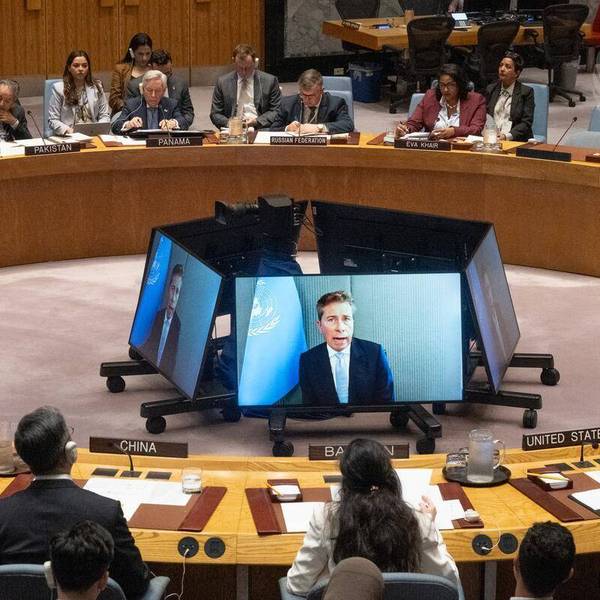
On June 15, the United Nations Security Council unanimously called for a cease-fire in the conflict between the Saudi-UAE coalition and the Houthi-Saleh forces in Yemen. "The U.N. Security Council urged the warring parties in Yemen on Thursday to immediately agree on a cease-fire and keep all ports open for humanitarian aid to confront the threat of famine and the rapid spread of cholera," AP reported.
"The Saudi-led war in Yemen has created a humanitarian disaster." --Sen. Bernie Sanders (I-Vt.)On June 13, using the Arms Export Control Act to force a floor vote, the U.S. Senate narrowly failed to block an arms deal with Saudi Arabia. Senators opposed to the deal stressed the need to end the humanitarian crisis in Yemen rather than escalate it.
"The Saudi-led war in Yemen has created a humanitarian disaster," Senator Bernie Sanders said. "Millions are at the risk of starvation...the chaos in Yemen has also been strategically disastrous for the United States, providing fertile ground for the extremist groups like Al Qaeda and ISIS...it is long past time that we begin to take a very hard look at our relationship with Saudi Arabia...it is important that we begin to discuss...the decades long effort by Saudi Arabia to export an ultra-reactionary form of Islam throughout the world."
"The human rights and humanitarian concerns have been well documented and are important," Senate Democratic leader Chuck Schumer said. "Of equal concern to me is that the Saudi government continues to aid and abet terrorism via its relationship with Wahhabism and the funding of schools that spread extremist propaganda throughout the world."
Yet the New York Times reported on June 14 that the Trump Administration plans to escalate U.S. participation in the Saudi bombing of Yemen, with U.S. military advisers in the Saudi air operations control center in Riyadh.
U.S. participation in the Saudi war in Yemen has never been authorized by Congress. Under the Vietnam Era War Powers Resolution of 1973, a single Member of Congress can force a debate and vote on withdrawing U.S. participation from the Saudi war in Yemen--the conflict that the UN Security Council has just unanimously said should stop immediately to save Yemen from cholera and famine.
Under the Arms Export Control Act, any Senator was able to force a vote on the Saudi arms deal, allowing the Senate to vote on U.S. participation in Saudi Arabia's war and blockade in Yemen. But the only way for House Members to force a vote on the war is to invoke the War Powers Resolution. The last time the House voted on any aspect of U.S. participation in the Saudi war was June 2016, when the House narrowly failed to prohibit the transfer of cluster bombs to Saudi Arabia.
You can urge your Representative to force a House vote on backing the UN cease-fire call to save Yemen from cholera and famine by signing our petition at MoveOn.
Dear Common Dreams reader, It’s been nearly 30 years since I co-founded Common Dreams with my late wife, Lina Newhouser. We had the radical notion that journalism should serve the public good, not corporate profits. It was clear to us from the outset what it would take to build such a project. No paid advertisements. No corporate sponsors. No millionaire publisher telling us what to think or do. Many people said we wouldn't last a year, but we proved those doubters wrong. Together with a tremendous team of journalists and dedicated staff, we built an independent media outlet free from the constraints of profits and corporate control. Our mission has always been simple: To inform. To inspire. To ignite change for the common good. Building Common Dreams was not easy. Our survival was never guaranteed. When you take on the most powerful forces—Wall Street greed, fossil fuel industry destruction, Big Tech lobbyists, and uber-rich oligarchs who have spent billions upon billions rigging the economy and democracy in their favor—the only bulwark you have is supporters who believe in your work. But here’s the urgent message from me today. It's never been this bad out there. And it's never been this hard to keep us going. At the very moment Common Dreams is most needed, the threats we face are intensifying. We need your support now more than ever. We don't accept corporate advertising and never will. We don't have a paywall because we don't think people should be blocked from critical news based on their ability to pay. Everything we do is funded by the donations of readers like you. When everyone does the little they can afford, we are strong. But if that support retreats or dries up, so do we. Will you donate now to make sure Common Dreams not only survives but thrives? —Craig Brown, Co-founder |
On June 15, the United Nations Security Council unanimously called for a cease-fire in the conflict between the Saudi-UAE coalition and the Houthi-Saleh forces in Yemen. "The U.N. Security Council urged the warring parties in Yemen on Thursday to immediately agree on a cease-fire and keep all ports open for humanitarian aid to confront the threat of famine and the rapid spread of cholera," AP reported.
"The Saudi-led war in Yemen has created a humanitarian disaster." --Sen. Bernie Sanders (I-Vt.)On June 13, using the Arms Export Control Act to force a floor vote, the U.S. Senate narrowly failed to block an arms deal with Saudi Arabia. Senators opposed to the deal stressed the need to end the humanitarian crisis in Yemen rather than escalate it.
"The Saudi-led war in Yemen has created a humanitarian disaster," Senator Bernie Sanders said. "Millions are at the risk of starvation...the chaos in Yemen has also been strategically disastrous for the United States, providing fertile ground for the extremist groups like Al Qaeda and ISIS...it is long past time that we begin to take a very hard look at our relationship with Saudi Arabia...it is important that we begin to discuss...the decades long effort by Saudi Arabia to export an ultra-reactionary form of Islam throughout the world."
"The human rights and humanitarian concerns have been well documented and are important," Senate Democratic leader Chuck Schumer said. "Of equal concern to me is that the Saudi government continues to aid and abet terrorism via its relationship with Wahhabism and the funding of schools that spread extremist propaganda throughout the world."
Yet the New York Times reported on June 14 that the Trump Administration plans to escalate U.S. participation in the Saudi bombing of Yemen, with U.S. military advisers in the Saudi air operations control center in Riyadh.
U.S. participation in the Saudi war in Yemen has never been authorized by Congress. Under the Vietnam Era War Powers Resolution of 1973, a single Member of Congress can force a debate and vote on withdrawing U.S. participation from the Saudi war in Yemen--the conflict that the UN Security Council has just unanimously said should stop immediately to save Yemen from cholera and famine.
Under the Arms Export Control Act, any Senator was able to force a vote on the Saudi arms deal, allowing the Senate to vote on U.S. participation in Saudi Arabia's war and blockade in Yemen. But the only way for House Members to force a vote on the war is to invoke the War Powers Resolution. The last time the House voted on any aspect of U.S. participation in the Saudi war was June 2016, when the House narrowly failed to prohibit the transfer of cluster bombs to Saudi Arabia.
You can urge your Representative to force a House vote on backing the UN cease-fire call to save Yemen from cholera and famine by signing our petition at MoveOn.
On June 15, the United Nations Security Council unanimously called for a cease-fire in the conflict between the Saudi-UAE coalition and the Houthi-Saleh forces in Yemen. "The U.N. Security Council urged the warring parties in Yemen on Thursday to immediately agree on a cease-fire and keep all ports open for humanitarian aid to confront the threat of famine and the rapid spread of cholera," AP reported.
"The Saudi-led war in Yemen has created a humanitarian disaster." --Sen. Bernie Sanders (I-Vt.)On June 13, using the Arms Export Control Act to force a floor vote, the U.S. Senate narrowly failed to block an arms deal with Saudi Arabia. Senators opposed to the deal stressed the need to end the humanitarian crisis in Yemen rather than escalate it.
"The Saudi-led war in Yemen has created a humanitarian disaster," Senator Bernie Sanders said. "Millions are at the risk of starvation...the chaos in Yemen has also been strategically disastrous for the United States, providing fertile ground for the extremist groups like Al Qaeda and ISIS...it is long past time that we begin to take a very hard look at our relationship with Saudi Arabia...it is important that we begin to discuss...the decades long effort by Saudi Arabia to export an ultra-reactionary form of Islam throughout the world."
"The human rights and humanitarian concerns have been well documented and are important," Senate Democratic leader Chuck Schumer said. "Of equal concern to me is that the Saudi government continues to aid and abet terrorism via its relationship with Wahhabism and the funding of schools that spread extremist propaganda throughout the world."
Yet the New York Times reported on June 14 that the Trump Administration plans to escalate U.S. participation in the Saudi bombing of Yemen, with U.S. military advisers in the Saudi air operations control center in Riyadh.
U.S. participation in the Saudi war in Yemen has never been authorized by Congress. Under the Vietnam Era War Powers Resolution of 1973, a single Member of Congress can force a debate and vote on withdrawing U.S. participation from the Saudi war in Yemen--the conflict that the UN Security Council has just unanimously said should stop immediately to save Yemen from cholera and famine.
Under the Arms Export Control Act, any Senator was able to force a vote on the Saudi arms deal, allowing the Senate to vote on U.S. participation in Saudi Arabia's war and blockade in Yemen. But the only way for House Members to force a vote on the war is to invoke the War Powers Resolution. The last time the House voted on any aspect of U.S. participation in the Saudi war was June 2016, when the House narrowly failed to prohibit the transfer of cluster bombs to Saudi Arabia.
You can urge your Representative to force a House vote on backing the UN cease-fire call to save Yemen from cholera and famine by signing our petition at MoveOn.