SUBSCRIBE TO OUR FREE NEWSLETTER
Daily news & progressive opinion—funded by the people, not the corporations—delivered straight to your inbox.
5
#000000
#FFFFFF
To donate by check, phone, or other method, see our More Ways to Give page.
Daily news & progressive opinion—funded by the people, not the corporations—delivered straight to your inbox.
The digital divide is alive and well in 2016 and there are still millions of people in the United States living without internet access. And a court decision that came down this week hasn't helped matters.
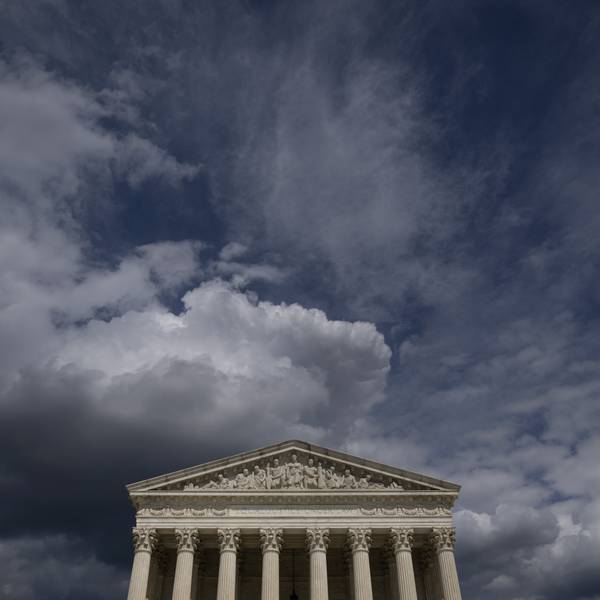
On Wednesday, the 6th Circuit Court of Appeals blocked the FCC's 2015 order to preempt state-level restrictions in North Carolina and Tennessee on municipalities seeking to build their own high-speed broadband networks.
The digital divide is alive and well in 2016 and there are still millions of people in the United States living without internet access. And a court decision that came down this week hasn't helped matters.
On Wednesday, the 6th Circuit Court of Appeals blocked the FCC's 2015 order to preempt state-level restrictions in North Carolina and Tennessee on municipalities seeking to build their own high-speed broadband networks.
First some background: For years now states across the country have passed bills, predominantly due to intense pressure campaigns from phone and cable companies, to block municipalities from building their own networks. The corporate-funded American Legislative Exchange Council is behind many of these bills and even boasts model legislation on its website.
Despite ALEC's efforts, there are municipal networks operating in states across the country, many of them robust set-ups. The hope was that the FCC's move last year would pave the way for other communities -- many of which companies like Comcast refuse to serve -- to create their own networks.
The court's ruling is a discouraging development in the fight to get everyone online. And this isn't just about connectivity -- it's also about competition. The phone and cable companies love to talk about it, but at least 20 statewide bans ensure that they retain their stranglehold on the broadband market.
And without meaningful competition, prices for internet access remain high. This locks out many members of low-income communities and low-income communities of color who can't afford the steep prices set by monopolistic companies like Comcast and Verizon.
FCC Commissioner Mignon Clyburn expressed her disappointment over the court's decision, emphasizing that local governments that want to connect their communities -- "particularly when the private sector has failed to do so" -- should be able to.
"State laws like the ones upheld [Wednesday] are part of the reason why families on one street may have gigabit service, while those on the other have nothing," Clyburn said in a statement. "It is sad that those laws will still stand tall and act as a barrier to digital inclusion and universal opportunity for all."
With the FCC's municipal broadband order overturned, Congress needs to step in and clear the way for communities to build their own networks.
Dear Common Dreams reader, It’s been nearly 30 years since I co-founded Common Dreams with my late wife, Lina Newhouser. We had the radical notion that journalism should serve the public good, not corporate profits. It was clear to us from the outset what it would take to build such a project. No paid advertisements. No corporate sponsors. No millionaire publisher telling us what to think or do. Many people said we wouldn't last a year, but we proved those doubters wrong. Together with a tremendous team of journalists and dedicated staff, we built an independent media outlet free from the constraints of profits and corporate control. Our mission has always been simple: To inform. To inspire. To ignite change for the common good. Building Common Dreams was not easy. Our survival was never guaranteed. When you take on the most powerful forces—Wall Street greed, fossil fuel industry destruction, Big Tech lobbyists, and uber-rich oligarchs who have spent billions upon billions rigging the economy and democracy in their favor—the only bulwark you have is supporters who believe in your work. But here’s the urgent message from me today. It's never been this bad out there. And it's never been this hard to keep us going. At the very moment Common Dreams is most needed, the threats we face are intensifying. We need your support now more than ever. We don't accept corporate advertising and never will. We don't have a paywall because we don't think people should be blocked from critical news based on their ability to pay. Everything we do is funded by the donations of readers like you. When everyone does the little they can afford, we are strong. But if that support retreats or dries up, so do we. Will you donate now to make sure Common Dreams not only survives but thrives? —Craig Brown, Co-founder |
The digital divide is alive and well in 2016 and there are still millions of people in the United States living without internet access. And a court decision that came down this week hasn't helped matters.
On Wednesday, the 6th Circuit Court of Appeals blocked the FCC's 2015 order to preempt state-level restrictions in North Carolina and Tennessee on municipalities seeking to build their own high-speed broadband networks.
First some background: For years now states across the country have passed bills, predominantly due to intense pressure campaigns from phone and cable companies, to block municipalities from building their own networks. The corporate-funded American Legislative Exchange Council is behind many of these bills and even boasts model legislation on its website.
Despite ALEC's efforts, there are municipal networks operating in states across the country, many of them robust set-ups. The hope was that the FCC's move last year would pave the way for other communities -- many of which companies like Comcast refuse to serve -- to create their own networks.
The court's ruling is a discouraging development in the fight to get everyone online. And this isn't just about connectivity -- it's also about competition. The phone and cable companies love to talk about it, but at least 20 statewide bans ensure that they retain their stranglehold on the broadband market.
And without meaningful competition, prices for internet access remain high. This locks out many members of low-income communities and low-income communities of color who can't afford the steep prices set by monopolistic companies like Comcast and Verizon.
FCC Commissioner Mignon Clyburn expressed her disappointment over the court's decision, emphasizing that local governments that want to connect their communities -- "particularly when the private sector has failed to do so" -- should be able to.
"State laws like the ones upheld [Wednesday] are part of the reason why families on one street may have gigabit service, while those on the other have nothing," Clyburn said in a statement. "It is sad that those laws will still stand tall and act as a barrier to digital inclusion and universal opportunity for all."
With the FCC's municipal broadband order overturned, Congress needs to step in and clear the way for communities to build their own networks.
The digital divide is alive and well in 2016 and there are still millions of people in the United States living without internet access. And a court decision that came down this week hasn't helped matters.
On Wednesday, the 6th Circuit Court of Appeals blocked the FCC's 2015 order to preempt state-level restrictions in North Carolina and Tennessee on municipalities seeking to build their own high-speed broadband networks.
First some background: For years now states across the country have passed bills, predominantly due to intense pressure campaigns from phone and cable companies, to block municipalities from building their own networks. The corporate-funded American Legislative Exchange Council is behind many of these bills and even boasts model legislation on its website.
Despite ALEC's efforts, there are municipal networks operating in states across the country, many of them robust set-ups. The hope was that the FCC's move last year would pave the way for other communities -- many of which companies like Comcast refuse to serve -- to create their own networks.
The court's ruling is a discouraging development in the fight to get everyone online. And this isn't just about connectivity -- it's also about competition. The phone and cable companies love to talk about it, but at least 20 statewide bans ensure that they retain their stranglehold on the broadband market.
And without meaningful competition, prices for internet access remain high. This locks out many members of low-income communities and low-income communities of color who can't afford the steep prices set by monopolistic companies like Comcast and Verizon.
FCC Commissioner Mignon Clyburn expressed her disappointment over the court's decision, emphasizing that local governments that want to connect their communities -- "particularly when the private sector has failed to do so" -- should be able to.
"State laws like the ones upheld [Wednesday] are part of the reason why families on one street may have gigabit service, while those on the other have nothing," Clyburn said in a statement. "It is sad that those laws will still stand tall and act as a barrier to digital inclusion and universal opportunity for all."
With the FCC's municipal broadband order overturned, Congress needs to step in and clear the way for communities to build their own networks.