Yet, instead of "anchoring" Russia to the political and economic architecture of the Western alliance system, which George F. Kennan's "containment doctrine" endorsed, successive U.S. administrations have not only kept the Kremlin at arm's length but have drawn the North Atlantic Treaty Organization (NATO) closer to Russia itself. This is central to the current crisis over Crimea.
In expanding NATO, the United States has been guilty of betraying a guarantee that Secretary of State James Baker gave to Soviet Foreign Minister Eduard Shevardnadze in 1990, when the United States stated that it would not "leapfrog" over East Germany to place U.S. military forces in East Europe in the wake of the Soviet military withdrawal from Germany.
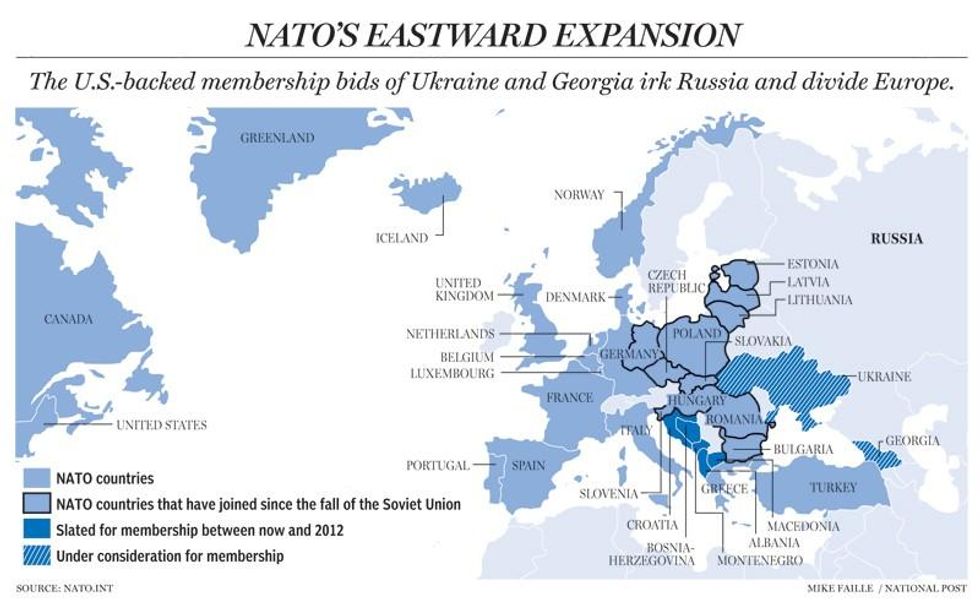
The administrations of Bill Clinton and George W. Bush ignored that commitment when the United States sponsored the entry of eight former Warsaw Pact members as well as three former Soviet Republics into NATO. The Obama administration, meanwhile, appears ignorant of the geopolitical context of its foreign policies, which have not taken this betrayal into account in the Crimean crisis.
President Clinton seemingly had no appreciation of the great difficulty involved in Soviet President Mikhail Gorbachev's acceptance of the unification of Germany and German membership in NATO in view of Russian historical memories and huge World War II losses. One of the few sources of Soviet pride in foreign policy was the Soviet defeat of the German Wehrmacht, which was the key to the U.S. and British victory on the Western front. Three-fourths of the German Army fought on the Eastern front, and three-fourths of German losses took place on the Eastern front.
U.S. diplomats and academics, particularly those with expertise in European policy and the Soviet Union such as George Kennan, made a valiant effort to convince President Clinton that the expansion of NATO was bad strategic policy. Even members of the administration, including Secretary of Defense William Perry, tried to dissuade the President from his strategic blunder. In using military power against Serbia in the late 1990s, Clinton seemed to have no idea of the long historical ties between Russia and Serbia.
President Bush made further significant contributions to the alienation of the new Russian leadership by sponsoring NATO membership for former Soviet Republics (Estonia, Latvia, and Lithuania); abrogating the Anti-Ballistic Missile Treaty, which was the cornerstone of strategic deterrence; and deploying a national missile defense system in California and Alaska.
The Bush administration's disdain for multilateral diplomacy and arms control, as well as its reliance on the use of force, particularly the unnecessary war against Iraq, angered the Russian leadership as well as many European leaders. President Bush explained that national missile defense as well as the regional missile defense in East Europe would not be aimed at Russia, but rather the "world's least-responsible states," which the President did not name. Of course, no one in the Kremlin believed him.
While a warning to Russia, the Bush administration was a welcome relief to the neoconservative community. The appointment of right-wing ideologues who brandished a deep animosity to the Russian state included Vice President Dick Cheney, Secretaries of Defense Donald Rumsfeld and Robert Gates, CIA Director Porter Goss as well as such Pentagon luminaries as Douglas Feith, William Luti, and Abram Shulsky.
In his memoir Duty, Gates prides himself for opposing any improved relations with Russia, since "making the Russians happy wasn't exactly on my to-do list." During meetings with his Russian military counterparts, Gates passed a childish and churlish note to Secretary of State Condi Rice stating "I'd forgotten how much I really don't like these guys." President Bush even favored the expansion of NATO into Ukraine and Georgia, and U.S. military support for Georgia played a significant role in the five-day war between Russia and Georgia in 2008.
President Obama initially received some credit for pushing the "reset" button in relations with Russia, but it was soon obvious that the button was simply symbolic and that no effort was being made to institutionalize bilateral relations. The Obama administration also ignored Secretary of State Baker's verbal commitment against "leapfrogging" over a united Germany by basing U.S. fighter jets in Poland as well as favoring the deployment of a sophisticated regional missile defense in Poland and the Czech Republic. He is using the Crimea crisis to base additional fighter jets in Poland and is considering the expansion of fighter patrols over the Baltic States.
At present, there is no U.S. ambassador in Russia, and Secretary of State John Kerry has been holding talks with his Russian counterpart without any senior Russian experts at his side. The intemperate remarks of Kerry's assistant secretary of state for European affairs last month as the crisis in Kiev was worsening speaks to the lack of diplomatic experience at Foggy Bottom.
During the Cuban missile crisis in 1962, a former U.S. ambassador to the Soviet Union played a key role in convincing President John F. Kennedy that, if the United States gave Moscow some diplomatic room, the Kremlin would find a way to withdraw its missiles and bombers from Cuba - and thus avoid a military confrontation.
In the Crimean crisis, President Obama seems to be unnecessarily accommodating the right-wing criticism of his administration from politicians and pundits instead of finding a diplomatic solution to the current imbroglio. If the United States offered guarantees against the further expansion of NATO and invited Russia to take part in a multilateral economic aid program for beleaguered Ukraine, then it is possible that President Vladimir Putin would find a way to lower the Russian military presence in the Crimea.
In the meantime, the U.S. reliance on modest military steps, travel bans and economic sanctions will not bring any favorable change to the situation on the ground in Crimea. These steps will only worsen the crisis in the Ukraine and ensure that the United States and Russia cannot discuss important geopolitical matters on arms control and disarmament, nonproliferation and counter-terrorism, which finds them essentially in agreement.
Yet, instead of "anchoring" Russia to the political and economic architecture of the Western alliance system, which George F. Kennan's "containment doctrine" endorsed, successive U.S. administrations have not only kept the Kremlin at arm's length but have drawn the North Atlantic Treaty Organization (NATO) closer to Russia itself. This is central to the current crisis over Crimea.
In expanding NATO, the United States has been guilty of betraying a guarantee that Secretary of State James Baker gave to Soviet Foreign Minister Eduard Shevardnadze in 1990, when the United States stated that it would not "leapfrog" over East Germany to place U.S. military forces in East Europe in the wake of the Soviet military withdrawal from Germany.
The administrations of Bill Clinton and George W. Bush ignored that commitment when the United States sponsored the entry of eight former Warsaw Pact members as well as three former Soviet Republics into NATO. The Obama administration, meanwhile, appears ignorant of the geopolitical context of its foreign policies, which have not taken this betrayal into account in the Crimean crisis.
President Clinton seemingly had no appreciation of the great difficulty involved in Soviet President Mikhail Gorbachev's acceptance of the unification of Germany and German membership in NATO in view of Russian historical memories and huge World War II losses. One of the few sources of Soviet pride in foreign policy was the Soviet defeat of the German Wehrmacht, which was the key to the U.S. and British victory on the Western front. Three-fourths of the German Army fought on the Eastern front, and three-fourths of German losses took place on the Eastern front.
U.S. diplomats and academics, particularly those with expertise in European policy and the Soviet Union such as George Kennan, made a valiant effort to convince President Clinton that the expansion of NATO was bad strategic policy. Even members of the administration, including Secretary of Defense William Perry, tried to dissuade the President from his strategic blunder. In using military power against Serbia in the late 1990s, Clinton seemed to have no idea of the long historical ties between Russia and Serbia.
President Bush made further significant contributions to the alienation of the new Russian leadership by sponsoring NATO membership for former Soviet Republics (Estonia, Latvia, and Lithuania); abrogating the Anti-Ballistic Missile Treaty, which was the cornerstone of strategic deterrence; and deploying a national missile defense system in California and Alaska.
The Bush administration's disdain for multilateral diplomacy and arms control, as well as its reliance on the use of force, particularly the unnecessary war against Iraq, angered the Russian leadership as well as many European leaders. President Bush explained that national missile defense as well as the regional missile defense in East Europe would not be aimed at Russia, but rather the "world's least-responsible states," which the President did not name. Of course, no one in the Kremlin believed him.
While a warning to Russia, the Bush administration was a welcome relief to the neoconservative community. The appointment of right-wing ideologues who brandished a deep animosity to the Russian state included Vice President Dick Cheney, Secretaries of Defense Donald Rumsfeld and Robert Gates, CIA Director Porter Goss as well as such Pentagon luminaries as Douglas Feith, William Luti, and Abram Shulsky.
In his memoir Duty, Gates prides himself for opposing any improved relations with Russia, since "making the Russians happy wasn't exactly on my to-do list." During meetings with his Russian military counterparts, Gates passed a childish and churlish note to Secretary of State Condi Rice stating "I'd forgotten how much I really don't like these guys." President Bush even favored the expansion of NATO into Ukraine and Georgia, and U.S. military support for Georgia played a significant role in the five-day war between Russia and Georgia in 2008.
President Obama initially received some credit for pushing the "reset" button in relations with Russia, but it was soon obvious that the button was simply symbolic and that no effort was being made to institutionalize bilateral relations. The Obama administration also ignored Secretary of State Baker's verbal commitment against "leapfrogging" over a united Germany by basing U.S. fighter jets in Poland as well as favoring the deployment of a sophisticated regional missile defense in Poland and the Czech Republic. He is using the Crimea crisis to base additional fighter jets in Poland and is considering the expansion of fighter patrols over the Baltic States.
At present, there is no U.S. ambassador in Russia, and Secretary of State John Kerry has been holding talks with his Russian counterpart without any senior Russian experts at his side. The intemperate remarks of Kerry's assistant secretary of state for European affairs last month as the crisis in Kiev was worsening speaks to the lack of diplomatic experience at Foggy Bottom.
During the Cuban missile crisis in 1962, a former U.S. ambassador to the Soviet Union played a key role in convincing President John F. Kennedy that, if the United States gave Moscow some diplomatic room, the Kremlin would find a way to withdraw its missiles and bombers from Cuba - and thus avoid a military confrontation.
In the Crimean crisis, President Obama seems to be unnecessarily accommodating the right-wing criticism of his administration from politicians and pundits instead of finding a diplomatic solution to the current imbroglio. If the United States offered guarantees against the further expansion of NATO and invited Russia to take part in a multilateral economic aid program for beleaguered Ukraine, then it is possible that President Vladimir Putin would find a way to lower the Russian military presence in the Crimea.
In the meantime, the U.S. reliance on modest military steps, travel bans and economic sanctions will not bring any favorable change to the situation on the ground in Crimea. These steps will only worsen the crisis in the Ukraine and ensure that the United States and Russia cannot discuss important geopolitical matters on arms control and disarmament, nonproliferation and counter-terrorism, which finds them essentially in agreement.
Yet, instead of "anchoring" Russia to the political and economic architecture of the Western alliance system, which George F. Kennan's "containment doctrine" endorsed, successive U.S. administrations have not only kept the Kremlin at arm's length but have drawn the North Atlantic Treaty Organization (NATO) closer to Russia itself. This is central to the current crisis over Crimea.
In expanding NATO, the United States has been guilty of betraying a guarantee that Secretary of State James Baker gave to Soviet Foreign Minister Eduard Shevardnadze in 1990, when the United States stated that it would not "leapfrog" over East Germany to place U.S. military forces in East Europe in the wake of the Soviet military withdrawal from Germany.
The administrations of Bill Clinton and George W. Bush ignored that commitment when the United States sponsored the entry of eight former Warsaw Pact members as well as three former Soviet Republics into NATO. The Obama administration, meanwhile, appears ignorant of the geopolitical context of its foreign policies, which have not taken this betrayal into account in the Crimean crisis.
President Clinton seemingly had no appreciation of the great difficulty involved in Soviet President Mikhail Gorbachev's acceptance of the unification of Germany and German membership in NATO in view of Russian historical memories and huge World War II losses. One of the few sources of Soviet pride in foreign policy was the Soviet defeat of the German Wehrmacht, which was the key to the U.S. and British victory on the Western front. Three-fourths of the German Army fought on the Eastern front, and three-fourths of German losses took place on the Eastern front.
U.S. diplomats and academics, particularly those with expertise in European policy and the Soviet Union such as George Kennan, made a valiant effort to convince President Clinton that the expansion of NATO was bad strategic policy. Even members of the administration, including Secretary of Defense William Perry, tried to dissuade the President from his strategic blunder. In using military power against Serbia in the late 1990s, Clinton seemed to have no idea of the long historical ties between Russia and Serbia.
President Bush made further significant contributions to the alienation of the new Russian leadership by sponsoring NATO membership for former Soviet Republics (Estonia, Latvia, and Lithuania); abrogating the Anti-Ballistic Missile Treaty, which was the cornerstone of strategic deterrence; and deploying a national missile defense system in California and Alaska.
The Bush administration's disdain for multilateral diplomacy and arms control, as well as its reliance on the use of force, particularly the unnecessary war against Iraq, angered the Russian leadership as well as many European leaders. President Bush explained that national missile defense as well as the regional missile defense in East Europe would not be aimed at Russia, but rather the "world's least-responsible states," which the President did not name. Of course, no one in the Kremlin believed him.
While a warning to Russia, the Bush administration was a welcome relief to the neoconservative community. The appointment of right-wing ideologues who brandished a deep animosity to the Russian state included Vice President Dick Cheney, Secretaries of Defense Donald Rumsfeld and Robert Gates, CIA Director Porter Goss as well as such Pentagon luminaries as Douglas Feith, William Luti, and Abram Shulsky.
In his memoir Duty, Gates prides himself for opposing any improved relations with Russia, since "making the Russians happy wasn't exactly on my to-do list." During meetings with his Russian military counterparts, Gates passed a childish and churlish note to Secretary of State Condi Rice stating "I'd forgotten how much I really don't like these guys." President Bush even favored the expansion of NATO into Ukraine and Georgia, and U.S. military support for Georgia played a significant role in the five-day war between Russia and Georgia in 2008.
President Obama initially received some credit for pushing the "reset" button in relations with Russia, but it was soon obvious that the button was simply symbolic and that no effort was being made to institutionalize bilateral relations. The Obama administration also ignored Secretary of State Baker's verbal commitment against "leapfrogging" over a united Germany by basing U.S. fighter jets in Poland as well as favoring the deployment of a sophisticated regional missile defense in Poland and the Czech Republic. He is using the Crimea crisis to base additional fighter jets in Poland and is considering the expansion of fighter patrols over the Baltic States.
At present, there is no U.S. ambassador in Russia, and Secretary of State John Kerry has been holding talks with his Russian counterpart without any senior Russian experts at his side. The intemperate remarks of Kerry's assistant secretary of state for European affairs last month as the crisis in Kiev was worsening speaks to the lack of diplomatic experience at Foggy Bottom.
During the Cuban missile crisis in 1962, a former U.S. ambassador to the Soviet Union played a key role in convincing President John F. Kennedy that, if the United States gave Moscow some diplomatic room, the Kremlin would find a way to withdraw its missiles and bombers from Cuba - and thus avoid a military confrontation.
In the Crimean crisis, President Obama seems to be unnecessarily accommodating the right-wing criticism of his administration from politicians and pundits instead of finding a diplomatic solution to the current imbroglio. If the United States offered guarantees against the further expansion of NATO and invited Russia to take part in a multilateral economic aid program for beleaguered Ukraine, then it is possible that President Vladimir Putin would find a way to lower the Russian military presence in the Crimea.
In the meantime, the U.S. reliance on modest military steps, travel bans and economic sanctions will not bring any favorable change to the situation on the ground in Crimea. These steps will only worsen the crisis in the Ukraine and ensure that the United States and Russia cannot discuss important geopolitical matters on arms control and disarmament, nonproliferation and counter-terrorism, which finds them essentially in agreement.