SUBSCRIBE TO OUR FREE NEWSLETTER
Daily news & progressive opinion—funded by the people, not the corporations—delivered straight to your inbox.
5
#000000
#FFFFFF
To donate by check, phone, or other method, see our More Ways to Give page.


Daily news & progressive opinion—funded by the people, not the corporations—delivered straight to your inbox.
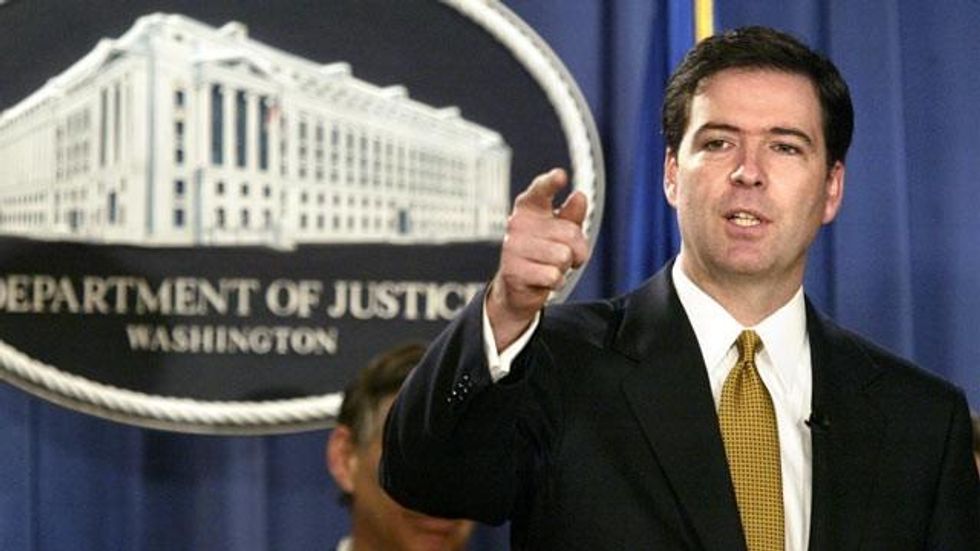
Current Federal Bureau of Investigation (FBI) Director Robert Mueller's term is expiring (again), and the Senate Judiciary Committee will be holding a hearing to question the nominee to replace Mueller, James Comey.
Current Federal Bureau of Investigation (FBI) Director Robert Mueller's term is expiring (again), and the Senate Judiciary Committee will be holding a hearing to question the nominee to replace Mueller, James Comey. The FBI is deeply linked with the NSA's unconstitutional domestic spying, and Comey was the Deputy Attorney General and Acting Attorney General under President Bush who approved almost all of the aspects of the secretive programs that collect Americans' information, emails, and phone calls. One such program--uncovered in a leaked top secret order of the secret court overseeing the spying--uses Section 215 of the PATRIOT Act to order Verizon Business Network Services to send all of its customers' call information to the NSA.

Today's hearing is another chance for the Senate to further investigate these programs. A coalition of over 100 civil liberties organizations and 500,000 people have come together to demand a special investigatory committee, more accountability, and legislative fixes to end the unconstitutional program of domestic spying. (Join them now.) We've already drafted questions that Congress must ask about these programs. With the upcoming hearing, the Senators should get Comey's word that he will stop the unconstitutional programs facilitated by the FBI.
Here are a some questions to ask Comey:
1) Rep. Jim Sensenbrenner, one of the original authors of Section 215 of the PATRIOT Act, has stated that the FBI's use of Section 215 is an "abuse of the law." Will you make a commitment today that, if confirmed, you will stop the FBI from using Section 215 to collect calling information, or any other information, about Americans in bulk?
2) Articles by both the Wall Street Journal (paywall) and New York Times revealed that the secret court overseeing the spying, the Foreign Intelligence Surveillance Court (FISA Court), doesn't believe that communications metadata is protected under the Fourth Amendment or First Amendment of the Constitution. Do you think the FISA Court is right?
3) Officials have stated that the Supreme Court case Smith v. Maryland supports the constitutionality of the 215 program. Of course, Smith only considered the Fourth Amendment implications of calling information for a single subscriber. Do you believe that the constitutional analysis changes when calling information is collected by the government in bulk? Is the constitutional analysis different for any information collected in bulk? What are the implications for the First Amendment when it comes to collecting information in bulk?
4) Section 215 of the PATRIOT Act allows the FBI to obtain "any tangible things" that are relevant to an authorized national security investigation. Articles by both the Wall Street Journal and New York Times revealed that the secret court overseeing the spying, the Foreign Intelligence Surveillance Court (FISA Court), has vastly expanded the ability of law enforcement to sidestep Fourth Amendment protections by redefining "relevant." Can you explain how my call records are relevant to an authorized national security investigation? How are all Americans' calling information relevant?
5) Section 215 of the PATRIOT Act allows the FBI to obtain "any tangible things" that are relevant to an authorized national security investigation. Prior to this nomination, you were the Acting Attorney General of the Department of Justice and well versed in national security and constitutional law. Can you explain how "any tangible things" could include information that a communications company would not otherwise produce, record, or store in a tangible form?
6) The top secret order compelling Verizon to give the NSA all Americans' calling information asks for calling information to be provided on an "ongoing, daily basis." Yet, Section 215 only permits the production of "tangible things." Can you explain how an order issued under Section 215 can compel the production of something that does not yet exist--indeed, the very definition of an intangible thing?
7) In light of the revelations of widespread, dragnet, unconstitutional spying, are you personally satisfied that the government--Congress, the Bush and Obama Administrations, and the FISA court system--has disclosed enough about these domestic surveillance programs and the law that sustains them to meet the standards of the rule of law in a democratic society?

Dear Common Dreams reader, It’s been nearly 30 years since I co-founded Common Dreams with my late wife, Lina Newhouser. We had the radical notion that journalism should serve the public good, not corporate profits. It was clear to us from the outset what it would take to build such a project. No paid advertisements. No corporate sponsors. No millionaire publisher telling us what to think or do. Many people said we wouldn't last a year, but we proved those doubters wrong. Together with a tremendous team of journalists and dedicated staff, we built an independent media outlet free from the constraints of profits and corporate control. Our mission has always been simple: To inform. To inspire. To ignite change for the common good. Building Common Dreams was not easy. Our survival was never guaranteed. When you take on the most powerful forces—Wall Street greed, fossil fuel industry destruction, Big Tech lobbyists, and uber-rich oligarchs who have spent billions upon billions rigging the economy and democracy in their favor—the only bulwark you have is supporters who believe in your work. But here’s the urgent message from me today. It's never been this bad out there. And it's never been this hard to keep us going. At the very moment Common Dreams is most needed, the threats we face are intensifying. We need your support now more than ever. We don't accept corporate advertising and never will. We don't have a paywall because we don't think people should be blocked from critical news based on their ability to pay. Everything we do is funded by the donations of readers like you. When everyone does the little they can afford, we are strong. But if that support retreats or dries up, so do we. Will you donate now to make sure Common Dreams not only survives but thrives? —Craig Brown, Co-founder |
Current Federal Bureau of Investigation (FBI) Director Robert Mueller's term is expiring (again), and the Senate Judiciary Committee will be holding a hearing to question the nominee to replace Mueller, James Comey. The FBI is deeply linked with the NSA's unconstitutional domestic spying, and Comey was the Deputy Attorney General and Acting Attorney General under President Bush who approved almost all of the aspects of the secretive programs that collect Americans' information, emails, and phone calls. One such program--uncovered in a leaked top secret order of the secret court overseeing the spying--uses Section 215 of the PATRIOT Act to order Verizon Business Network Services to send all of its customers' call information to the NSA.

Today's hearing is another chance for the Senate to further investigate these programs. A coalition of over 100 civil liberties organizations and 500,000 people have come together to demand a special investigatory committee, more accountability, and legislative fixes to end the unconstitutional program of domestic spying. (Join them now.) We've already drafted questions that Congress must ask about these programs. With the upcoming hearing, the Senators should get Comey's word that he will stop the unconstitutional programs facilitated by the FBI.
Here are a some questions to ask Comey:
1) Rep. Jim Sensenbrenner, one of the original authors of Section 215 of the PATRIOT Act, has stated that the FBI's use of Section 215 is an "abuse of the law." Will you make a commitment today that, if confirmed, you will stop the FBI from using Section 215 to collect calling information, or any other information, about Americans in bulk?
2) Articles by both the Wall Street Journal (paywall) and New York Times revealed that the secret court overseeing the spying, the Foreign Intelligence Surveillance Court (FISA Court), doesn't believe that communications metadata is protected under the Fourth Amendment or First Amendment of the Constitution. Do you think the FISA Court is right?
3) Officials have stated that the Supreme Court case Smith v. Maryland supports the constitutionality of the 215 program. Of course, Smith only considered the Fourth Amendment implications of calling information for a single subscriber. Do you believe that the constitutional analysis changes when calling information is collected by the government in bulk? Is the constitutional analysis different for any information collected in bulk? What are the implications for the First Amendment when it comes to collecting information in bulk?
4) Section 215 of the PATRIOT Act allows the FBI to obtain "any tangible things" that are relevant to an authorized national security investigation. Articles by both the Wall Street Journal and New York Times revealed that the secret court overseeing the spying, the Foreign Intelligence Surveillance Court (FISA Court), has vastly expanded the ability of law enforcement to sidestep Fourth Amendment protections by redefining "relevant." Can you explain how my call records are relevant to an authorized national security investigation? How are all Americans' calling information relevant?
5) Section 215 of the PATRIOT Act allows the FBI to obtain "any tangible things" that are relevant to an authorized national security investigation. Prior to this nomination, you were the Acting Attorney General of the Department of Justice and well versed in national security and constitutional law. Can you explain how "any tangible things" could include information that a communications company would not otherwise produce, record, or store in a tangible form?
6) The top secret order compelling Verizon to give the NSA all Americans' calling information asks for calling information to be provided on an "ongoing, daily basis." Yet, Section 215 only permits the production of "tangible things." Can you explain how an order issued under Section 215 can compel the production of something that does not yet exist--indeed, the very definition of an intangible thing?
7) In light of the revelations of widespread, dragnet, unconstitutional spying, are you personally satisfied that the government--Congress, the Bush and Obama Administrations, and the FISA court system--has disclosed enough about these domestic surveillance programs and the law that sustains them to meet the standards of the rule of law in a democratic society?
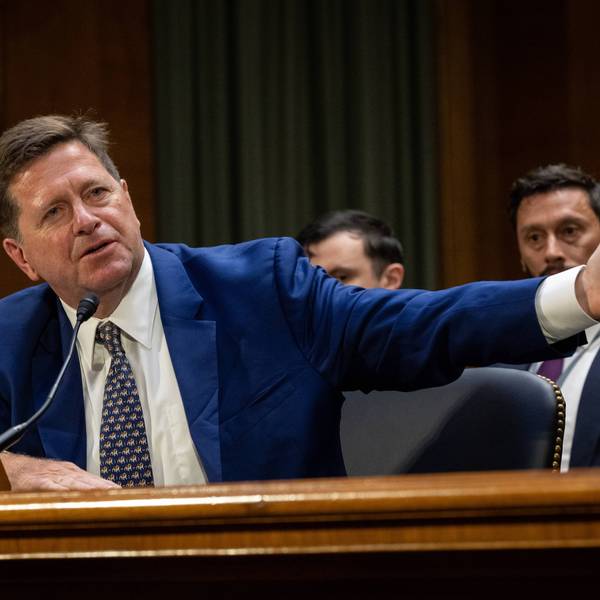
Current Federal Bureau of Investigation (FBI) Director Robert Mueller's term is expiring (again), and the Senate Judiciary Committee will be holding a hearing to question the nominee to replace Mueller, James Comey. The FBI is deeply linked with the NSA's unconstitutional domestic spying, and Comey was the Deputy Attorney General and Acting Attorney General under President Bush who approved almost all of the aspects of the secretive programs that collect Americans' information, emails, and phone calls. One such program--uncovered in a leaked top secret order of the secret court overseeing the spying--uses Section 215 of the PATRIOT Act to order Verizon Business Network Services to send all of its customers' call information to the NSA.

Today's hearing is another chance for the Senate to further investigate these programs. A coalition of over 100 civil liberties organizations and 500,000 people have come together to demand a special investigatory committee, more accountability, and legislative fixes to end the unconstitutional program of domestic spying. (Join them now.) We've already drafted questions that Congress must ask about these programs. With the upcoming hearing, the Senators should get Comey's word that he will stop the unconstitutional programs facilitated by the FBI.
Here are a some questions to ask Comey:
1) Rep. Jim Sensenbrenner, one of the original authors of Section 215 of the PATRIOT Act, has stated that the FBI's use of Section 215 is an "abuse of the law." Will you make a commitment today that, if confirmed, you will stop the FBI from using Section 215 to collect calling information, or any other information, about Americans in bulk?
2) Articles by both the Wall Street Journal (paywall) and New York Times revealed that the secret court overseeing the spying, the Foreign Intelligence Surveillance Court (FISA Court), doesn't believe that communications metadata is protected under the Fourth Amendment or First Amendment of the Constitution. Do you think the FISA Court is right?
3) Officials have stated that the Supreme Court case Smith v. Maryland supports the constitutionality of the 215 program. Of course, Smith only considered the Fourth Amendment implications of calling information for a single subscriber. Do you believe that the constitutional analysis changes when calling information is collected by the government in bulk? Is the constitutional analysis different for any information collected in bulk? What are the implications for the First Amendment when it comes to collecting information in bulk?
4) Section 215 of the PATRIOT Act allows the FBI to obtain "any tangible things" that are relevant to an authorized national security investigation. Articles by both the Wall Street Journal and New York Times revealed that the secret court overseeing the spying, the Foreign Intelligence Surveillance Court (FISA Court), has vastly expanded the ability of law enforcement to sidestep Fourth Amendment protections by redefining "relevant." Can you explain how my call records are relevant to an authorized national security investigation? How are all Americans' calling information relevant?
5) Section 215 of the PATRIOT Act allows the FBI to obtain "any tangible things" that are relevant to an authorized national security investigation. Prior to this nomination, you were the Acting Attorney General of the Department of Justice and well versed in national security and constitutional law. Can you explain how "any tangible things" could include information that a communications company would not otherwise produce, record, or store in a tangible form?
6) The top secret order compelling Verizon to give the NSA all Americans' calling information asks for calling information to be provided on an "ongoing, daily basis." Yet, Section 215 only permits the production of "tangible things." Can you explain how an order issued under Section 215 can compel the production of something that does not yet exist--indeed, the very definition of an intangible thing?
7) In light of the revelations of widespread, dragnet, unconstitutional spying, are you personally satisfied that the government--Congress, the Bush and Obama Administrations, and the FISA court system--has disclosed enough about these domestic surveillance programs and the law that sustains them to meet the standards of the rule of law in a democratic society?